
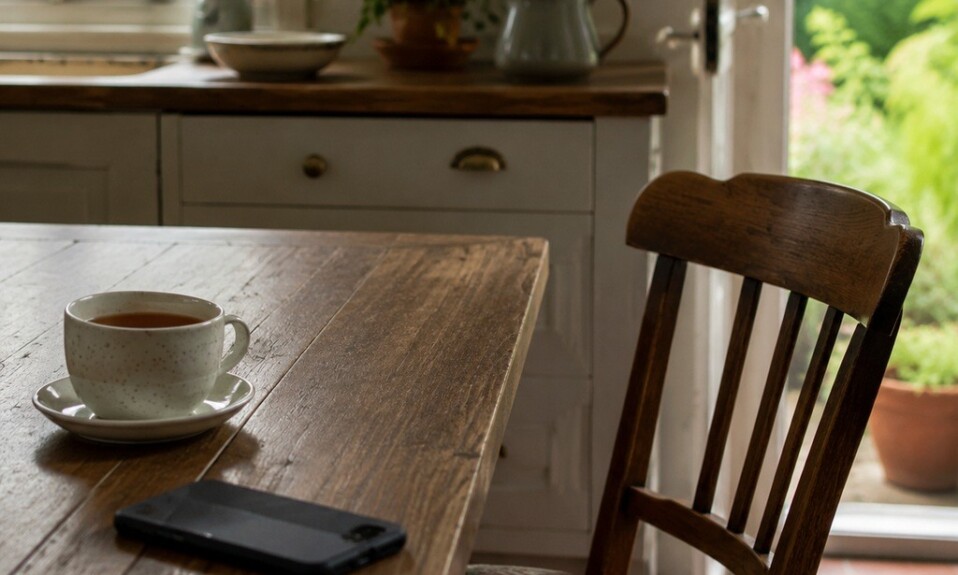
A quiet, compassionate letter for the mother who still loves deeply while learning how to live with distance from an adult child.
Dear mother,
Maybe you have learned to answer, "They're busy," before anyone even asks. You say it lightly, almost automatically, because it is easier than explaining the ache of loving a grown child who feels harder to reach than they used to.
You may not want pity. You may not even want advice. What you want is simpler and harder: you want someone to understand that a quiet phone can hurt like a sentence.
Maybe you type a message and then delete half of it because you do not want to sound needy. Maybe you reread a short reply and try to decide if the period at the end means anything. Maybe you tell yourself not to keep score, while some tired place in you has counted every call you started first.
This is not small. A mother spends years becoming a familiar place. Then one day she may feel like a visitor at the edge of her own child's life, waiting for permission to ask ordinary questions.
That kind of distance is confusing because the person is still alive. There is no public ritual for it. People see your child at holidays or in photos and assume everything is fine. But a mother can grieve access. She can grieve ease. She can grieve the old warmth that did not need careful wording.

You might find yourself reviewing the past like evidence. The school mornings, the fevers, the rides, the bills, the nights you stayed awake because they were late, angry, sad, or sick. None of it was done for applause, but it still hurts when it seems to have vanished from their memory.
If you made mistakes, you are in the company of every mother who ever lived. Maybe you were too worried. Too sharp. Too tired. Too eager to fix things. But imperfection is not the same as lovelessness, and regret does not mean you deserve silence.
A grown child may carry pain you do not fully understand. They may be overwhelmed, distracted, guarded, influenced by someone else, or simply clumsy with closeness. Any of that may be true. It still does not make your hurt imaginary.
There is a hard dignity in learning not to chase. Not because you stop loving. Because you finally notice what constant reaching is doing to your own heart. Love without begging is still love. It may be the bravest kind.
You can send a warm note and set the phone down. You can say, "I miss you," without turning the next hour into a courtroom. You can leave the door unlocked without sleeping on the threshold.
And if an apology is needed, you can offer it cleanly. No speeches, no bargaining, no endless self-punishment. A simple, honest apology can open a window. But after you have spoken with humility, you do not have to keep crawling to prove you are sorry enough.
The part no one tells you is that motherhood changes shape long after the child is grown. Sometimes you are no longer the one they run to. Sometimes you become the one who waits, prays, notices, and learns how to remain steady without being central.
That can feel like a demotion. It is not. Your motherhood is not erased because your child is distant. The years still happened. The love still counted. The sacrifices still passed through your body and your days.
Please do not make your entire worth depend on whether they soften this week. There are flowers to put on the table, friends who answer with warmth, meals worth making, stories worth telling, mornings that still belong to you. These things do not replace your child. They keep you from disappearing into waiting.
If you are a grandmother, the ache may have another layer. You may be trying to stay close without overstepping, to love grandchildren through a doorway someone else controls. Be gentle there. Children remember steadiness. They remember who felt safe.
There may come a day when your child returns with more softness than you expected. Families do find new languages. People grow into apologies slowly. Sometimes distance was a season before anyone knew how to name it.
Until then, keep the porch light on without standing at the window all night. Let love remain possible without letting absence become your whole house.
And tonight, if you feel forgotten, hear this plainly: you are not only the amount of contact someone gives you. You are a whole woman with memory, humor, taste, wisdom, wounds, and a heart that has survived more than one silence.
The temptation is to keep proving love in ways that slowly empty you. Another message. Another gift. Another careful question. Another attempt to sound cheerful so they do not pull away again.
But a mother should not have to audition for crumbs of tenderness. You can be warm without making yourself small. You can be available without becoming endlessly reachable.
There may be nights when you imagine what you would say if they finally asked, really asked, how this has felt. You might have a whole speech ready. Then morning comes, and you fold it back into your chest.
That folded speech needs somewhere to go. Write it down if you cannot say it. Tell it to someone safe. Pray it if that is your language. Unspoken grief still needs air.
And if they do come closer, try not to make the first soft moment carry the weight of every lonely year. Let it be a beginning, not a trial. A fragile bridge cannot hold a truck on the first crossing.
You are learning something painfully grown-up about love: it can remain real even when it is no longer in charge of the other person's behavior.
May tenderness find you from somewhere. May your child soften if and when they can. And may a quiet phone never have the final word over a mother's worth.