A reassuring letter for the person who knows a mobility aid may help, but still feels the emotional weight of needing one.
Dear friend,
A cane or walker can look simple to everyone else. A practical tool. A safety device. Something sensible. But the first time you look at it and realize it may be for you, the feeling can be much larger than the object.
You may know, logically, that it can help. You may know falls are dangerous. You may know independence sometimes requires support. Still, a quiet part of you may whisper, I did not think this would be me yet.
That whisper deserves tenderness. The hard part is not only using the cane. It is being seen with it. It is walking into a room and feeling as if the tool arrives before you do, announcing a story you are not ready for others to read.
People may say, "Don't be embarrassed," because they mean well. But embarrassment does not disappear because someone gives it instructions. It softens when it is understood.
A mobility aid can stir grief for the old casual body. The body that crossed a parking lot without planning. The body that carried groceries without strategy. The body that trusted uneven pavement and rose from a chair without thinking.
Missing that body does not mean you are vain. It means you remember ease. And ease, once lost, is allowed to be grieved.
There may also be anger. Why this? Why now? Why another thing to adjust to? Why must every outing include calculation? You do not have to make that anger pretty. Some changes are simply hard before they are helpful.
But here is a truth worth holding carefully: using support is not the same as surrendering yourself. A cane does not erase your humor, judgment, taste, stubbornness, memory, or dignity. It is a tool, not a biography.
The first public outing may feel the worst. You may imagine everyone looking. Most people are not looking as closely as fear says they are. And if some do notice, they are still not seeing the whole of you.
You are allowed to practice in small ways. Around the house. Down the driveway. In a store where the aisles are wide. With someone who will not fuss too much. Confidence can return by inches.
Try not to call yourself dramatic if you cry afterward. A new aid can make a person feel safer and sadder at the same time. Both can be true. The body may feel relief while the heart catches up more slowly.
There is dignity in preventing the fall you can prevent. There is dignity in making the walk possible. There is dignity in choosing the thing that lets you enter the room instead of staying home because pride had the louder voice.
If someone comments clumsily, you may answer lightly or firmly. "It helps me get around." "I'm safer with it." "I'm still me." You do not owe a long explanation. Your safety does not require public permission.
Over time, the aid may become less of a symbol and more of a companion to your independence. Not the end of freedom, but one of the reasons freedom can continue.
You may even notice that the world opens a little when your body trusts the next step again. A visit you would have skipped. A walk you would have feared. A hallway that no longer feels like a test.
That does not mean you have to love the cane. You only have to let it help. Acceptance does not have to feel cheerful to be real.
There may be a day when you leave it at home because you want to feel like your old self, and then spend the whole outing managing fear. That is a hard lesson. Pride can feel strong at the door and very lonely halfway across a parking lot.
The aid is not there to make you look old. It is there to give your attention back to the world. When your body feels steadier, you can notice the conversation, the shelves, the weather, the person beside you.
You may need to grieve the first version of independence before accepting this version. The old version said, "I need nothing." The wiser version may say, "I know what helps me keep going."
That wiser version is not lesser. It is independence with honesty added.
Let the cane or walker become ordinary slowly. Choose one that feels sturdy, adjust it properly, and let someone show you how to use it well. A tool used badly can make you feel worse; a tool fitted well can feel like relief.
One day, you may realize you were less noticeable with the aid than you felt without it, because confidence often draws less attention than fear.
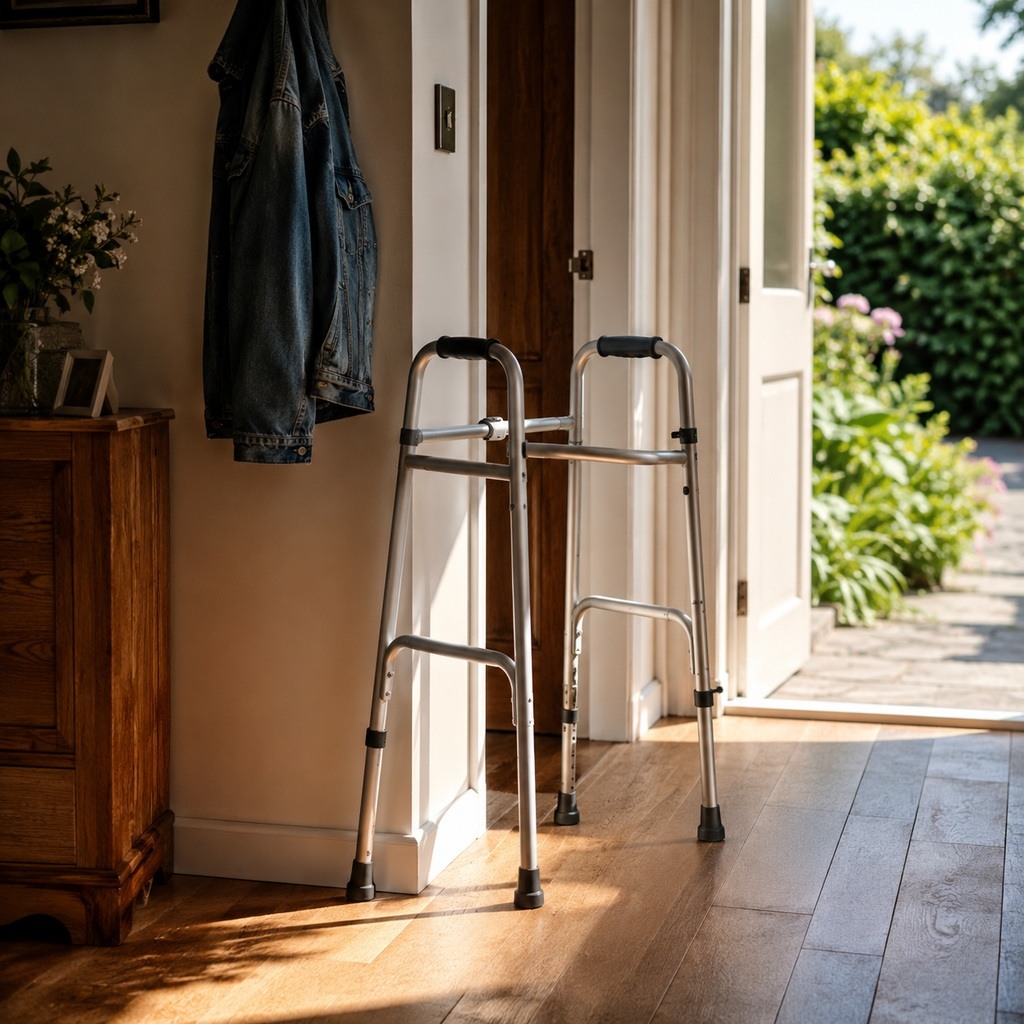
There may be grief in the storage of the aid too. Seeing it by the door can feel like seeing a new truth waiting for you every morning.
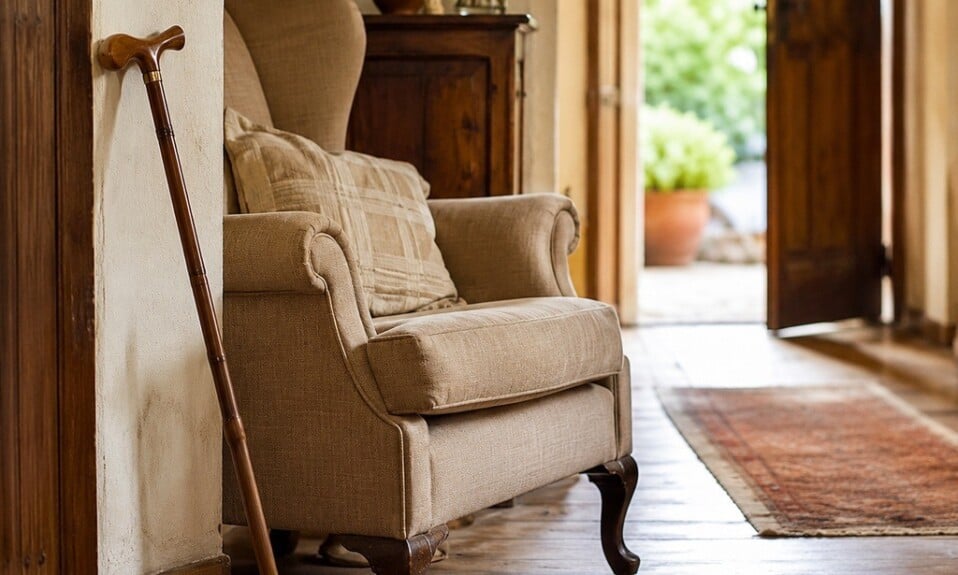
Try placing it somewhere that feels practical rather than punishing. A tool by the door can be a promise, not a sentence. It says you intend to go out, not disappear.
The people who love you may need guidance. Ask them not to fuss, not to grab, not to make jokes unless you make them first. Helpful people can still make a tender adjustment feel louder than it needs to be.
The goal is quiet competence. You, moving through the world with the support you need and the dignity you already had.
May the first awkward days pass gently. May the people around you learn not to make a performance of helping. And may you remember that needing steadiness does not make you less yourself. It may be how you keep more of your life within reach.