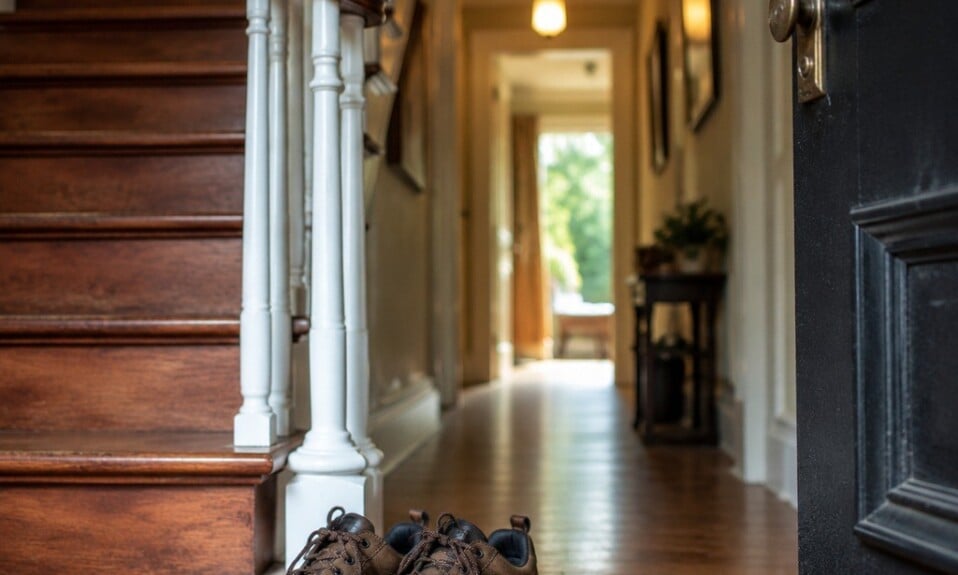
A steadying letter for anyone whose walking or balance has changed and who misses moving through the world without thinking about every step.
Dear friend,
There is an old confidence in walking that most people do not notice until it changes. The body used to move through a room without negotiation. A curb was just a curb. A hallway was just a hallway. A patch of uneven grass did not feel like a decision.
Then one day, or slowly over many days, your steps begin asking questions. Is the floor wet? Is there a rail? Is that rug loose? How far is the chair? Who is watching? Walking can become a private calculation.
That can feel humiliating, even when nobody else notices. You may hate how much attention a simple walk now requires. You may miss carrying something in both hands. You may resent needing to scan the world for hazards like you are solving a puzzle just to cross a room.
Please do not call that vanity. It is grief for ease. The old ease mattered because it let you think about where you were going instead of whether you would get there safely.
Fear of falling can shrink a life quietly. First you avoid the stairs. Then the garden. Then the busy store. Then the visit where parking is uncertain. You tell yourself you are being sensible, and often you are. But another part of you may feel the walls moving inward.
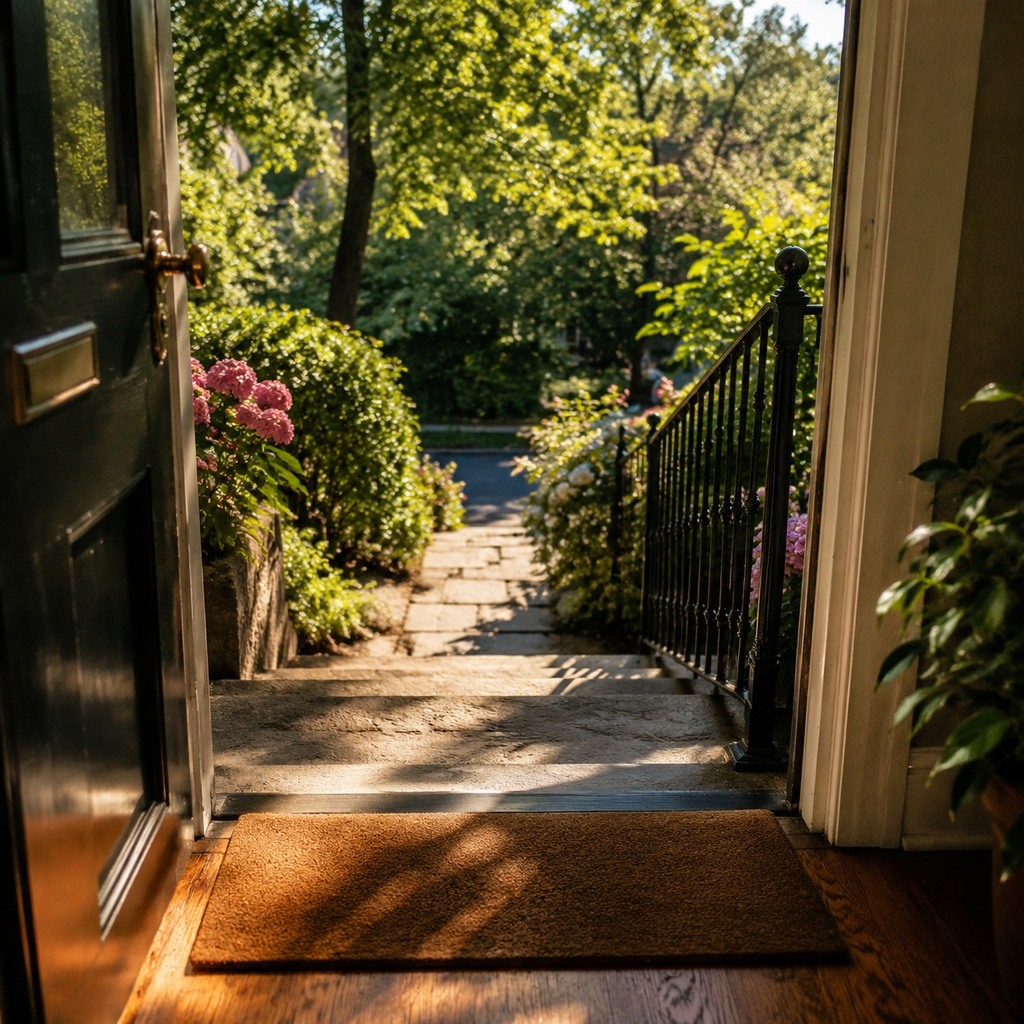
Safety matters. So does selfhood. The goal is not to prove bravery by taking foolish risks. The goal is to build enough steadiness that life does not become only avoidance.
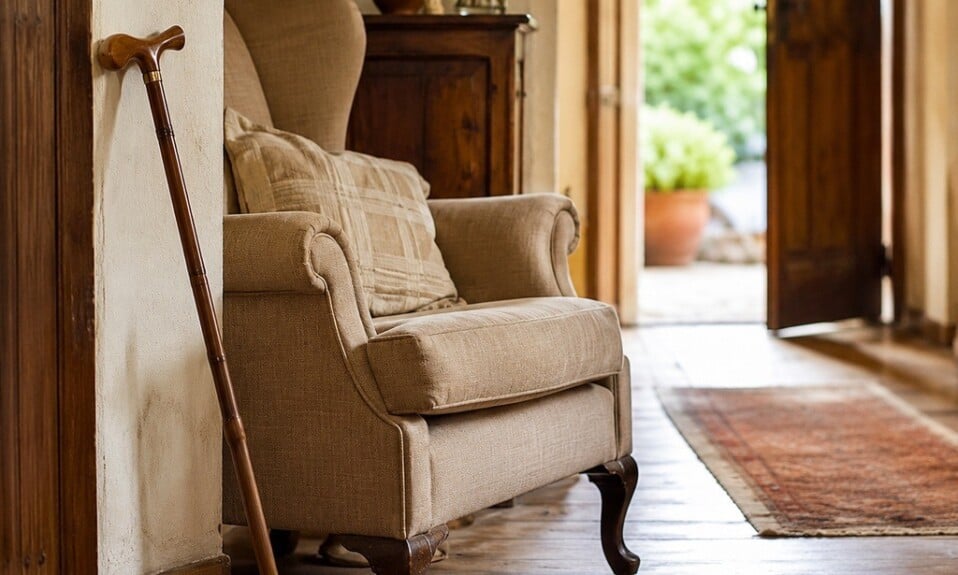
That may mean better shoes, brighter lights, a cleared path, a cane, therapy, exercises, rails, a slower pace, or asking someone to walk with you. These are not insults. Support is not the opposite of independence. Sometimes it is what keeps independence alive.
Still, the first time you need support can sting. You may feel exposed. You may imagine people seeing weakness instead of a person making a wise adjustment. Let that feeling be real without letting it rule.
There is dignity in choosing the thing that keeps you upright. There is dignity in refusing to let pride write checks your body has to pay.
You may also feel anger at how uneven the world is. Cracked sidewalks, rushed crowds, poor lighting, slick floors, chairs without arms. A place that once felt ordinary may suddenly reveal how little it was designed for bodies that need care.
That anger is not silly. The world should be easier to move through than it is.
When walking becomes uncertain, confidence often returns through repetition. The same safe route. The same hallway. The same exercises. The same friend. It may feel small, but small practice teaches the nervous system that not every step is danger.
Try to celebrate less dramatic victories. Getting to the mailbox. Walking the aisle. Standing from the chair with more control. Crossing the room without panic. These are not minor if fear has been taking up space.
And on days when balance is worse, do not turn caution into shame. Bodies vary. Energy varies. Pain, sleep, medication, weather, and stress can all change the way a person moves.
You are allowed to have a smaller day. A cautious day is not a failed day.
May your steps become safer. May your home and the people around you adapt without making you feel managed. And may you remember that moving slowly through the world is still moving through the world.
The emotional exhaustion can surprise you. People see the slower walk, but they may not see the constant awareness behind it. Every doorway, cord, curb, pet, rug, and patch of gravel becomes part of a mental map.
That kind of vigilance is tiring. Balance problems do not only live in the legs; they live in the attention.
You may miss daydreaming while walking. Looking at trees instead of pavement. Carrying a cup without planning. Entering a crowded room without immediately searching for the nearest chair.
Give yourself permission to miss that. Then give yourself permission to build a new kind of confidence, one that uses tools, pacing, and awareness without shame.
If someone rushes you, let them go ahead. Their pace is not the measure of your value. You are allowed to arrive slowly and still arrive fully.
And if a fall has already happened, be gentle with the fear that followed. The body remembers impact. Confidence may need repeated safety before it believes again.
There may be grief in watching other people move carelessly. They step backward, pivot, rush, carry too much, glance at their phone while walking. You may feel envy for the thoughtlessness of it.
That envy is understandable. Ease looks different after you have lost some of it.
Try to let preparation be a kindness rather than a punishment. The clear shoes by the door, the light left on, the path checked before guests arrive, the handrail used without apology.
These are not signs that fear won. They are signs that you are giving courage a better floor to stand on.
There is also a social part to balance that people forget. You may avoid places not because you dislike the people, but because the entryway is awkward, the bathroom is far, the chairs are low, or the crowd moves too quickly.
That kind of avoiding can look like withdrawal from the outside. Inside, it may be a person trying to protect one remaining sense of control.
You are not only the stumble you fear. You are the person still choosing the next step, and that choice deserves respect.