
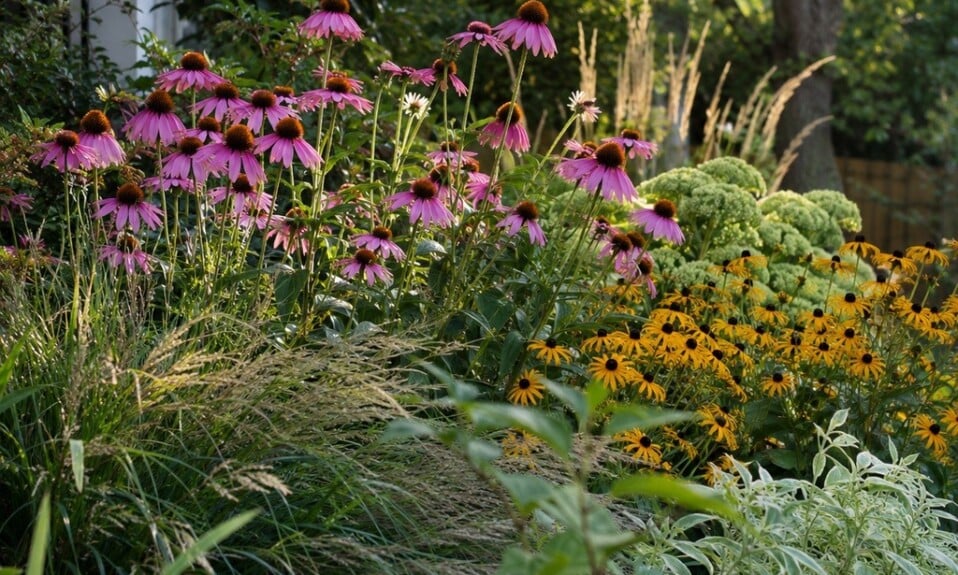
A warm, practical letter for the gardener looking at coneflowers and wondering how to make the whole bed feel fuller, calmer, and more alive.
Dear gardener,
There is a moment in every flower bed when one plant is doing its best and the rest of the space still feels unfinished. Coneflowers can stand there with their strong centers and cheerful petals, looking steady, while the ground around them quietly asks for better company.
If you have looked at your coneflowers and thought the bed should feel fuller, softer, or more intentional, you are not alone. A good garden often fails first as a feeling. Something is blooming, but the scene does not yet hold together.
Coneflowers are generous plants. They bring height, pollinators, and that late-summer confidence many gardens need. But they can also look lonely if they are surrounded by bare mulch, plants that peak too early, or colors that do not know how to speak to one another.
The trick is not to crowd them. It is to give them companions that make their strengths easier to see.
Think first about rhythm. Coneflowers have upright stems and bold daisy shapes. They often look better when something softer moves around them. A garden needs contrast the way a sentence needs breath.
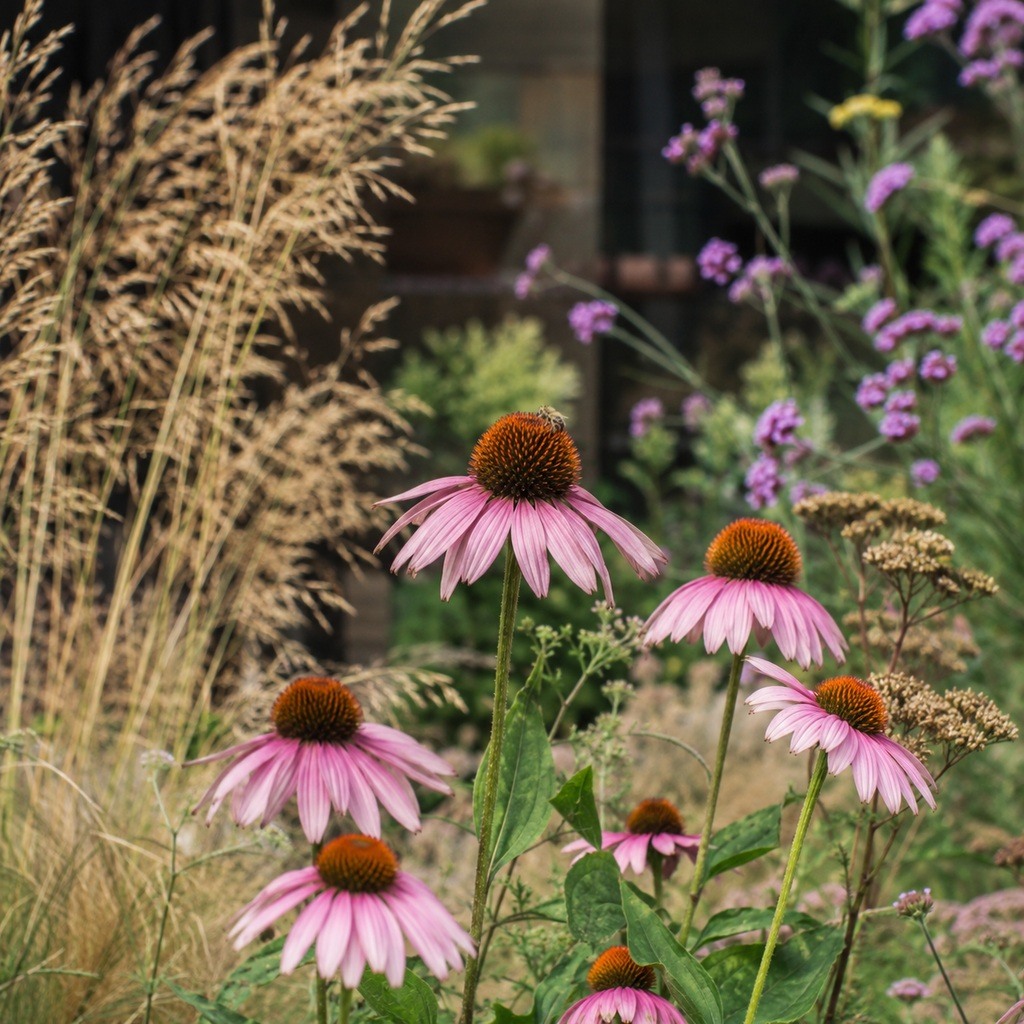
Ornamental grasses can do that beautifully. Their fine blades and seed heads catch light while the coneflowers hold the color. Catmint can soften the front edge. Salvia can echo the vertical energy. Black-eyed Susans can extend the warm, meadow feeling without making the bed feel formal.
You might also think about timing. A bed that looks wonderful for three weeks and tired for three months is asking for more succession. Early perennials, summer bloomers, and seed heads for fall can keep the space from feeling abandoned after one flush.
That is where plants like yarrow, bee balm, coreopsis, sedum, and asters can help, depending on your climate and space. The goal is not more plants. The goal is fewer empty moments.
Color matters too, but not in the stiff way garden magazines sometimes imply. Purple coneflowers can handle gold, blue, white, soft pink, burgundy, and silver foliage. What matters is repetition. A color that appears once can feel accidental. A color that returns feels like intention.
If your bed feels chaotic, repeat one leaf texture or flower color in a few places. If it feels flat, add a different height. If it feels harsh, add softness at the edges. Most garden problems are not solved by one miracle plant; they are solved by better relationships.
So before buying anything, stand back. Look at the bed in morning light and again late in the day. Notice where your eye stops. Notice where the soil looks bare. Notice which plant seems unsupported. The garden will often tell you what kind of company it needs.
Also consider the pollinators. Coneflowers already invite bees, butterflies, and seed-loving birds. Companions like bee balm, salvia, mountain mint, and asters can turn that invitation into a longer season of activity.
A lively bed is not only pretty. It feels inhabited. It gives the gardener the quiet satisfaction of seeing the space working, not just decorated.
You do not have to redo everything. Start with one gap, one edge, one repeated color, one plant that blooms before or after the coneflowers. A garden improves by layers, not by panic.
And if a choice fails, that is not wasted. Gardens are forgiving teachers. Move the plant. Divide it. Try again next season. The best beds often look inevitable only after several years of correction.
May your coneflowers find companions that make them shine without stealing the whole room. May the bed feel less like separate plants and more like a small community. And may you remember that the garden is allowed to become itself slowly.
A bed can also feel wrong when every plant has the same kind of confidence. Coneflowers are bold. Pair them only with other bold shapes and the garden may start arguing with itself.
That is why softness can be a design tool. Fine leaves, airy flowers, seed heads, and lower mounds can make the coneflowers look intentional instead of stranded.
Think about what you want the bed to feel like in July, then again in September. Do you want meadowy and loose? Bright and cheerful? Calm and pollinator-friendly? The answer changes the companions.
For a natural look, repeat plants in small groups instead of buying one of everything. Repetition is what makes a garden look calm instead of collected by accident.
Leave enough space for the coneflowers to stand. Crowding can create mildew, weak stems, and a bed that feels busy instead of abundant. Generosity in planting sometimes means restraint.
The pleasure is in watching the bed become a conversation: upright stems, soft edges, moving grasses, returning color, and pollinators stitching it all together.
If your coneflowers flop, fade, or look awkward, do not assume you chose wrong. Sometimes the plant is fine but the bed needs a stronger supporting cast.
A nearby grass can hold the scene. A lower front plant can hide bare stems. A later bloomer can keep the bed from feeling finished too early. Companion planting is often emotional before it is technical.
You are trying to create a view that makes you pause when you walk past. That pause matters. Gardens are partly about food and habitat, yes, but also about the little lift a person feels when a corner finally makes sense.
Let the bed teach you across a season rather than demanding perfection in one weekend.
Sometimes the loveliest improvement is simply this: one good plant finally finding the friends it deserved.