Most people step onto a cruise ship and assume the food is exactly what it looks like from the outside. They’re wrong about almost all of it. There’s one item at #1 on this list that every returning cruiser knows, and it changes the way you eat for every trip after. Don’t board your next ship until you’ve read this.
25. How Many Meals Are Served Each Day
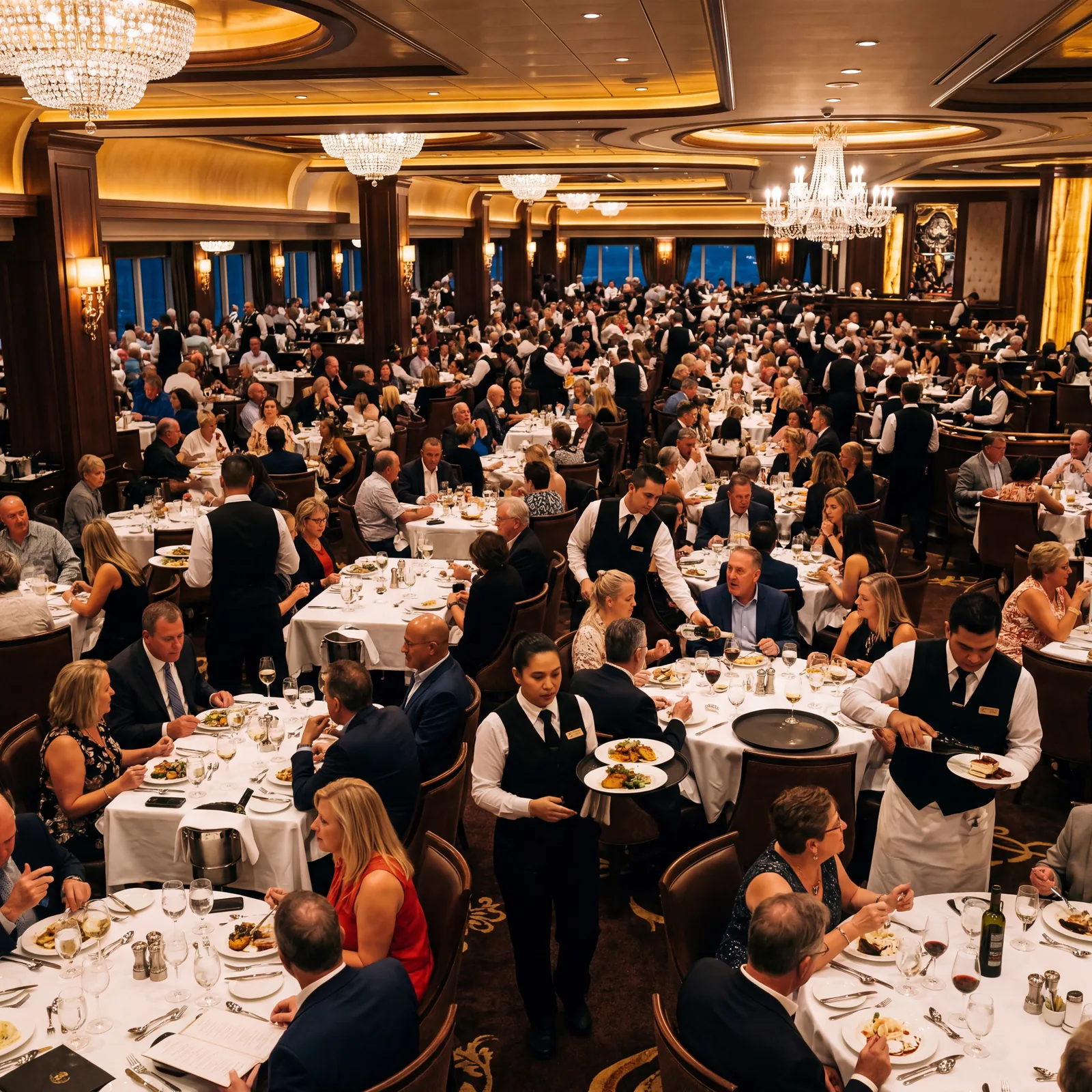
A large cruise ship feeds somewhere between 15,000 and 30,000 individual meals every single day. That includes breakfast, lunch, dinner, midnight buffet, room service, specialty restaurants, and pool deck snacks. Most passengers never stop to think about the sheer scale of what’s happening below them. The logistics alone would shut down most five-star hotel kitchens. On sea days, passenger demand spikes hard, and the galley crew works in rotating six-hour shifts just to keep up.
24. Where the Food Is Actually Prepared
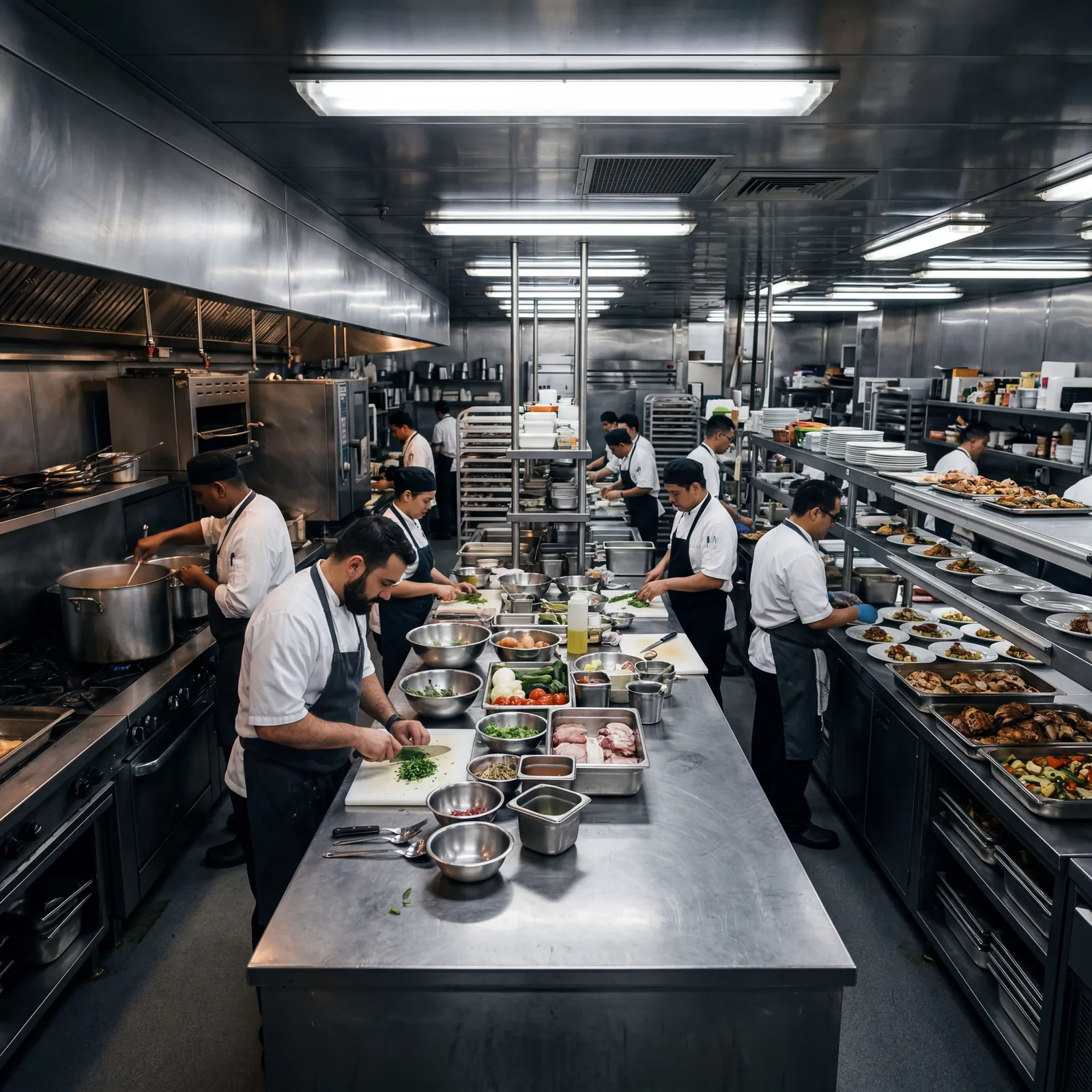
The main kitchen on most ships is called the galley, and it’s buried several decks below the dining room. You’ll never see it on your tour. It runs on a military-style timed system where every dish has a precise window for preparation and delivery. On a ship like the Wonder of the Seas, the galley spans three full decks and employs over 400 kitchen staff. The food reaches your table via insulated carts and service elevators that most passengers don’t know exist.
23. How Much Food Is Loaded at Every Port
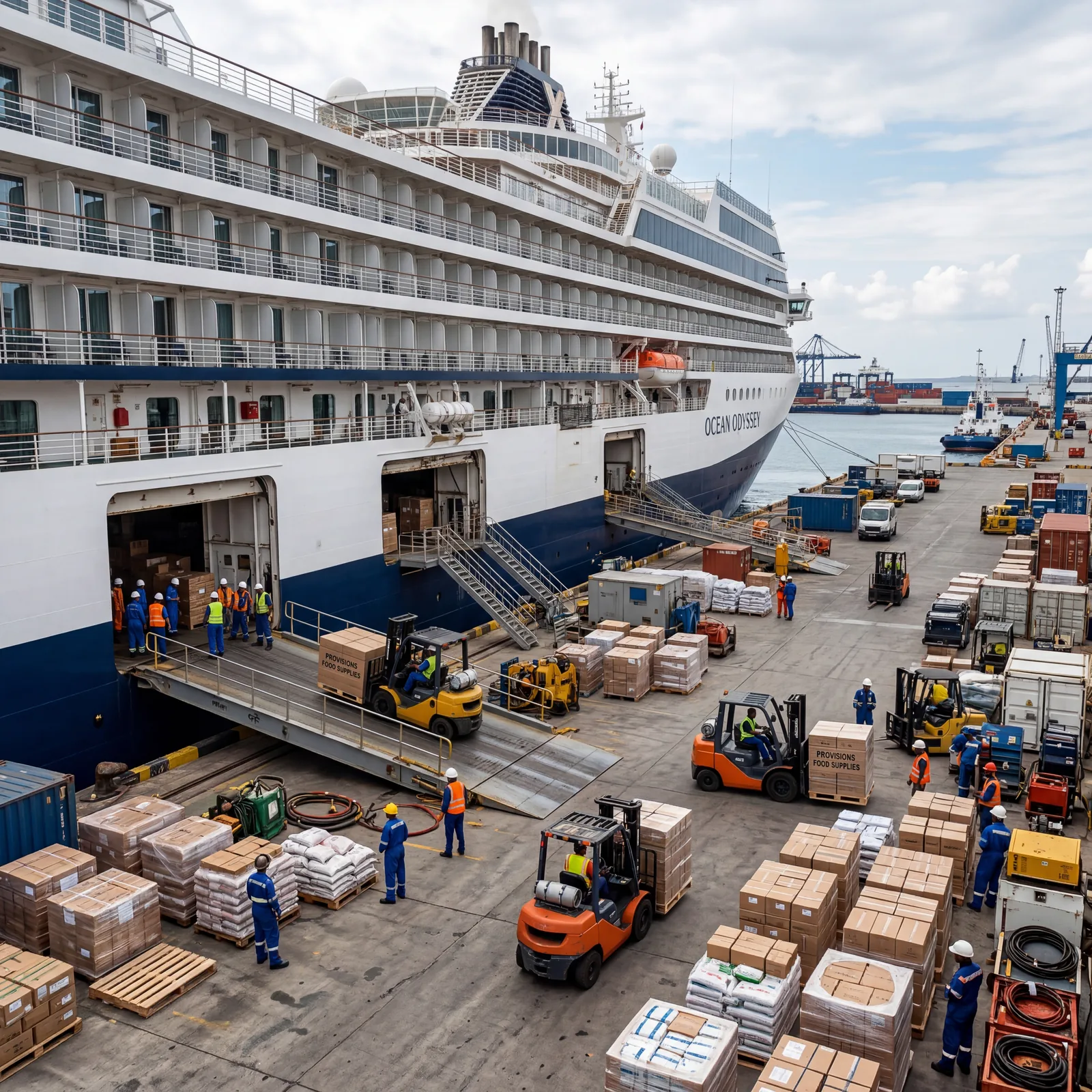
Every port stop is a provisioning operation. A typical week-long cruise loads approximately 100 tons of fresh food before departure. That includes 20,000 eggs, 2,000 pounds of chicken, hundreds of cases of fresh produce, and enough dairy to fill a small supermarket. Some of the provisions are loaded directly from local suppliers at the port, which is why fruit and vegetables can taste noticeably different depending on where your ship last docked.
22. Which Buffet Items Are Actually Frozen
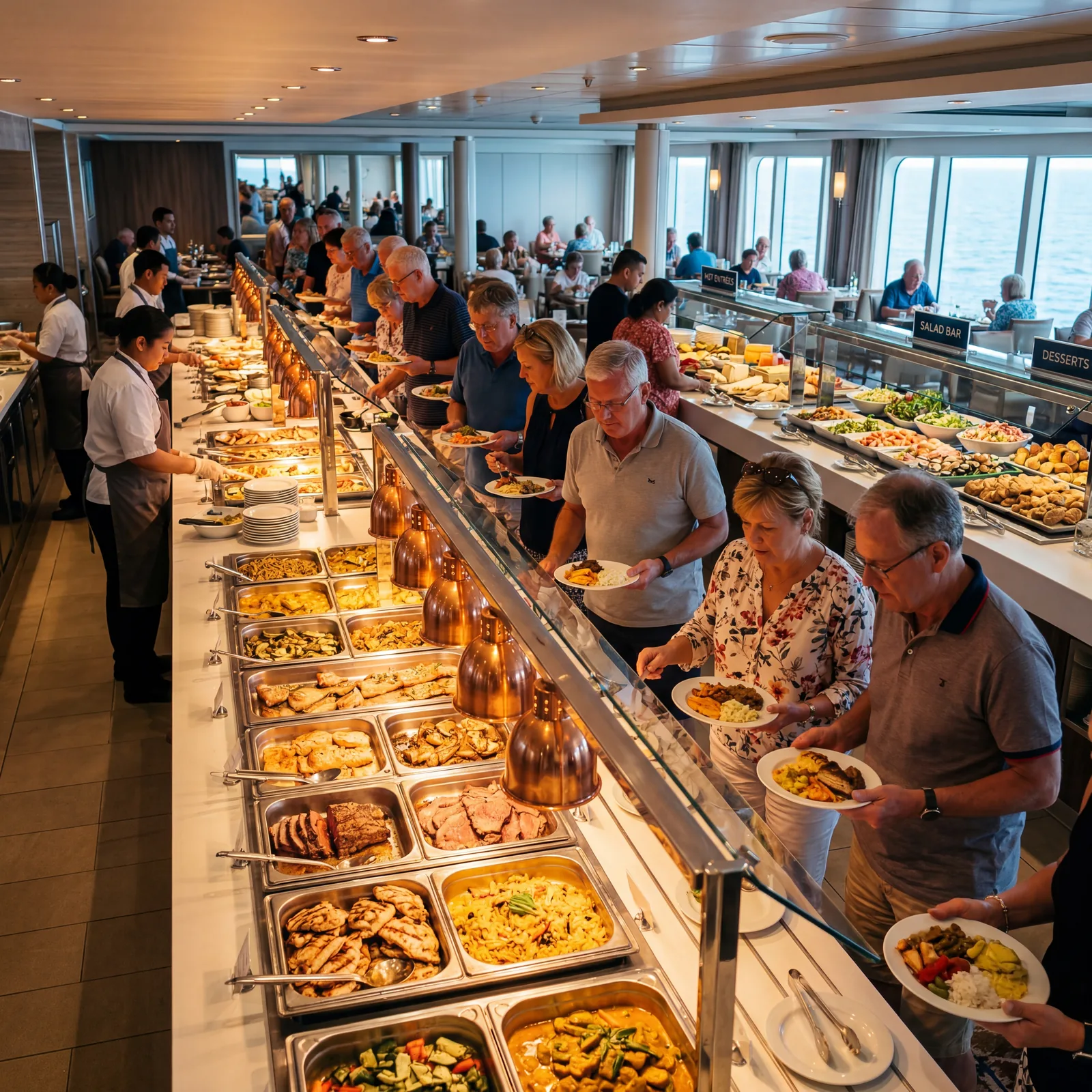
Not everything on the buffet is made fresh that morning. Certain items arrive on board pre-made and frozen, particularly pastries, some soups, pre-formed burger patties, and many desserts outside the specialty pastry stations. This isn’t a cost-cutting secret so much as a practical necessity at scale. Items that are genuinely made fresh daily include carved meats, omelets, and the deli-style cold cuts on higher-end lines. The tell: if it’s on a buffet tray under a heat lamp and it’s been sitting there for more than 30 minutes, it was almost certainly frozen at some point.
21. What Happens to Leftover Food
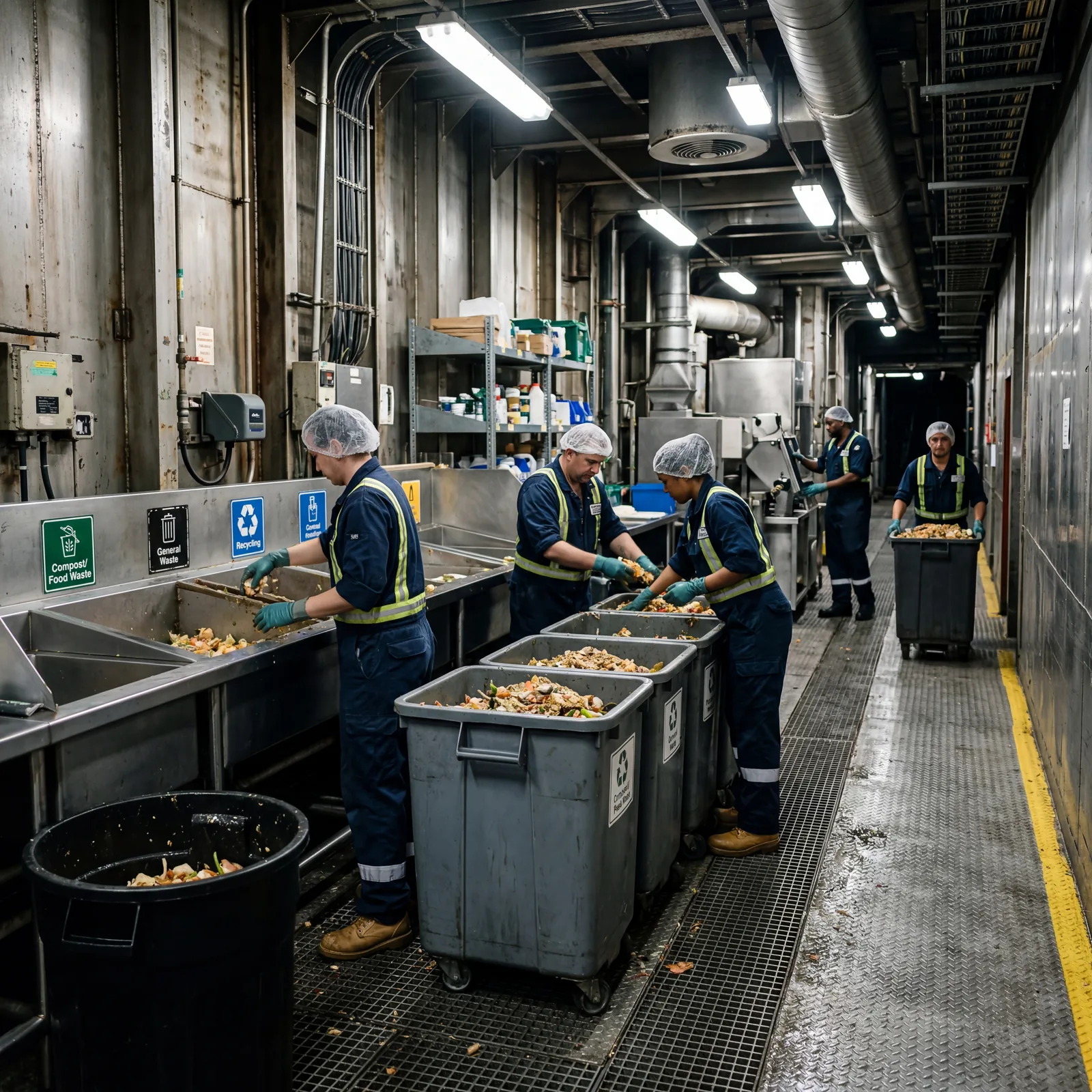
Cruise lines are required by international maritime law to manage food waste at sea. Most ships run food waste reduction programs where leftovers are tracked, logged, and redirected. Uneaten food that was never served to passengers can sometimes go to crew meals or be held for staff galleys. Anything that was served and returned goes into a maceration and discharge system in open ocean waters, which is legal outside a 12-nautical-mile coastal boundary. None of it gets donated to port communities. That’s not how it works.
20. What the Crew Eats (It’s Very Different)
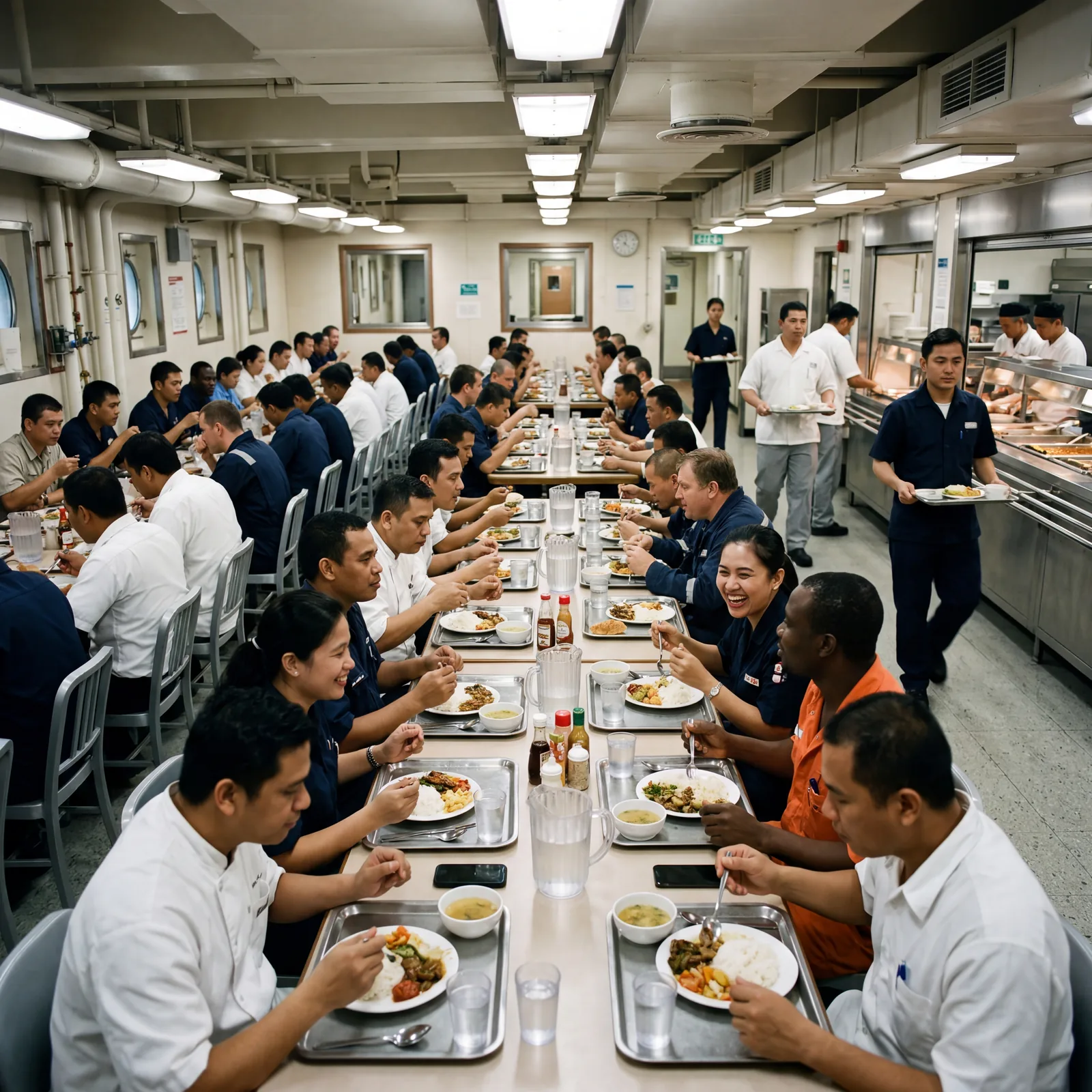
The crew has their own separate galley, and the food looks nothing like what you’re eating upstairs. Crew meals are budget-focused and nationality-matched where possible, meaning Filipino crew members get rice-heavy menus while Indian crew get spiced dishes more familiar to them. You won’t find chocolate fountains or specialty dining down there. Crew members get three meals a day plus one snack, and the budget per crew meal is a fraction of the passenger meal budget. Some crew on lower contracts describe the food as adequate but monotonous after month three.
19. How They Handle Dietary Restrictions for Thousands of Passengers
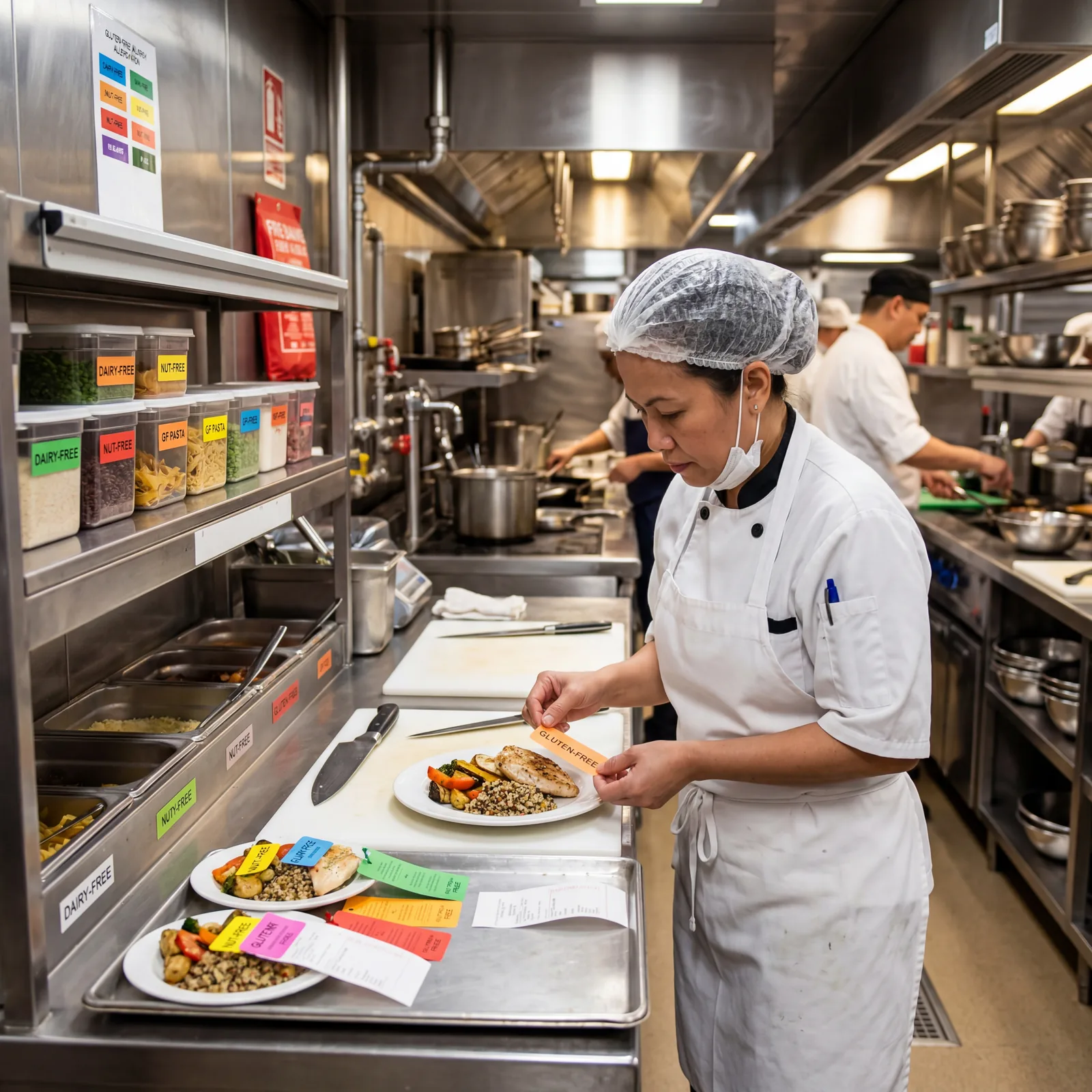
Managing dietary restrictions at this scale is genuinely impressive. Most major lines use a coded tagging system where dietary requests are flagged weeks before embarkation and attached to your cabin number. Your waiter in the main dining room pulls up your profile before service. Gluten-free, nut-free, vegan, kosher, and halal options are all prepared in designated sections of the galley to prevent cross-contamination. Where this breaks down is at the buffet, where cross-contamination is much harder to control. If you have a serious allergy, the buffet is a genuine risk.
18. The Hidden Cost of “Included” Drinks
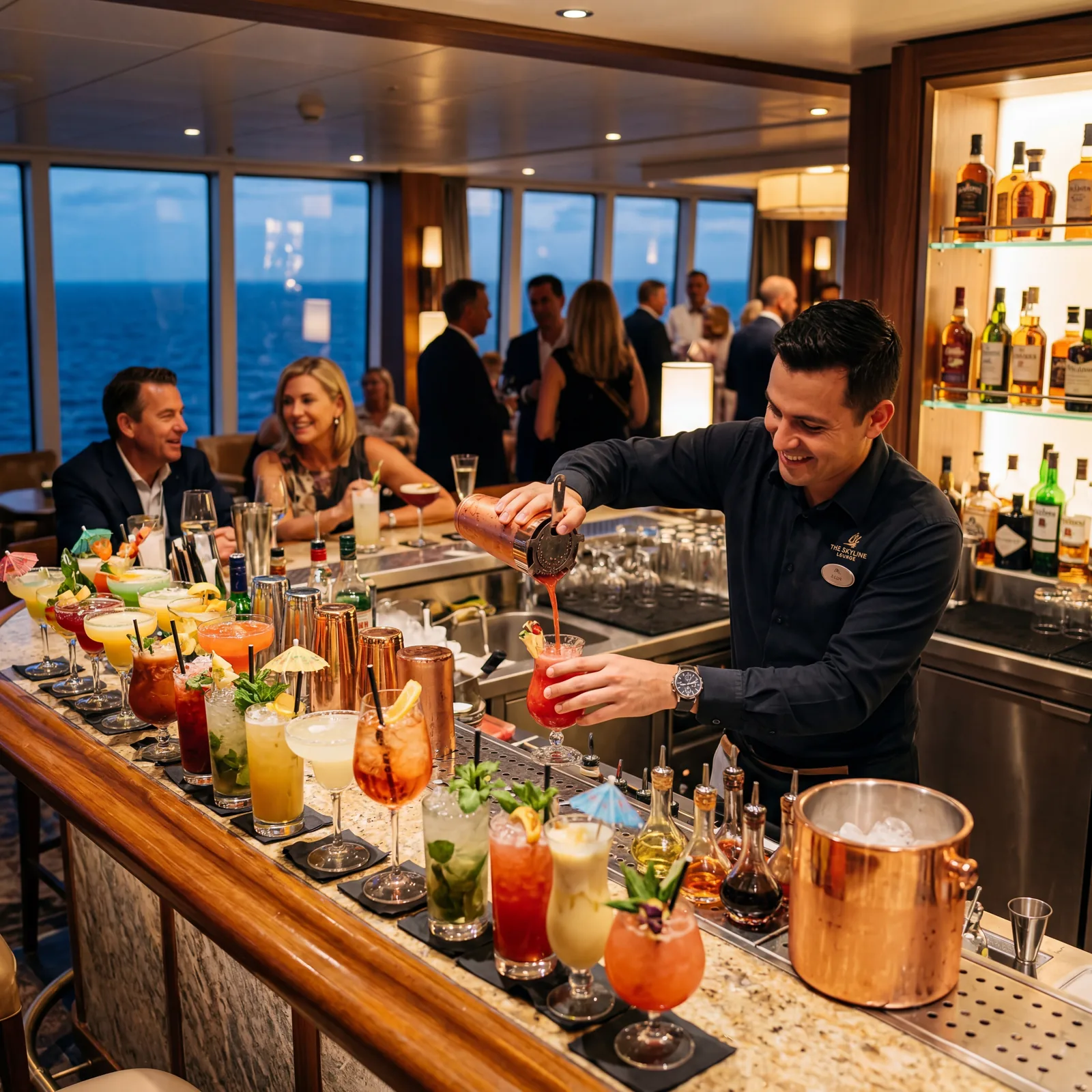
The drinks packages on most cruise lines are priced to make the ship money, not save you money. The break-even point on a premium drinks package is typically 5–7 alcoholic drinks per day, and that’s assuming you’re ordering nothing but mid-shelf spirits. Specialty coffees, fresh-squeezed juices, and bottled water are excluded from most base packages. Some passengers spend $80–$120 per day on a drinks package and then barely drink on port days. Run your actual numbers before you buy.
17. Which Restaurants Are Worth Paying Extra For
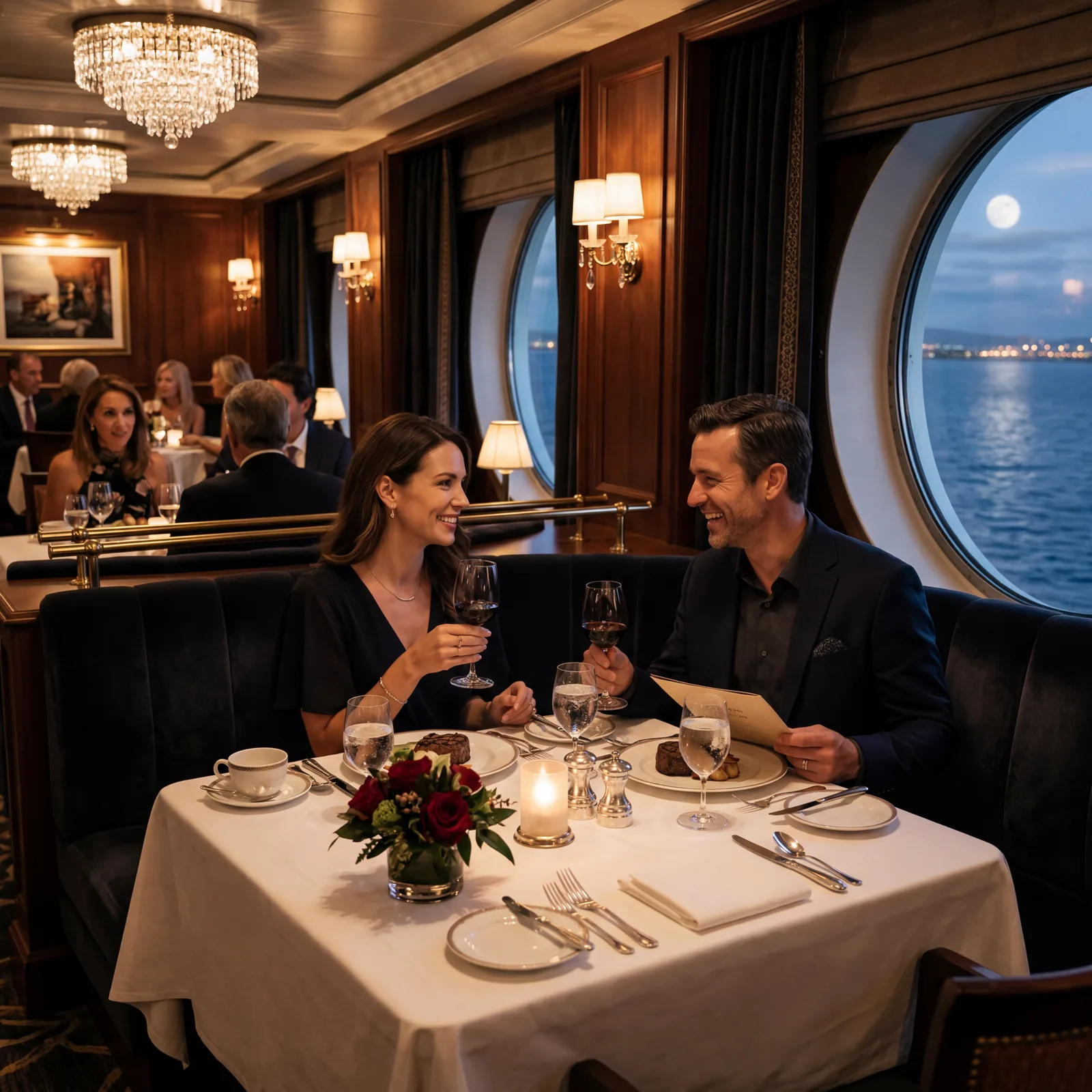
On most major cruise lines, the specialty restaurants that are genuinely worth the surcharge are the steakhouse and the sushi bar, if the ship has one. Italian and seafood restaurants on cruise ships tend to underdeliver compared to what you’d get on land for the same price. The main dining room food and the specialty restaurant food often come from the same central galley on smaller ships, meaning the primary difference is plating, ambiance, and portion control, not ingredient quality. On ultra-premium lines like Silversea or Seabourn, this gap narrows significantly.
16. How the Midnight Buffet Actually Works Now
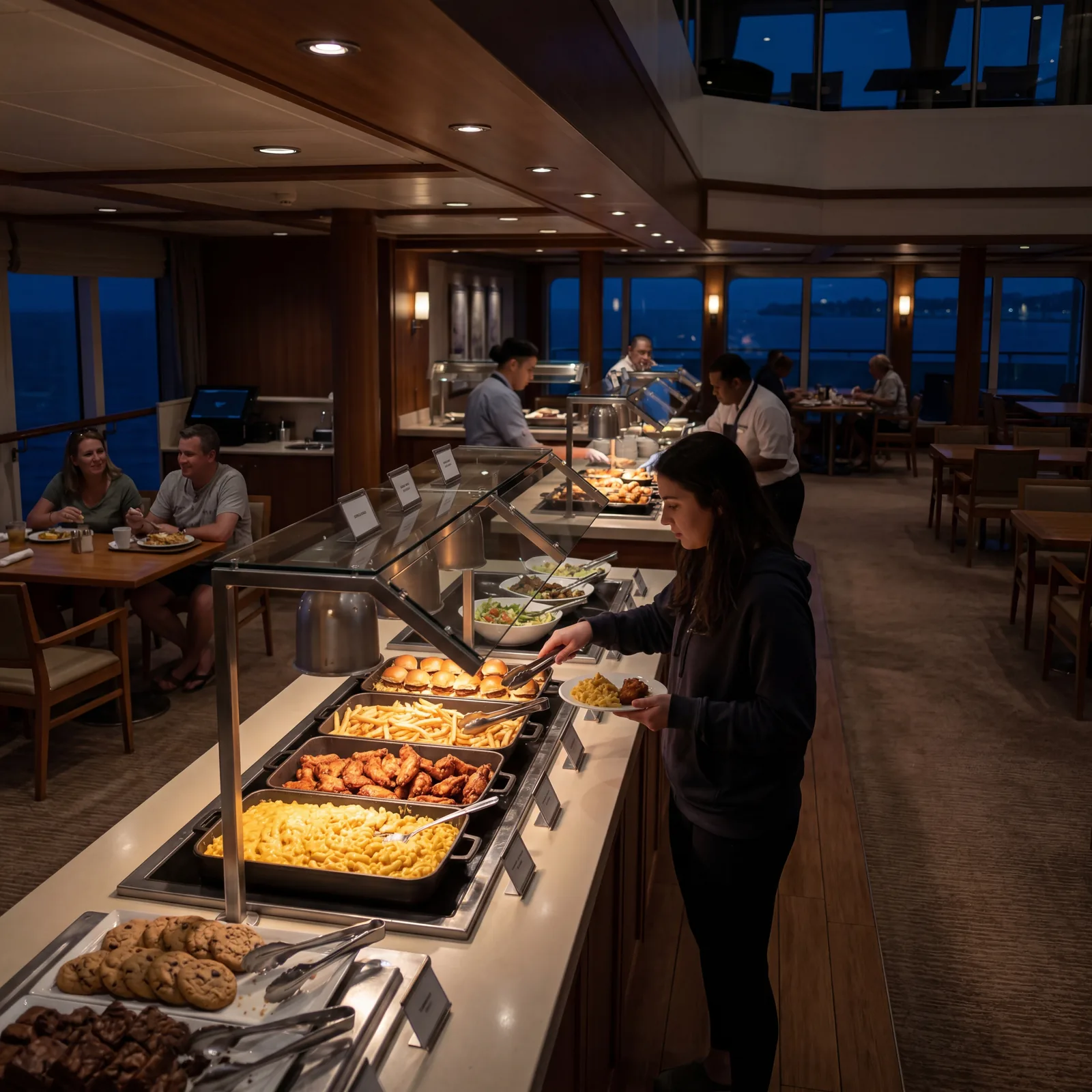
The legendary midnight buffet that older cruise veterans remember is mostly gone. The elaborate ice sculptures and carved displays were quietly retired by most lines in the early 2000s for cost and labor reasons. What you get now on most ships is a scaled-down late-night snack station with pizza, nachos, hot dogs, or whatever was planned as the late-service offering. The Lido buffet may extend its hours, but it’s not a full spread. If you’ve been promised a “midnight buffet experience” in any marketing material from the last decade, that promise was made loosely.
15. The Truth About “Fresh” Seafood on Board
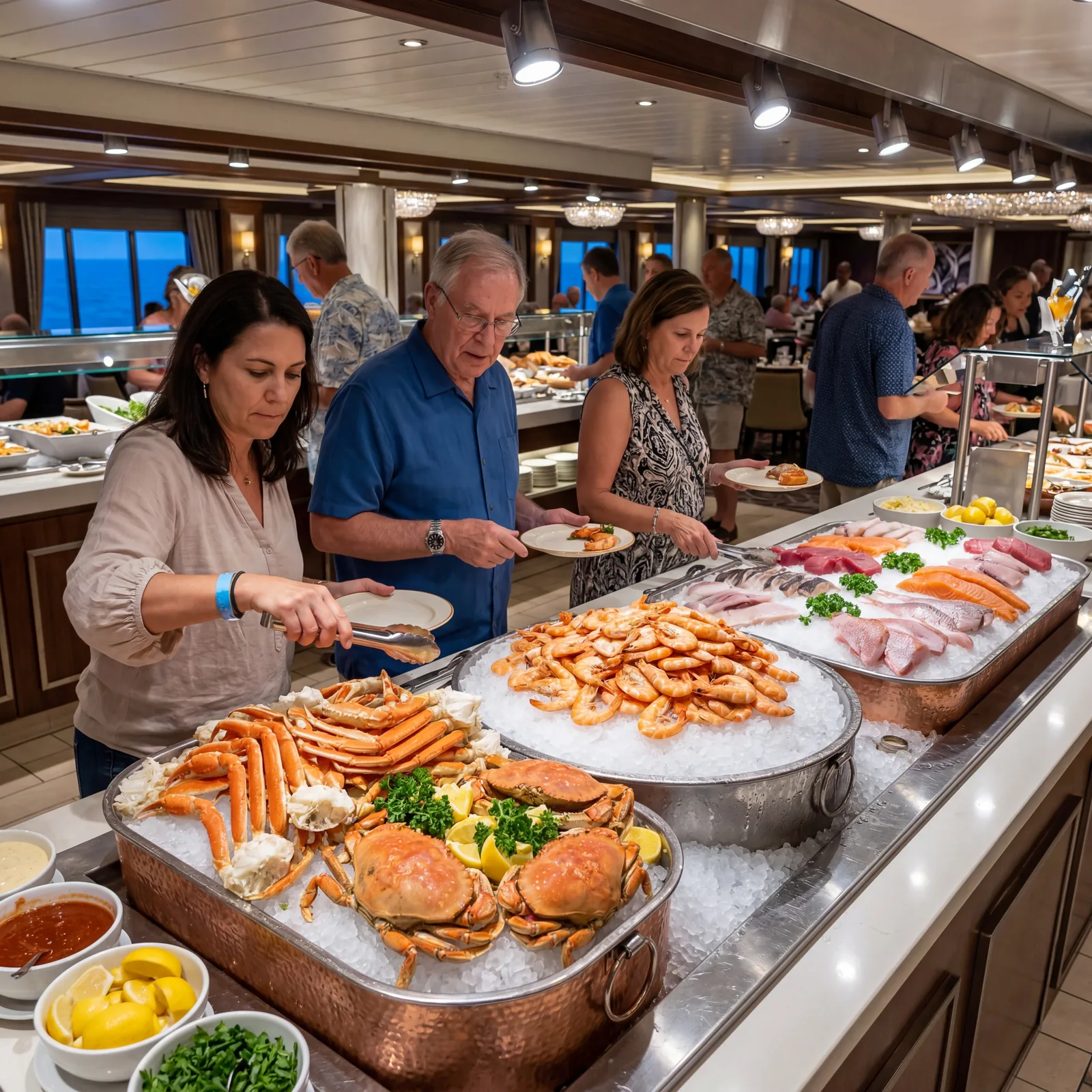
Seafood on a cruise ship is rarely as fresh as it sounds. Most ships load frozen or blast-chilled seafood before departure and defrost it to order during the sailing. Exceptions exist on shorter sailings where fresh catch can be brought on mid-voyage, or on itineraries like Alaska where local seafood sourcing is built into the supply chain. “Fresh” on a cruise ship menu legally only means it hasn’t been frozen, which leaves a wide window. Shrimp cocktail at the buffet is almost always frozen-and-thawed, no matter how artfully it’s displayed on ice.
Read More: 19 Cruise Ship Cabin Secrets the Brochure Never Mentions
14. How Specialty Dining vs Main Dining Room Quality Compares
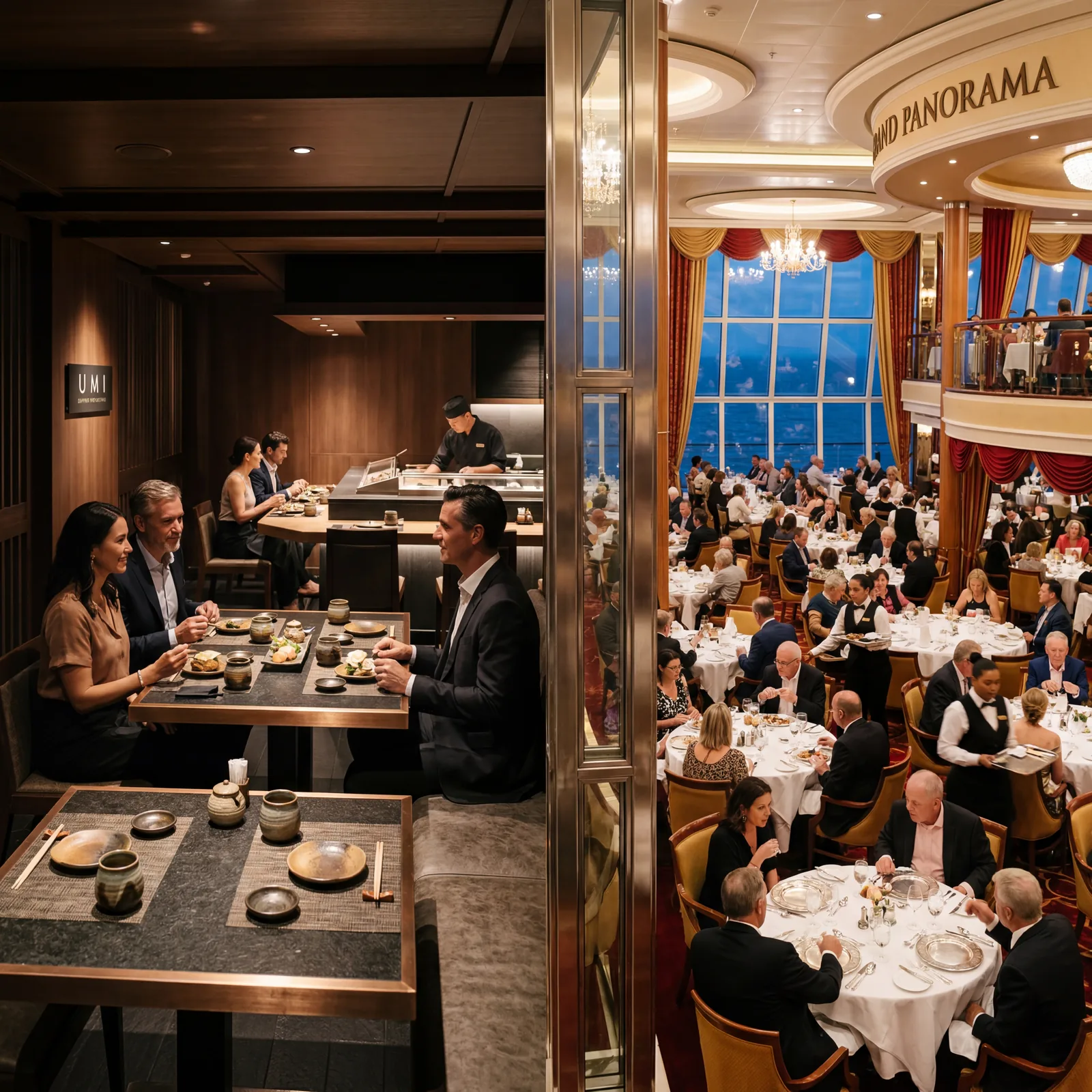
The honest answer is: it depends entirely on the line. On mass-market lines like Carnival or Norwegian, the gap between specialty and main dining room is real and noticeable in portion size, plating, and service attention. On premium lines like Celebrity or Holland America, the main dining room food is genuinely good, and paying a $40–$60 surcharge for specialty dining is mostly buying you a quieter room and better wine service. On luxury lines, there’s almost no meaningful difference. Know your line before you decide the specialty restaurant surcharge is worth it.
13. Items That Are Actually Made Fresh Every Day
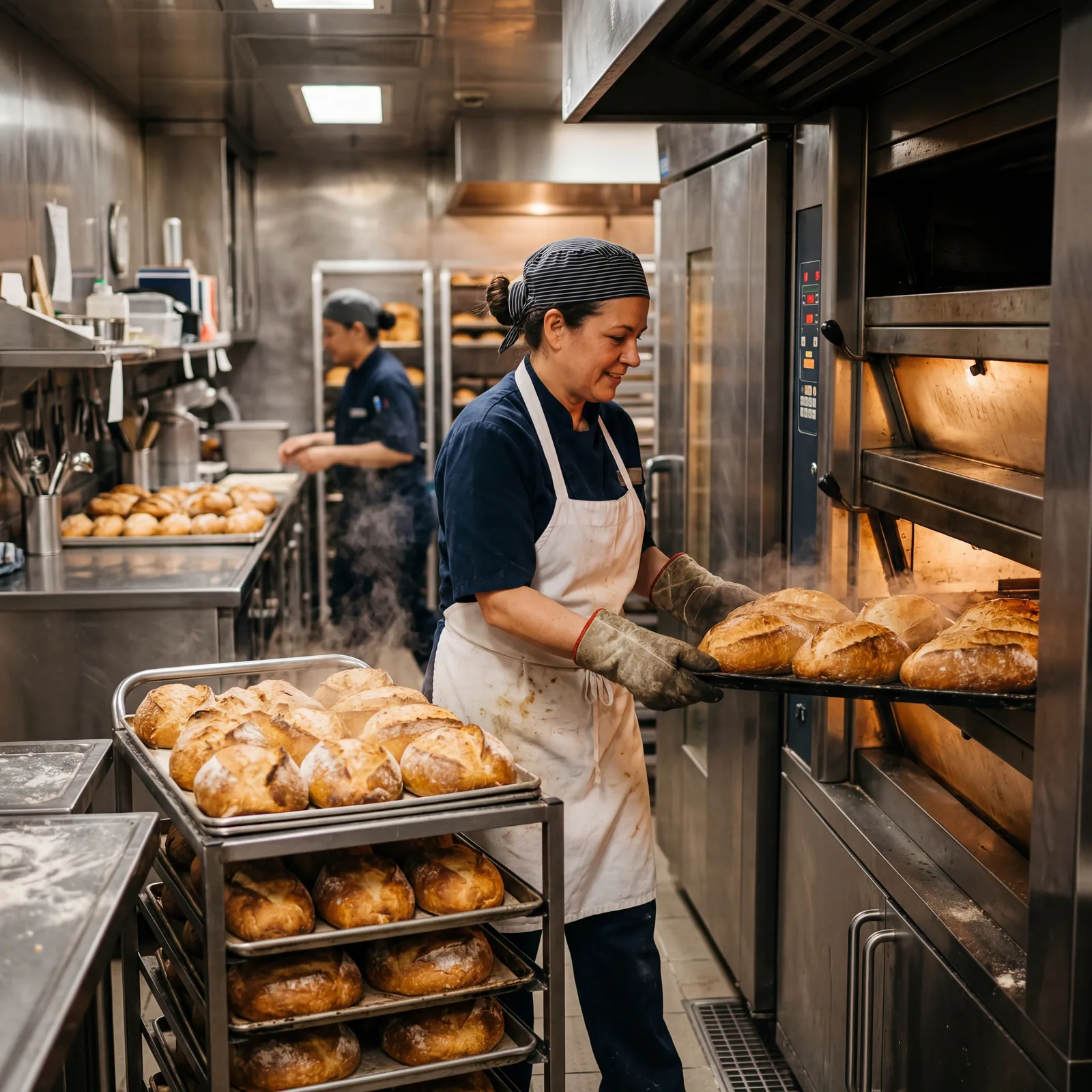
Fresh bread is the thing cruise ships genuinely get right. Bread, rolls, and baked goods on most mid-to-premium lines are baked fresh multiple times daily by dedicated pastry teams. Some ships produce over 3,000 bread rolls per day just for main dining room service. Fresh pasta is also typically made in-house on Italian specialty restaurant nights. Omelets and egg dishes at breakfast are cooked to order, not held. These are the items where the “fresh” claim is legitimate, and they’re worth seeking out.
12. What the Chef’s Table Actually Involves
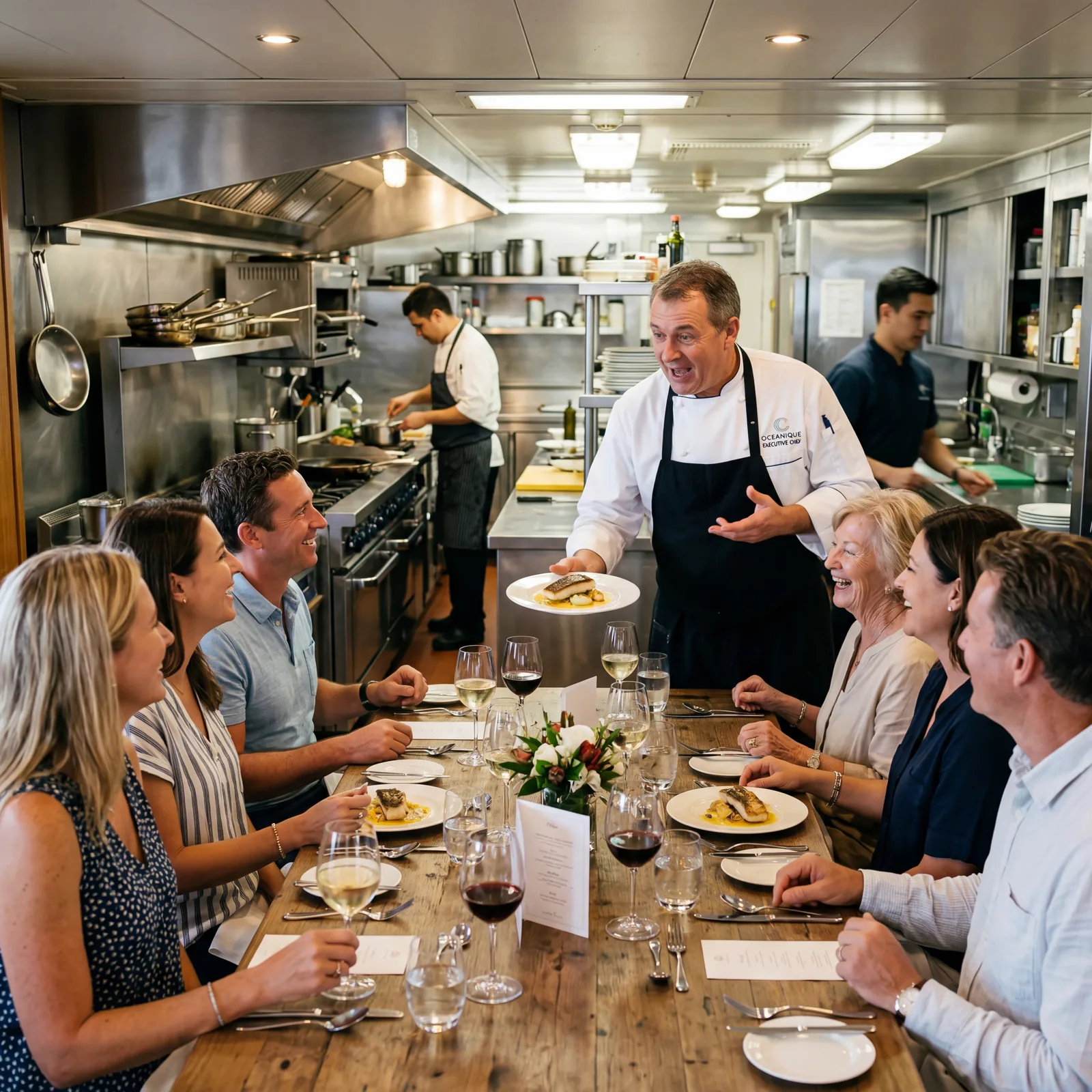
The Chef’s Table is one of the most underrated experiences on a cruise ship. Usually limited to 8–12 passengers per sailing, it’s a multi-course dinner hosted by the executive chef, sometimes partially in or adjacent to the galley. Pricing typically runs $100–$150 per person on top of your cruise fare. The quality jump is real, not marketing. You’re eating dishes the galley crew has been refining for years, usually paired with wines selected by the ship’s sommelier. Bookings fill fast, sometimes before embarkation day. If you’re interested, book it the hour you board.
11. How They Keep Food at Temperature for 2,000+ Passengers
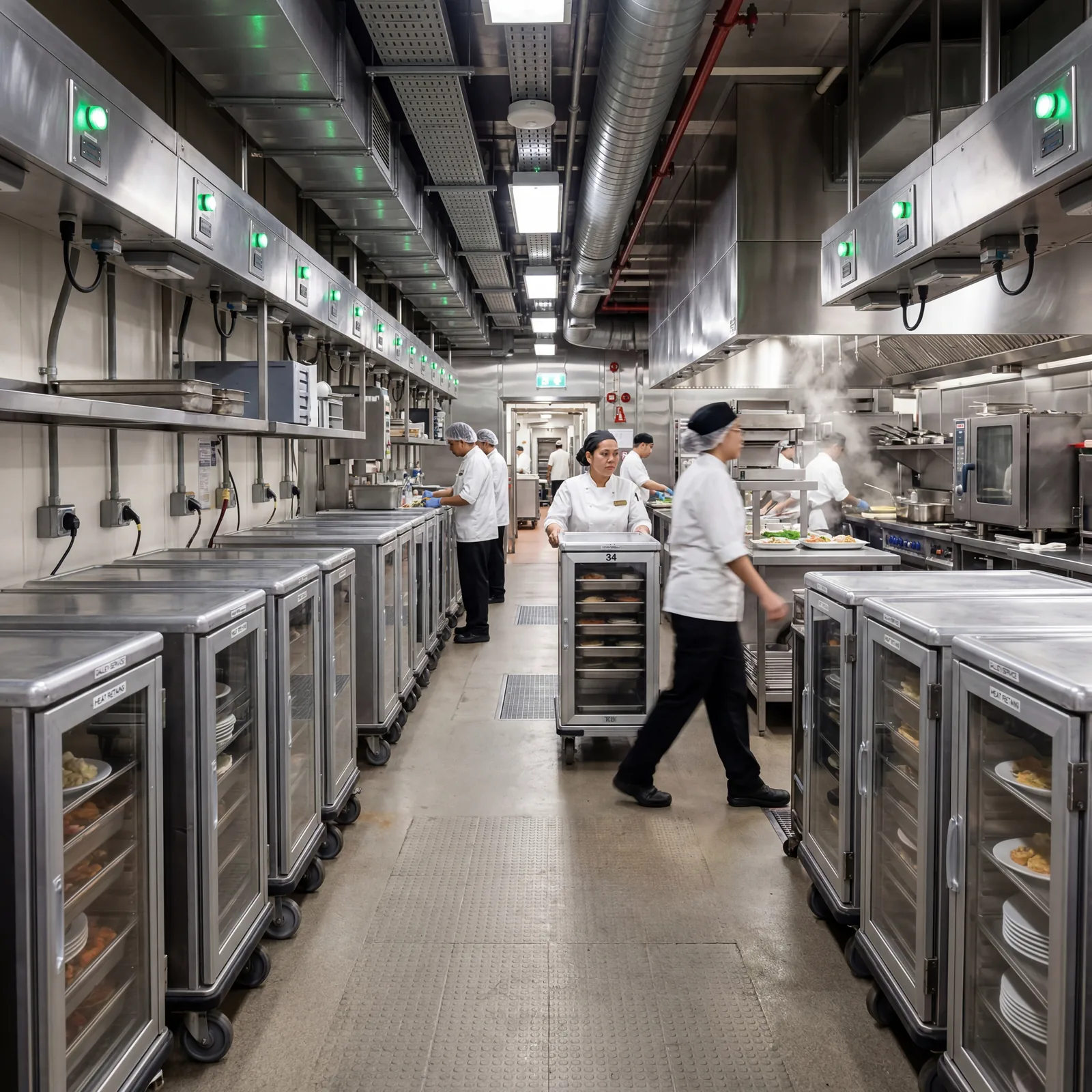
The engineering behind food temperature control on a cruise ship is something most passengers never think about. Food is cooked in large batches and held in insulated transport carts calibrated to the exact service temperature. Main dining room food travels from galley to table in under 90 seconds on a well-run ship. The system breaks down on sea days with high passenger volume, which is why your food can arrive lukewarm when the ship is full and the dining room is slammed. It’s not laziness. It’s a timing chain with 2,000+ variables in it.
10. What Goes Into the Chocolate Fountain
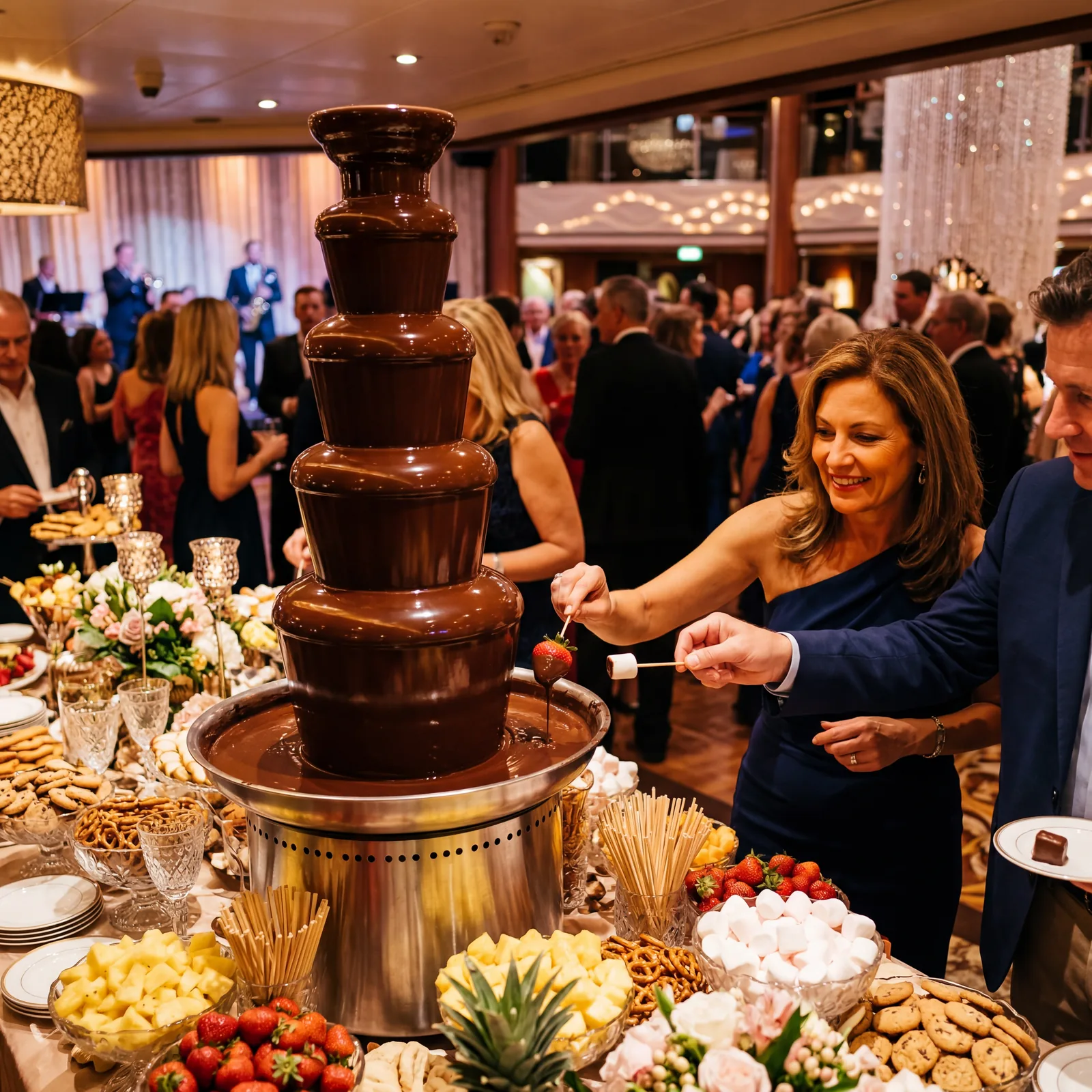
The chocolate fountain looks like melted premium chocolate. It isn’t. The fountain requires a highly fluid chocolate compound that stays liquid at room temperature under the fountain’s recirculation heat. This is achieved by adding vegetable oil or cocoa butter extenders that reduce the viscosity to fountain-compatible levels. What you’re dipping into is closer to a chocolate-flavored coating product than couverture chocolate. It’s also been recirculating for hours and has been touched by multiple serving utensils. On health and quality grounds, the specialty chocolate desserts from the patisserie are a significantly better choice.
Read More: 23 Things Experienced Cruise Passengers Always Pack (And You Won’t Think Of)
9. The Real Reason the Buffet Never Runs Out
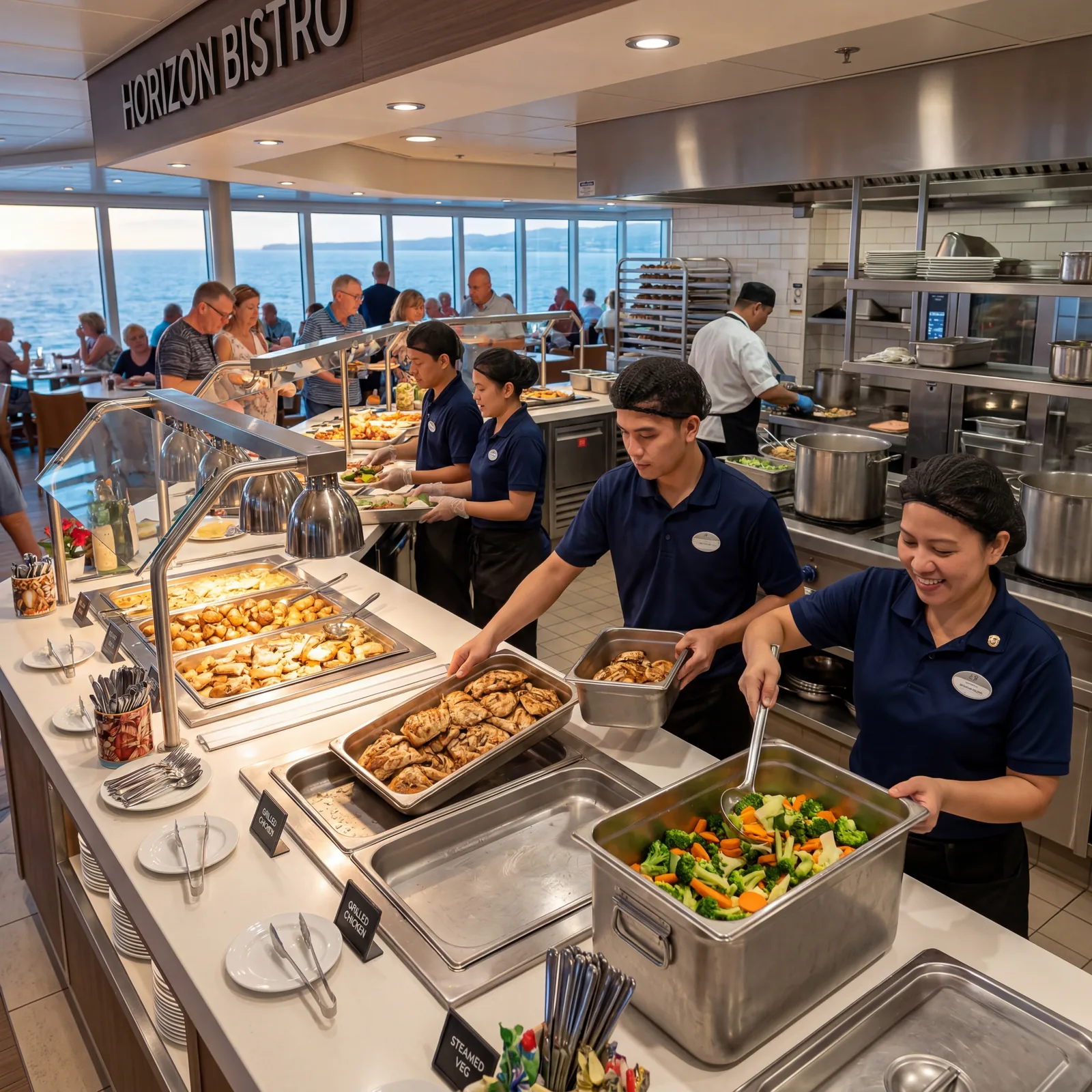
The buffet doesn’t run out because the kitchen runs on predictive batch cooking, not reactive cooking. Food and beverage managers analyze historical consumption data from previous sailings on the same itinerary. They know, within a reasonable margin, how many pounds of pasta a Caribbean sailing will consume on day three versus day five. Batch sizes are set accordingly, and backup trays sit in the galley ready to replace whatever empties. The illusion of abundance is real abundance, but it’s managed abundance. The food you don’t eat gets thrown away or composted. There’s no magic. Just very careful math.
8. How Much Food Costs the Cruise Line Per Passenger Per Day
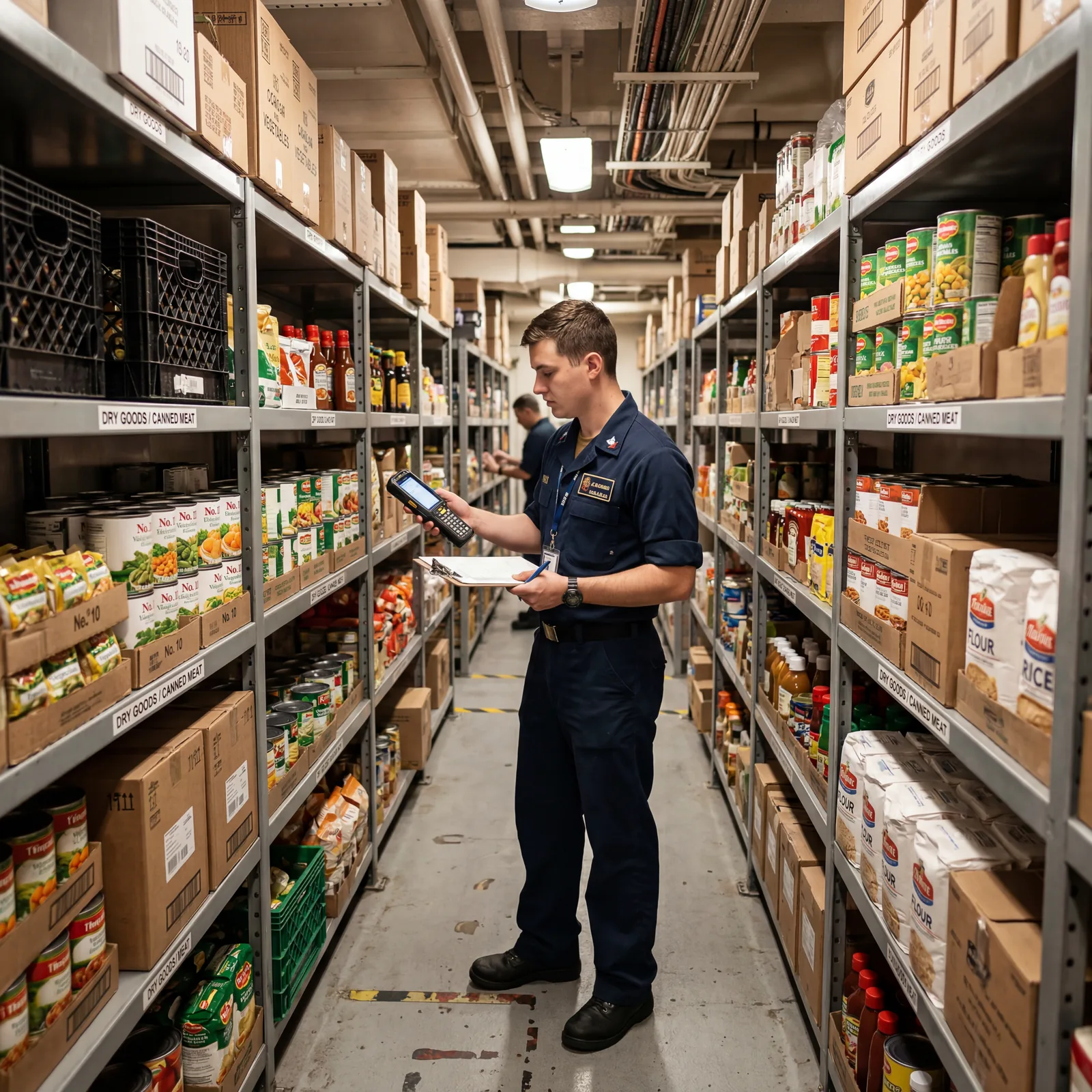
This one surprises most people. The average food cost per passenger per day on a mass-market cruise line is between $12 and $18. That includes all meals, buffet, room service, and non-alcoholic beverages. On premium lines, it climbs to $30–$50. On ultra-luxury lines, it can reach $100+. Given that you can spend $18 on a single lunch on land, the margin cruise lines operate on is extraordinary. They achieve it through bulk purchasing contracts, centralized supply chains, and high volume, not through premium ingredients. This is why the buffet food tastes like hotel banquet food, because economically, that’s exactly what it is.
7. Why the Main Dining Room Has a Set Menu Every Night
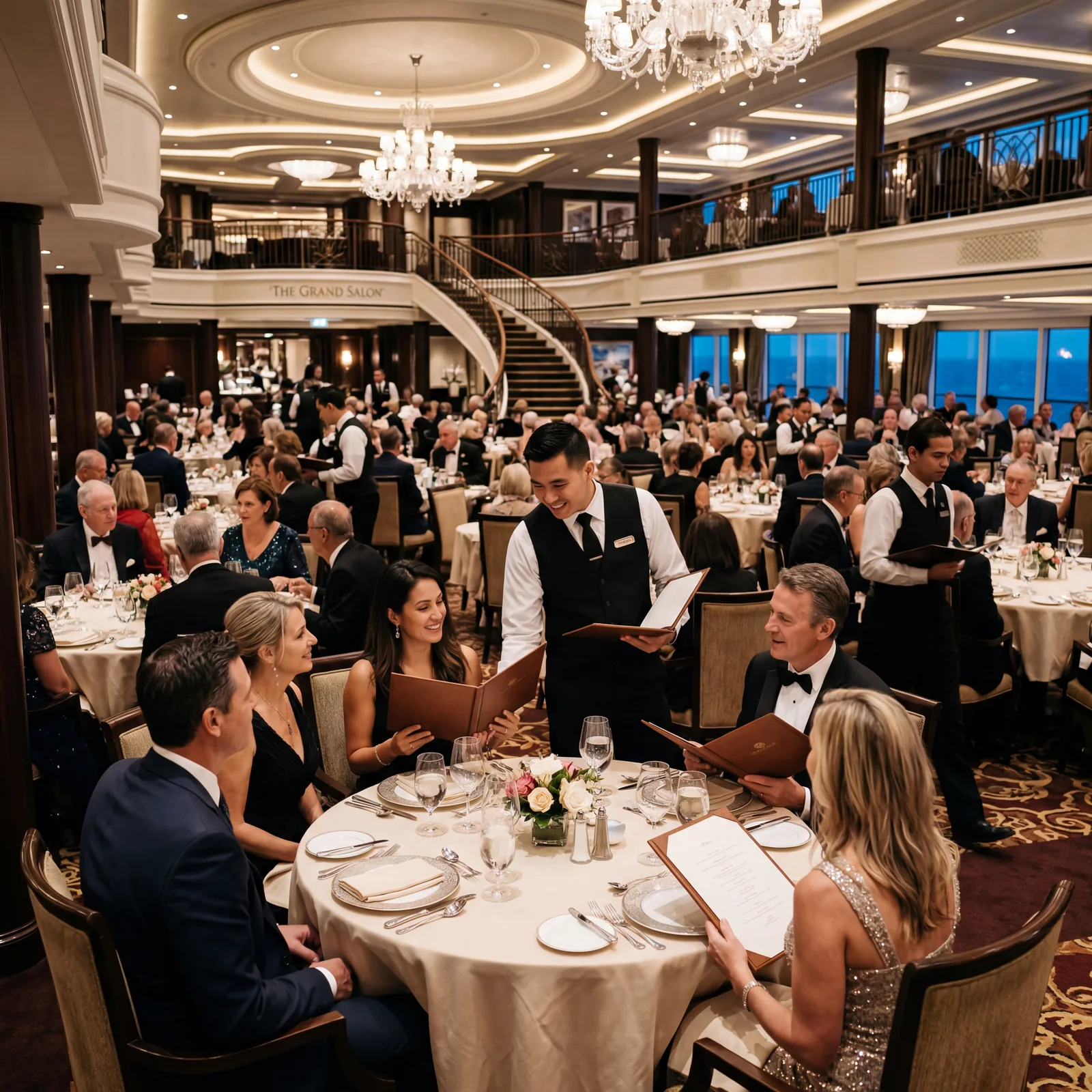
The rotating set menu in the main dining room isn’t designed around variety for your enjoyment. It’s engineered around galley efficiency and food waste reduction. A set menu for 2,000+ passengers allows the kitchen to pre-order exact ingredient volumes, minimize spoilage, and run production lines that would be impossible with a fully open menu. The “always available” section of the menu exists as a pressure release valve for passengers who don’t like the nightly feature. Some lines have moved to open dining with broader menu flexibility, but the tradeoff is slower service and higher waste. The old fixed seating model was more efficient, which is why so many ships still run it.
6. What the Room Service Food Actually Is
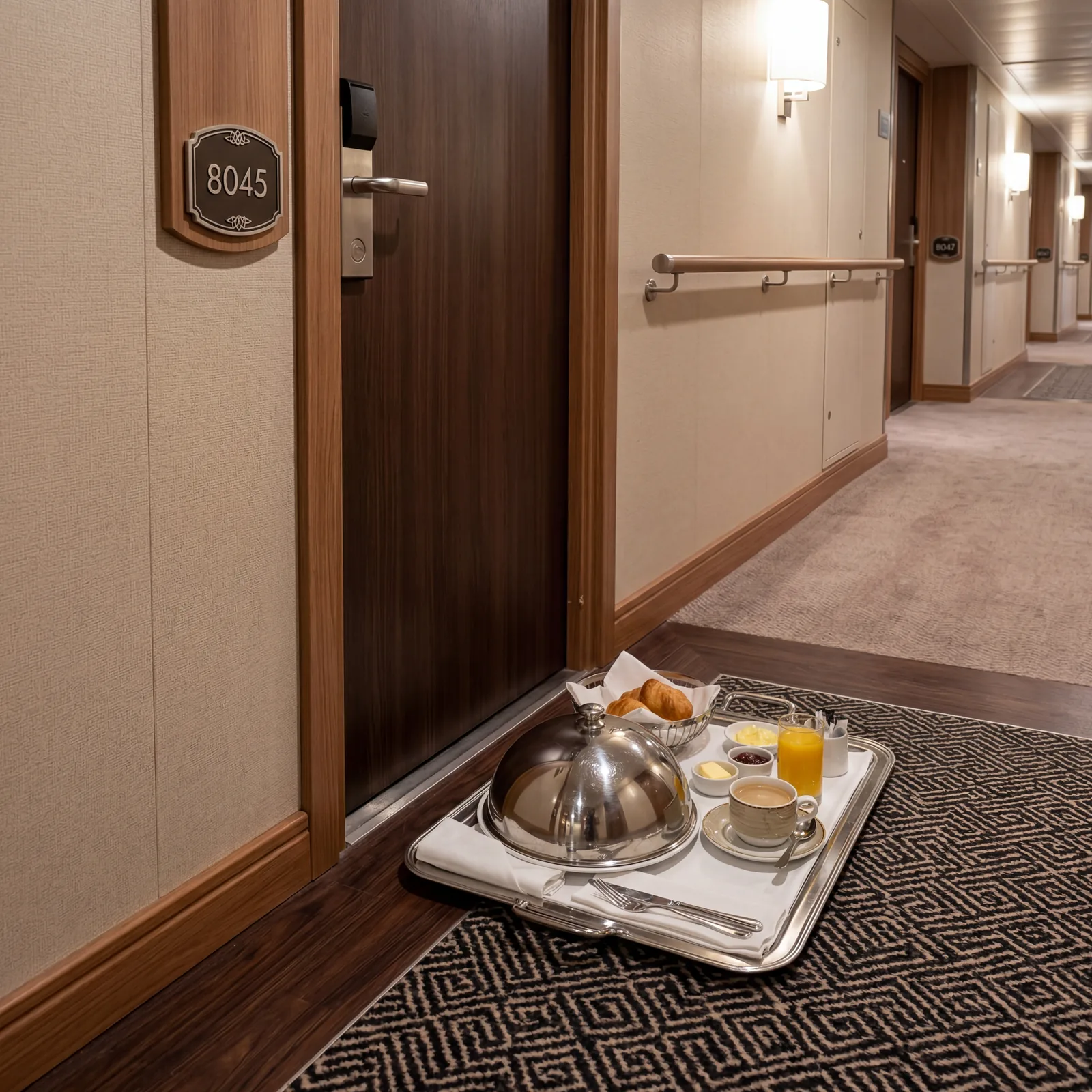
Room service on most cruise ships is operated from a separate, simplified galley running a reduced menu. The items available are deliberately limited compared to what the main dining room serves. On lines that charge for room service delivery (increasingly common), you’re paying a $5–$10 delivery fee on top of your cruise fare for food that was prepared 30–60 minutes before delivery and held in an insulated cart. The quality gap between room service and dining room food is real on most ships. On premium lines, the gap shrinks. On budget lines, room service is best reserved for mornings when you don’t want to get dressed.
5. The Secret to Getting the Best Table in the Main Dining Room
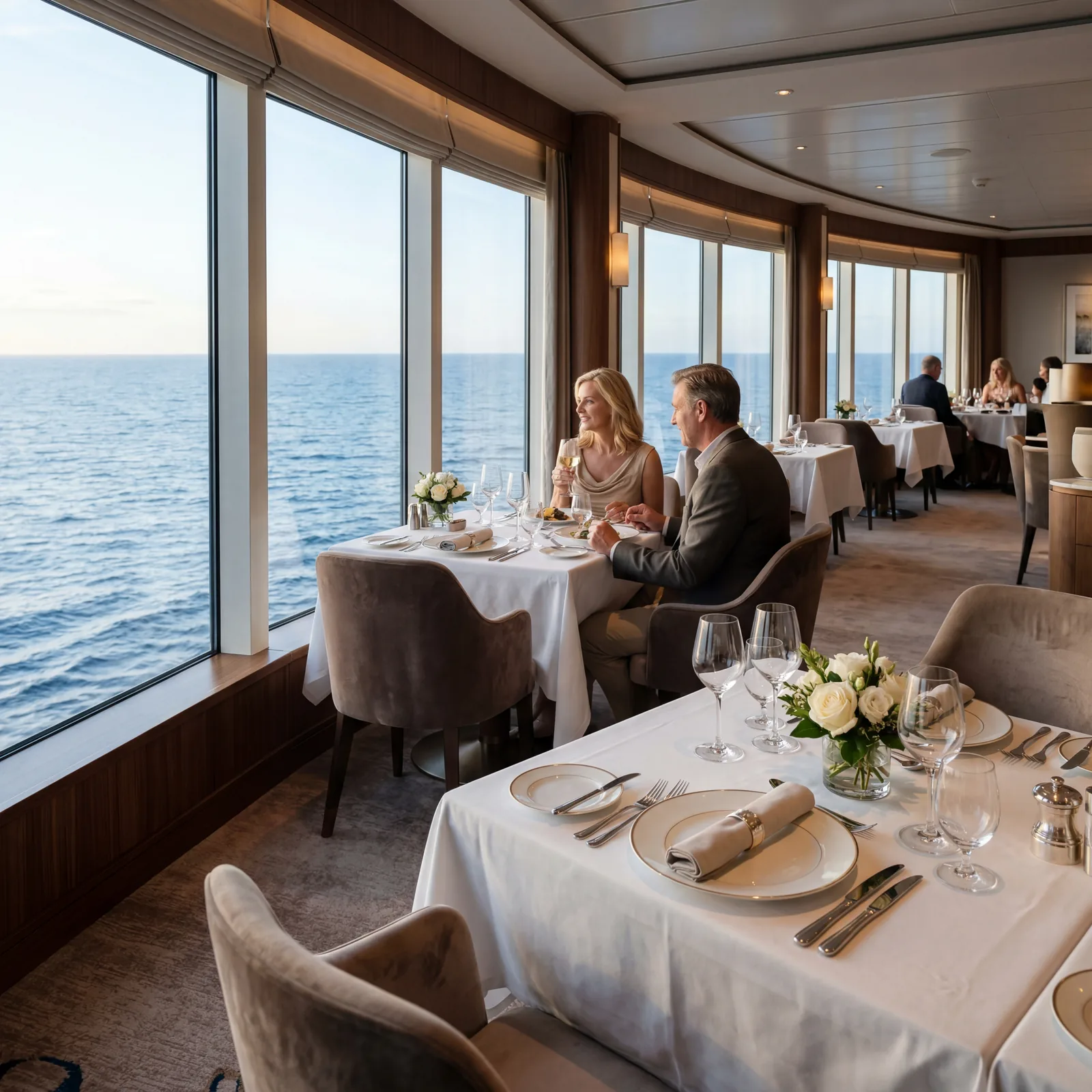
The best tables in the main dining room are the ones near the large windows on the ship’s perimeter, with views of the water. These are not assigned randomly. They’re allocated first to passengers who request them early, either during online check-in or within the first hour of boarding when you speak to the maitre d’ directly. On ships with traditional fixed seating, the maitre d’ has discretion over the dining room layout. A polite, specific request at embarkation (“we’d love a window table, just the two of us”) lands far better than nothing. Most passengers don’t ask. Most passengers get whatever table is left.
4. Why Specialty Restaurants Use Surcharges Instead of Being Included
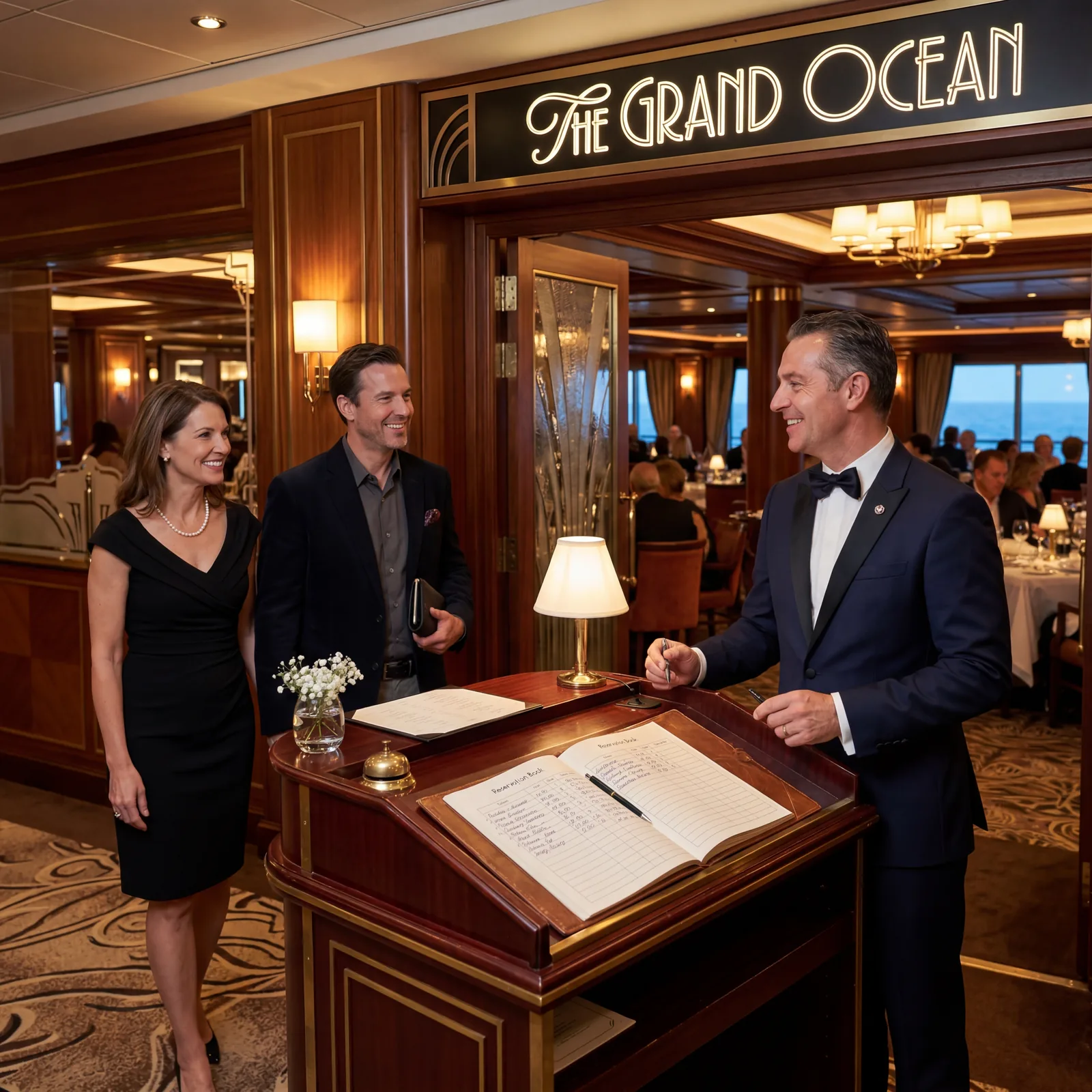
The shift from included specialty dining to surcharge specialty dining happened across most major lines between 2010 and 2018, and it wasn’t driven by food quality. It was a revenue strategy. Specialty restaurants generate some of the highest profit margins on the entire ship, higher even than alcohol. By excluding them from the base fare and charging $35–$80 per person per visit, cruise lines created a secondary revenue stream that passengers feel is optional, but that most end up paying anyway. Norwegian Cruise Line pioneered this model with their Freestyle Dining concept, and every other major line followed. You’re not paying for better food. You’re paying for the experience of exclusivity that the line deliberately manufactured.
3. How They Feed Passengers During a Medical Emergency or Quarantine
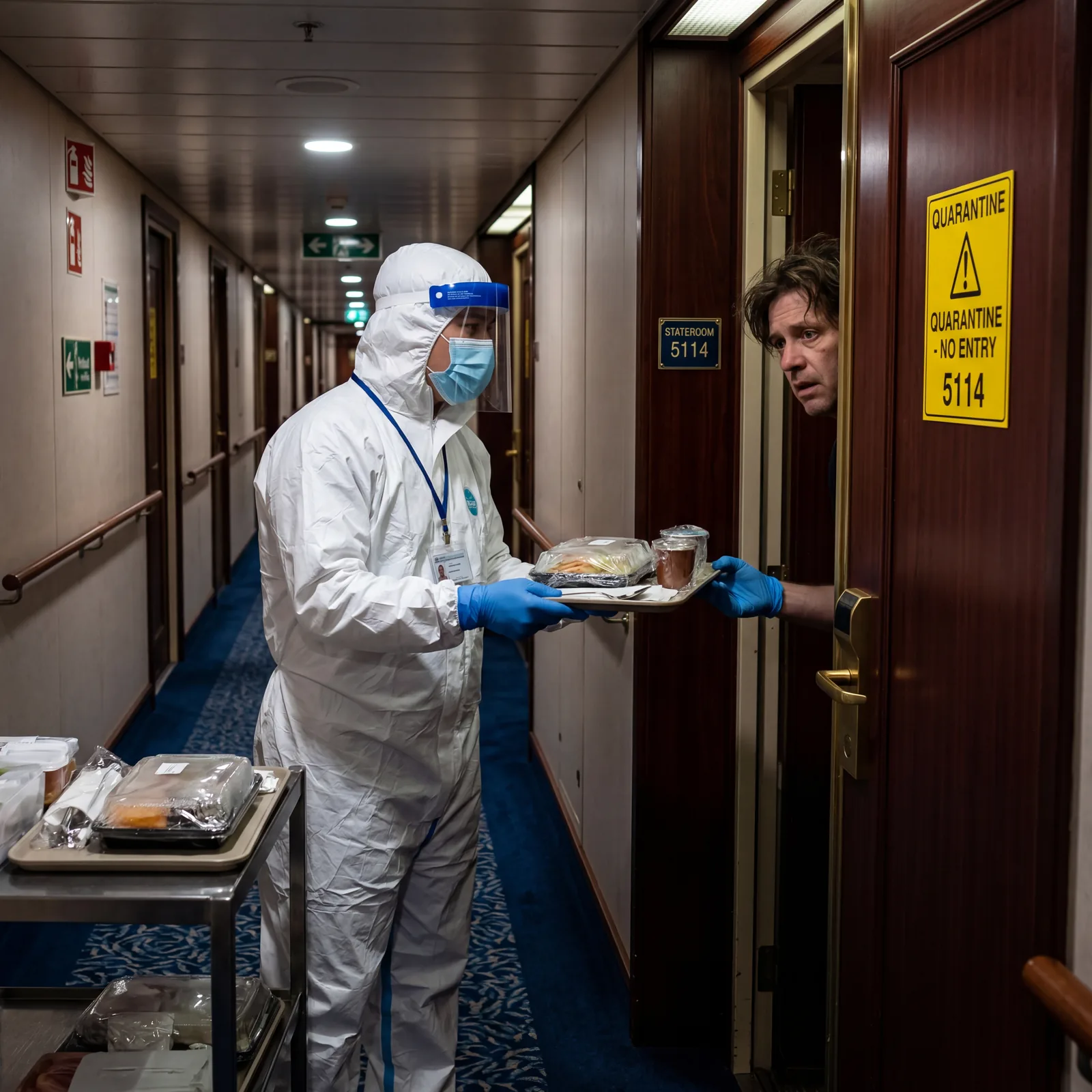
This became very visible during the early COVID sailings, but it’s been a reality on cruise ships for decades. If you’re quarantined to your cabin for any medical reason, the ship operates a dedicated isolation meal delivery protocol. Staff deliver meals in sealed packaging to your door without entering your room. The food comes from a partitioned section of the galley that operates under stricter sanitation protocols during outbreak situations. On ships that experienced norovirus outbreaks, which happen more often than cruise lines publicly acknowledge, the buffet shifts to crew-service only, meaning you point and a crew member plates for you, eliminating passenger contact with serving utensils entirely. This protocol can activate within 24 hours of an outbreak being detected.
2. What Cruise Lines Don’t Tell You About Food Sourcing
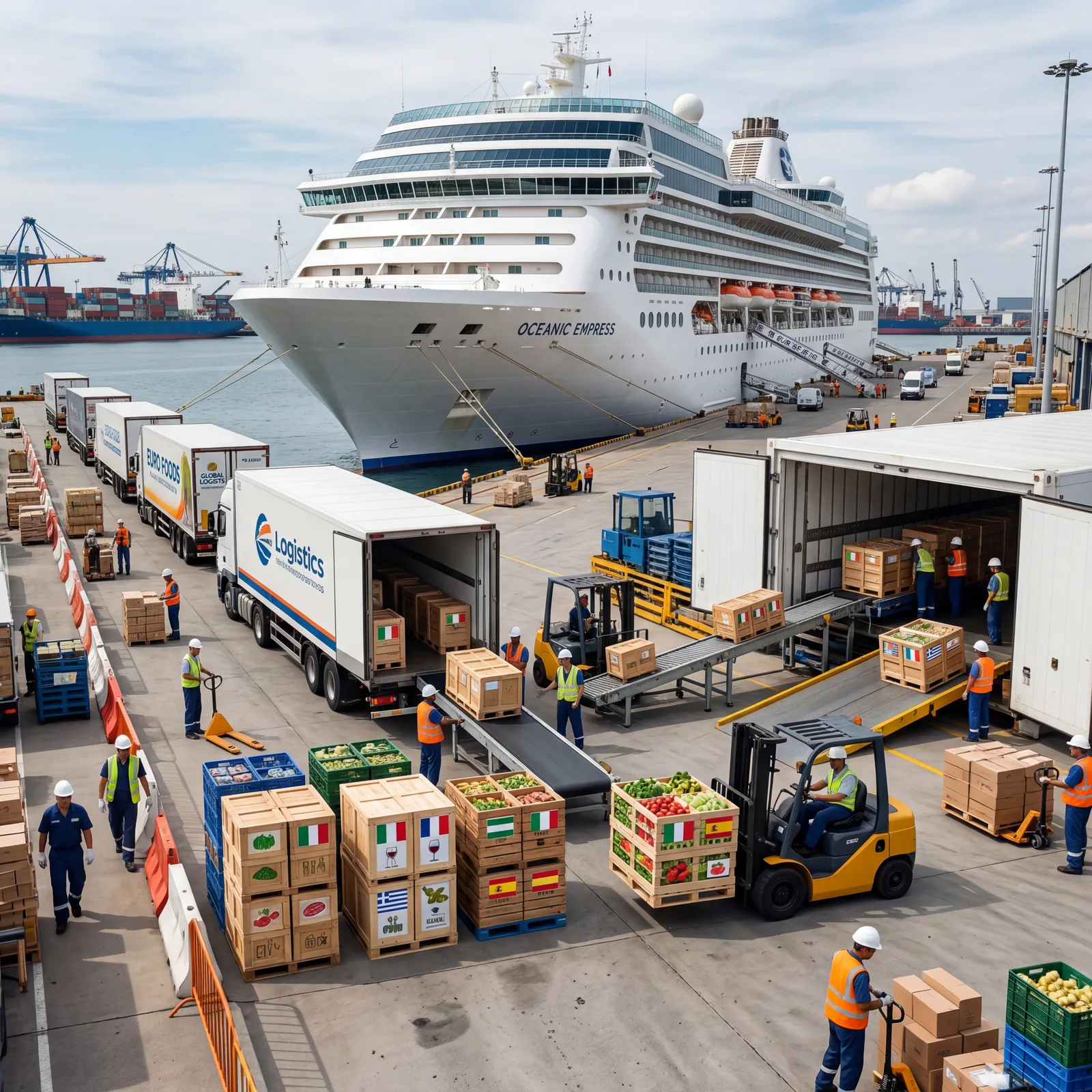
The food sourcing practices of major cruise lines are largely unregulated and almost never disclosed to passengers. Unlike restaurants on land that face local health department inspections and labeling laws, cruise ships operate in international waters under maritime law. The CDC does conduct Vessel Sanitation Program inspections twice annually for US-homeported ships, but these inspect sanitation practices, not ingredient sourcing or supply chain ethics. Most large cruise lines source from global bulk suppliers who operate across multiple countries with varying food safety standards. The beef on your plate may have passed through three countries before reaching the galley. The shrimp almost certainly came from a large aquaculture operation in Southeast Asia. None of this is required to be disclosed to you.
It’s bad. But nothing compared to what’s waiting at #1.
1. The Real Reason Food Tastes Different at Sea
The Undisputed Most Surprising Food Fact of Them All
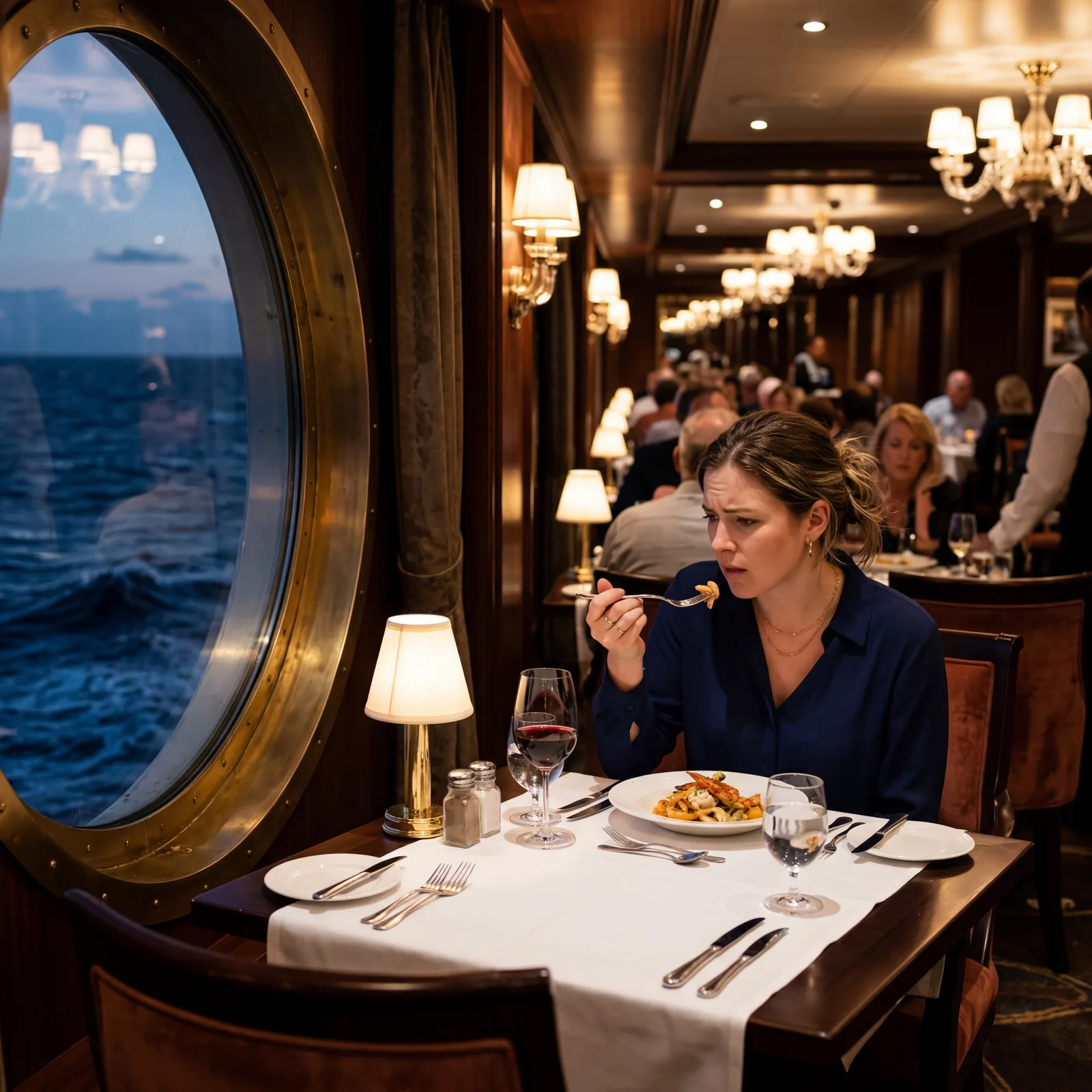
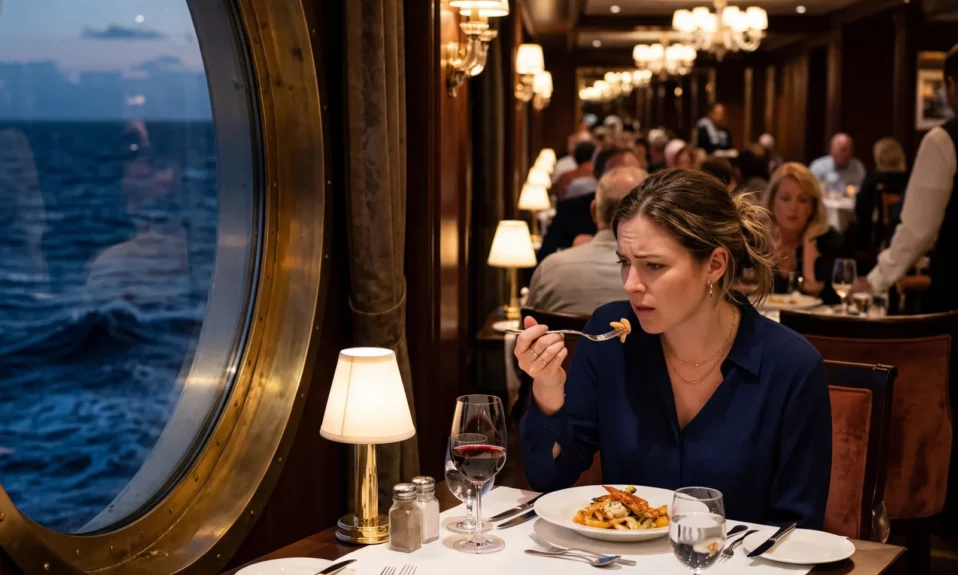
There’s a food science phenomenon that virtually no cruise passenger is ever told about, and it changes the entire way you should be ordering on board. At sea, in a pressurized, low-humidity ship environment, your taste perception shifts measurably. The combination of low cabin humidity (typically 20–25%), constant low-level engine vibration, and the mild pressurization of ship interiors causes your sense of smell to partially suppress, which directly reduces taste sensitivity. Research from Lufthansa-funded studies on similar conditions found that saltiness and sweetness perception drops by up to 30% in these environments.
This is why cruise ship food tastes blander than the same dish on land. The galley knows this, which is why cruise ship food is deliberately over-seasoned to compensate. If you took the same dish home and ate it in your kitchen, it would taste aggressively salty. A retired cruise line executive I spoke with put it this way: “We season everything for the ship environment, not for land. People think the food is average. It’s not average. It’s calibrated.”
This is also why Bloody Marys and tomato juice sell so well on planes and ships: umami and acidity register more strongly than salt or sugar when taste suppression kicks in. The bar already knows. Now you know.
Now you know why we saved this one for last.
What You’ll Never Look at the Same Way Again
The food on a cruise ship is an engineering problem more than a culinary one, and the people running the galley solve it at a scale that would break most restaurant kitchens. Which one surprised you most? Drop it in the comments, especially if you’ve experienced the quarantine protocol firsthand. That story we’d genuinely like to hear.