You’ll eat three meals a day on that ship, maybe four, and it’ll all feel completely effortless. What’s happening below deck to make that possible is something almost no one ever thinks to ask about.
The secret at #1 on this list is something even seasoned cruisers don’t know, and once you understand it, you’ll never look at your dinner plate the same way again.
Here are 25 things about how cruise ship food actually works that most passengers never find out.
25. The Ship Loads More Food Than You Could Possibly Imagine
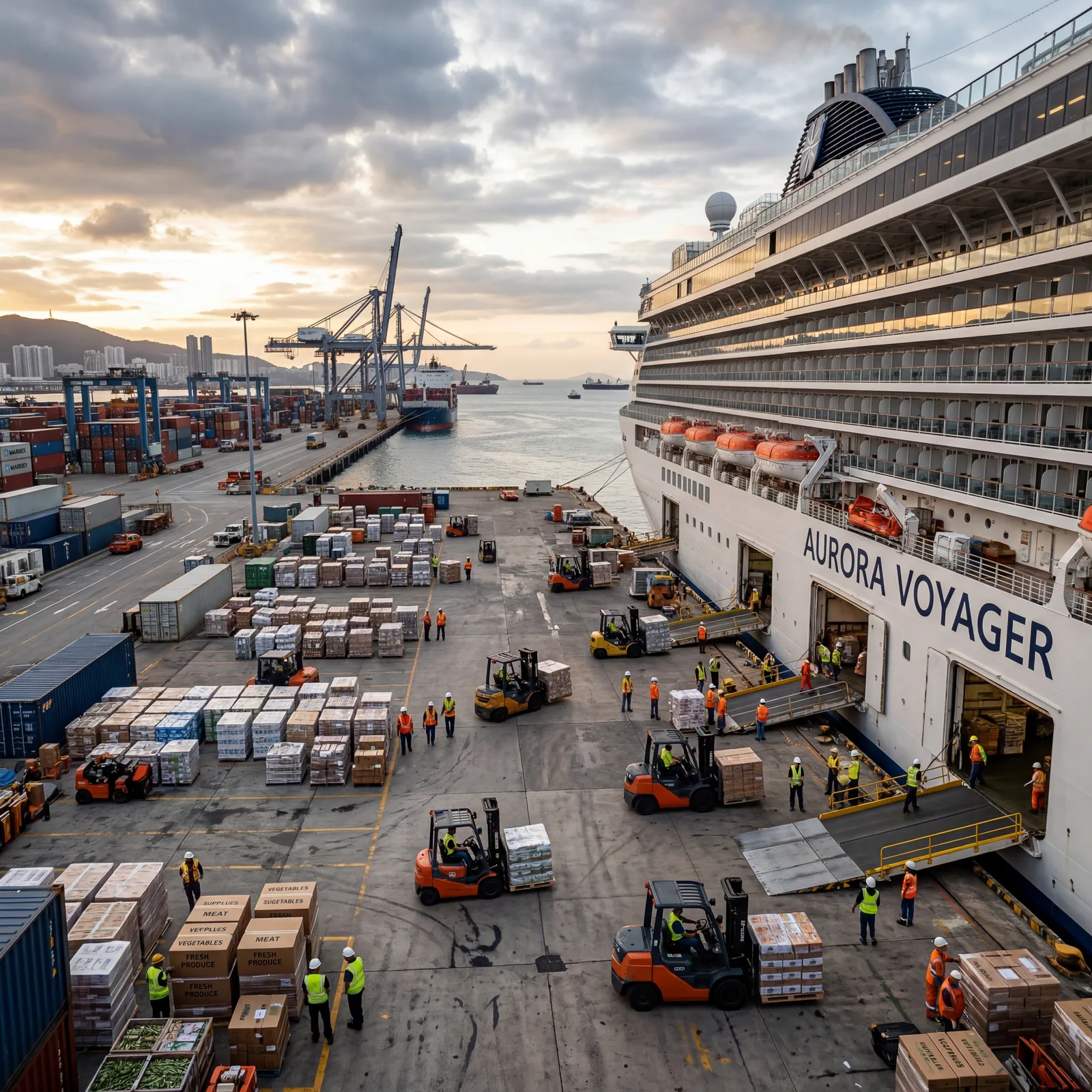
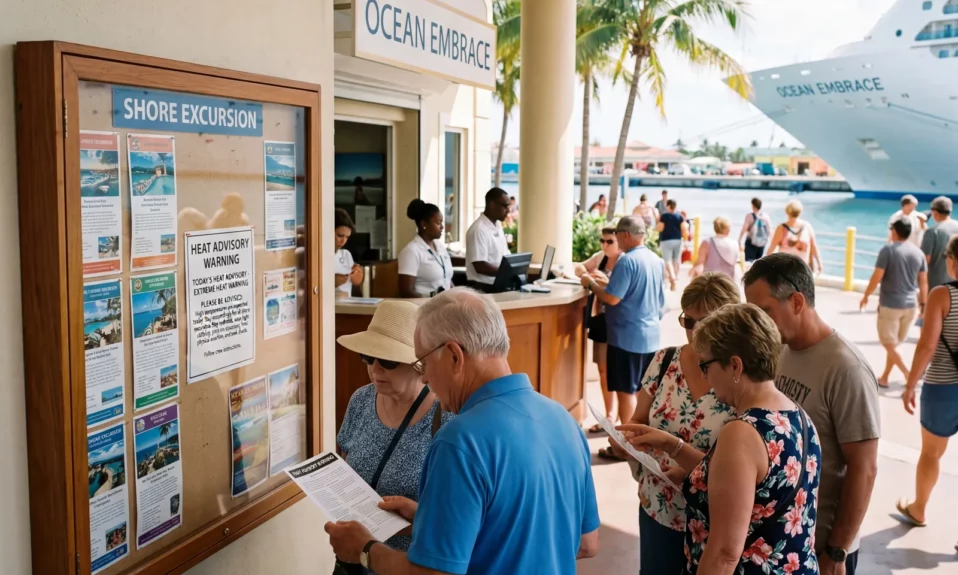
On the day before every sailing, a small army of dock workers moves hundreds of tons of food onto the ship. We’re talking 20,000 pounds of beef, 10,000 pounds of chicken, and enough produce to fill a supermarket — all in a single loading day.
Most passengers walk up the gangway and never glance at the cargo bays below them. The scale of what’s being loaded would genuinely shock you. A 3,000-passenger ship might board more fresh food in one afternoon than a small town grocery store moves in a month.
24. There Are Multiple Kitchens Running Simultaneously
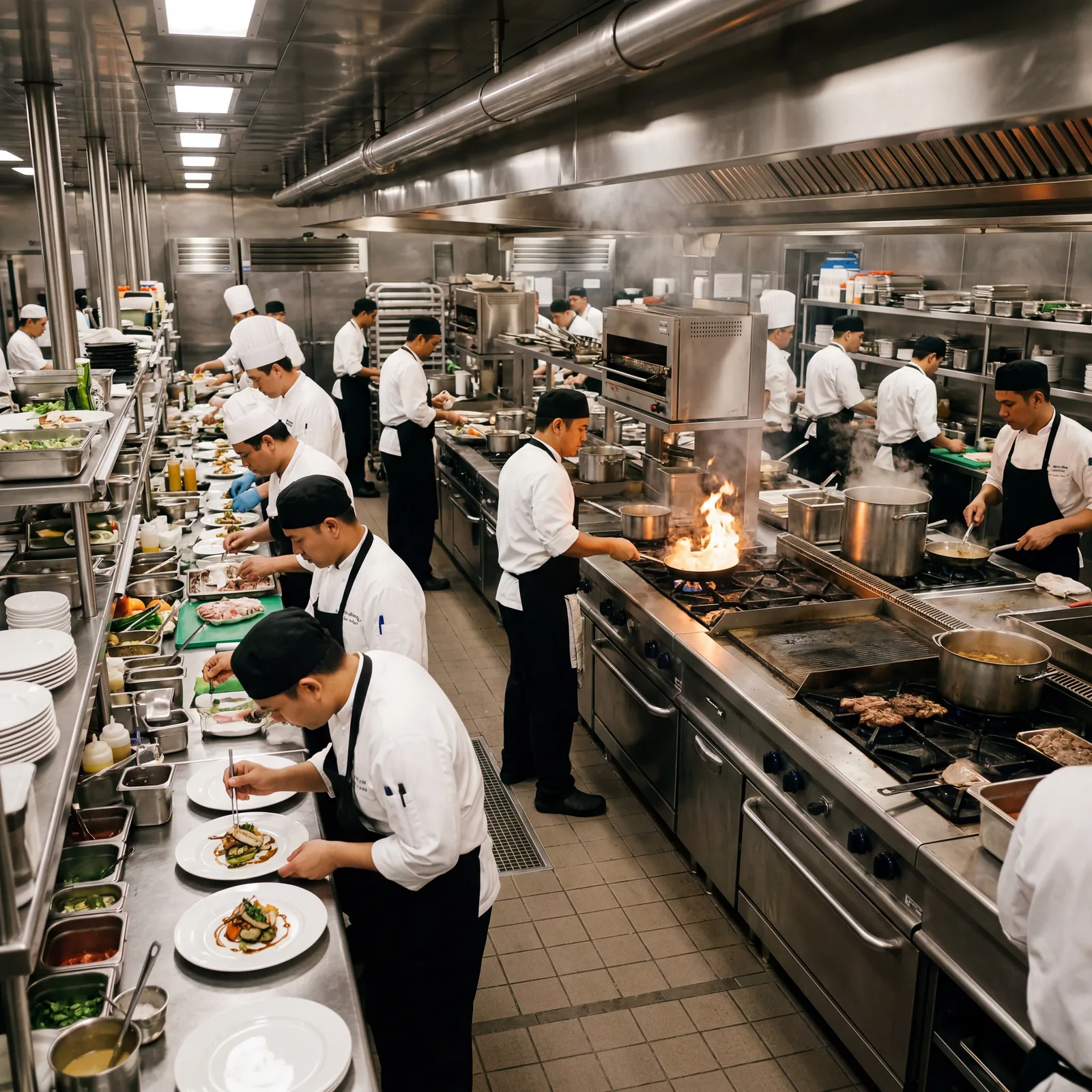
The main dining room is just one kitchen. Below deck there are separate galleys for the buffet, the specialty restaurants, room service, and crew meals.
Each kitchen runs on its own schedule and has its own brigade of cooks. The ship you’re sailing on is essentially running four or five restaurant kitchens at once, all inside a floating vessel.
23. The Buffet Never Fully Closes
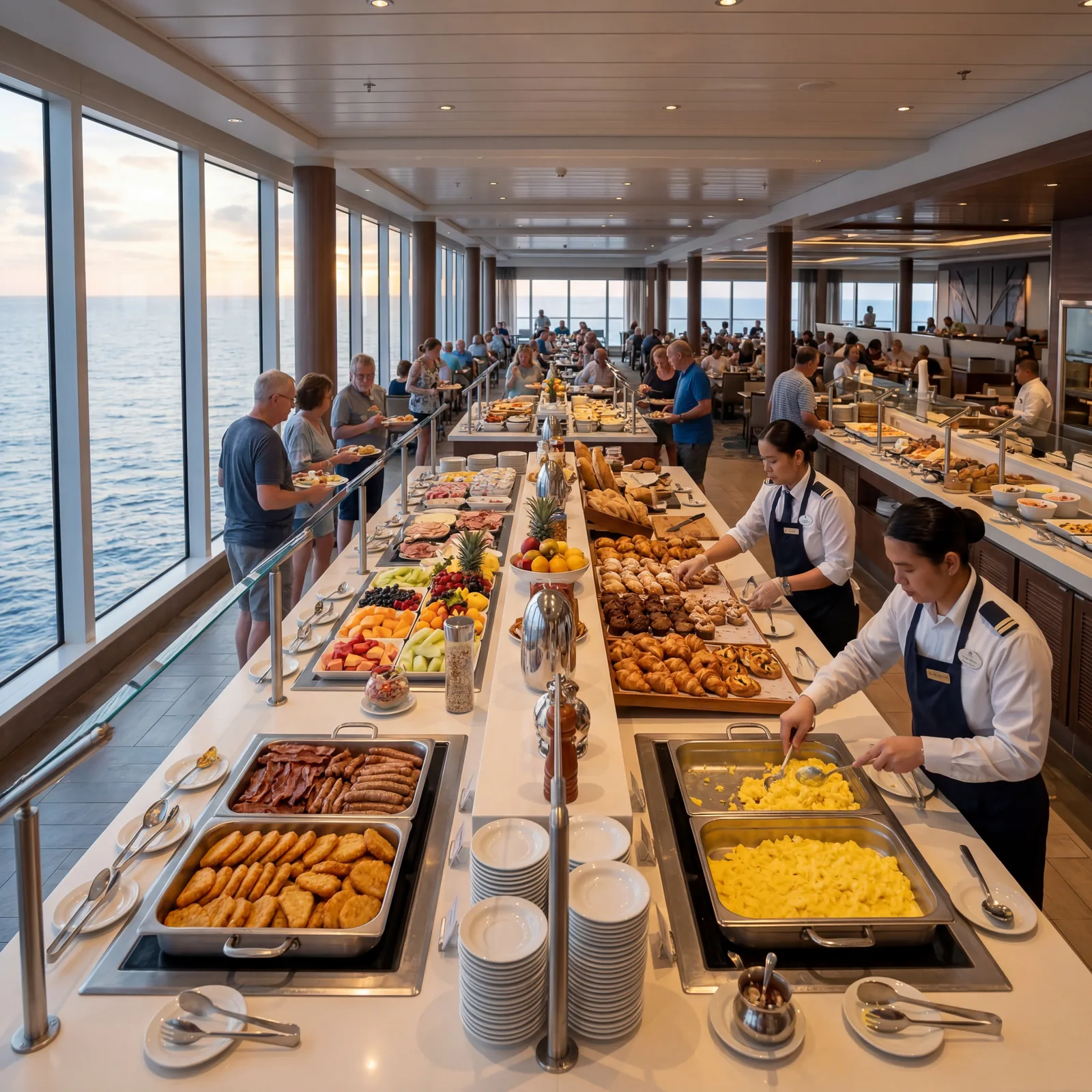
At 3am, when you’re asleep in your cabin, the buffet prep team is already at work. They’re restocking stations, prepping ingredients, and setting up for the breakfast crowd that starts arriving at 6am.
The logistics of keeping food continuously available for thousands of passengers is a round-the-clock operation. Most passengers don’t realize the buffet they stroll into at 7:30am took four hours of overnight work to make look that way.
22. Your Dietary Restrictions Are Tracked From the Moment You Book
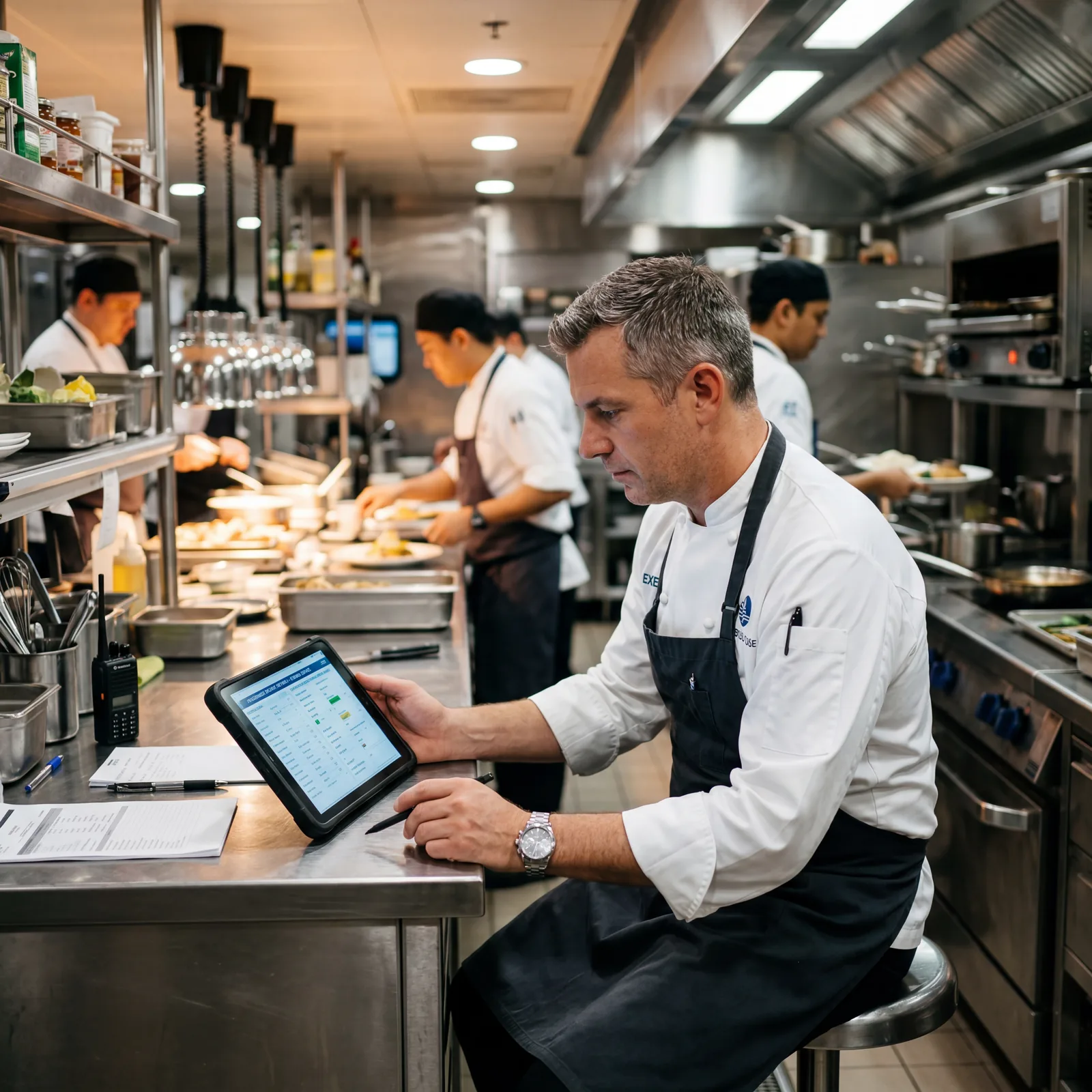
When you note a nut allergy in your booking, that information travels through the system and lands on the galley’s prep sheets. By the time you board, the kitchen already has a flag on your cabin number.
The allergy management system on large ships can track hundreds of different dietary needs simultaneously. Your waiter already knows before you sit down, and a dedicated cook handles flagged meals separately to prevent cross-contamination.
21. The Specialty Restaurants Are Running a Completely Different Food Program
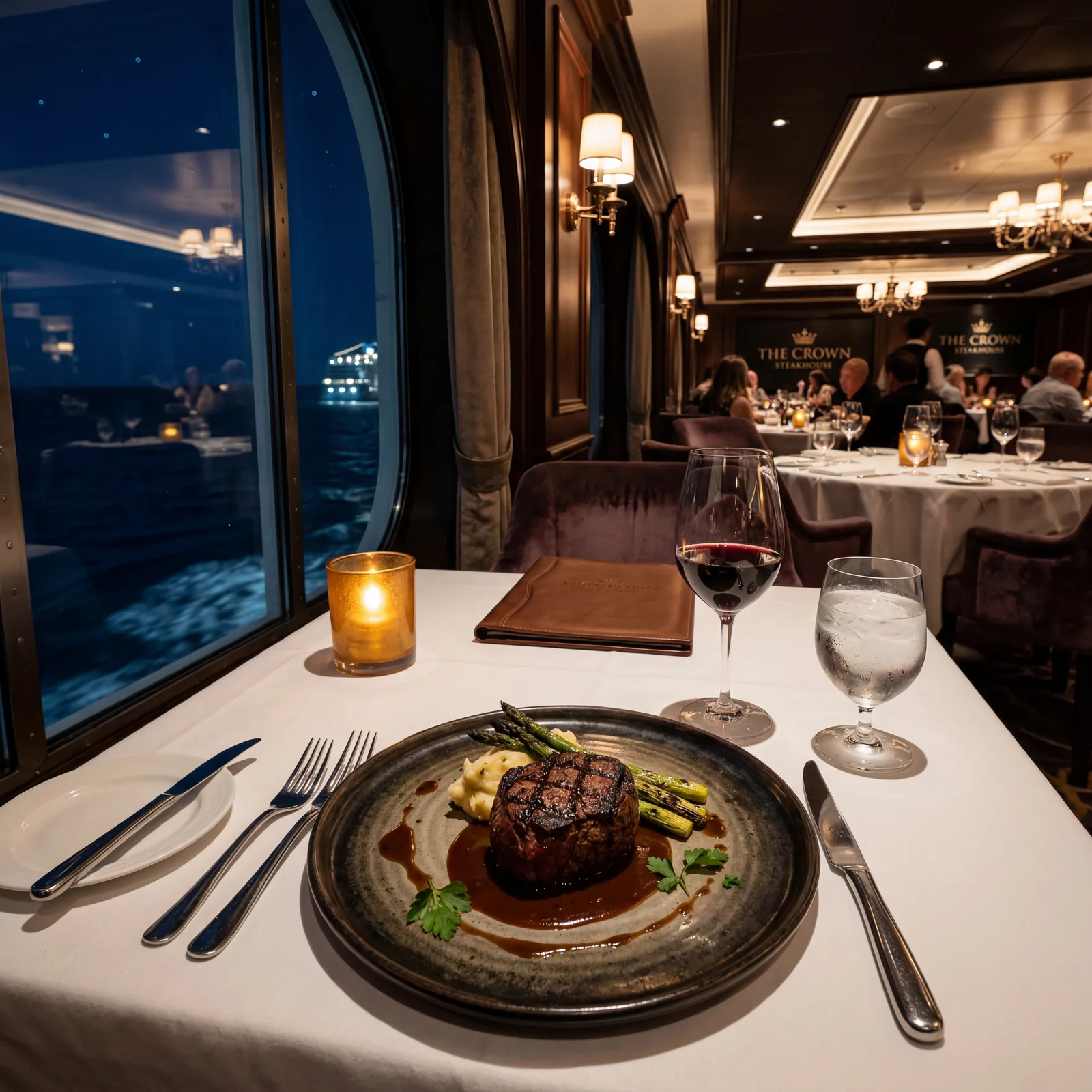
The steakhouse on deck 6 isn’t connected to the main dining room kitchen. It runs its own independent food program, with different suppliers, different preps, and different service standards.
That $49 surcharge you’re paying isn’t just for a better table. It’s funding a separate kitchen operation running simultaneously with everything else on the ship. The food quality difference is real, and there’s a straightforward operational reason for it.
20. The Crew Eats From a Completely Separate Kitchen
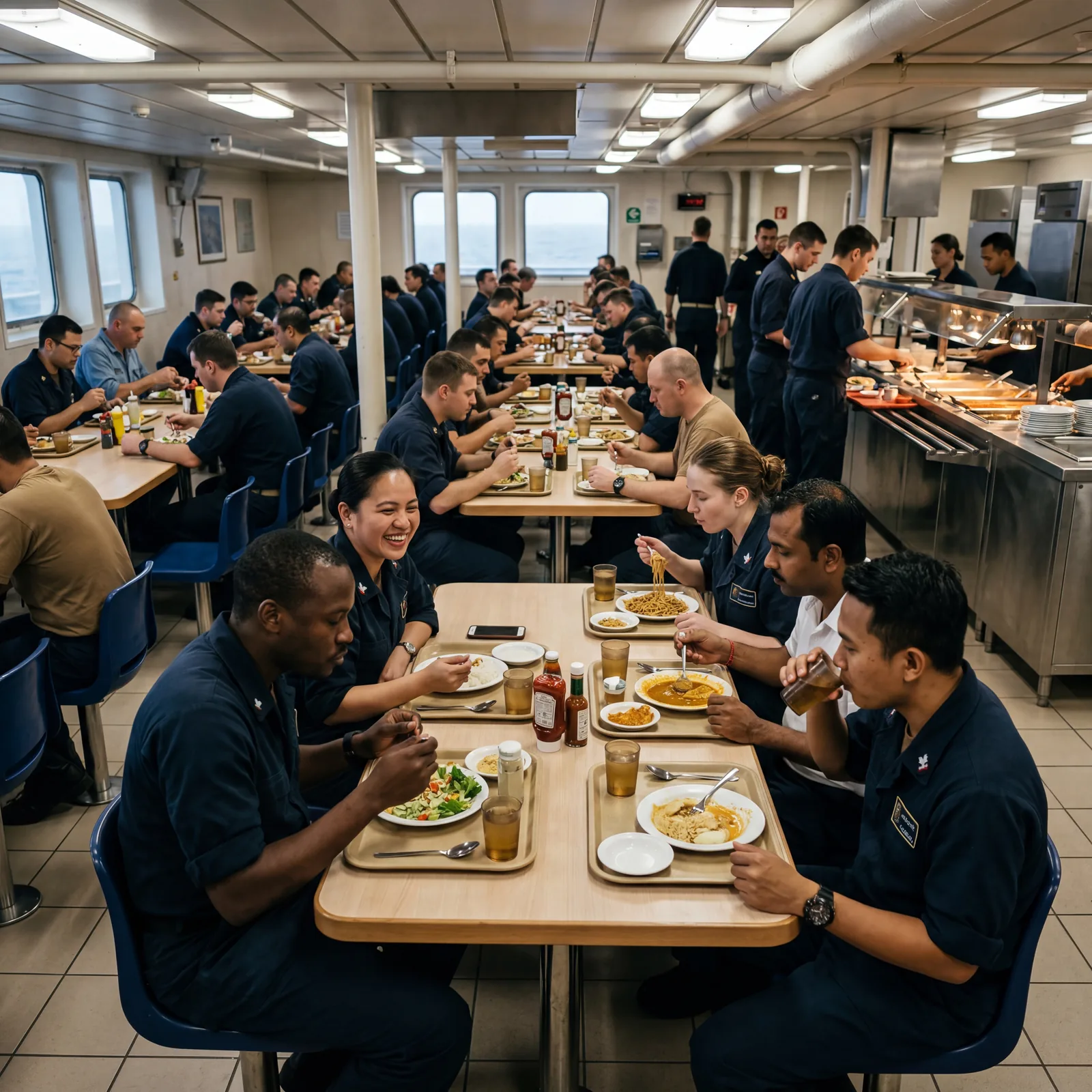
The 1,500-person crew has its own galley, its own menu, and their own dining schedule. You will never see it. It’s typically on a lower deck behind staff-only doors.
Crew food is functional, not luxurious. It’s designed around the nationalities on board, and a Filipino cook might find rice and adobo while a European crew member gets something different. The crew’s experience of food on the ship is a parallel universe you never encounter.
19. Some Ingredients Are Sourced Port by Port
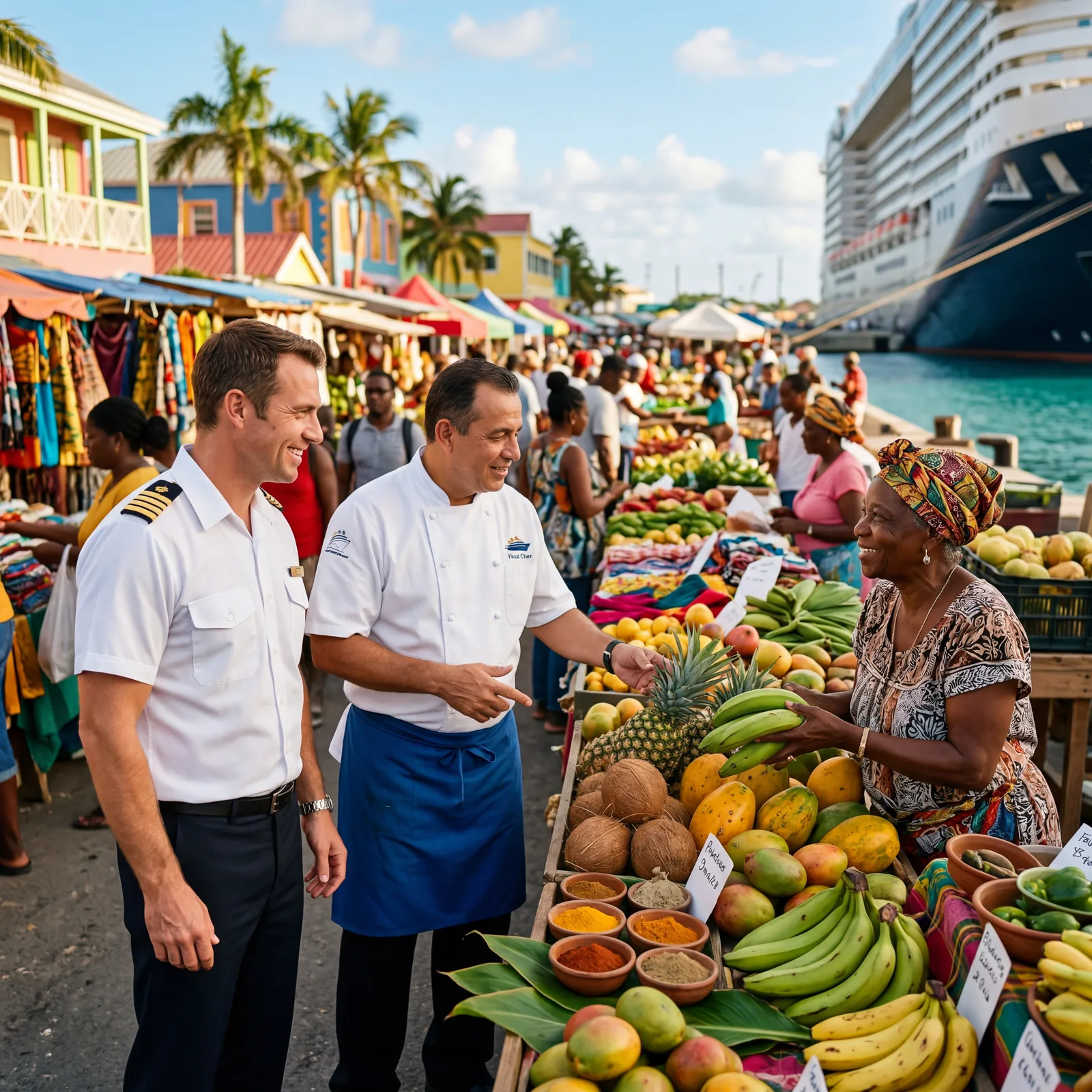
Not everything on your plate came from the loading dock at home port. In the Caribbean, ships often take on fresh local fish. In the Mediterranean, regional produce and olive oil get loaded at ports along the route.
This is partly about freshness and partly about cost. Local sourcing mid-voyage means the kitchen can rotate the menu with genuinely local ingredients rather than serving the same frozen supplies the whole trip. That grilled mahi-mahi might have been swimming yesterday morning.
18. The Bread Is Baked Fresh Overnight, Every Night
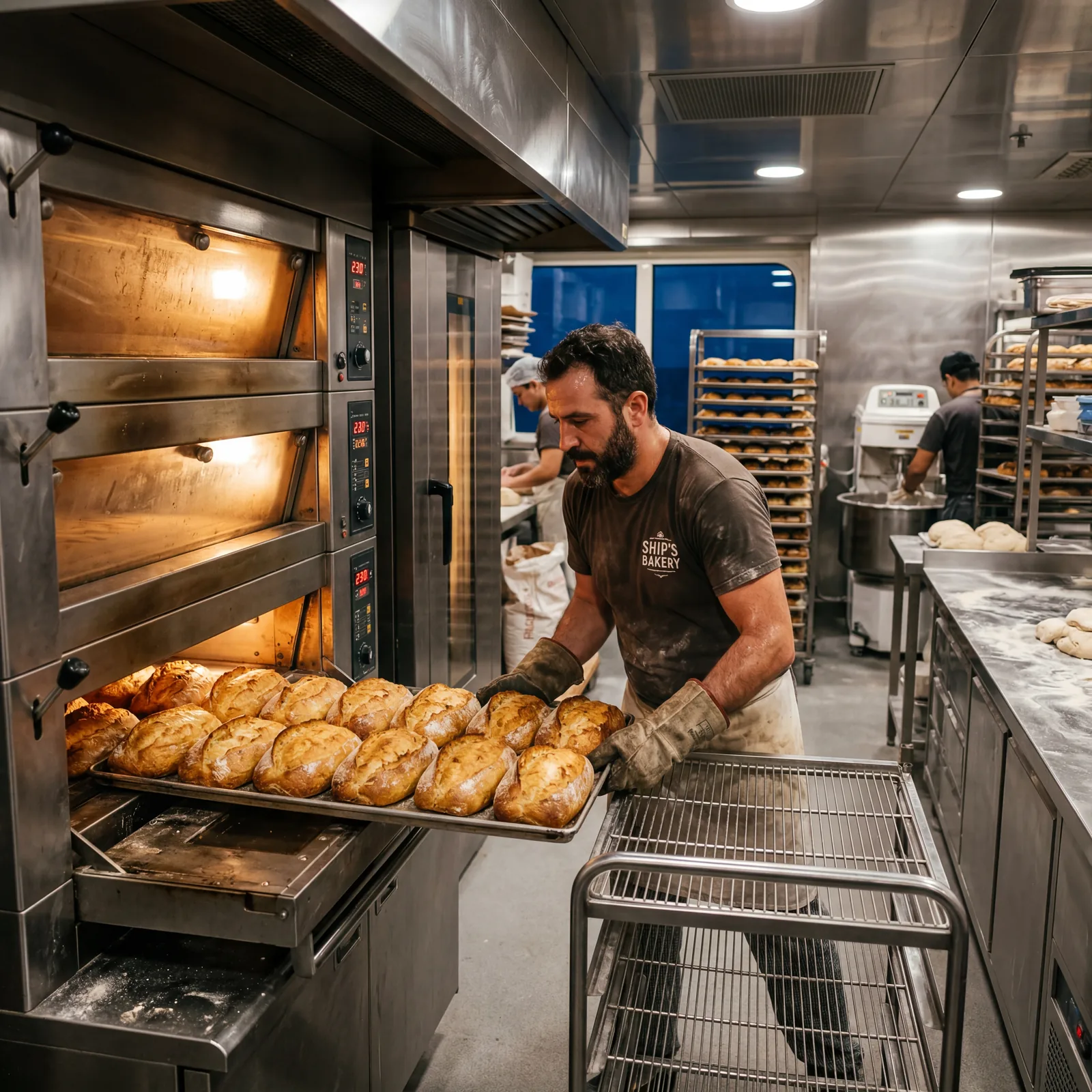
There’s a dedicated pastry and baking team on every major cruise ship, and they work the overnight shift. The rolls on your breakfast table were baked around 4am. The croissants were proofed at midnight.
Most passengers assume the bread is delivered pre-baked. It isn’t. A large ship might produce over 10,000 bread rolls per day, all from scratch. The bakery is one of the most labor-intensive operations on the vessel.
17. Food Waste Has Its Own Complex System
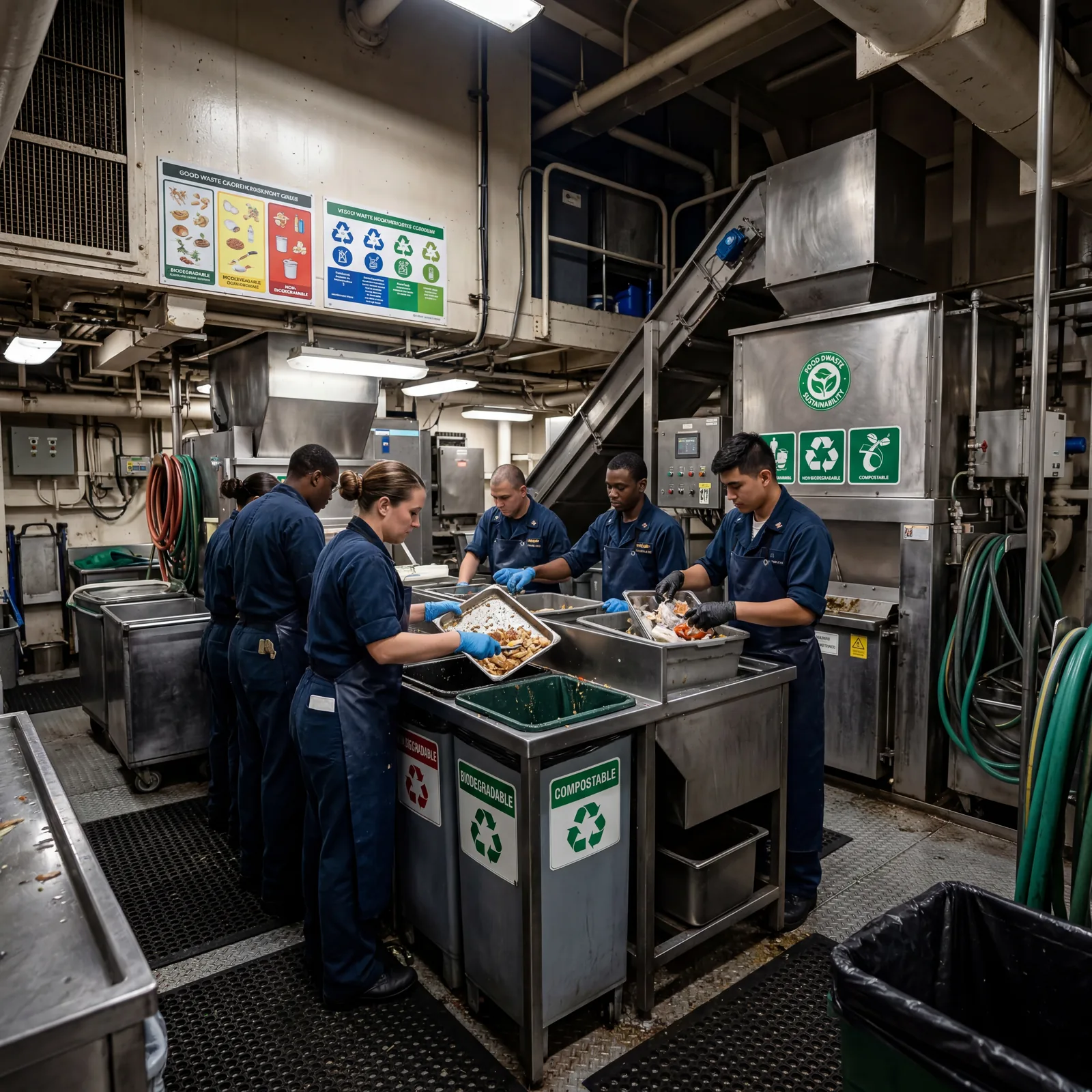
Leftovers from the dining room don’t just disappear. Ships operate under MARPOL maritime regulations, which strictly govern what can be disposed of at sea and what has to be held until port.
Solid food waste is typically processed and stored, then offloaded at specific facilities. Some ships have onboard food composting programs. The sheer volume of waste from 10,000 daily meals is a logistical problem the industry takes seriously, mostly because it has to by law.
16. The Ice Cream Machine Is an Actual Round-the-Clock Operation
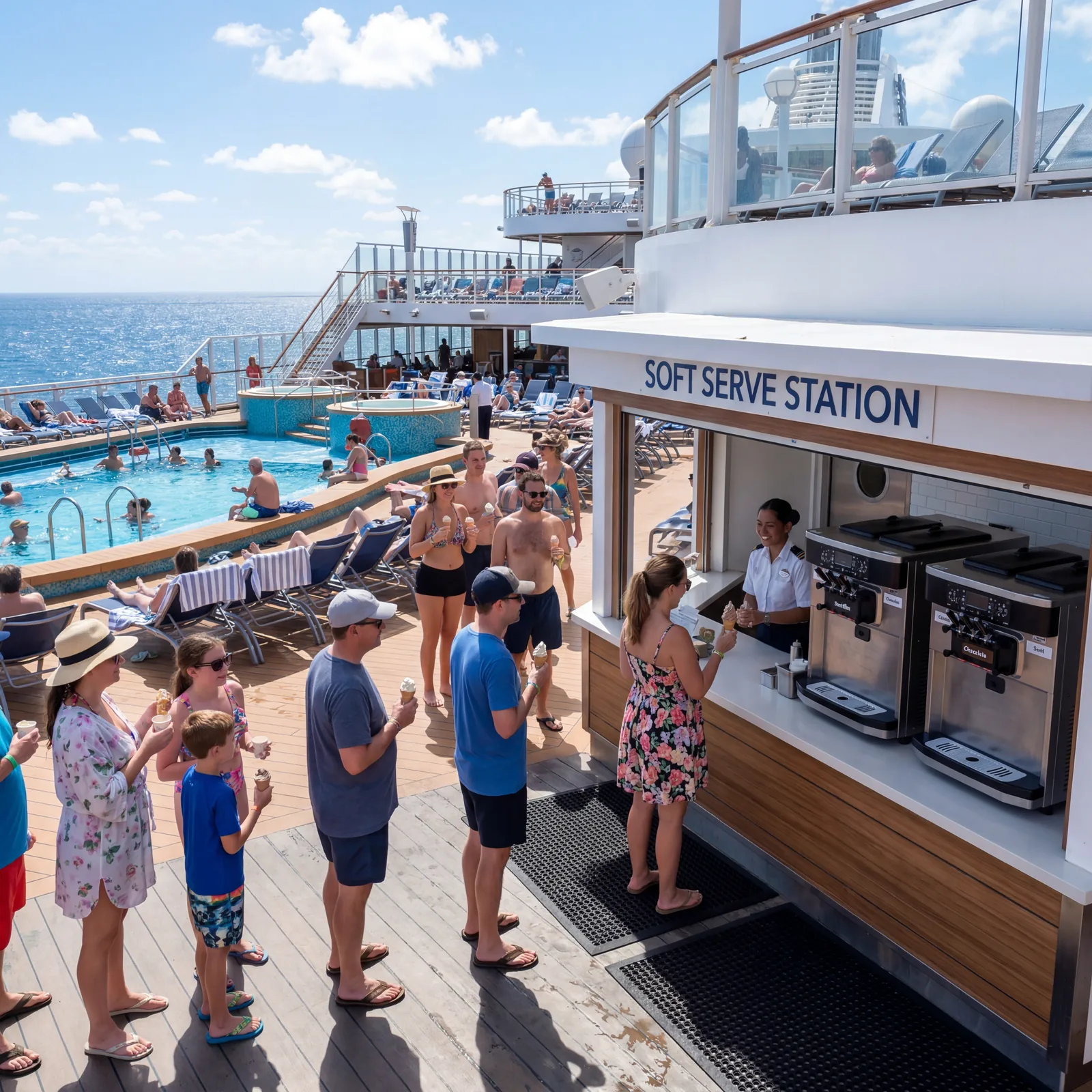
The soft serve stations on the pool deck don’t run themselves. They’re restocked, cleaned, and maintained by dedicated crew members throughout the day and into the evening.
Ice cream consumption on a 7-day Caribbean cruise is staggering by any measure. Carnival has reported serving millions of scoops per year fleet-wide. The machines run nearly continuously during daylight hours and get deep-cleaned every night.
15. The Main Dining Room Runs Two or Three Seating Times Simultaneously
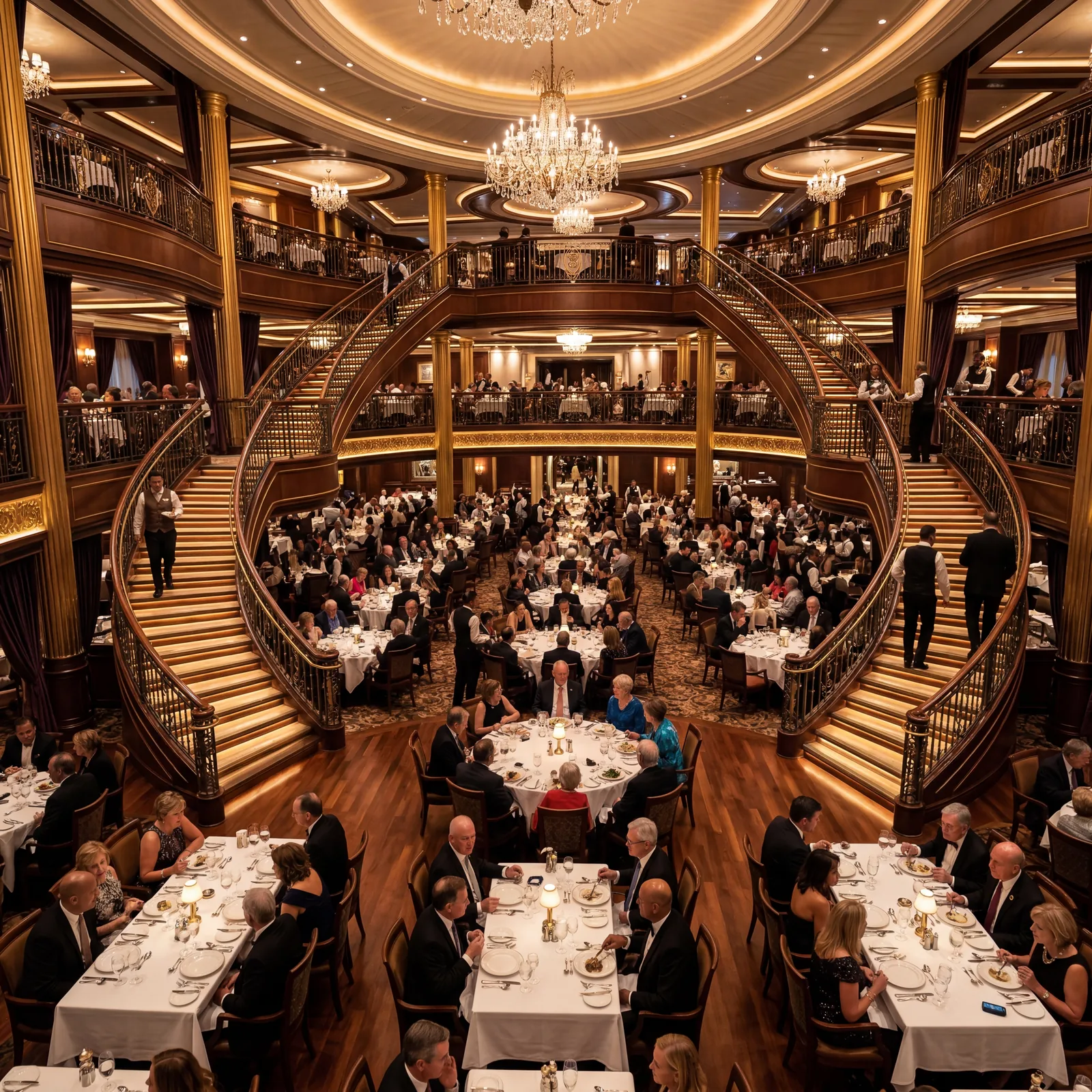
If you chose early dining at 6pm, someone else is sitting at your table at 8:30pm. The galley is turning the same kitchen for multiple full dining services back to back every single night.
That’s thousands of plated, hot meals going out per service, with full turnover between seatings. The kitchen brigades are essentially running two full dinner services every evening, back to back, for 7 nights straight.
Read More: 21 Things First-Time Cruisers Always Get Wrong
14. Every Dish on the Menu Is Pre-Costed to the Cent
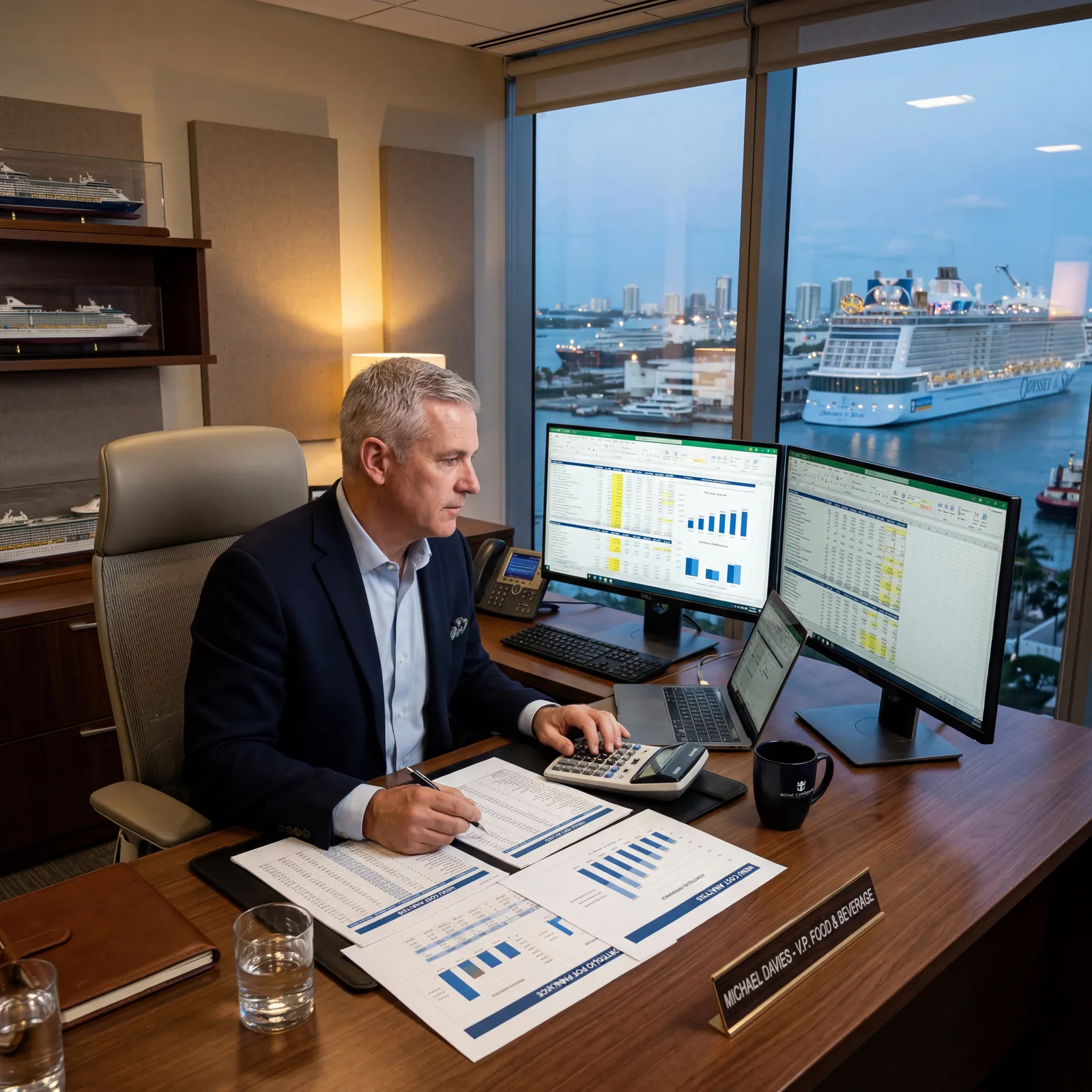
Before any dish appears on the menu, a food and beverage team has run the numbers. Every ingredient is costed, portioned, and approved against a target food cost percentage.
Cruise lines operate on very thin food margins. That lobster tail is on the menu on the last night partly because it’s a perceived luxury and partly because it’s been budgeted weeks in advance. Nothing lands on that menu by accident.
13. The Fruit and Vegetables Are Inspected Before Loading
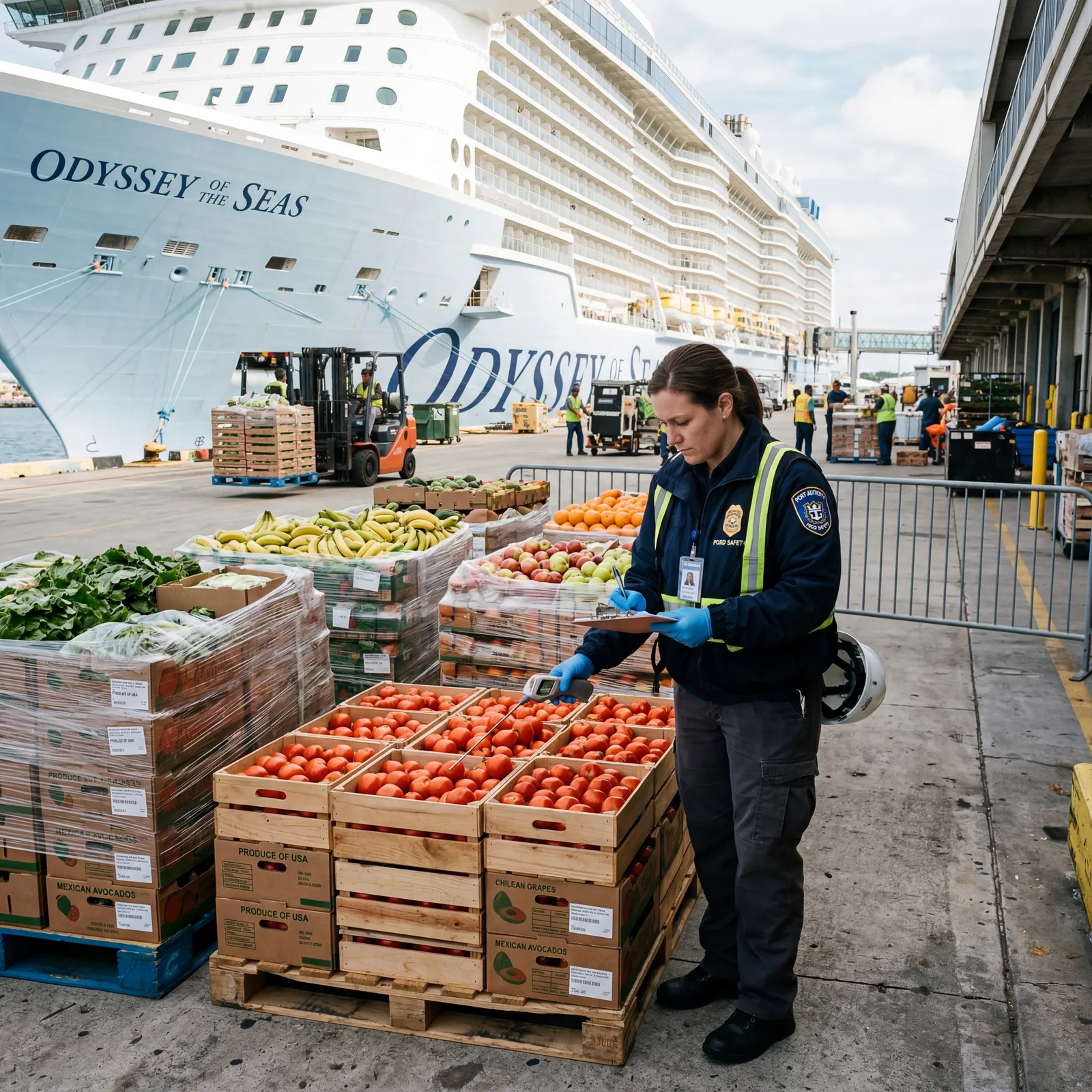
Every shipment of fresh produce goes through a quality check before it’s allowed on board. A ship that departs with bad produce has no way to replace it mid-ocean.
The inspection process is more rigorous than most passengers would guess. Produce with any signs of spoilage gets rejected outright. The ship’s chef or purchasing officer is ultimately responsible for making sure 3,000 people have fresh food for 7 days from whatever gets loaded at the dock.
12. There’s a Cold Storage Area the Size of a Warehouse Somewhere Below You
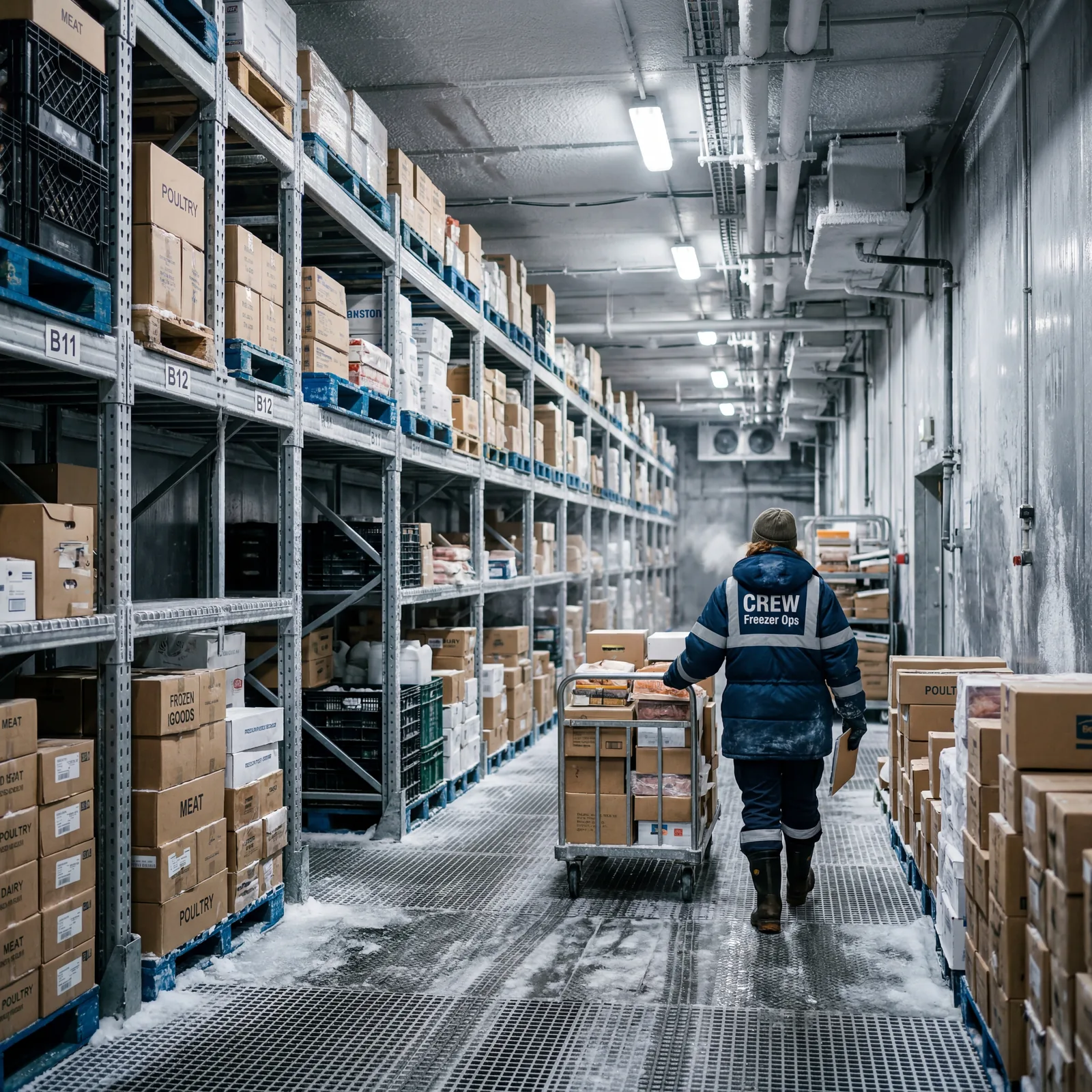
Below the waterline, behind locked doors, is a refrigerated storage complex that would fit inside a large supermarket. Meat in one section. Fish in another. Dairy in another. Frozen goods in yet another.
The temperature management across all these zones is a constant engineering task. A malfunction in the freezer hold isn’t just an inconvenience — it’s a food safety crisis for thousands of people at sea. The system is monitored 24 hours a day.
11. The Coffee Program Is More Complex Than Any Coffee Shop
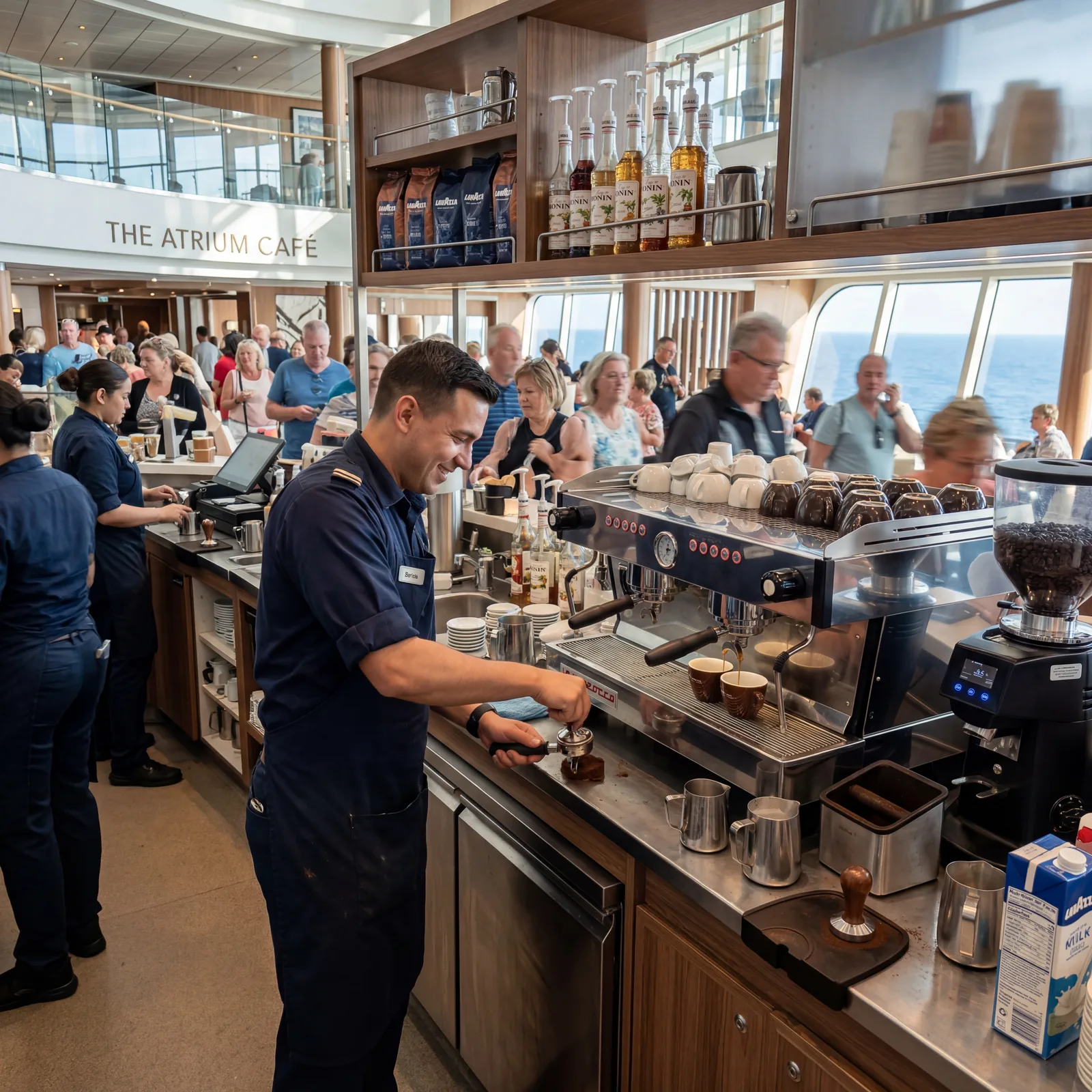
The ship’s coffee operation handles thousands of cups before 10am. Between the main dining room, the buffet, the specialty café, and room service, the daily coffee demand rivals a mid-size city coffee shop district.
The beans are typically sourced in bulk before departure. Some ships have moved to premium coffee programs with barista-trained crew in dedicated coffee bars. The margins on a $6 specialty coffee at sea are significantly higher than anything in the main dining room.
10. The Captain’s Table Dinner Is a Carefully Staged Performance
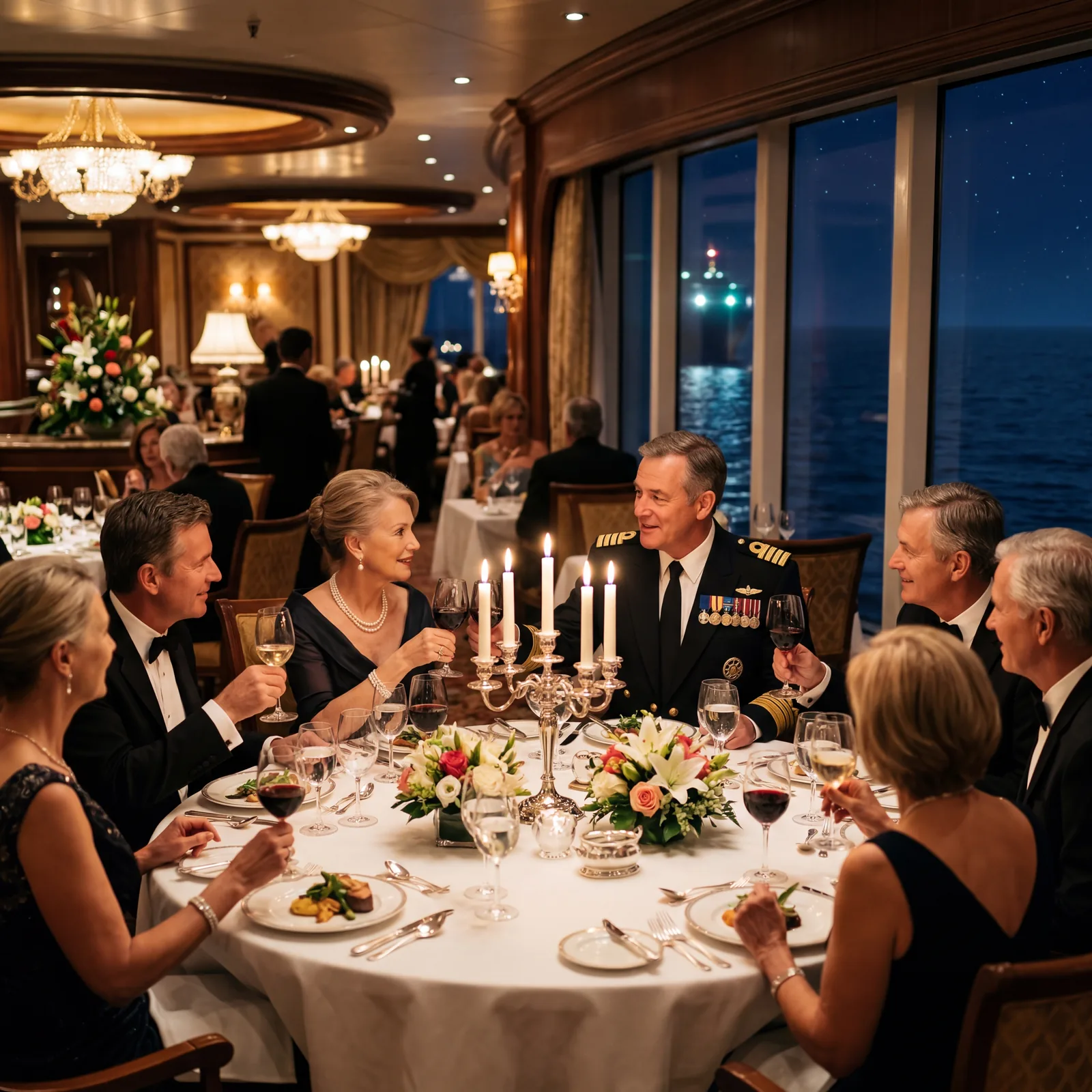
Getting invited to the captain’s table feels like a spontaneous honor. It isn’t. The guest list is curated by the hospitality team days in advance, usually based on loyalty tier, complaint history, or notable passenger status.
The menu is also different from the main dining room, and the chef knows about it well ahead. The whole event is a guest relations exercise designed to turn a potential critic into a loyal repeat customer. It works.
Read More: 19 Cruise Upgrades That Are Actually Worth Paying For
9. The Wine List Is Engineered to Maximize Spend, Not Satisfaction
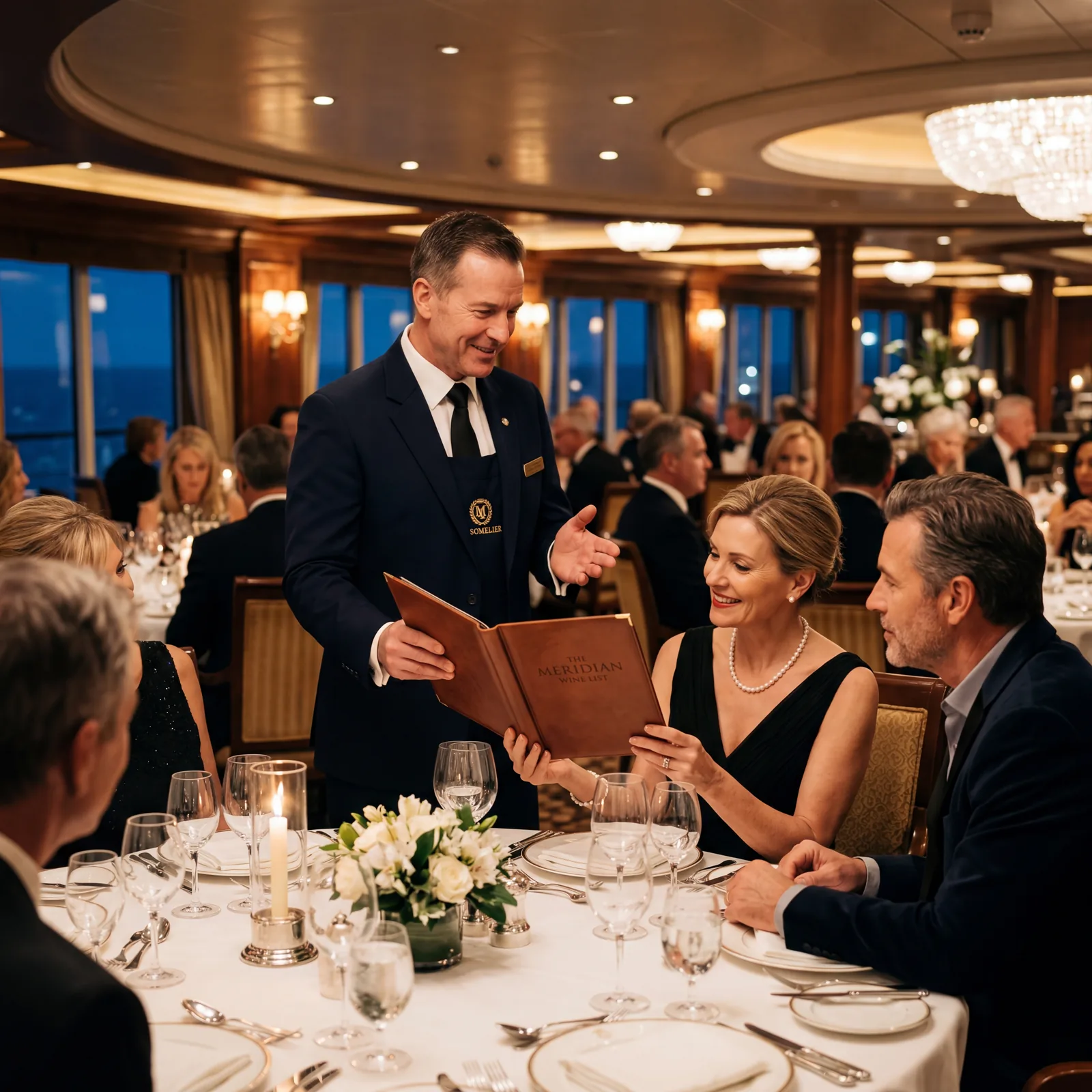
The wine list on a cruise ship is not a curated selection. It’s a revenue optimization document. The bottles are chosen to hit specific price points, and the margins on ship wine are considerably higher than onshore restaurants.
The cheapest bottle is positioned to make the mid-range look like value. The most expensive is there to make the mid-range look reasonable. A beverage manager reviews the pricing structure every year and adjusts it against passenger spend data. You’re being guided toward a particular price point before you even open the menu.
8. Allergy Management Involves a Separate Chain of Custody for Every Flagged Meal
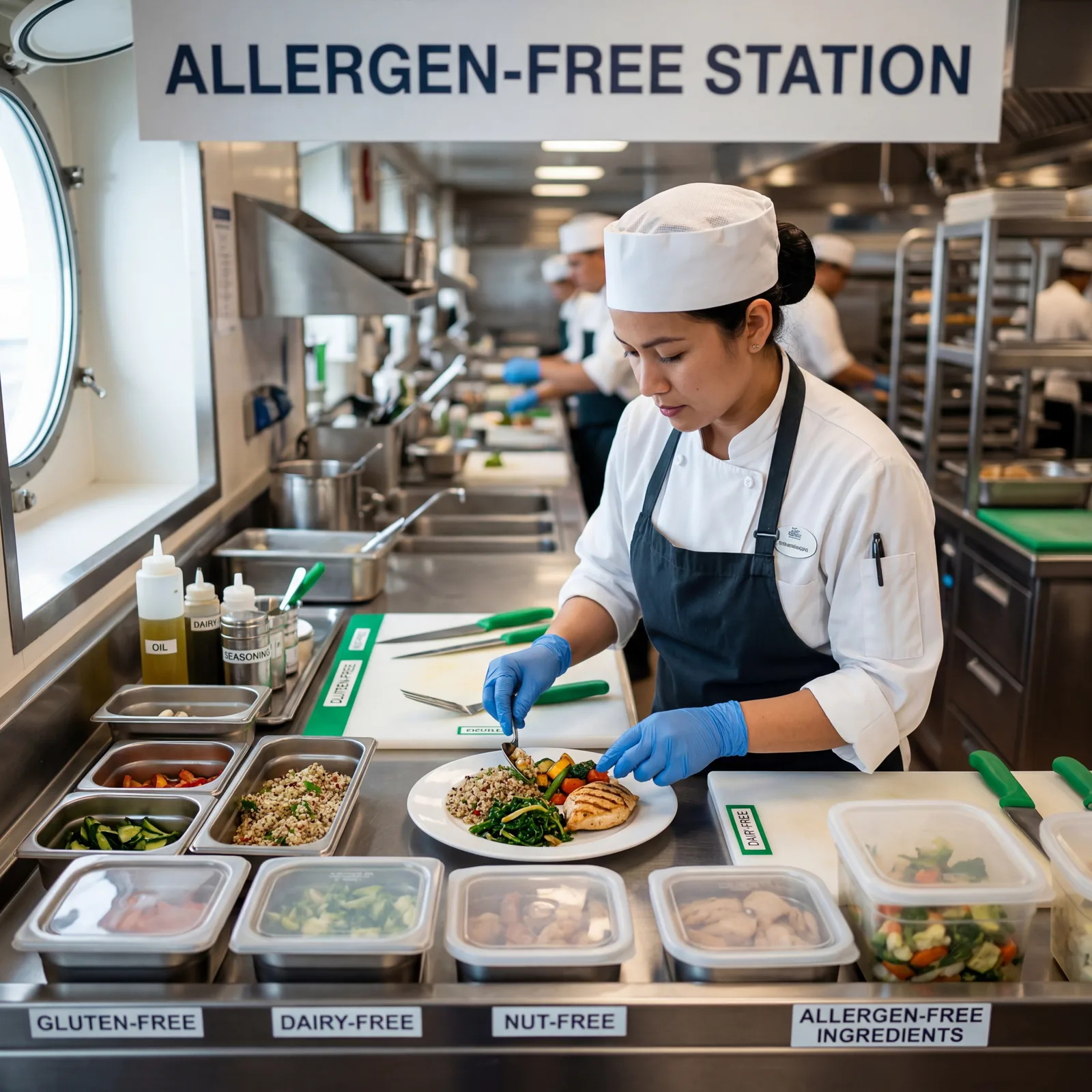
When your allergy flag is active, your meal doesn’t go through the same production line as everyone else’s. It gets a dedicated prep surface, dedicated utensils, and in most cases a dedicated cook who handles nothing else during service.
The plated dish gets covered and labeled before it leaves the kitchen. Your waiter is trained to deliver it without any substitution or interference. The protocol exists because a single cross-contamination incident at sea has nowhere to go. The system is more rigorous than most restaurants you’ve ever eaten in.
7. The Menu Changes by Night, But the Staples Are the Same on Every Ship in the Fleet
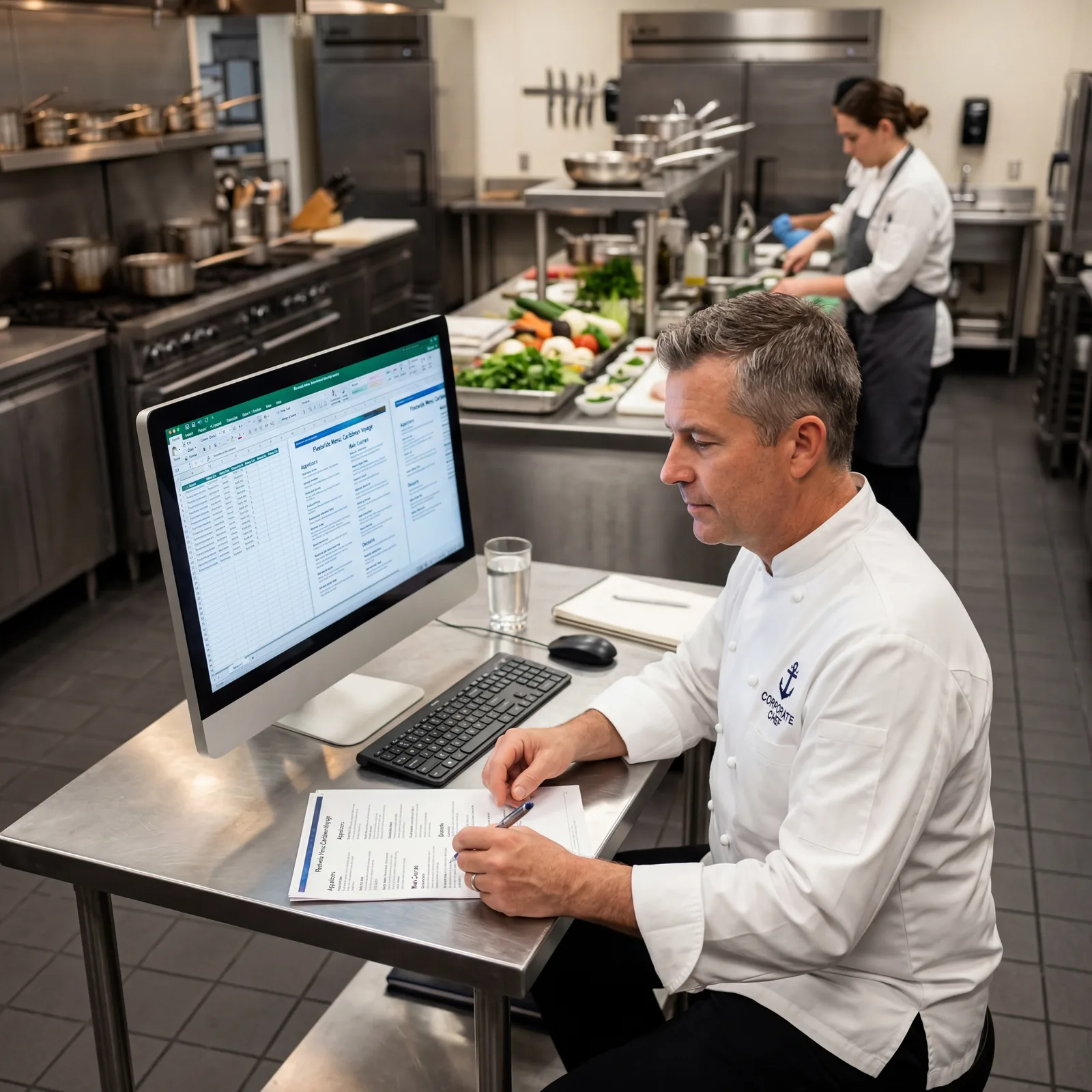
The nightly menu isn’t written by the chef on your ship. It’s developed by the corporate culinary team and standardized across the entire fleet. Every ship in the fleet serves the same rotating menu.
The head chef on your vessel is responsible for execution, not creation. They’re running a highly choreographed kitchen built around recipes, portion specs, and plating guides designed by people who’ve never set foot on the ship you’re sailing. The food is consistent because the system is intentionally consistent.
6. Leftovers From Dinner Don’t Get Thrown Away
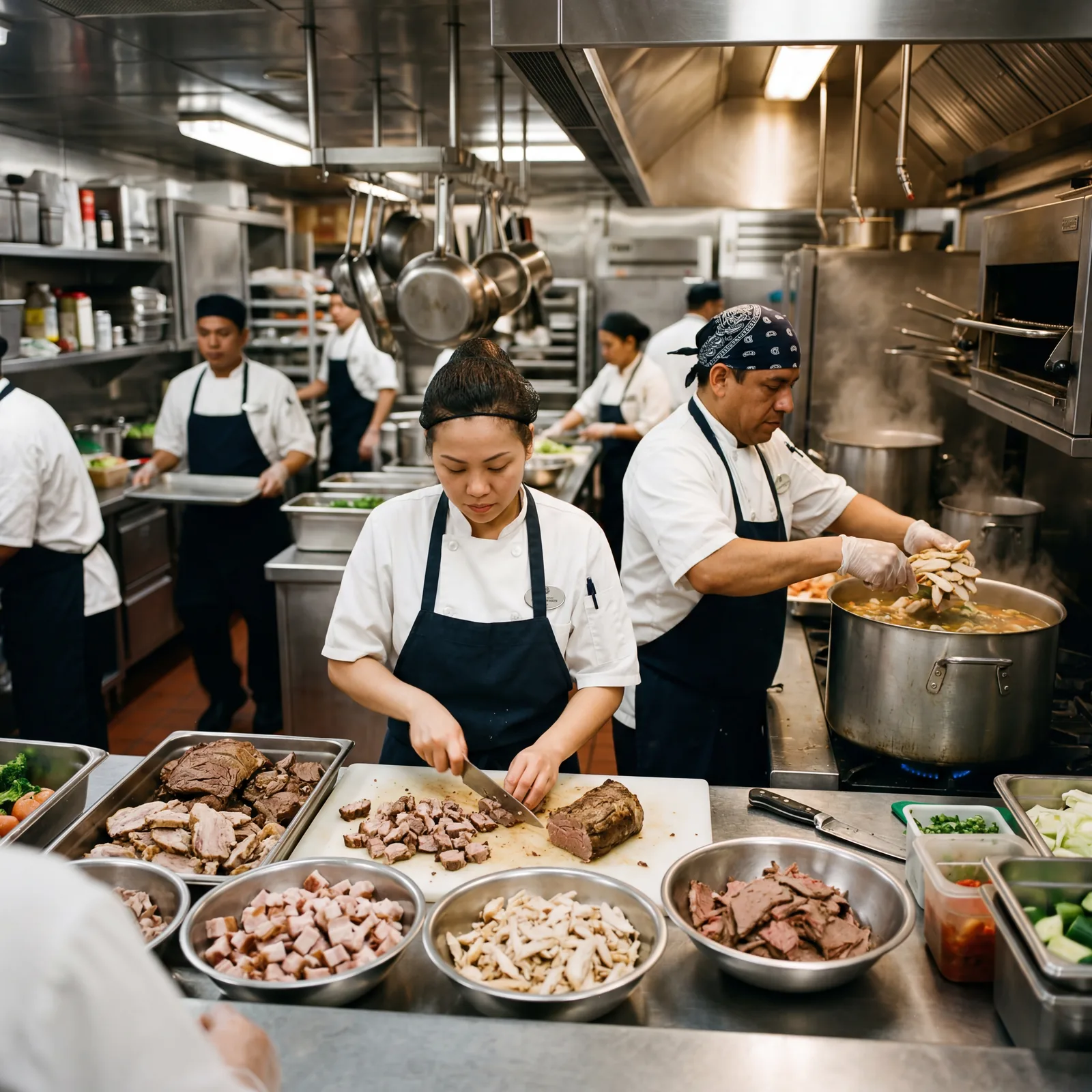
The proteins that don’t get served at dinner become tomorrow’s crew meal or get broken down into soups, stocks, and sides for the next day’s service. Almost nothing in the main galley gets wasted outright.
This isn’t charity. It’s cost management. Food cost is one of the biggest variables in the ship’s operating budget, and a well-run galley has a utilization plan for every major ingredient. The soup you get at lunch on day 4 may have started as last night’s roast.
5. The Specialty Restaurant Upsell Is a Calculated Profit Center
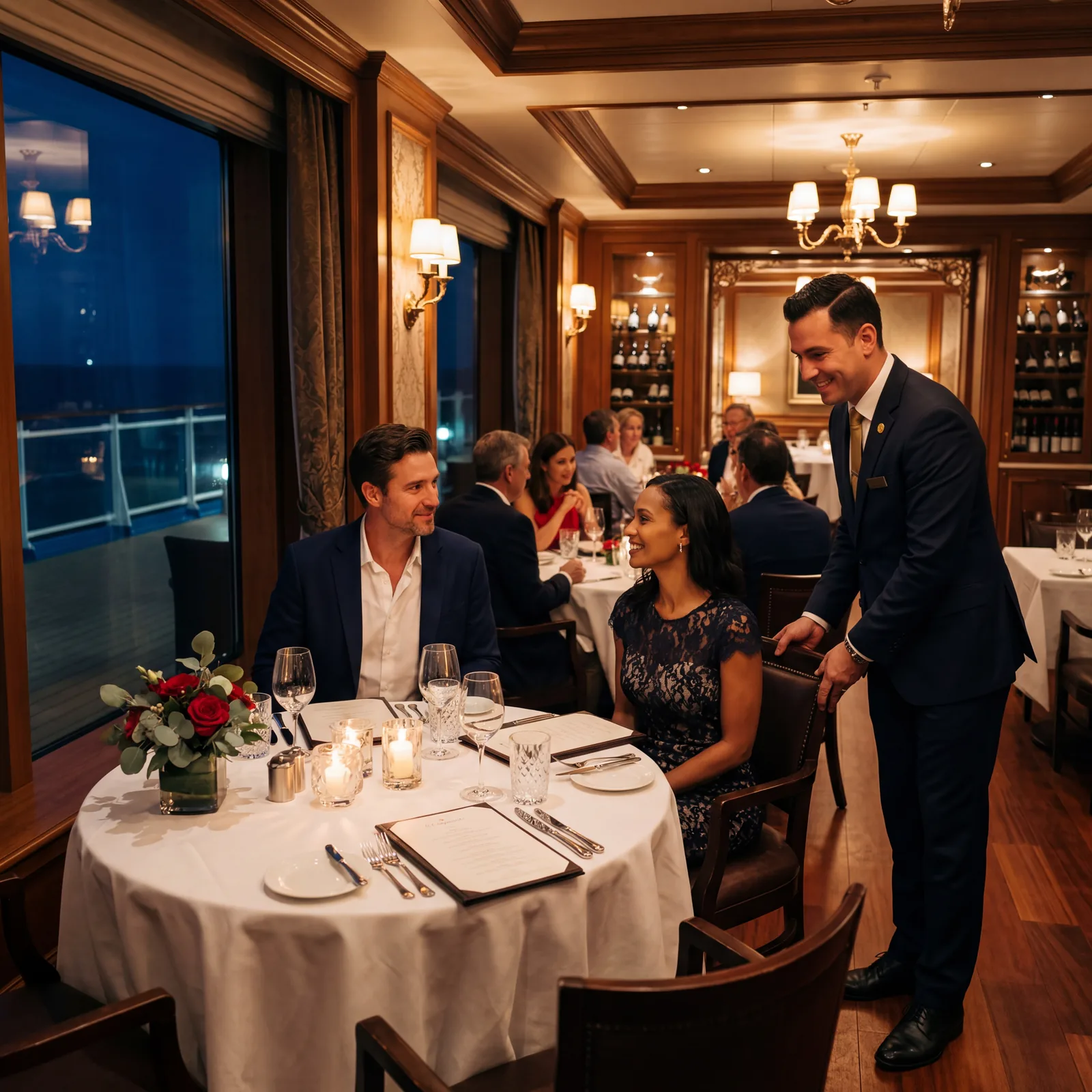
The specialty restaurants on a cruise ship aren’t just nice dining options. They’re a separate profit center that exists to convert your already-paid cruise fare into additional revenue. The surcharges are typically $25 to $65 per person, per meal.
On a large ship with four specialty restaurants running seven nights, the additional revenue from cover charges alone can exceed $1 million per voyage. The food is genuinely better. The math behind why it exists is a little more complicated.
4. The Food Safety Inspections Are More Intense Than Any Land Restaurant
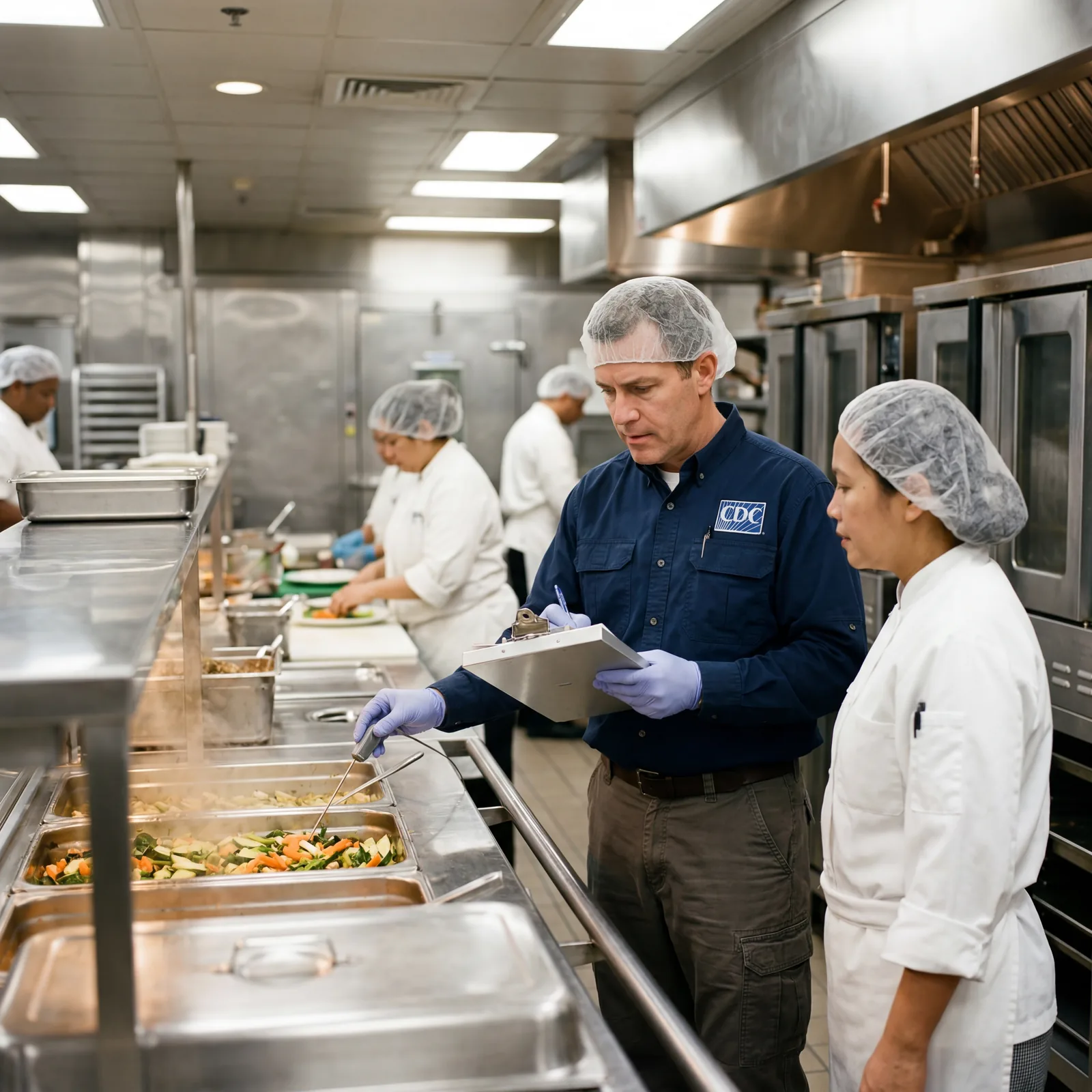
In the United States, the CDC’s Vessel Sanitation Program inspects cruise ships docking at American ports twice a year. The inspections cover every inch of food storage, preparation, and service.
A score below 86 out of 100 makes headlines. Ships take the inspections intensely seriously. The protocol training, temperature logging, and surface sanitation procedures you’d see in a cruise ship galley exceed what most Michelin-star restaurants would face in a typical health department visit. The stakes at sea are simply higher.
3. The Chef Who Runs Your Ship’s Kitchen Has Cooked for More People This Week Than Most Chefs Cook for in a Year
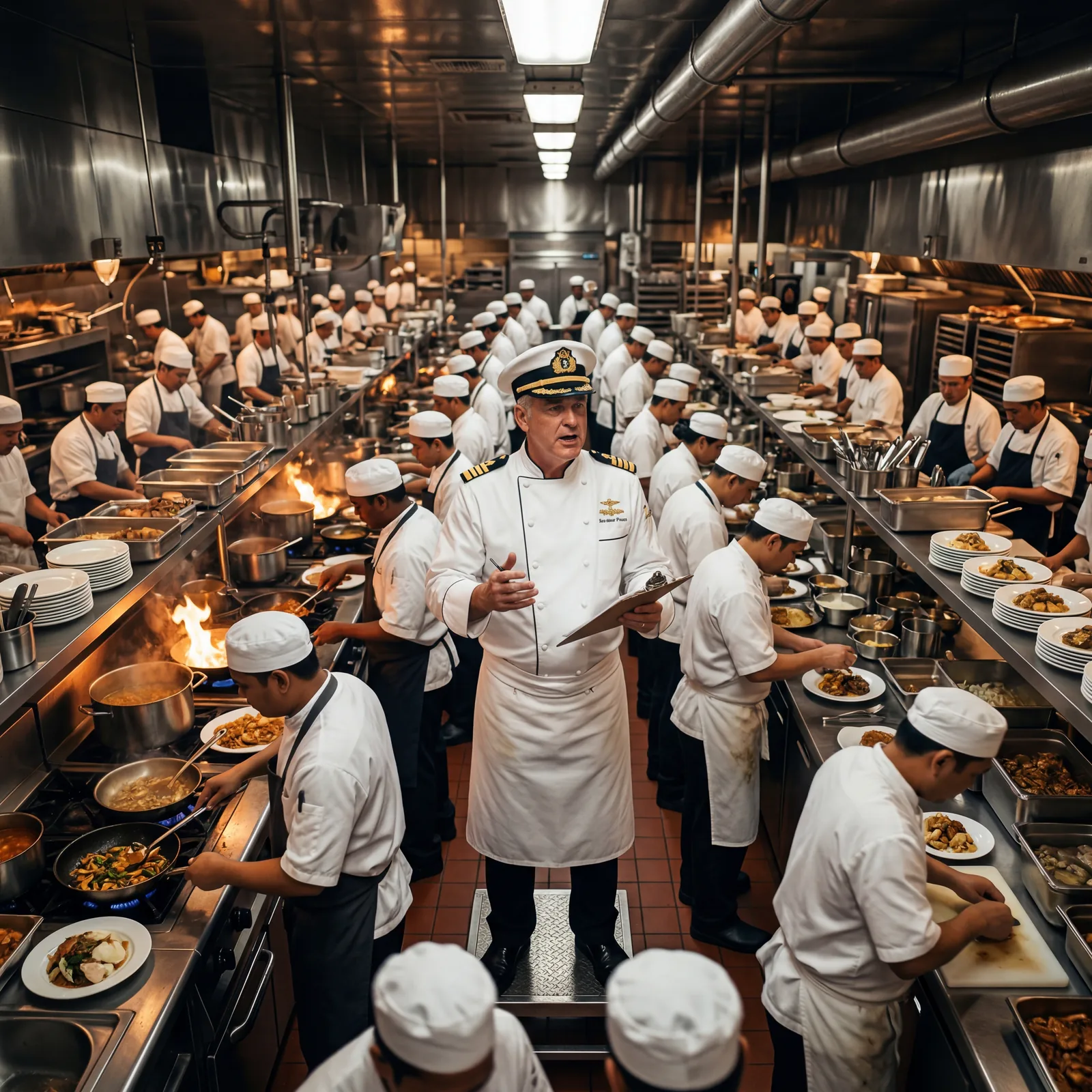
The executive chef on a large cruise ship is overseeing a kitchen brigade of 60 to 120 people. They’re responsible for 10,000 to 15,000 meals per day, across multiple kitchens, seven days a week.
That’s not a restaurant job. That’s a food manufacturing operation with fine dining expectations. The executive chef doesn’t cook. They plan, they supervise, they troubleshoot, and they make real-time decisions about supply and quality for a floating city.
A former executive chef from a major cruise line once described the job this way: “You’re part chef, part logistics manager, part military commander. The dining room only sees the finished result. They have no idea what’s happening behind that galley door.”
Most passengers eat three meals a day and never think about the person responsible for all of it. Now you do.
2. The Entire Menu for the Week Is Planned Before the Ship Even Leaves Port
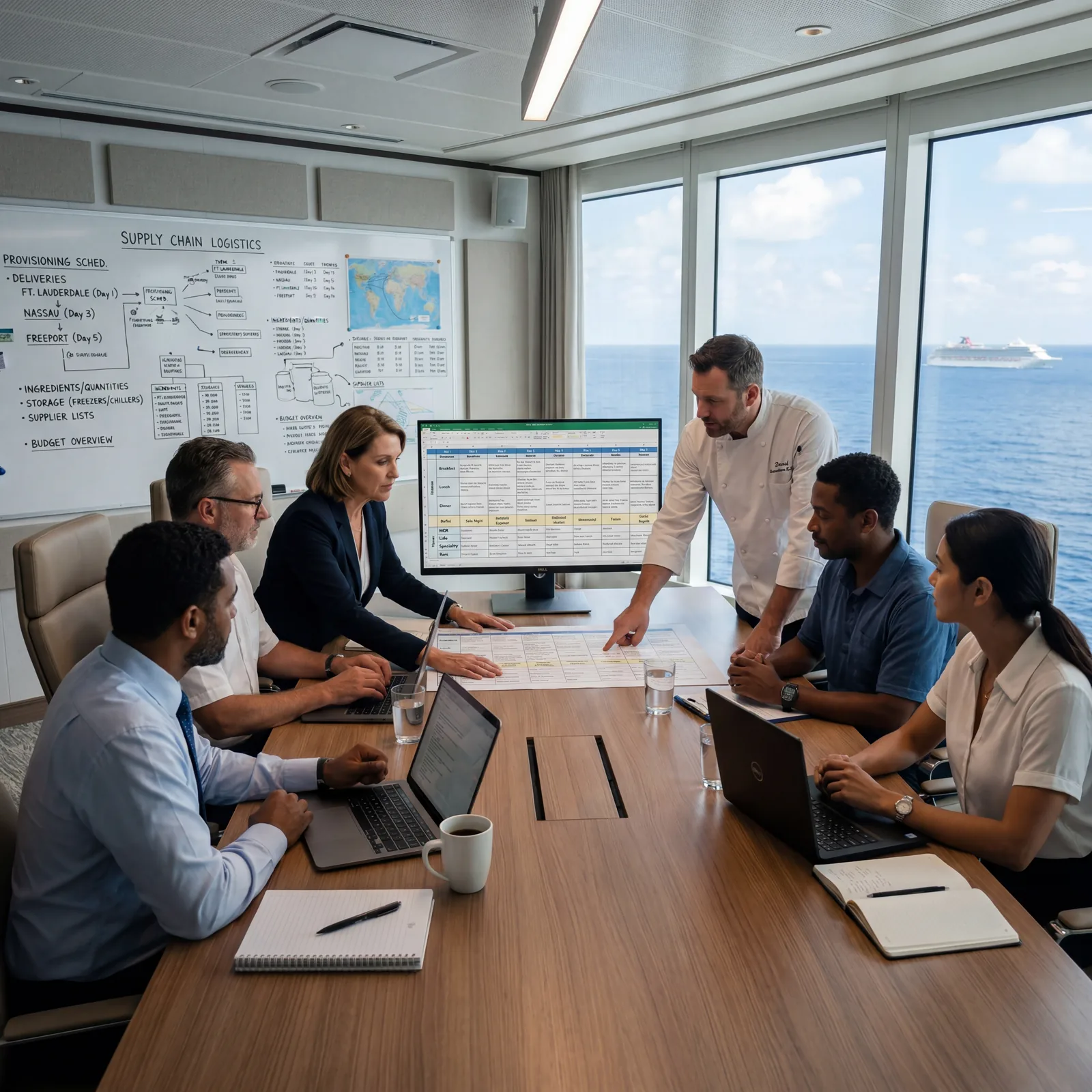
By the time you board, every meal you’ll eat for the next seven days has already been planned, costed, and prepped. The menu matrix for the voyage was signed off weeks ago. The produce was ordered. The proteins were allocated.
Your ship isn’t improvising. It’s executing a tightly engineered food plan calibrated to passenger counts, dietary flags, sea days versus port days, and budget targets. The seeming spontaneity of a fresh menu each night is the result of weeks of preparation you never see.
Nothing about your dining experience is accidental. Every decision — from the item that anchors the main course to the dessert that goes on the last night — was made in a corporate test kitchen somewhere in Miami or Seattle before the ship left the dock.
It’s bad. But nothing compared to what’s waiting at #1.
1. The Ship Produces Its Own Fresh Water, and It Touches Everything on Your Plate
The Most Extraordinary Thing Happening Below Deck Right Now
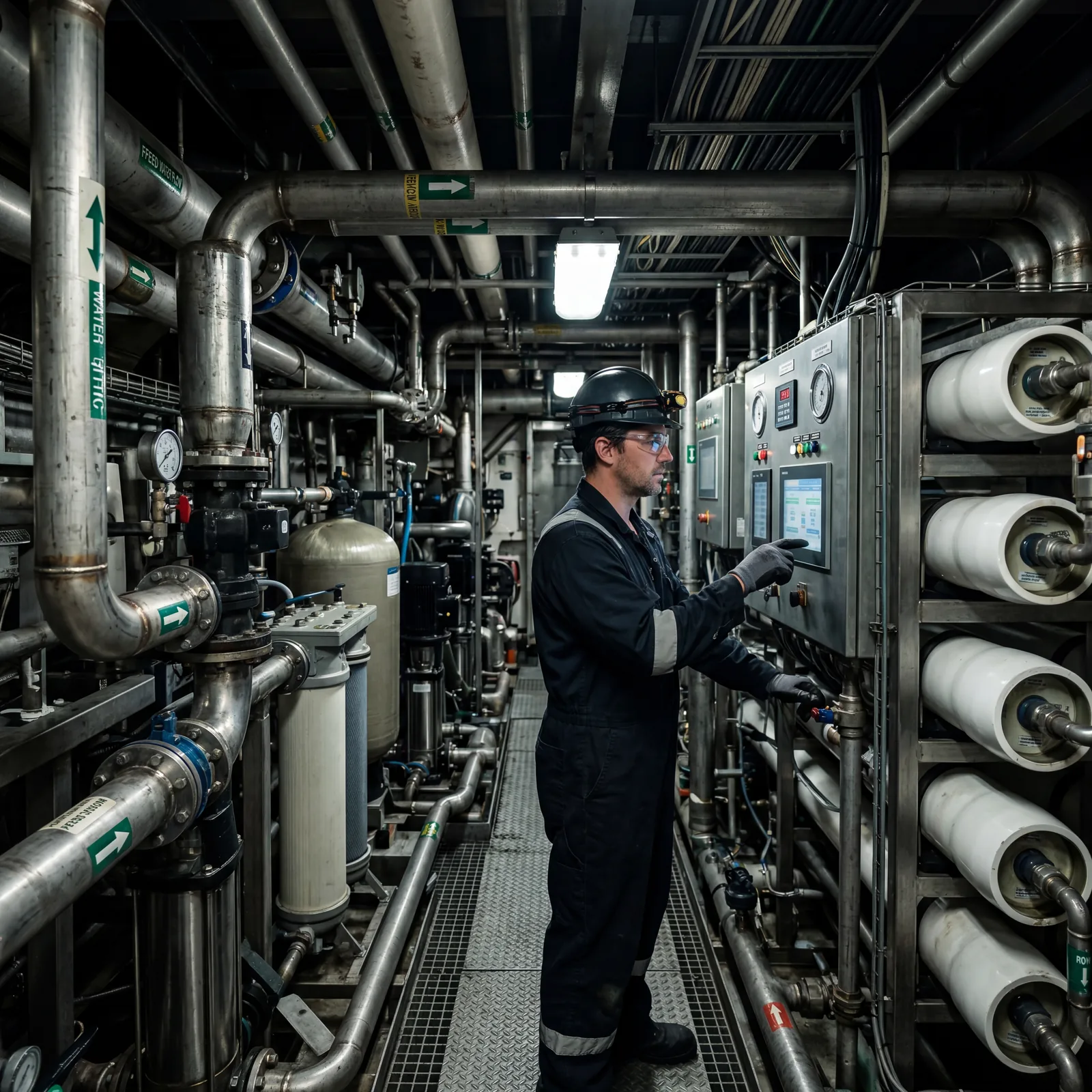
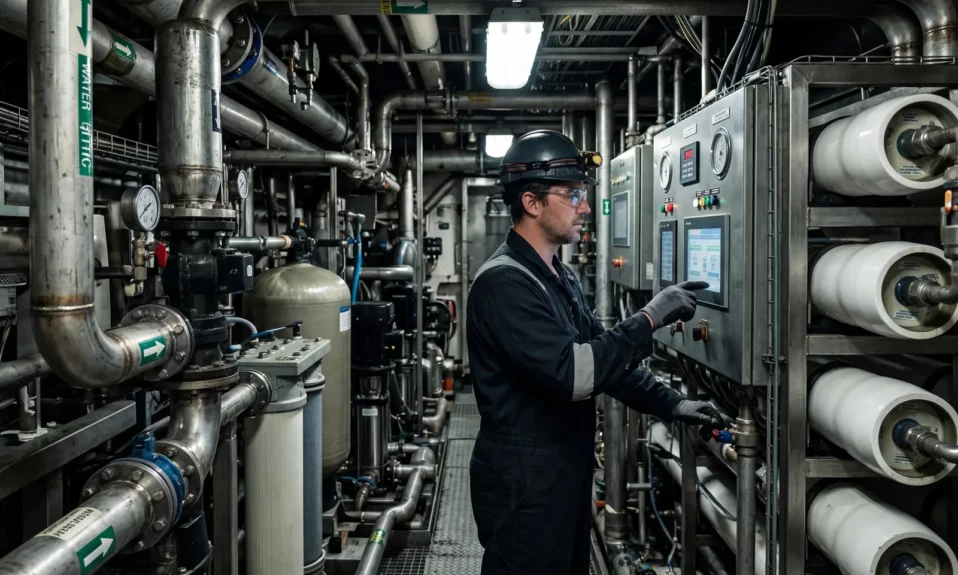
Right now, as the ship moves through open ocean, a set of machines below the waterline is pulling seawater in and turning it into drinking-quality fresh water. The process is called reverse osmosis, and a large cruise ship can produce 400,000 to 700,000 gallons of fresh water per day this way.
That water boils your pasta. It makes your coffee. It’s the ice in your drink. It’s the water your vegetables were washed in this morning. Every single thing that involves water in any of the ship’s kitchens flows from a system that didn’t exist the last time most passengers thought about where water comes from.
The desalination plant runs 24 hours a day and is one of the most critical systems on the vessel. If it fails, the ship diverts to port. No restaurant you’ve ever been to sources its own water from the ocean outside the building.
A marine engineer I spoke with put it plainly: “Passengers think about the engines. Nobody thinks about the water. But without the water plant, you’re not cooking anything. No water, no ship.”
You’ve eaten thousands of meals on land and never once wondered where the water came from. You’re on a ship in the middle of an ocean, and the water for your dinner was made from the sea beneath your feet, this morning.
Now you know why we saved this one for last.
The Ship’s Kitchen Never Sleeps, and Neither Does the Story
Most passengers leave a cruise thinking about the excursions, the sunsets, and the sheer relaxation of it all. The food just appeared, and it was good, and that was enough.
Now you know it wasn’t just food. It was a 24-hour, multi-kitchen, seawater-to-table operation run by a crew of hundreds that never once let you see the work. Which one surprised you most? Drop it in the comments, and forward this to anyone who’s ever taken a cruise without knowing any of this.