
Imagine walking into a 1930s kitchen on a Tuesday morning. The stove is burning coal. There’s a smell of lye soap drying near the window. A woman is pressing a darning egg into a sock that’s been mended so many times the heel is mostly thread.
Nothing in that kitchen was wasted. Not the bread bag. Not the fat from Sunday’s chicken. Not even the string that came around the newspaper.
The Depression had a way of teaching people exactly what they needed and exactly what they didn’t. What they needed was very little. What they built from it was extraordinary.
We’re only two or three generations removed from all of it. But it might as well be a different planet.
These weren’t survival tricks or clever life hacks. They were just Tuesday. Normal Tuesday.
There’s a version of daily life in the 1930s that no documentary quite captures. It’s the texture of it. The smell, the routine, the quiet discipline of people who never called it discipline.
One of the items on this list is something every single family in America did without question. Rich or poor. City or farm. It’s item #1, and it’ll catch you off guard.
Keep reading. It only gets more specific from here.
35. Saving and Reusing Bread Bags
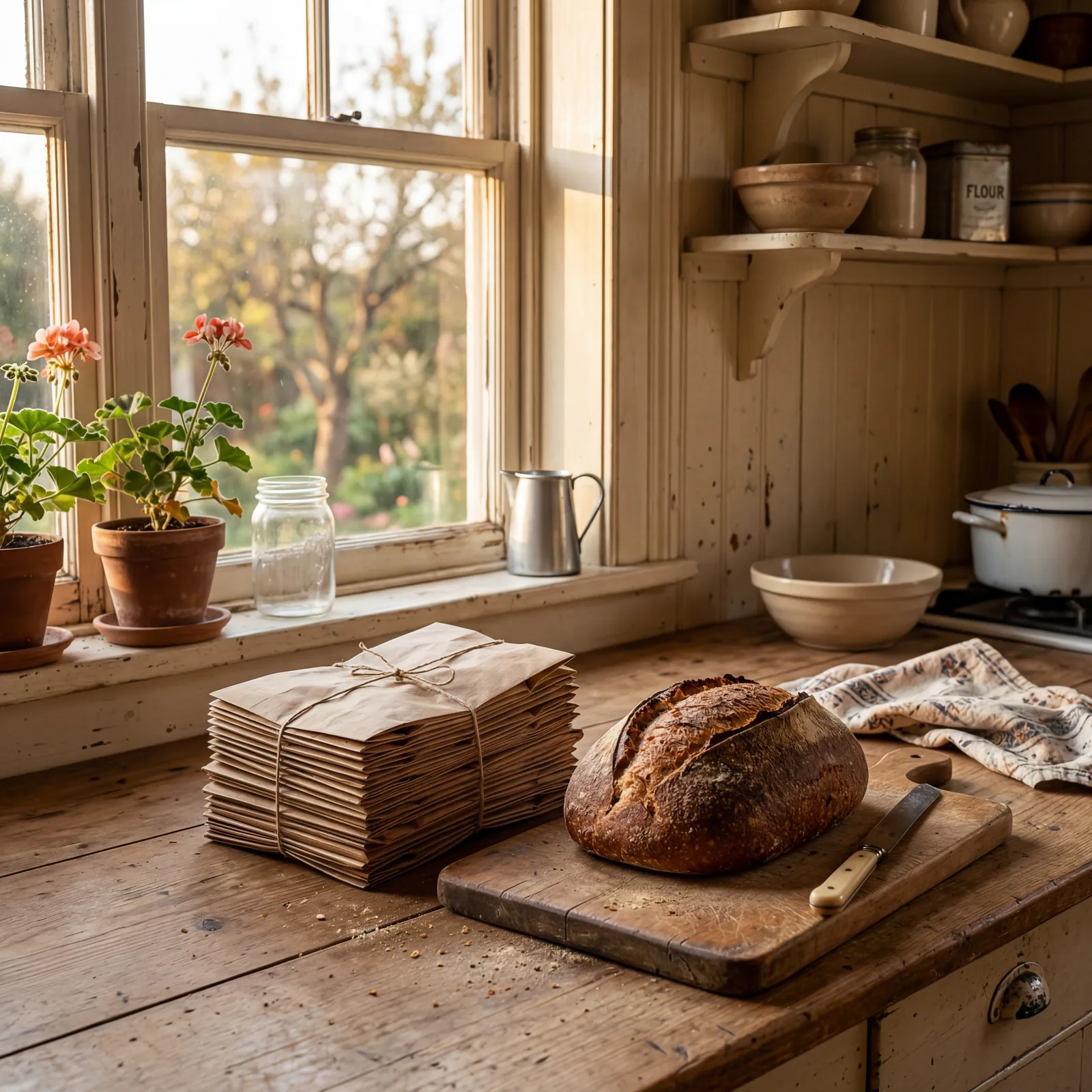
You didn’t throw away a bread bag in 1930. You folded it.
Wax paper bread bags were rinsed, dried, and reused for packing lunches, wrapping leftover biscuits, or storing anything else that needed a little protection. They were stiff and crinkly and they smelled faintly of bread no matter how many times you washed them.
Commercial bread in wax-paper bags became common in the late 1920s. By the Depression, families saved every bag as a matter of course. Wasting one would have felt like throwing away a small tool.
You didn’t save it because you were clever. You saved it because throwing it away never crossed your mind.
34. Hanging a Hand-Made Quilt Over the Windows for Insulation in Winter
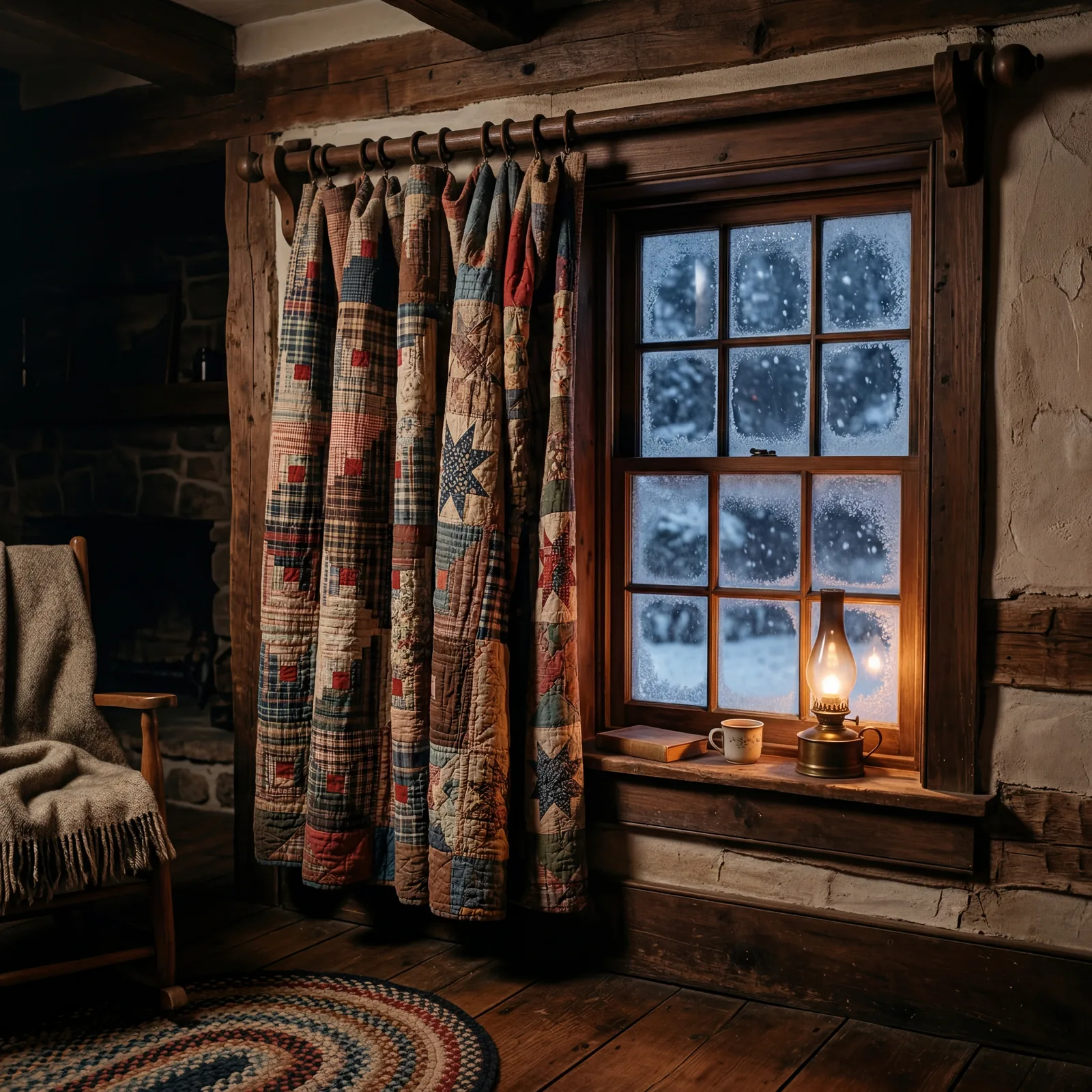
The quilt wasn’t just on the bed. In January, it was on the window.
Glass in older homes was single-pane, and a cold night could turn a bedroom into something close to a freezer. Families hung heavy quilts or blankets over the frames using rope or nails, trapping a pocket of dead air between the glass and the room. It worked.
Before affordable insulation and storm windows became common in the postwar era, this was the winter routine in millions of American homes. The quilt was doing two jobs at once: keeping the cold out at night, and going back on the bed before company arrived.
A quilt that kept you warm on a night it dropped to twelve degrees was worth more than any curtain.
33. Using a Chamber Pot at Night
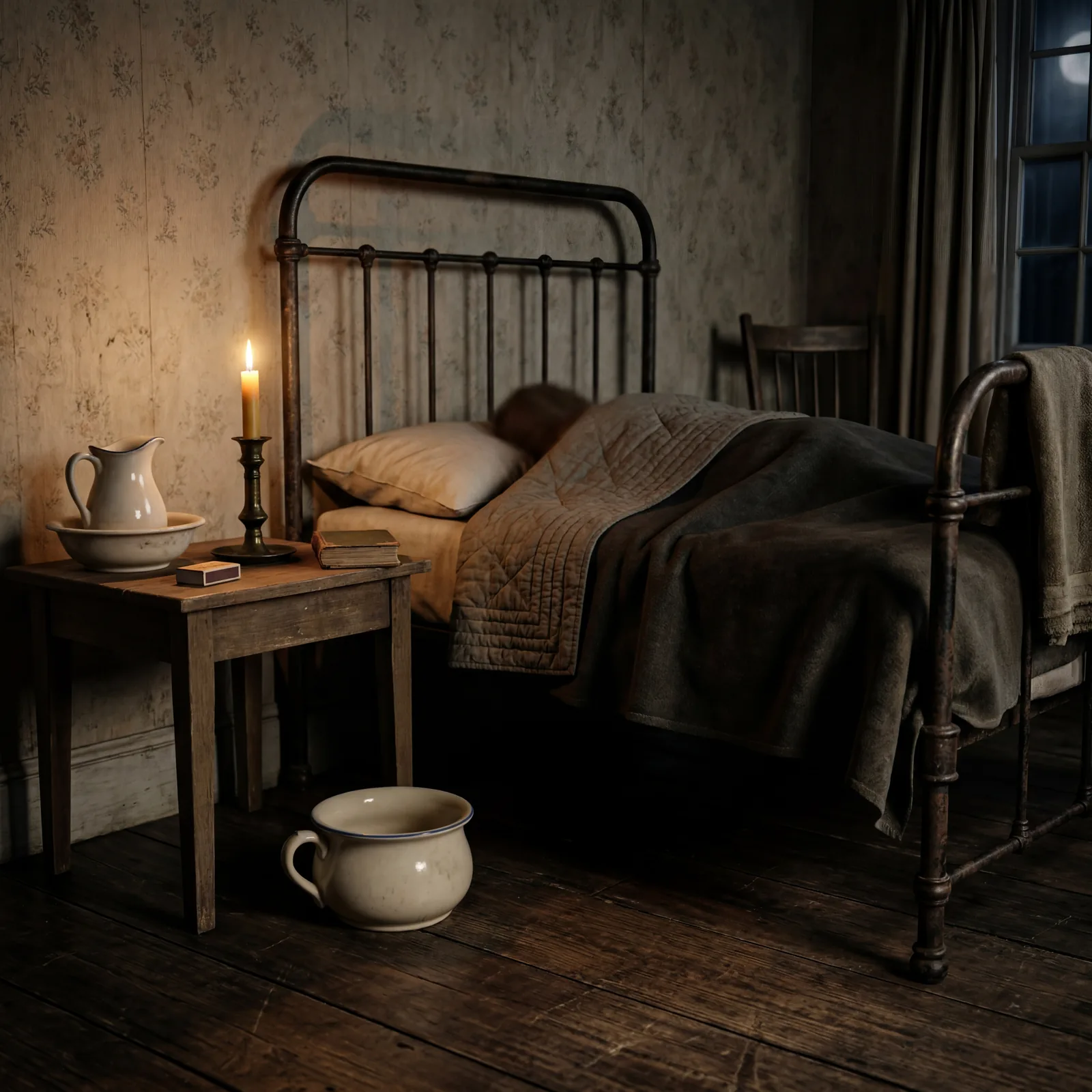
Getting up to use the outhouse at two in the morning in February wasn’t something anyone wanted to do. So they didn’t.
The chamber pot sat under the bed or in the corner of the bedroom. Porcelain, usually. Sometimes tin. It was used through the night and emptied first thing in the morning. It was matter-of-fact, entirely practical, and completely normal.
Indoor plumbing reached only about a third of American homes by 1930, and many rural families had none at all well into the 1940s. The chamber pot wasn’t considered rough living. It was considered reasonable.
We built entire rooms for this. Our great-grandparents used a bowl under the bed and got on with their lives.
32. Growing Tobacco for Personal Use

Rural families in the South and Midwest often grew a small plot of tobacco the same way they grew tomatoes. It was just another crop.
A few plants in the kitchen garden produced enough for a season’s worth of pipe tobacco or hand-rolled cigarettes. It was dried, stripped, and stored in a tin or cloth pouch. Men shared it. Boys watched.
Before the consolidation of tobacco brands and widespread retail, growing your own was common enough in rural areas that no one thought to comment on it. It was cheaper than the store, and you knew what was in it.
The kitchen garden had carrots, beans, and occasionally tobacco. That sentence would have been completely unremarkable in 1932.
31. Killing and Cleaning Your Own Chickens
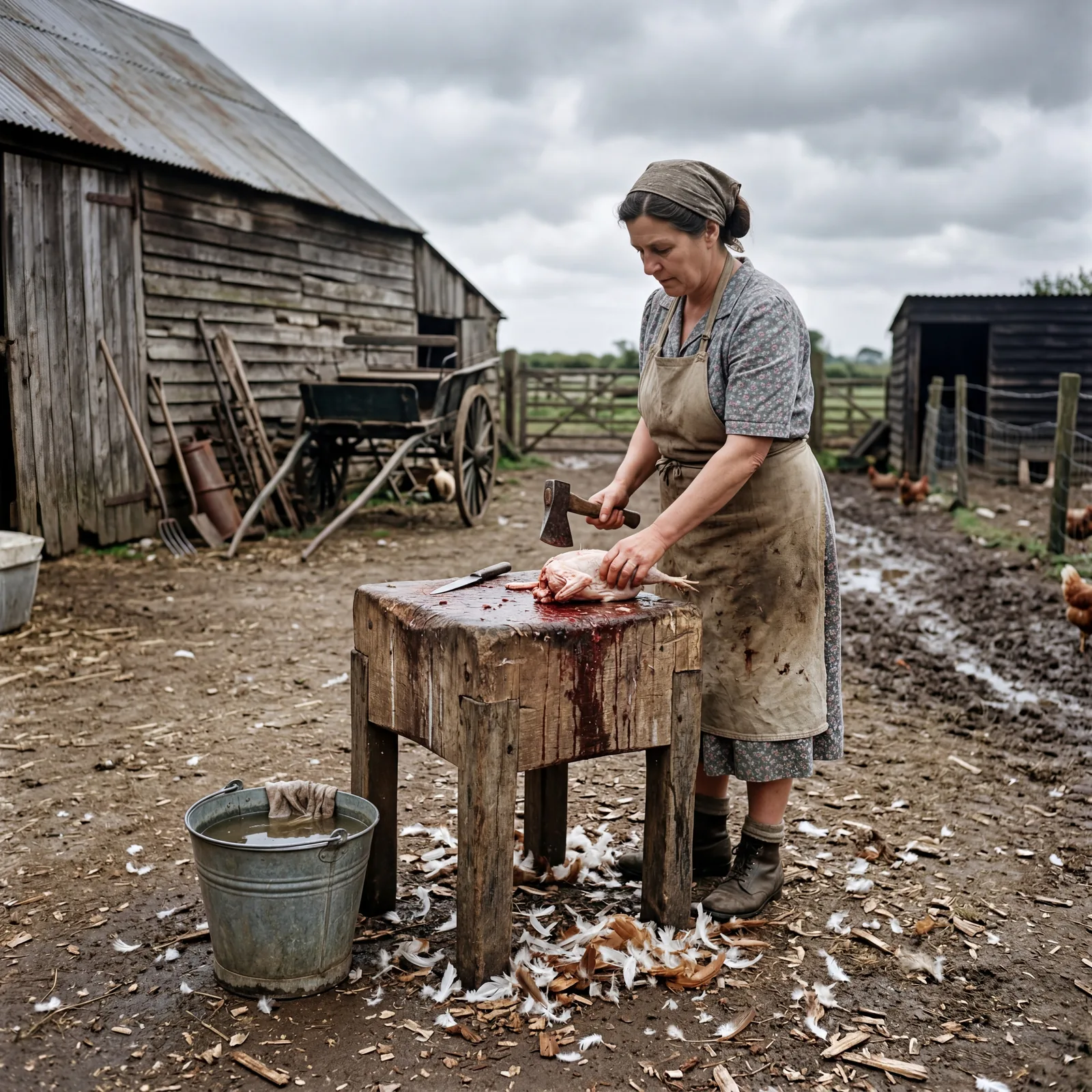
Sunday dinner started in the yard. Not the kitchen.
You selected the bird, you killed it quickly, and then the real work began. Scalding the carcass in hot water loosened the feathers. Plucking was fast if the water was hot enough. Cleaning and gutting came next, and by the time it went in the pot, every part of the bird had been accounted for. The liver, the neck, the feet if you were making stock.
Most American families kept their own chickens well into the mid-20th century. Slaughter was a chore like any other. Children watched, then helped, then took over. By twelve, most knew how to do it cleanly.
Knowing where your food came from wasn’t a philosophy. It was just Thursday.
“The next one would be illegal in most places today.”
30. Going to Bed at Dark and Rising at Dawn
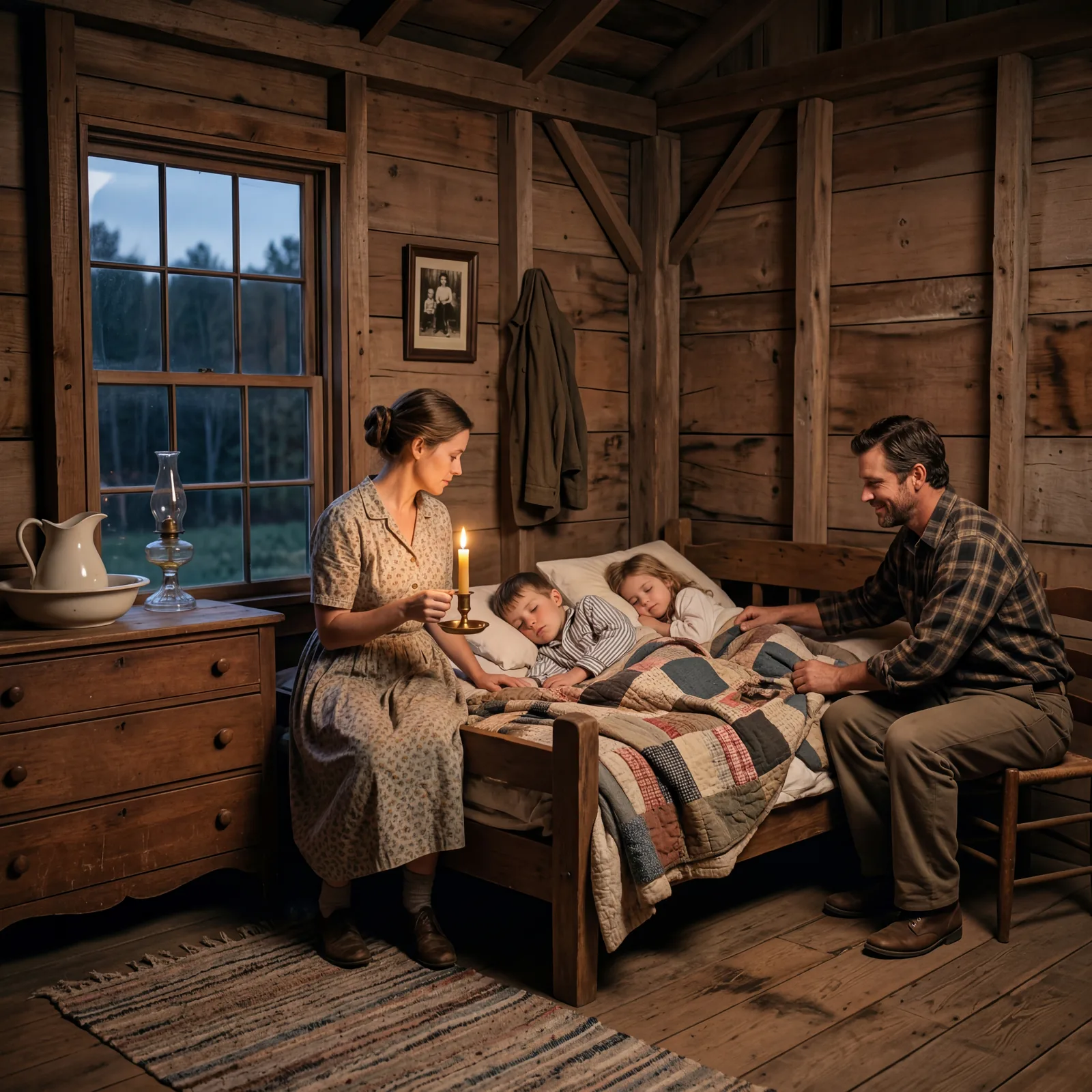
Before electric light was everywhere, the sun was the schedule.
When it got dark, there wasn’t much reason to stay up. Candles and kerosene cost money. Reading by them strained your eyes. The morning started early because the animals didn’t care what time you went to sleep, and neither did the garden.
In 1930, roughly 90 percent of rural American homes still lacked electricity. Even urban families with electric light often kept early schedules out of habit and economy. Most adults were asleep by nine and up before six.
The phrase “burning the midnight oil” used to describe something extraordinary. In a 1930s home, burning oil after dark was just waste.
29. Heating Rooms with Individual Space Heaters
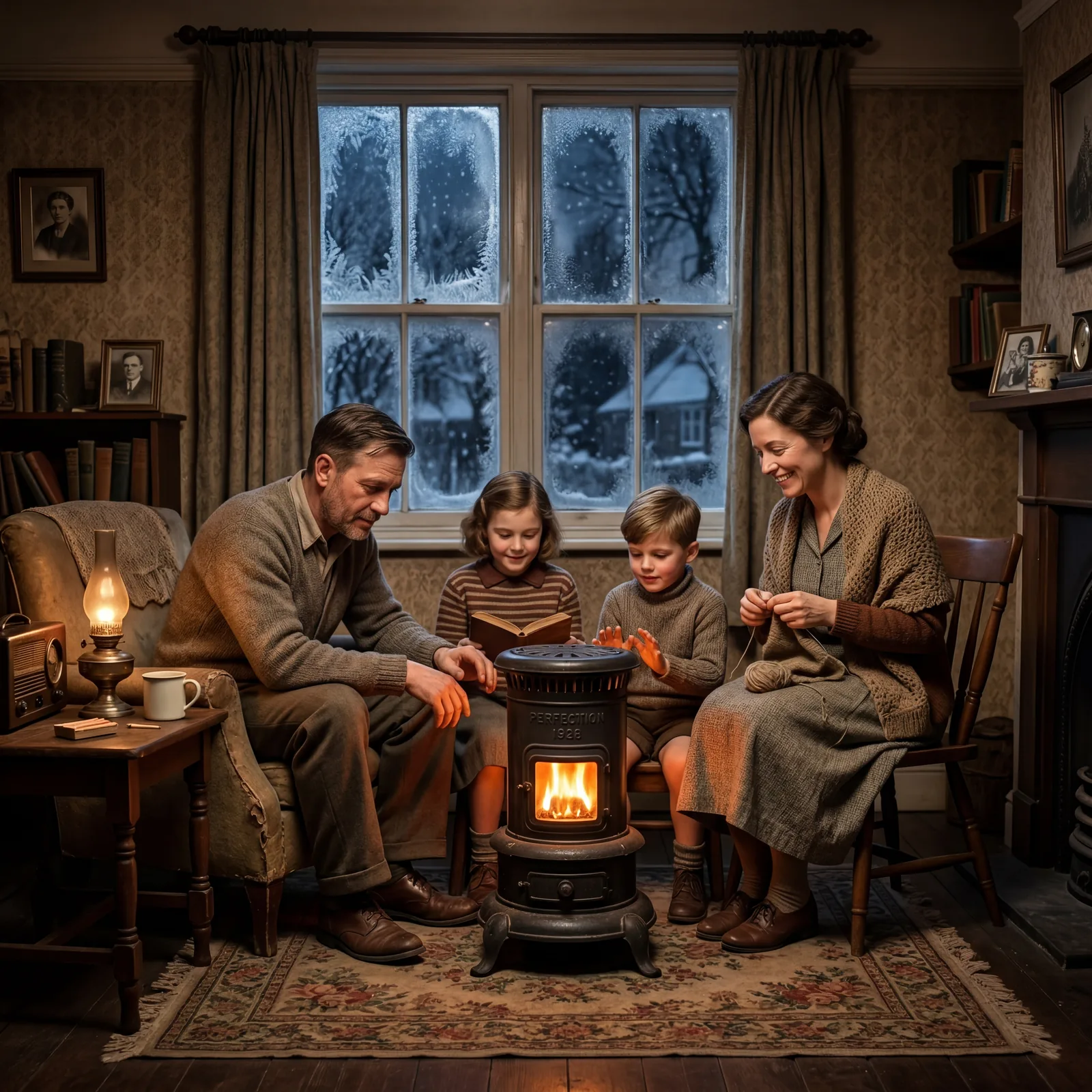
There was no thermostat. There was a heater in this room, and cold in every other room.
Families moved through their homes differently in winter. They gathered in the room with the heat source. Bedrooms were cold. Hallways were cold. You kept your coat on until the kitchen stove had been going for a while. Central heating in private homes was rare outside of upper-middle-class urban houses until after World War II.
Space heaters ran on kerosene, coal, or wood depending on the region. A family might have one in the main room and rely on body heat and quilts for the rest.
You didn’t heat your whole house. You heated the room you were in. That distinction shaped everything about how a family spent time together.
28. Using a Washboard for Laundry
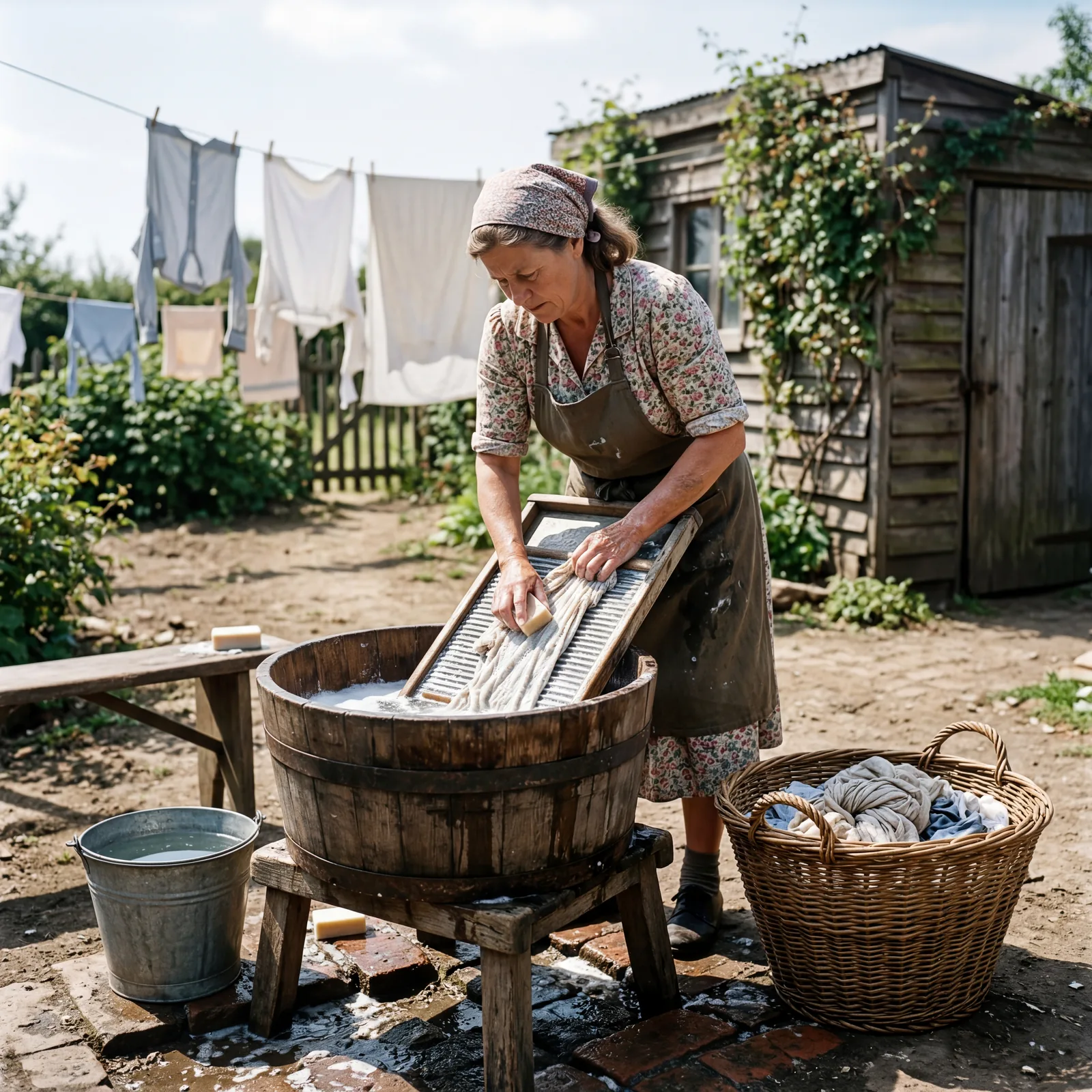
Laundry was a full-day event. Not a chore you fit in around other things.
The washboard sat in a galvanized tub filled with heated water and homemade lye soap. You worked each piece of clothing by hand, pressing and scrubbing against the ridged surface. Whites first. Then colors. Then work clothes last, in the darkest, most used-up water.
Monday was wash day in most American households, and that tradition was so consistent it had a name. The sequence was strict because the water was precious and it had to last.
Every shirt you wore that week had been pressed against that board by someone’s hands. You knew what it cost to get clothes clean. So you didn’t get them dirty if you could help it.
27. Washing Dishes in a Basin with Heated Water
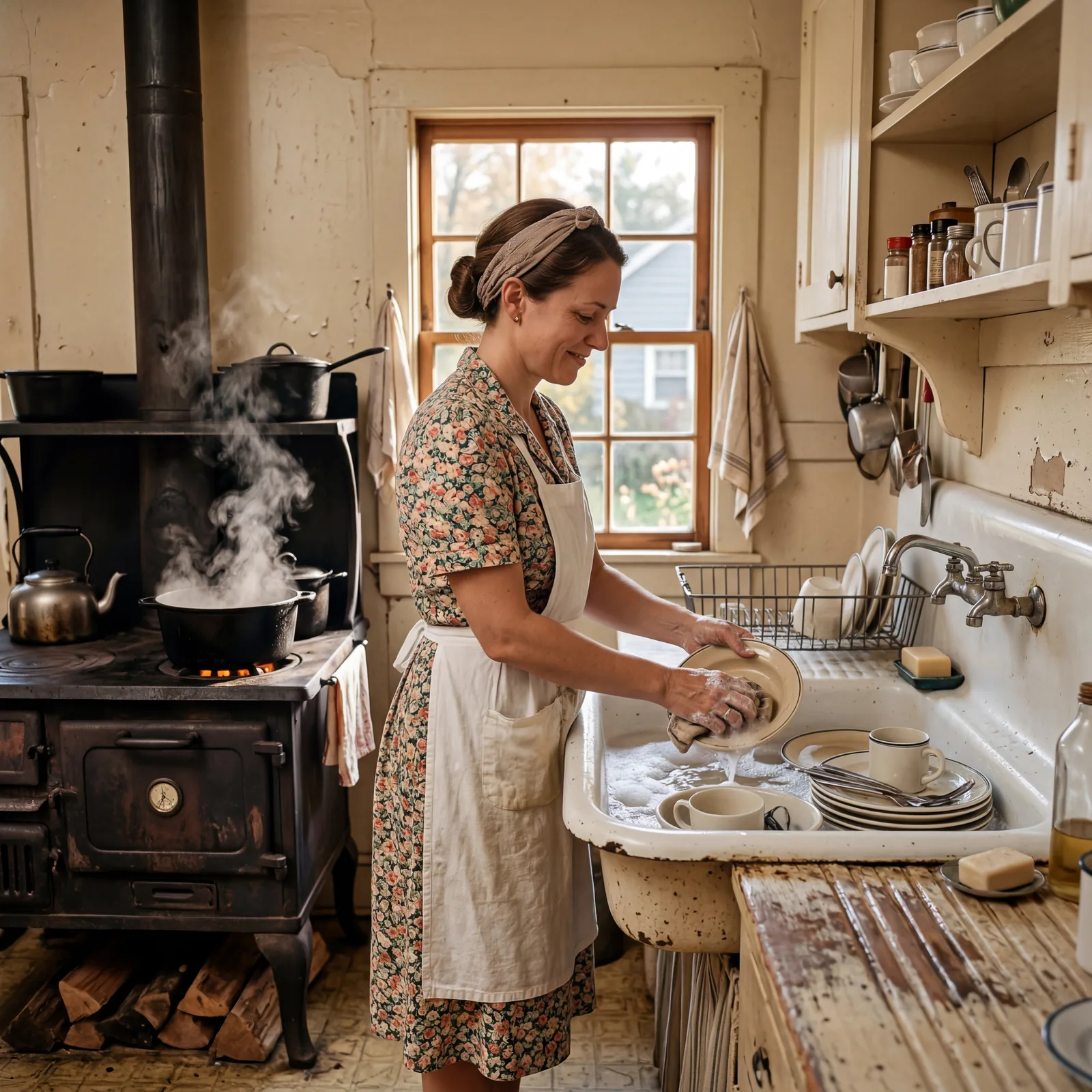
There was no hot tap. You heated the water first.
A pot went on the stove at the end of every meal. When it was warm enough, it went into the basin. You washed in that water, and you were careful with it. Every drop had been heated on purpose.
Running hot water in American homes was still far from universal in the 1930s. Rural homes often had no running water at all. Even in cities, hot water required a boiler, and boilers required fuel, and fuel cost money.
Washing dishes took longer when you had to boil the water first. So you used fewer dishes. The whole system was built around scarcity, and it worked.
26. Preserving Eggs in Water Glass
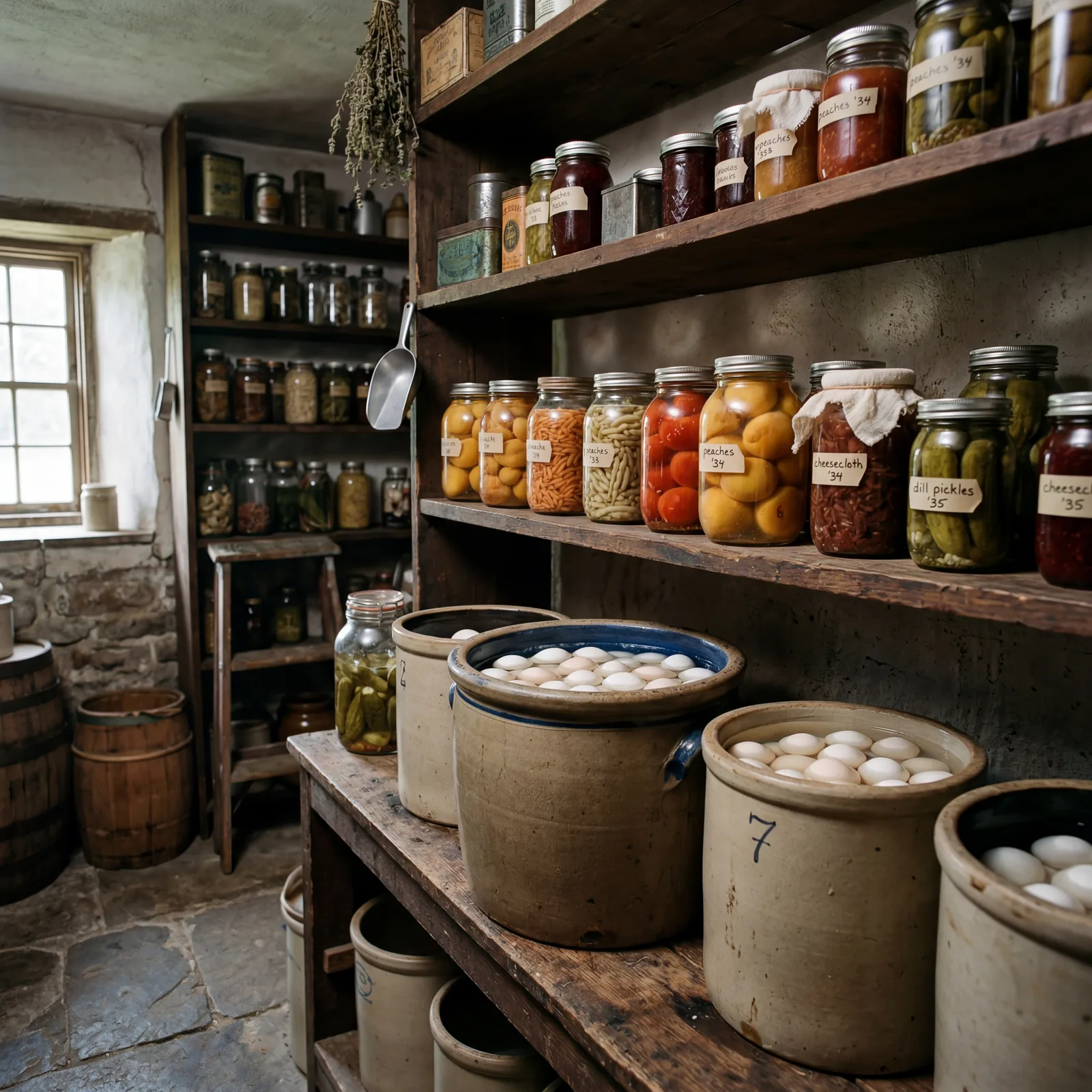
Eggs in spring were plentiful. Eggs in winter were not. So you preserved them in summer for the months ahead.
Water glass is sodium silicate, a thick liquid that seals the pores of an eggshell and keeps it fresh for up to nine months. You submerged unwashed, freshly laid eggs in a crock of the solution and stored them in the cellar. The eggs came out slightly firmer than fresh, fine for baking or scrambling.
Sodium silicate was sold at pharmacies and general stores specifically for egg preservation throughout the early 20th century. It was a routine purchase for farm families before home refrigeration became affordable.
Your great-grandmother knew chemistry she never called chemistry. She just called it getting through winter.
“What’s coming up next is the one that catches people off guard every time.”
25. Keeping a Sunday Best Outfit Worn Only Once a Week
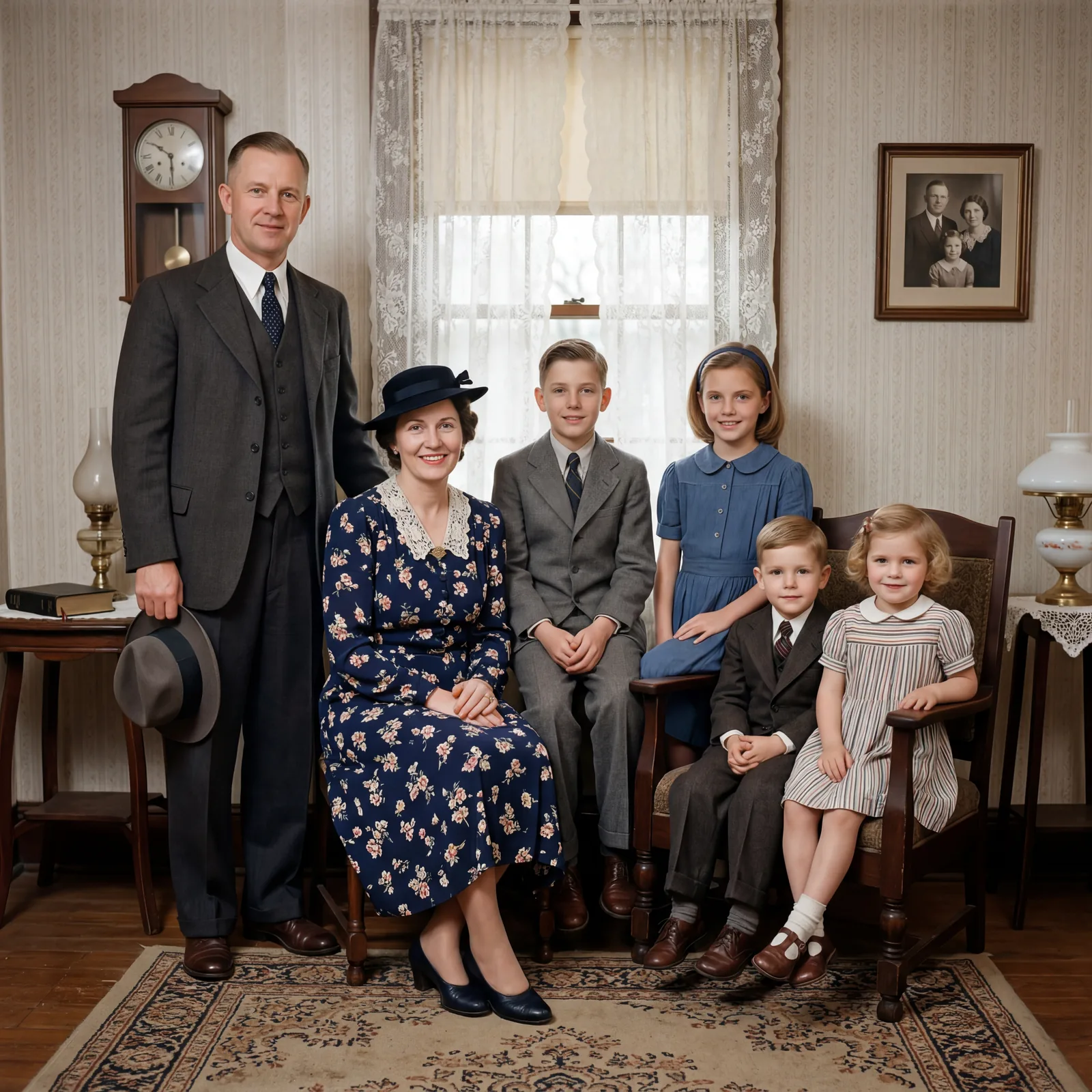
Most people in the 1930s owned two sets of clothes. Maybe three.
You had your everyday clothes and your Sunday clothes. The Sunday outfit came out once a week, for church and possibly a visit. It went back in the closet the moment you got home. You changed before you did anything else, because that dress or that suit had to last years, and it only lasted years if you treated it like it mattered.
Textile production and retail clothing were luxuries that Depression-era wages couldn’t easily absorb. Ready-to-wear existed, but buying new clothes regularly was something only the comfortable could do.
Caring for what you owned wasn’t a virtue they preached. It was arithmetic.
24. Writing Letters Instead of Calling
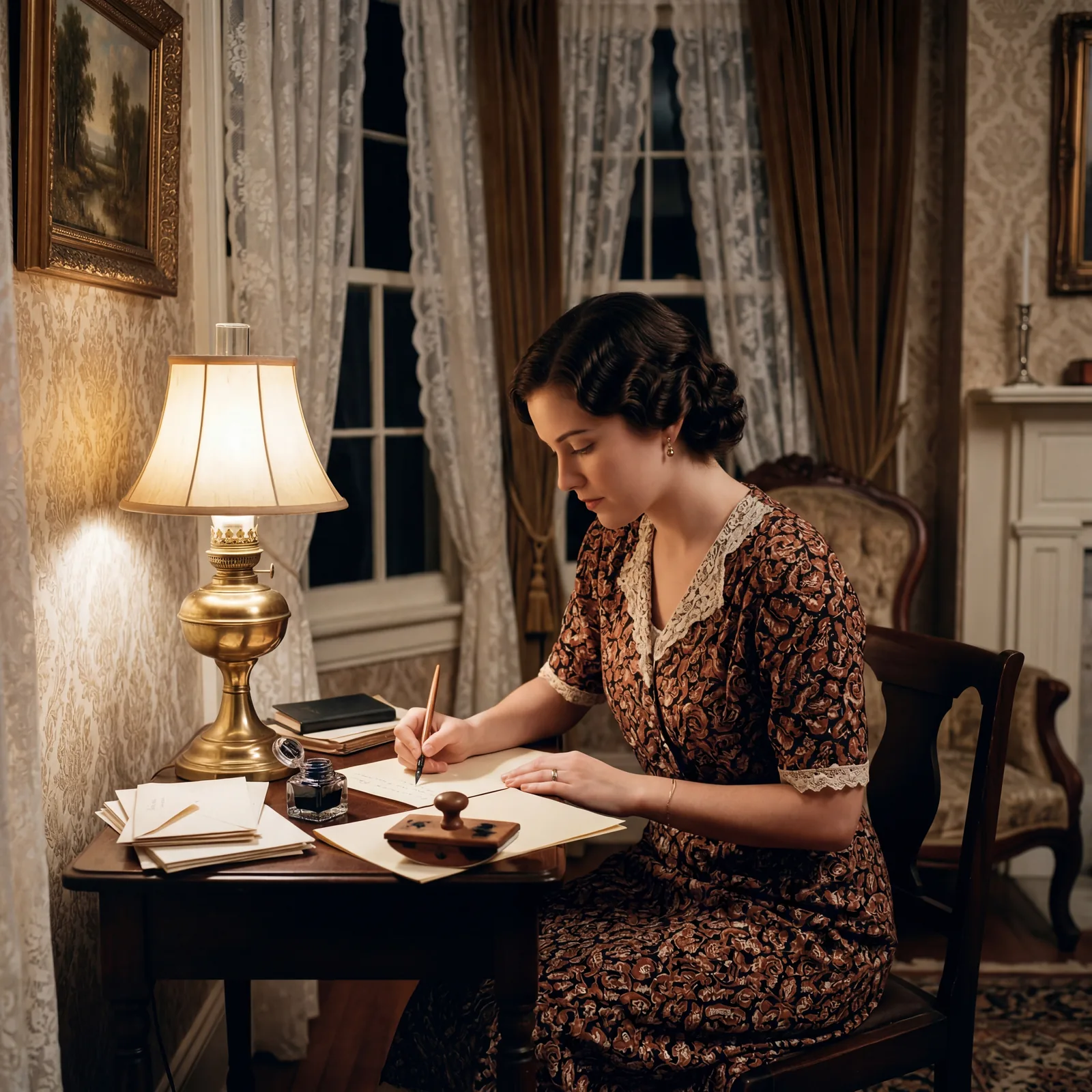
A phone call in 1930 was an event. A letter was how you actually stayed in touch.
You sat down, you thought about what you wanted to say, and you wrote it out. Then you waited. A letter from a sibling two states away might take a week to arrive, and you’d write back before you could expect a reply. The conversation moved slowly, and you chose your words because paper wasn’t free.
Phone ownership in American homes sat at roughly 40 percent in 1930, and long-distance calls were expensive enough that many families avoided them entirely. Letters were simply the normal mode of communication.
Every relationship your great-grandparents maintained across distance was built in sentences they had to mean.
23. Borrowing from Neighbors
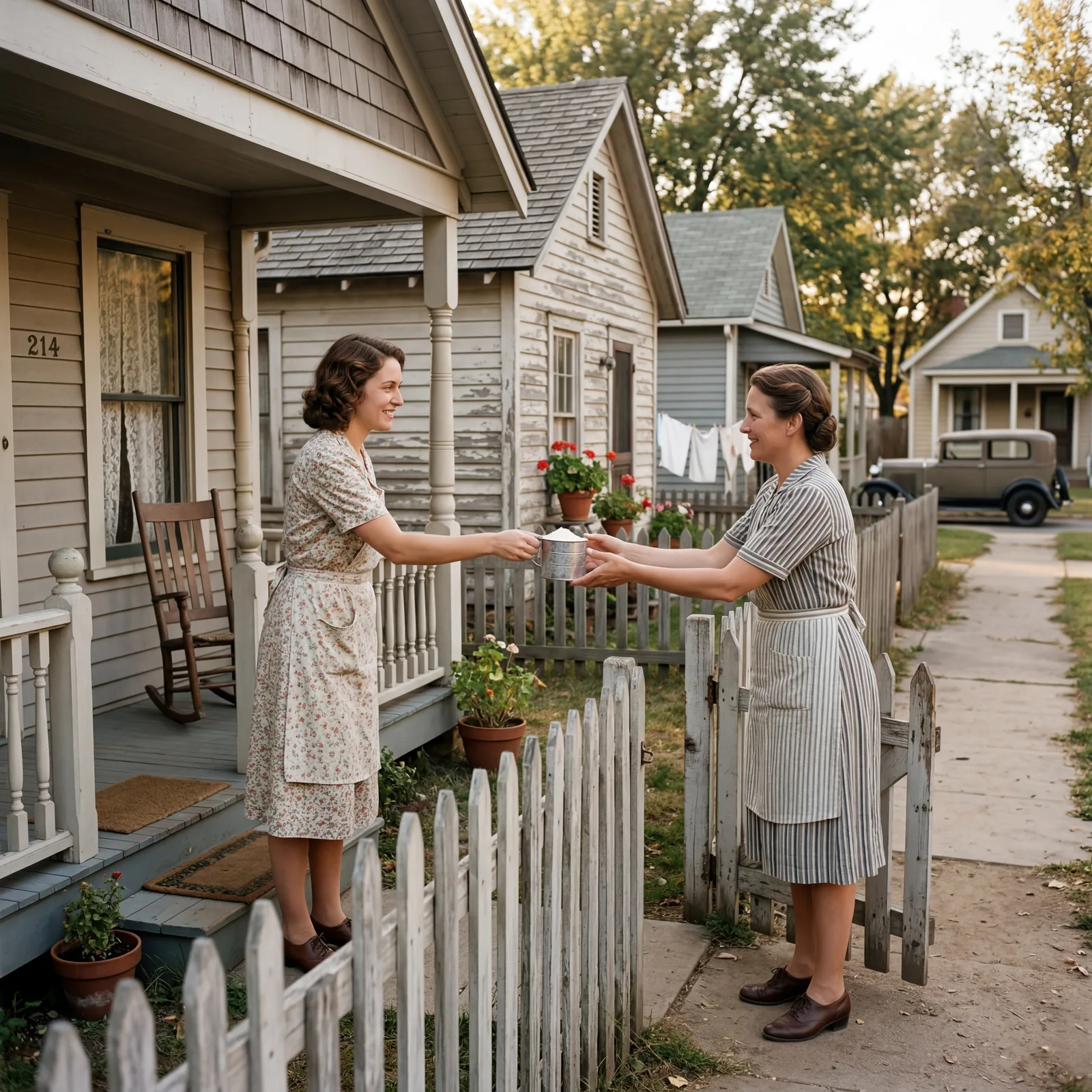
You didn’t run to the store when you ran out of something. You knocked on the door next door.
A cup of sugar, a tool you needed for one afternoon, a pot large enough to cook for a crowd. Neighbors lent without keeping score because the accounting was understood. You’d be on the other end of that exchange within the month. The whole arrangement depended on everyone participating.
Community borrowing was so embedded in Depression-era life that sociologists later studied it as an informal mutual aid system. It reduced what each family needed to own outright and built relationships that served everyone when times got harder.
The neighbors knew what you needed because they needed the same things. That knowledge held communities together in ways we don’t have good words for now.
22. Making Do with What You Had
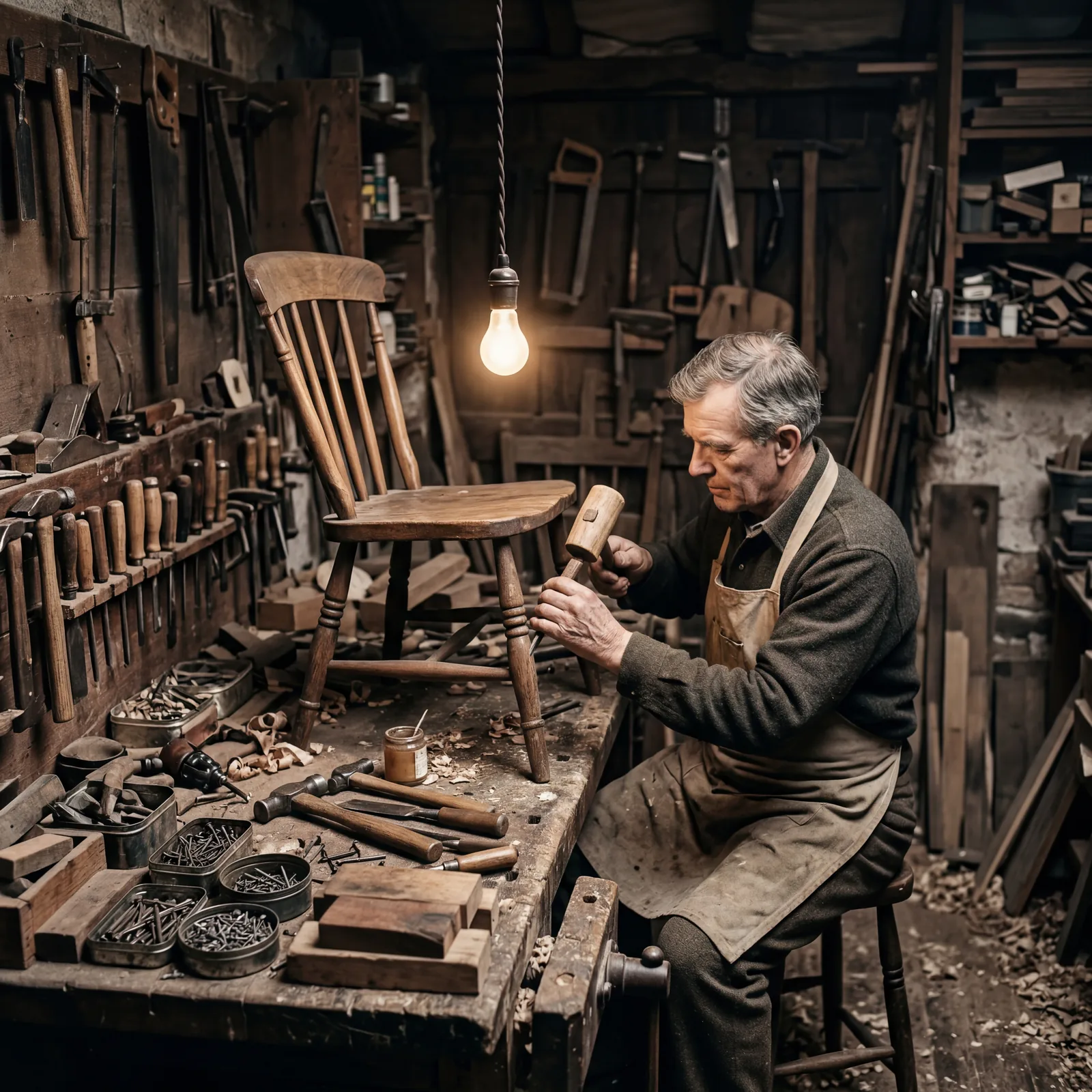
If something broke, you fixed it. If you couldn’t fix it, you found a use for the pieces.
A cracked bowl became a planter. A worn-out shirt became a rag, then a patch for something else. A broken handle was replaced. Things weren’t discarded until there was genuinely nothing left to do with them, and that point came much later than you’d think.
The disposal economy didn’t exist yet. Landfills weren’t a concept most people interacted with. What you had was what you worked with, and working with it was simply how life operated.
Resourcefulness in the 1930s wasn’t a personality trait. It was just the only option, and living inside the only option long enough makes it invisible.
21. Storing Root Vegetables in a Root Cellar
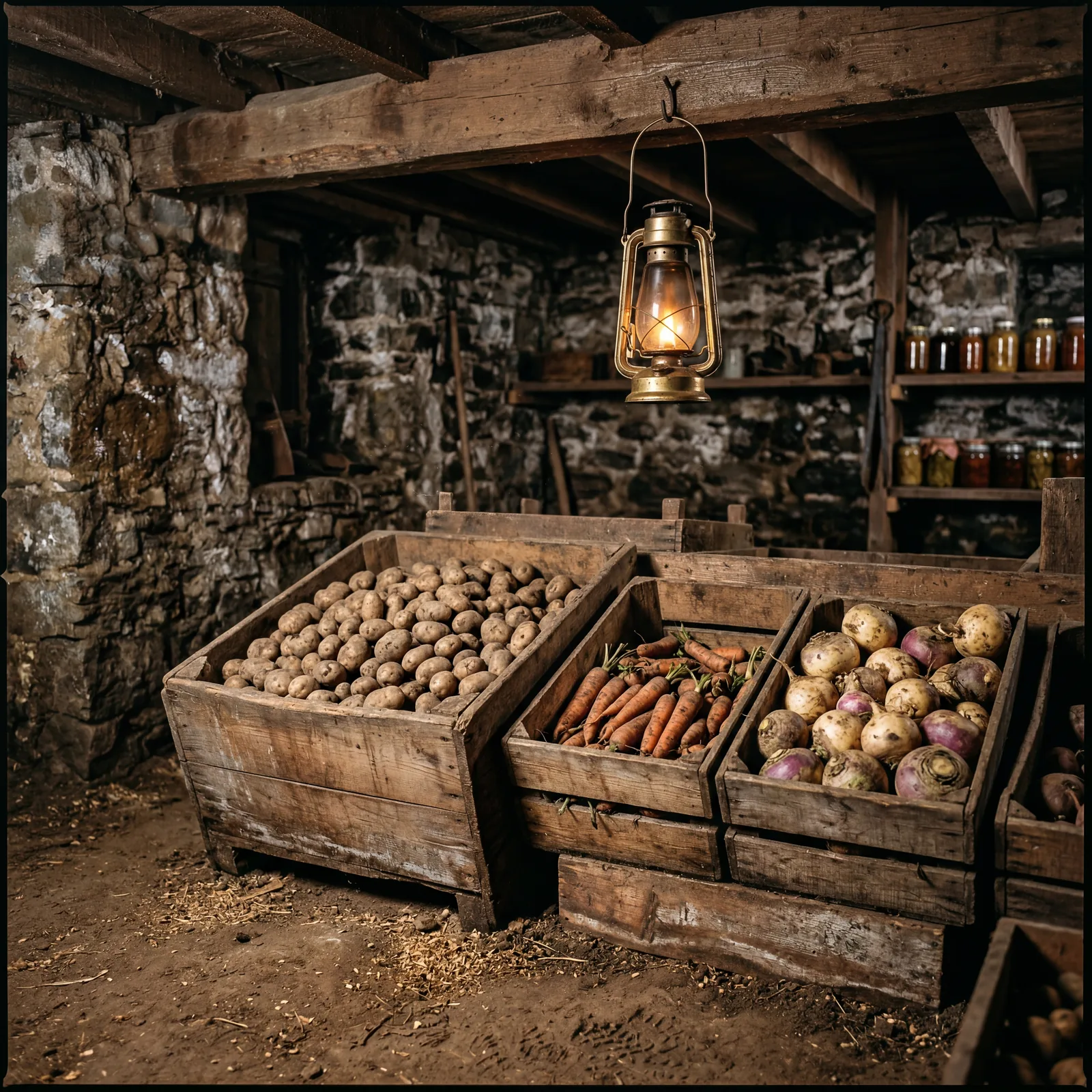
The root cellar was the refrigerator. It was dug into the earth for a reason.
Below the frost line, temperatures stayed between 32 and 40 degrees year-round without any power at all. Potatoes, turnips, carrots, beets, and cabbages could last months in that environment. A well-stocked root cellar in October was a family’s insurance policy against February.
Root cellars were a standard feature of American farmhouses and many rural homes well into the mid-20th century. Urban families who lacked them sometimes used cool basement corners or storage pits. The knowledge of how to pack and layer vegetables for maximum storage life was passed from mother to daughter as practical education.
The earth itself was the technology. You just had to know where to dig.
“It only gets more specific from here.”
20. Sharing a Party Line Telephone with Neighbors
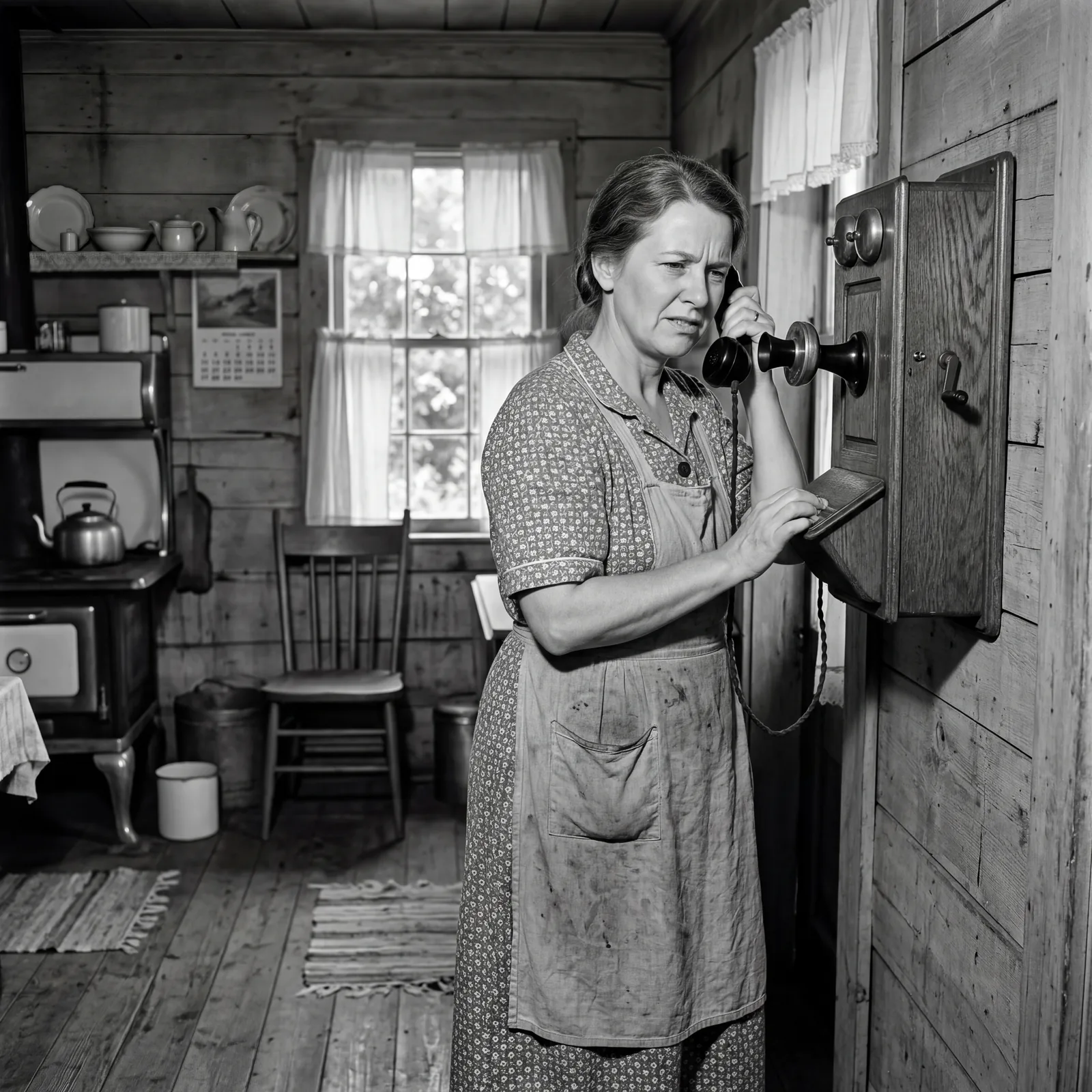
Your phone line wasn’t yours. It was shared with two, four, sometimes eight other households on the same wire.
Everyone on the party line could pick up and listen to anyone else’s call. Some people made a habit of it. You developed a code of polite pretense where everyone knew eavesdropping happened and no one admitted to doing it. Gossip moved fast on a party line, and private conversations required careful wording.
By 1930, rural telephone cooperatives had extended phone service to parts of America that large companies ignored, and party lines were the economic model that made it possible. A shared line cost less than a private one.
You learned to say everything important between the lines. The neighbors were always listening, and everyone knew it.
19. Sewing and Mending All Clothing at Home
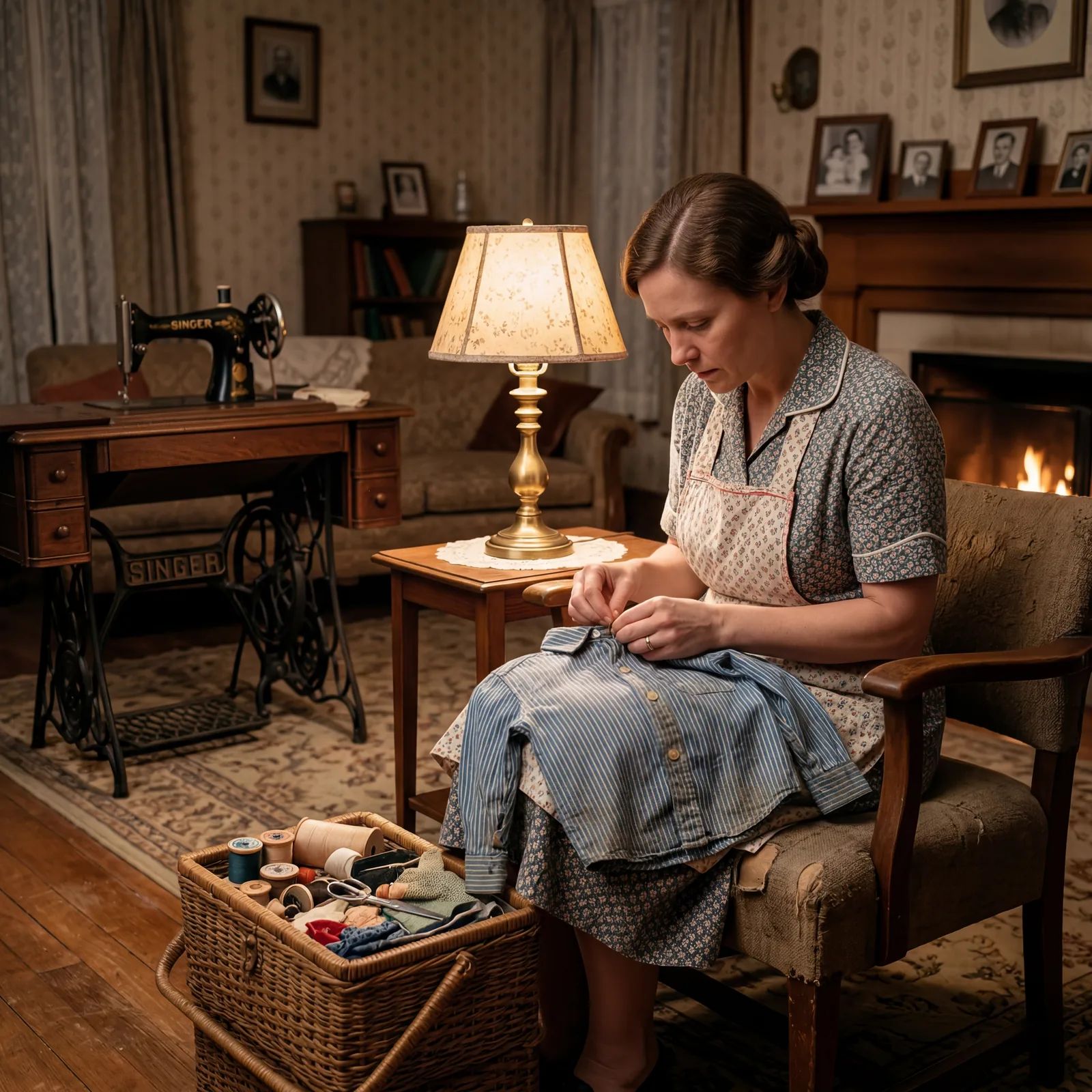
Buying new clothes wasn’t the first option. It was barely an option at all.
When a seam split, you re-sewed it. When a knee wore through, you patched it from a scrap of similar fabric. When a child outgrew a dress, it was let out if possible, or cut down for a younger sibling. Nothing was discarded while it could still be worn by someone.
Home sewing was a core domestic skill throughout the 1930s. Singer sewing machines appeared in millions of American homes. Feed sacks were designed with this in mind: cotton flour and grain sacks came in floral and gingham prints specifically so families could sew them into clothing.
The dress might be made from a flour bag. But it was sewn with care, and it lasted.
18. Keeping Chickens in the Backyard
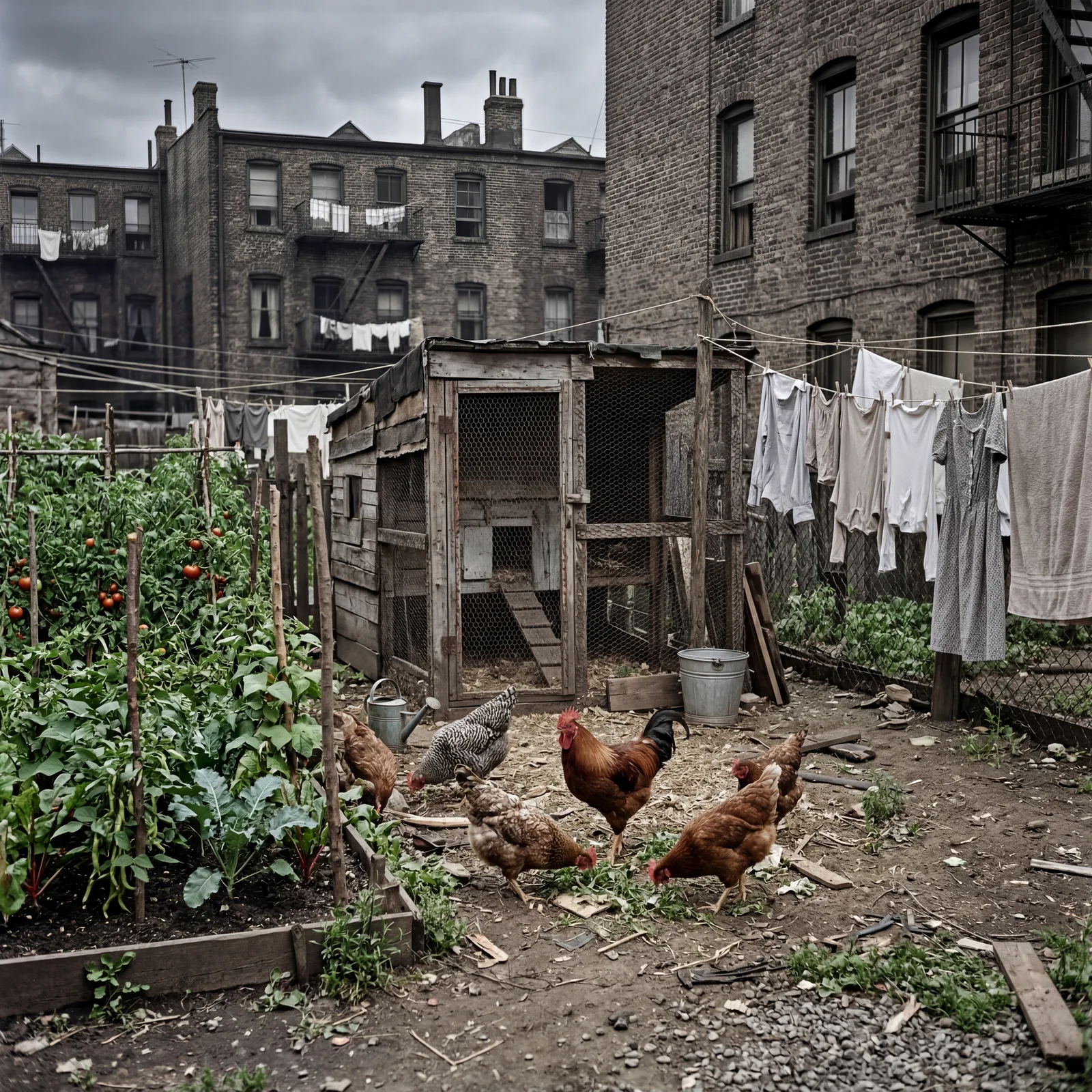
City families kept chickens. This is not a rural story.
Backyard chicken-keeping was common enough in American cities during the 1930s that municipalities had to actively legislate against it in later decades. A half-dozen hens in a small coop meant fresh eggs daily, and occasionally meat. They ate kitchen scraps. They cost almost nothing to keep.
Studies of Depression-era urban households show that food production in city backyards, including chickens, rabbits, and kitchen gardens, provided a meaningful supplement to family diets at a time when buying protein was difficult.
The fence between the garden and the chicken run was one of the most important structures in 1930s city life. Most people today have never seen one outside a photograph.
17. Going to Church Every Sunday Without Exception
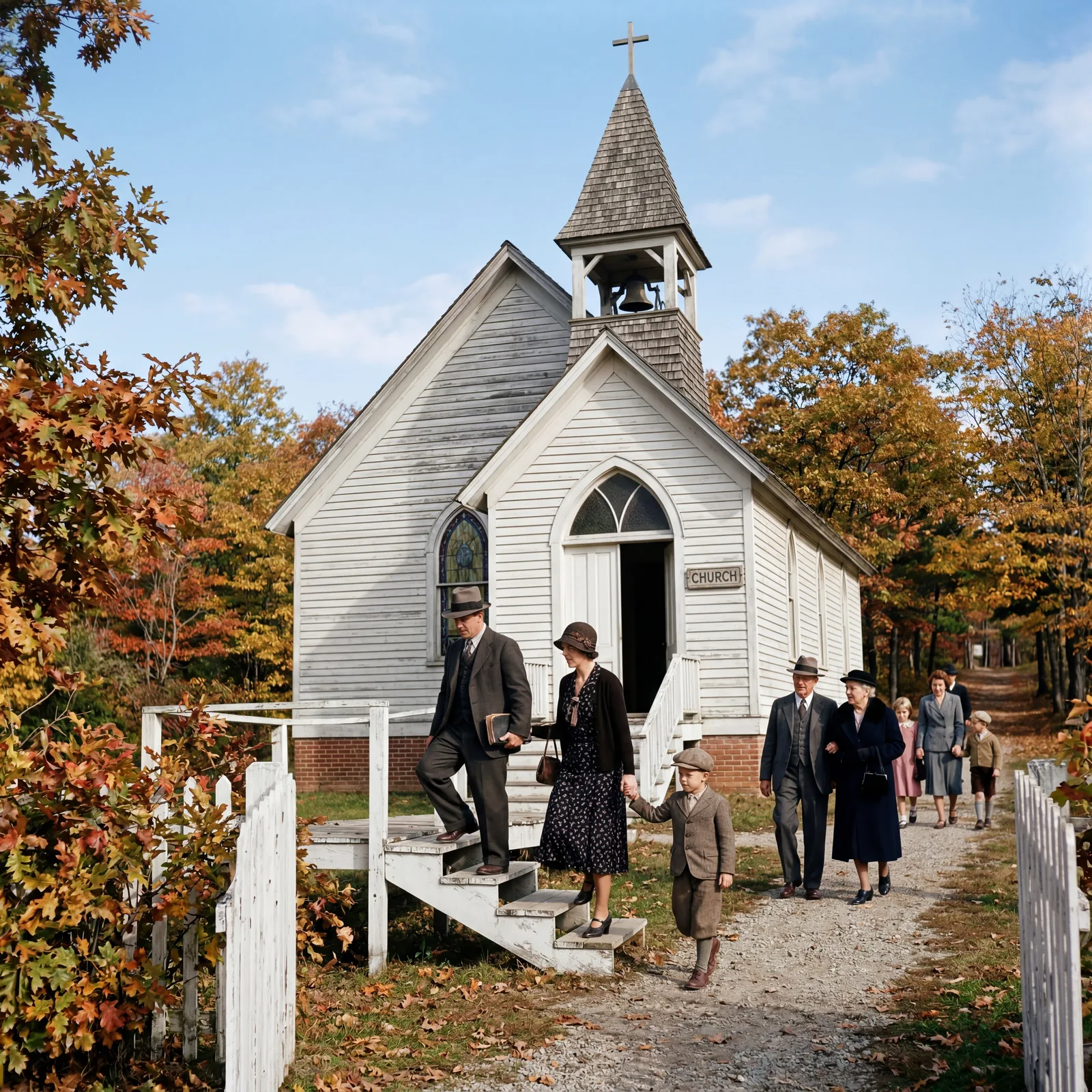
Sunday church attendance in the 1930s wasn’t spiritual enthusiasm. It was social infrastructure.
The church was where you saw your community, received news, asked for help when things got hard, and were seen to be participating in the life of the town. Staying home on Sunday was noticed. It signaled something wrong: illness, disgrace, or dangerous independence. You went.
Church membership rates in the United States hovered around 70 percent through the 1930s, and actual attendance was far more consistent than it is today even among members. The Depression increased attendance, not decreased it.
The Sunday service wasn’t separate from practical life. It was how practical life held together.
“The next one would be illegal in most places today.”
16. Paying Bills in Cash Only

If you didn’t have the money, you didn’t buy the thing. That was the whole system.
Consumer credit existed in the 1930s, but the Depression had destroyed trust in it. Installment plans had partly caused the crash, and ordinary families approached debt with something close to moral revulsion. You saved, and then you spent. The sequence was not negotiable.
Federal Reserve data from the early 1930s shows consumer credit contracted sharply as households paid off installment debt and avoided new borrowing. Cash transactions dominated retail. A family budget was a physical object: an envelope with actual money in it for each category of spending.
Running out of envelope before running out of month meant you went without. That clarity about money wasn’t austerity. It was just what money meant.
15. Using a Coal-Burning Stove for Cooking and Heat
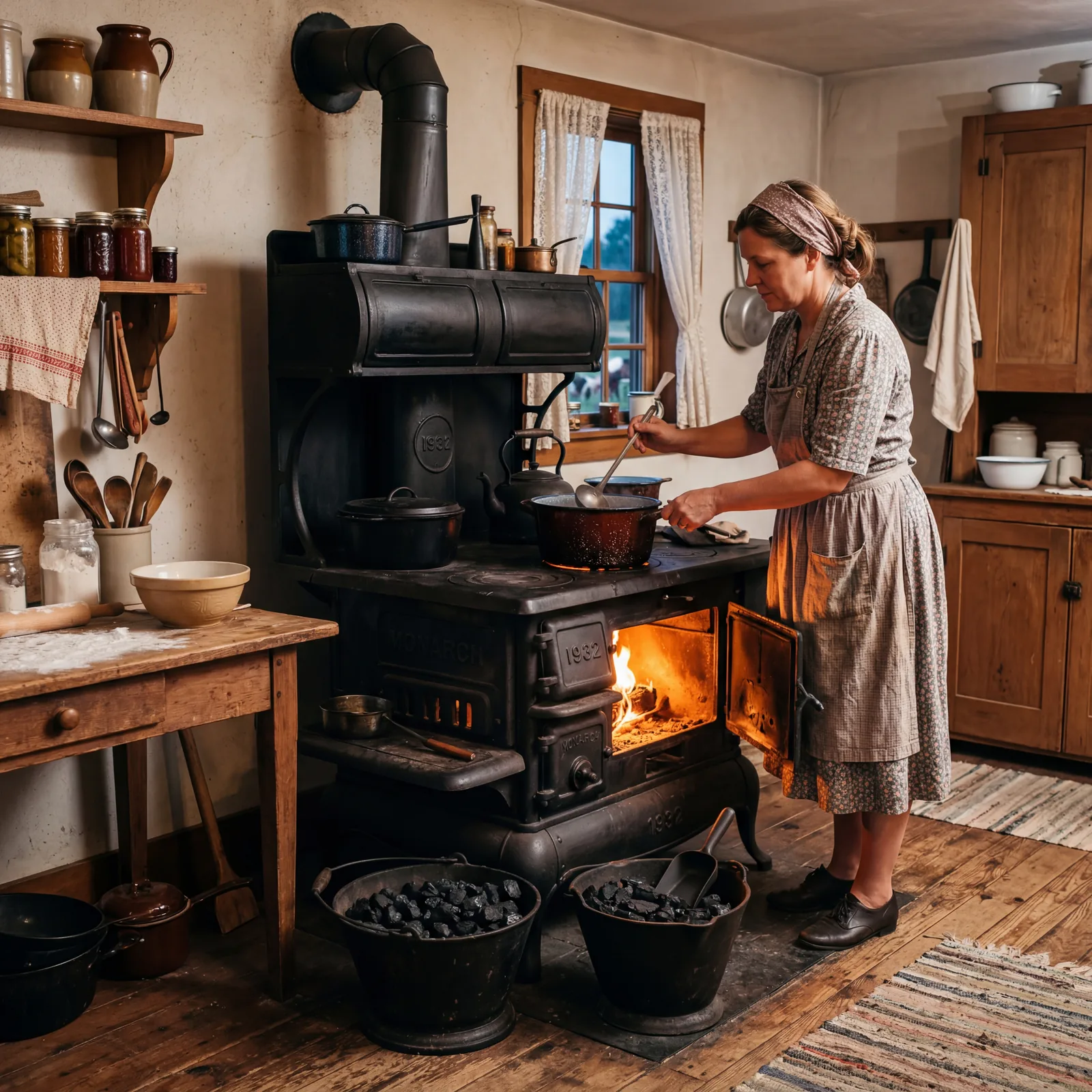
The stove was the center of the house. Not metaphorically. Literally.
A coal or wood-burning range produced the heat that cooked food, heated water, and warmed the room. Families built their routines around it. Someone had to get up first in the morning to start it. The kitchen was the warmest room in the house, which is why everyone gathered there.
Coal stoves required skill to operate. Damper adjustment controlled the burn rate and the temperature. Getting a stove hot enough to bake bread but not so hot it scorched the bottom was something you learned over years.
The appliance that replaced it, the gas range, seemed like a miracle when it arrived. One knob. Instant heat. Controlled flame. The gap between those two things is hard to overstate.
14. Canning Everything from the Garden
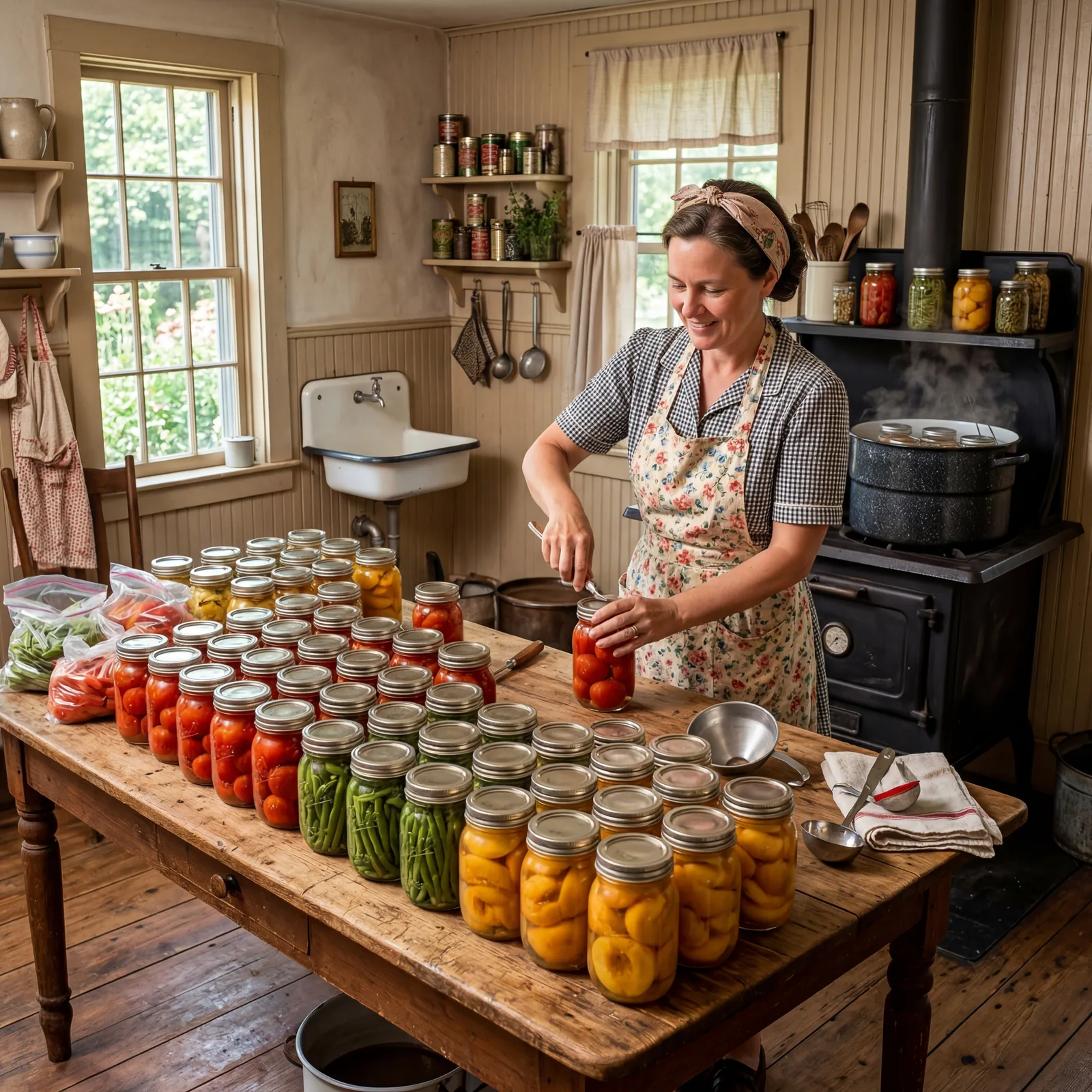
The summer garden wasn’t for eating in summer. It was for eating in January.
Canning season ran from late July through September and consumed weeks of work. Tomatoes, beans, corn, peaches, pickles, beets, and anything else the garden produced went into mason jars and into a boiling water bath or pressure canner. A well-stocked pantry shelf in October was the product of months of deliberate work.
USDA canning guides from the 1930s describe it as a domestic skill second only to cooking in importance for rural families. Extension service agents visited farm families specifically to teach safe canning practices, because botulism from improperly sealed jars was a genuine threat.
Those shelves of glass jars weren’t decoration. They were the reason the family ate in February.
13. Sending Children to Work at 12 to 14 Years Old
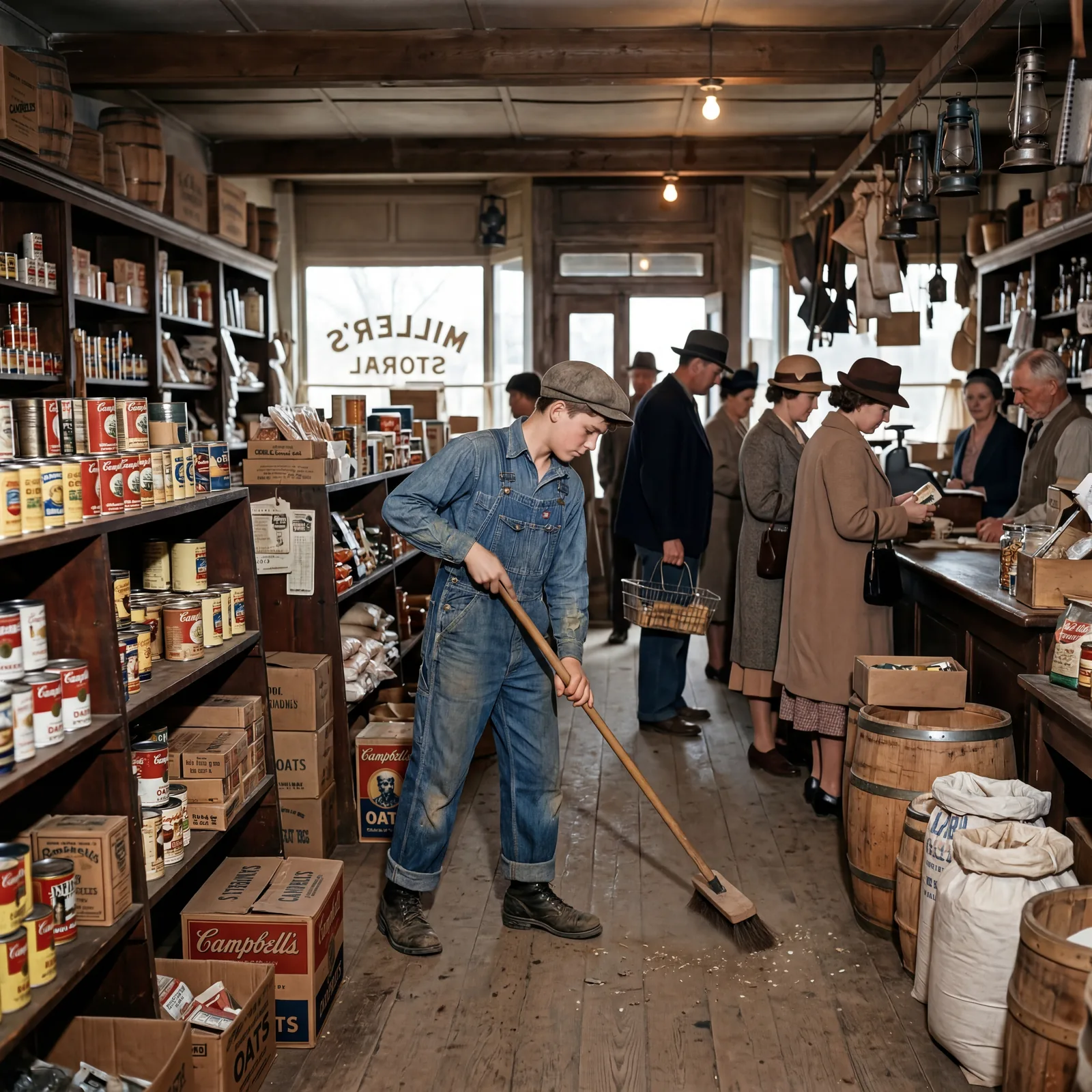
A fourteen-year-old in 1930 was often contributing to the household income. This wasn’t considered a problem.
Boys took jobs at farms, stores, gas stations, or anywhere that would have them. Girls took domestic service positions or helped in family businesses. The money went to the family, not to the child. Education beyond eighth grade was a privilege that required a certain level of economic security, and many families didn’t have it.
The Fair Labor Standards Act of 1938 set the first federal minimum age for employment, and even then it permitted children in agriculture. Before that, child labor was widespread and socially accepted across most income levels.
We built child labor laws because millions of children needed them. That fact is worth sitting with.
“What’s coming up next is the one that catches people off guard every time.”
12. Buying from Traveling Salesmen
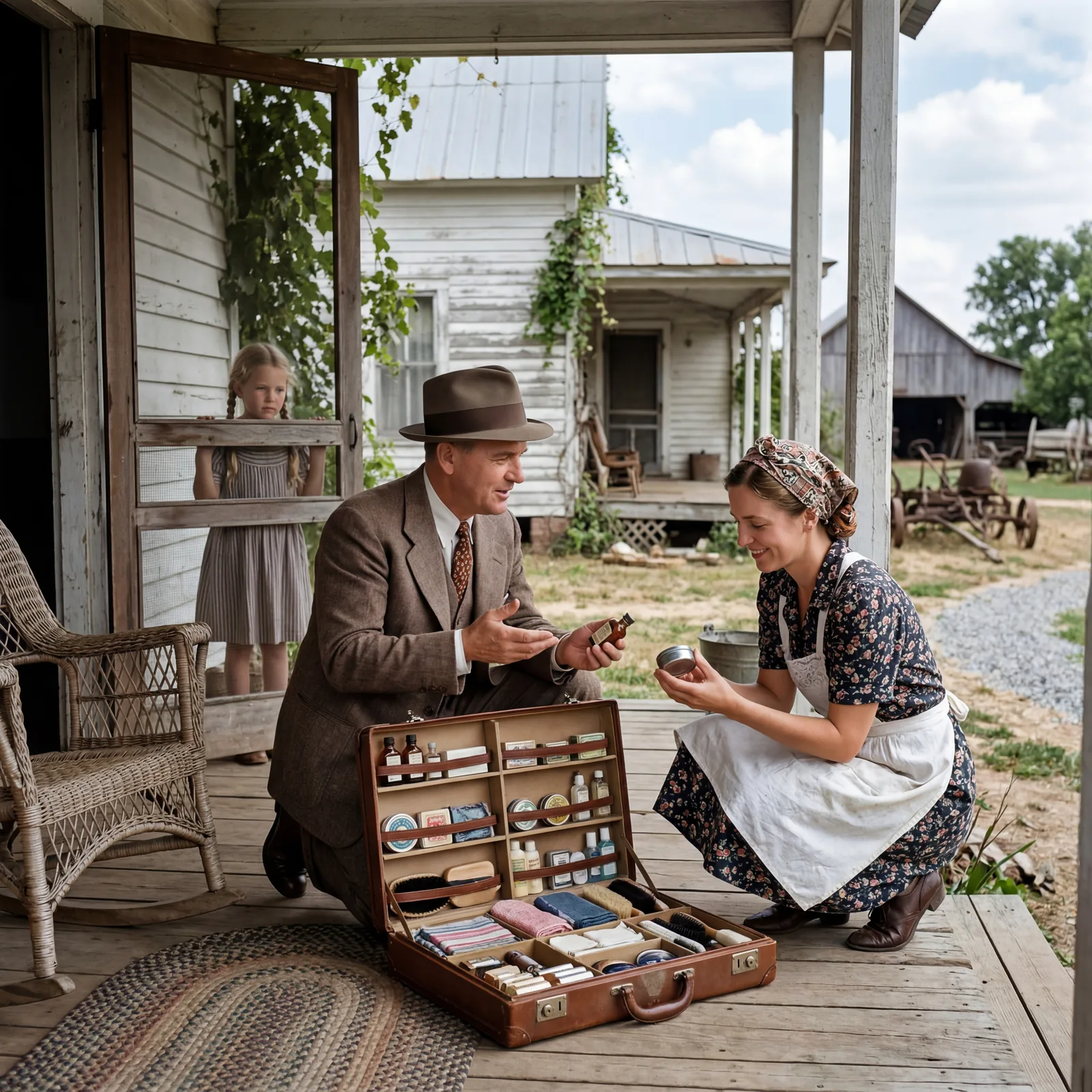
The store came to you. Because you couldn’t always get to the store.
The Watkins man, the Fuller Brush man, the Raleigh man. They arrived at the door with cases full of household products: extracts, spices, liniments, brushes, medicines. Rural families especially depended on them for goods that required a trip to town, and trips to town cost time and fuel neither of which were free.
The J.R. Watkins Company, founded in 1868, had tens of thousands of traveling salesmen during the Depression era. Direct-to-door sales were a significant retail channel before discount stores, highways, and reliable rural automobile ownership changed the equation.
That knock at the door was a delivery notification, a social visit, and a shopping trip all at once. People were often genuinely glad to see them.
11. Saving String and Rubber Bands
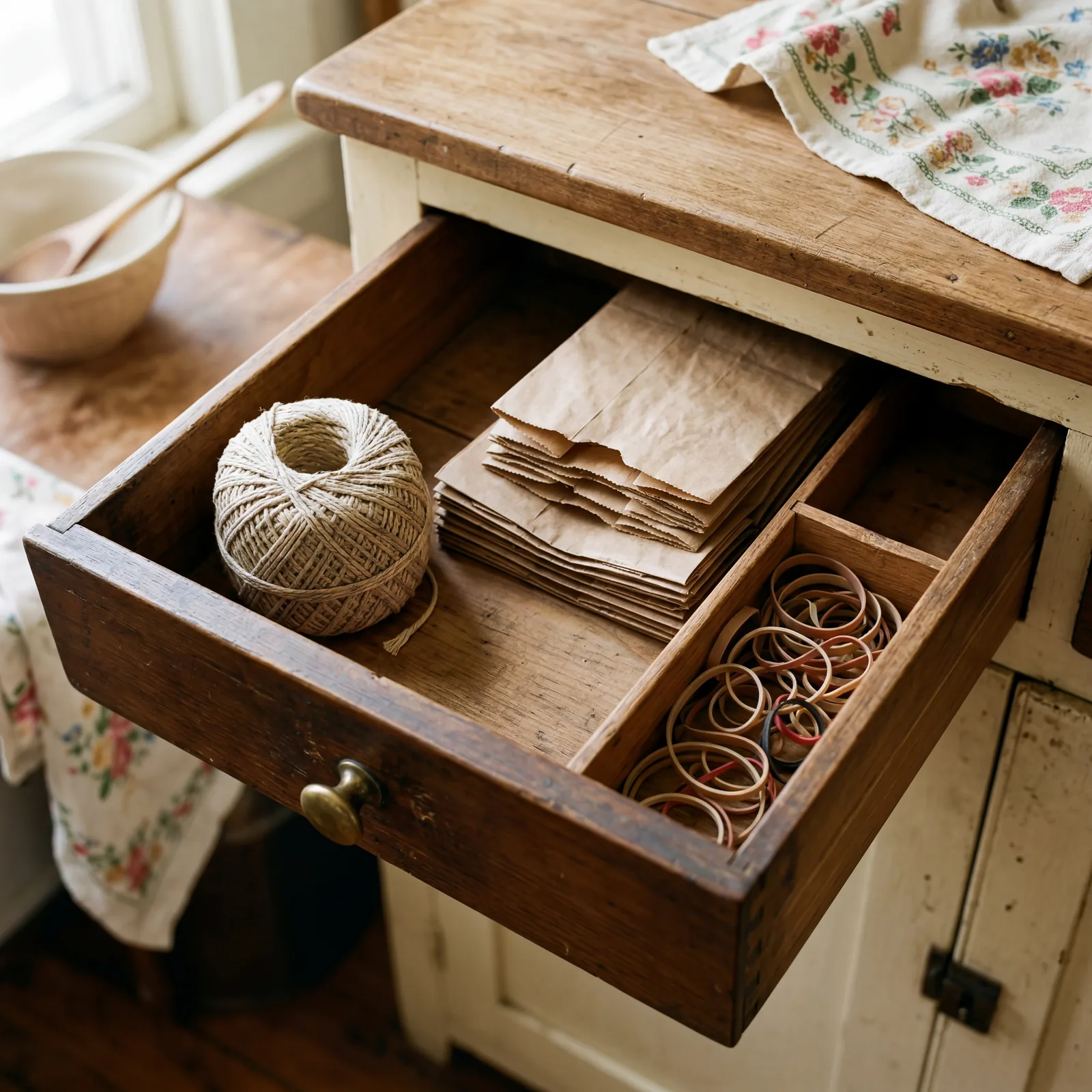
A ball of saved string sat in the kitchen drawer of nearly every 1930s home. You added to it every time a package arrived.
String was useful. Rubber bands were useful. Twist ties, buttons cut from worn-out clothes, and the paper that wrapped parcels were all saved without thought. Not because someone told you to. Because throwing away a useful object felt wrong in a way that required no explanation.
The habit was so universal that it became a generational marker. Americans who lived through the Depression kept string balls and rubber band collections their entire lives, long after scarcity ended. Their children found these collections after they died and didn’t quite know what to do with them.
The urge to save a useful thing outlasted the reasons for saving it by fifty years. That’s how deep the habit ran.
10. Making Butter at Home by Hand
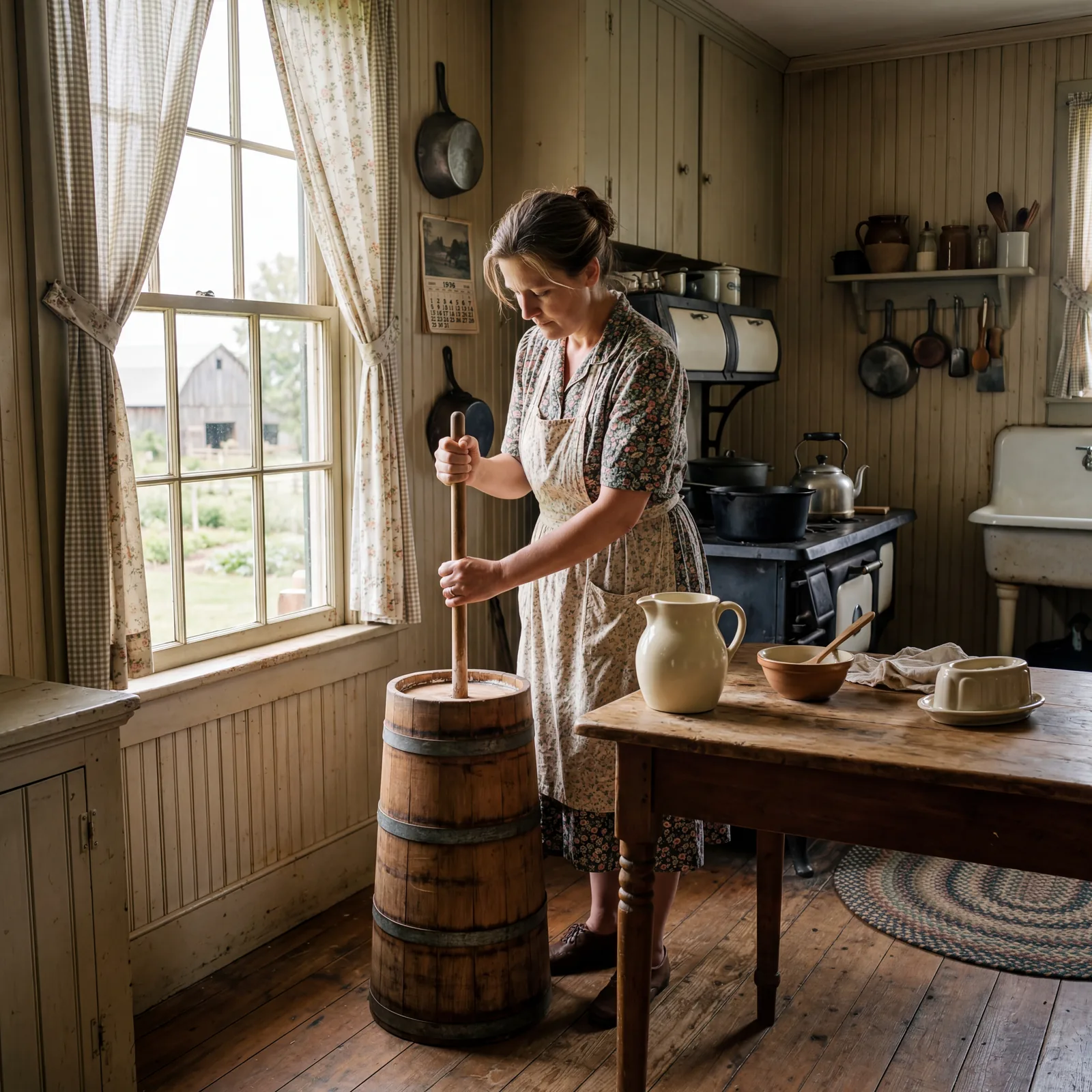
Store-bought butter existed. But if you kept a cow or could get cream, you made your own.
Churning butter is simple in principle. You agitate cream until the fat globules break and clump together, separating from the buttermilk. A dasher churn did the work, but the work still took twenty to forty minutes of steady effort. Then you worked the butter to press out remaining liquid, salted it, and pressed it into a mold.
American farm families producing their own dairy products were common well into the mid-20th century. Butter made at home cost less than purchased butter and used cream that would otherwise spoil. Nothing about the process was unusual.
You knew what was in your butter because you put it there. That certainty about food is something we’ve entirely traded away.
“It only gets more specific from here.”
9. Listening to the Radio as a Family
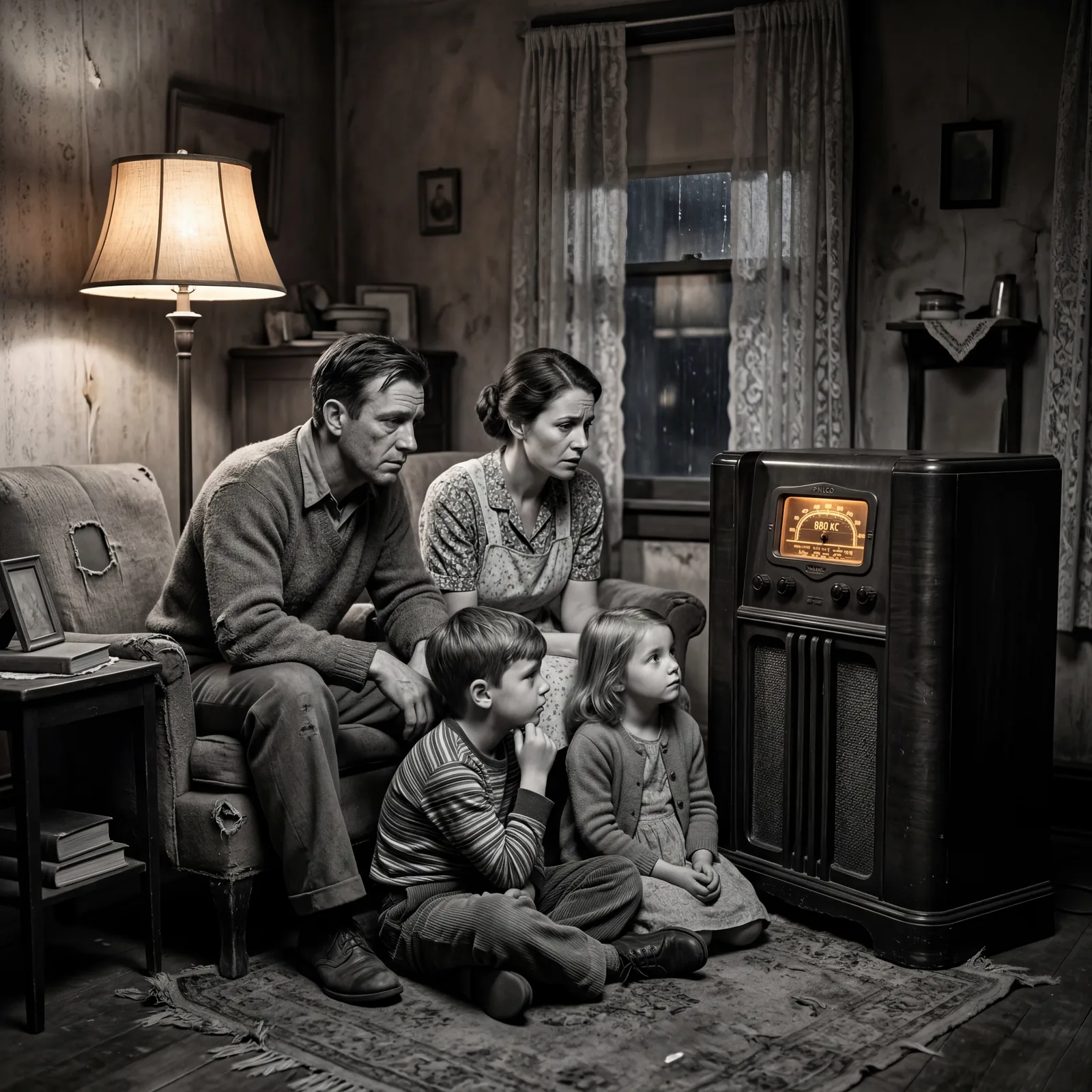
The radio didn’t play in the background. It was the event.
When a program came on, the family gathered. You sat together and listened. Franklin Roosevelt’s fireside chats drew the whole household to the receiver. The Lone Ranger, Amos and Andy, Jack Benny. These weren’t things you half-listened to while doing something else. They were the thing you were doing.
Radio ownership grew from 12 million sets in 1930 to 28 million by 1939. A single receiver in the main room served the whole family. Listening was communal because the technology required it.
We’ve spent the last eighty years engineering listening back into something private and individual. The 1930s family had no choice but to experience sound together, and it turned out to shape everything about how they spent their evenings.
8. Keeping an Ice Box Before Refrigerators
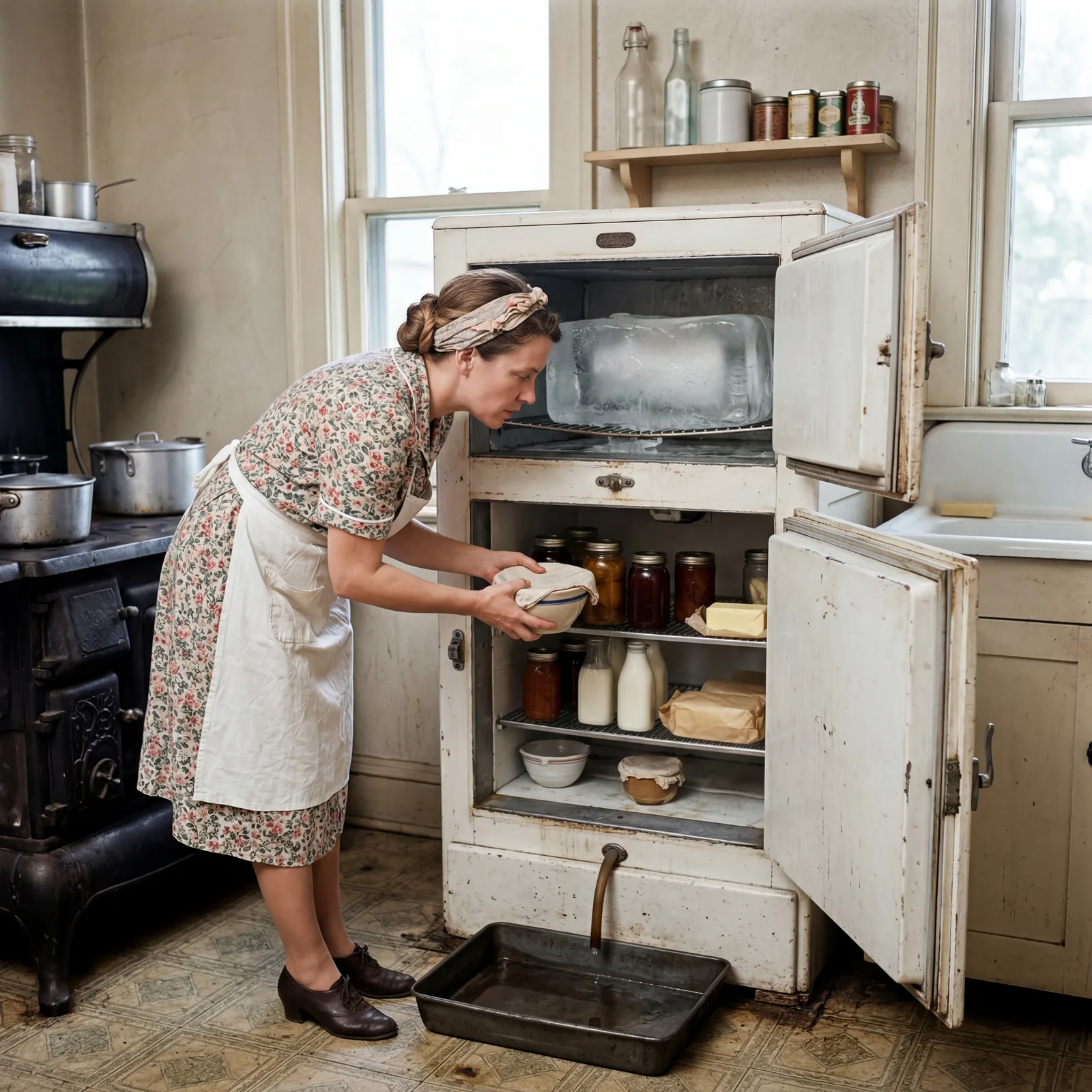
The iceman came twice a week. You planned around him.
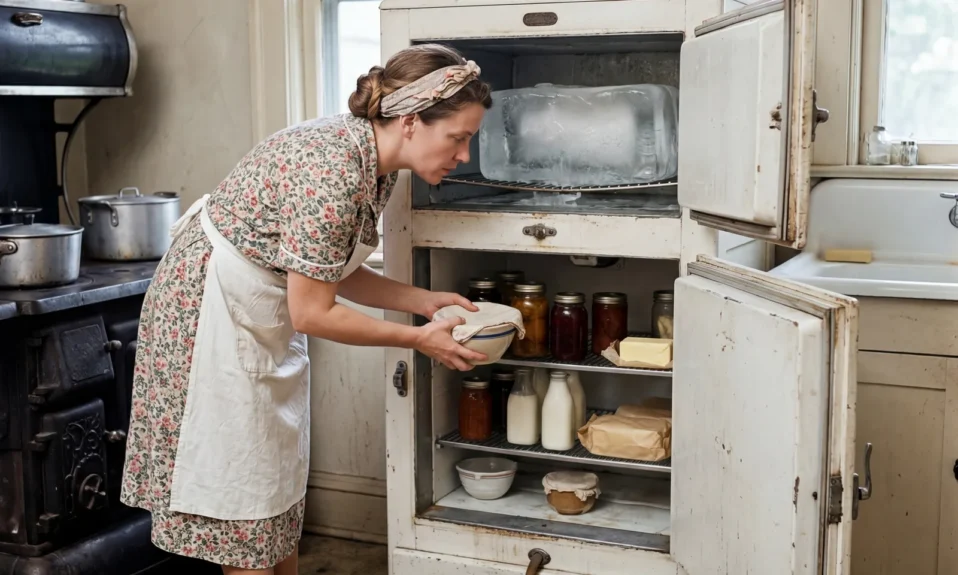
An ice box was an insulated wooden cabinet with a compartment at the top for a block of ice. The cold air fell down and chilled the food below. The ice melted slowly, and a drip pan underneath collected the water. Emptying the drip pan before it overflowed was a daily task that fell, inevitably, on the children.
Electric refrigerators became commercially available in the 1920s but remained unaffordable for most families through the 1930s. Ice delivery was a significant industry in American cities, employing thousands of workers with horse-drawn and eventually motor-driven carts.
You timed your grocery shopping to the ice schedule. Run out of ice mid-week, and the milk went bad. That constraint shaped every meal.
7. Using a Wringer Washing Machine

The wringer was the step between washing and drying. It was also the step most likely to take a finger.
After washing, wet clothes were fed through two rubber rollers that squeezed out the excess water. You cranked by hand or, on powered models, ran a small electric motor. The wrung clothes came out damp rather than soaking and dried faster on the line. The machine didn’t do the washing. It just extracted the water.
Wringer washers represented a significant improvement over the washboard but introduced their own hazard. Fingers, hands, and long hair caught in the rollers caused injuries severe enough that manufacturers eventually added safety releases. Children were kept away from the wringer for good reason.
Every generation of labor-saving device comes with its own specific danger. The wringer was honest about it.
6. Rendering Fat for Cooking
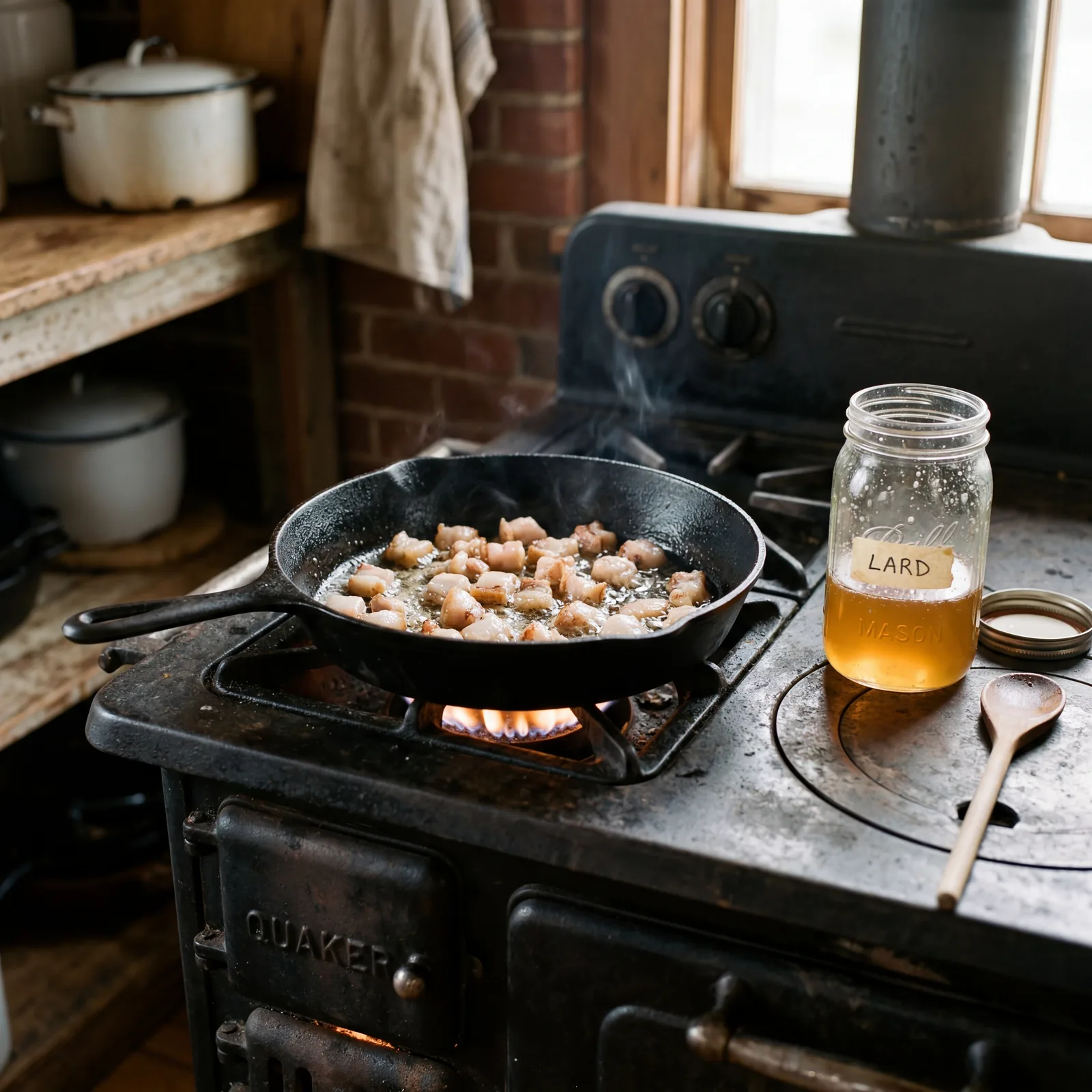
Nothing from an animal was thrown away if it could be eaten or used.
After slaughtering a pig or a chicken, the fat was rendered: cut into pieces, cooked slowly over low heat until the fat melted out and the solids crisped up into cracklins. The clear liquid fat was poured into jars, cooled into lard or tallow, and used for cooking, baking, soap-making, and waterproofing leather.
Lard was the dominant cooking fat in American homes through the 1930s. Crisco had been introduced in 1911, but many families continued using rendered animal fat because it was free. You’d already paid for the pig.
Every time a 1930s cook picked up a can of saved fat from beside the stove, they were completing a transaction that started months earlier in the yard. Waste was something that happened to someone else.
“The next one would be illegal in most places today.”
5. Drying Fruit and Vegetables for Winter
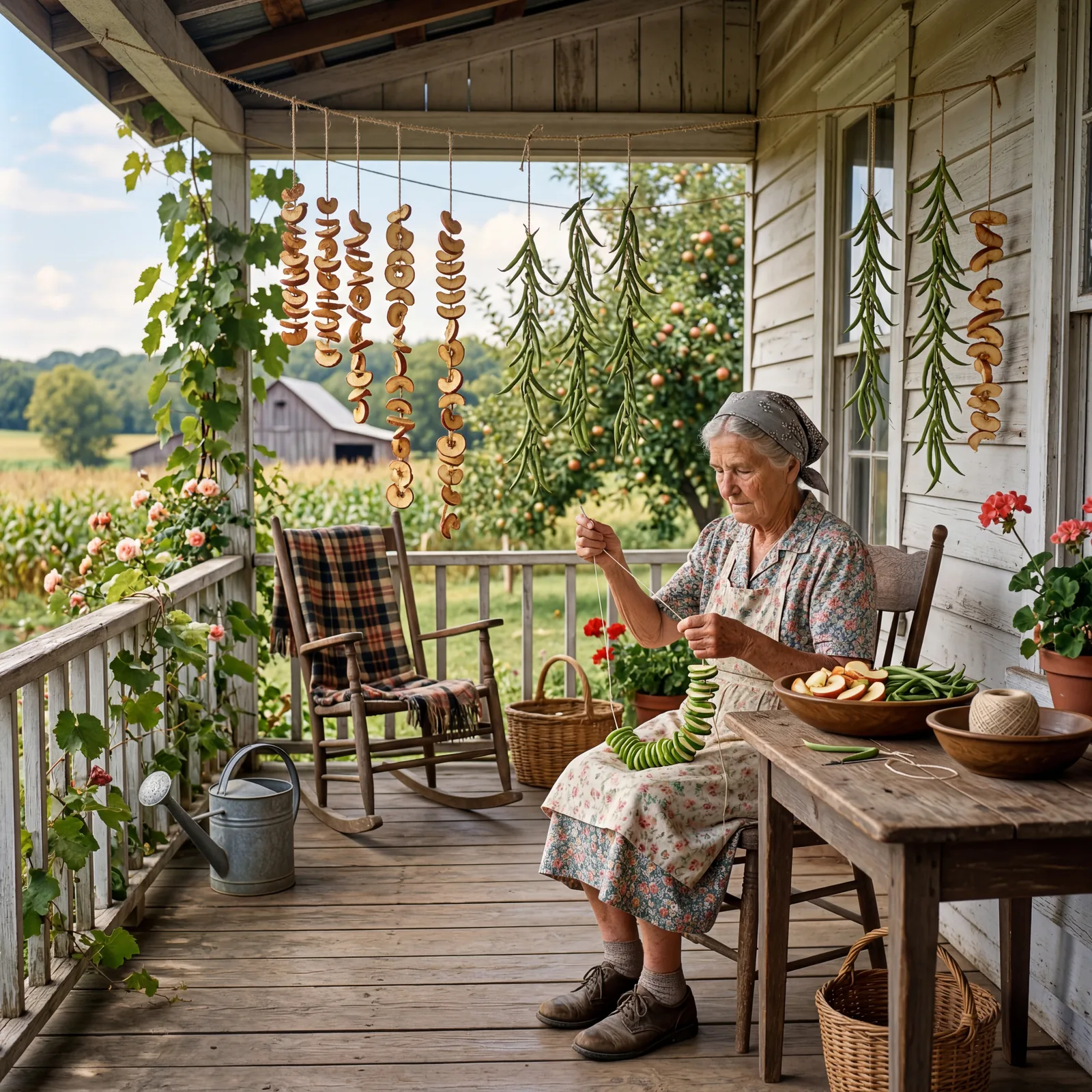
Before the freezer, drying was how you kept summer alive through winter.
Apples were peeled, sliced thin, and hung on strings in the sun or spread on wooden racks in a warm oven. Green beans were threaded on long strings, a practice called “leather britches” across the Appalachian South. Tomatoes, peppers, corn, and herbs were dried and stored in cloth bags or tins. They reconstituted in soups and stews well enough to be worth the work. Readers who enjoy these kinds of details may also want 25 Historic Hotels in the US That Are Absolutely Worth Every Extra Dollar in 202 for another quick detour.
Solar drying required specific weather conditions and took several days, which meant reading the sky accurately before starting. A rain that came in before the apples were done could ruin an afternoon’s work.
Knowing when to start drying and when to wait was its own form of knowledge. It doesn’t live anywhere now except in a few old books and the memory of people who learned it from someone who’s gone.
4. Keeping a Kitchen Garden Even in the City
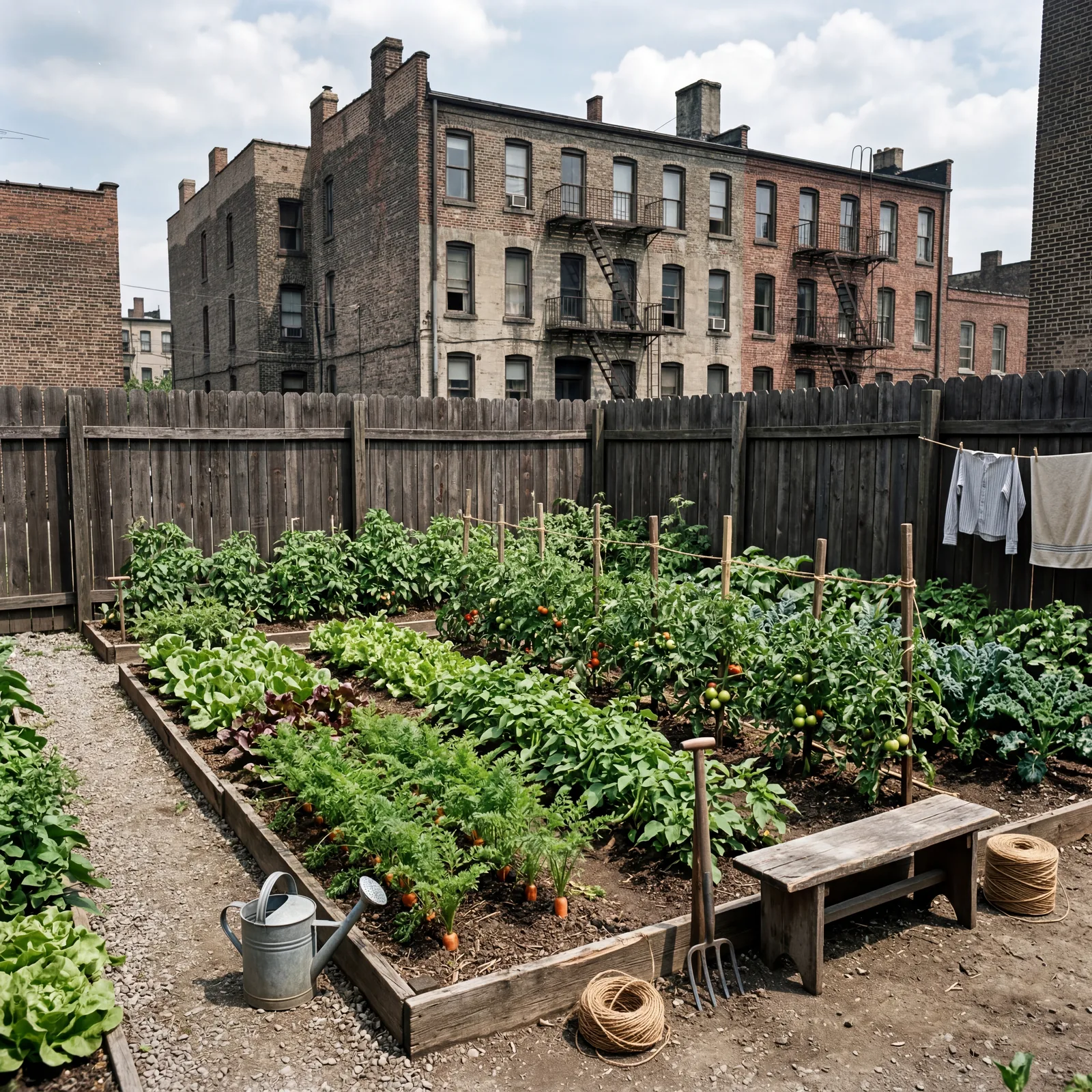
If you had a patch of dirt, you grew food in it. This was not optional.
City families grew tomatoes, beans, lettuce, radishes, and whatever else the space and climate allowed. A window box could hold herbs. A strip of ground beside the building could hold more than you’d think. During the Depression, relief agencies and city governments actively encouraged urban gardening and sometimes provided seeds and tools.
The federal government ran community garden programs through the 1930s specifically to supplement relief food supplies in urban areas. Philadelphia, Detroit, and other industrial cities reported hundreds of thousands of family gardens during peak Depression years.
A tomato grown in a city backyard in 1934 was a political act as much as a practical one. Feeding yourself was a form of resistance to conditions that were trying to make you dependent on someone else.
3. Making Lye Soap from Wood Ash and Lard
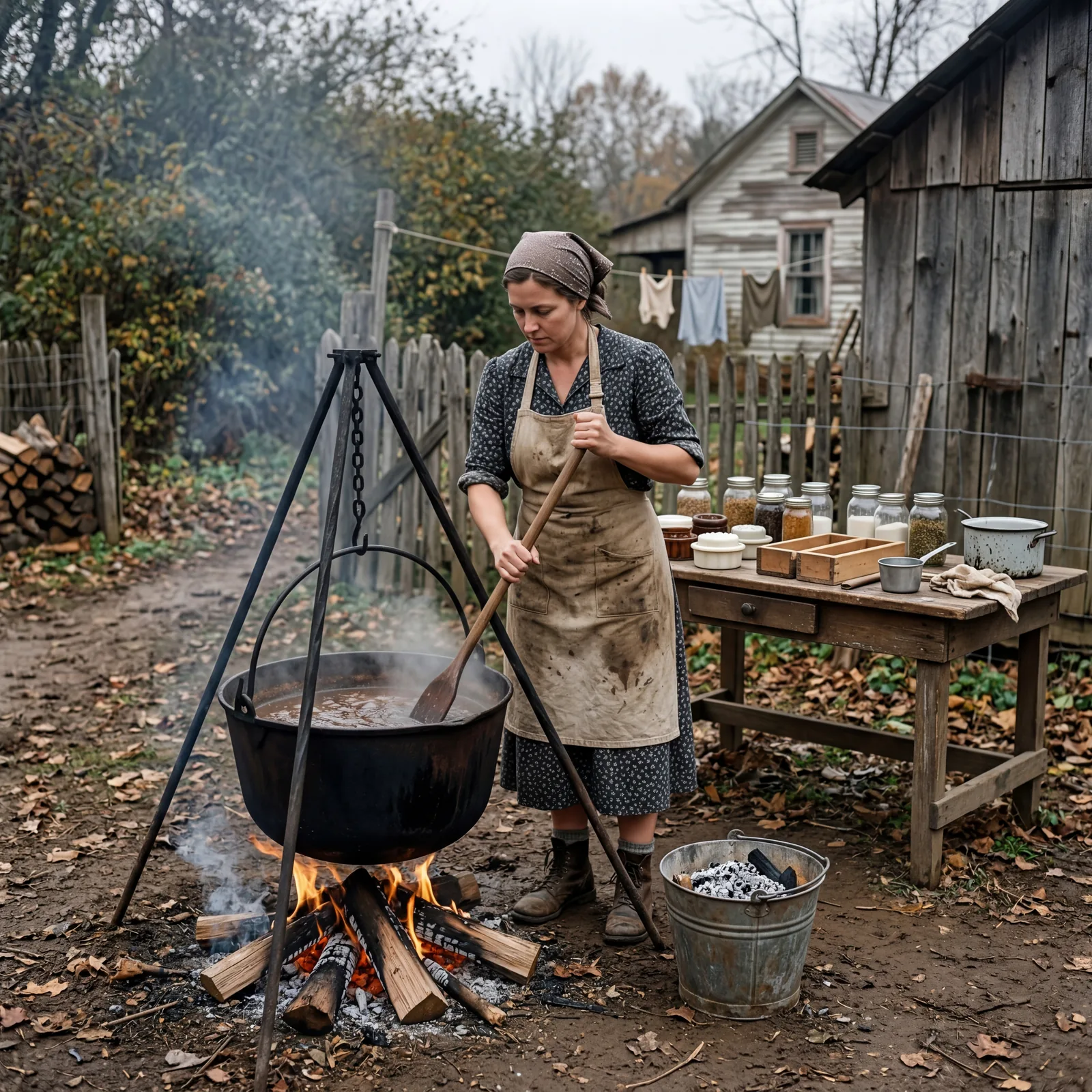
Store-bought soap was something you used when you had extra money. Most of the time, you made it.
Lye was produced by leaching water through hardwood ash. The brown caustic liquid that came through the bottom was then combined with rendered lard or tallow and cooked slowly in a large kettle, usually outdoors because the fumes were strong. The mixture was stirred for hours until it saponified, then poured into molds to harden. The result was a rough, effective soap that cleaned clothes, bodies, and dishes.
Soap-making from scratch requires understanding concentration ratios, temperature, and timing. Too little lye and the soap stays greasy. Too much and it burns skin. Women who made soap regularly knew exactly what they were doing.
This wasn’t folk craft. It was chemistry running in the background of domestic life, practiced by people who never called it that.
2. Keeping a Darning Egg to Mend Socks
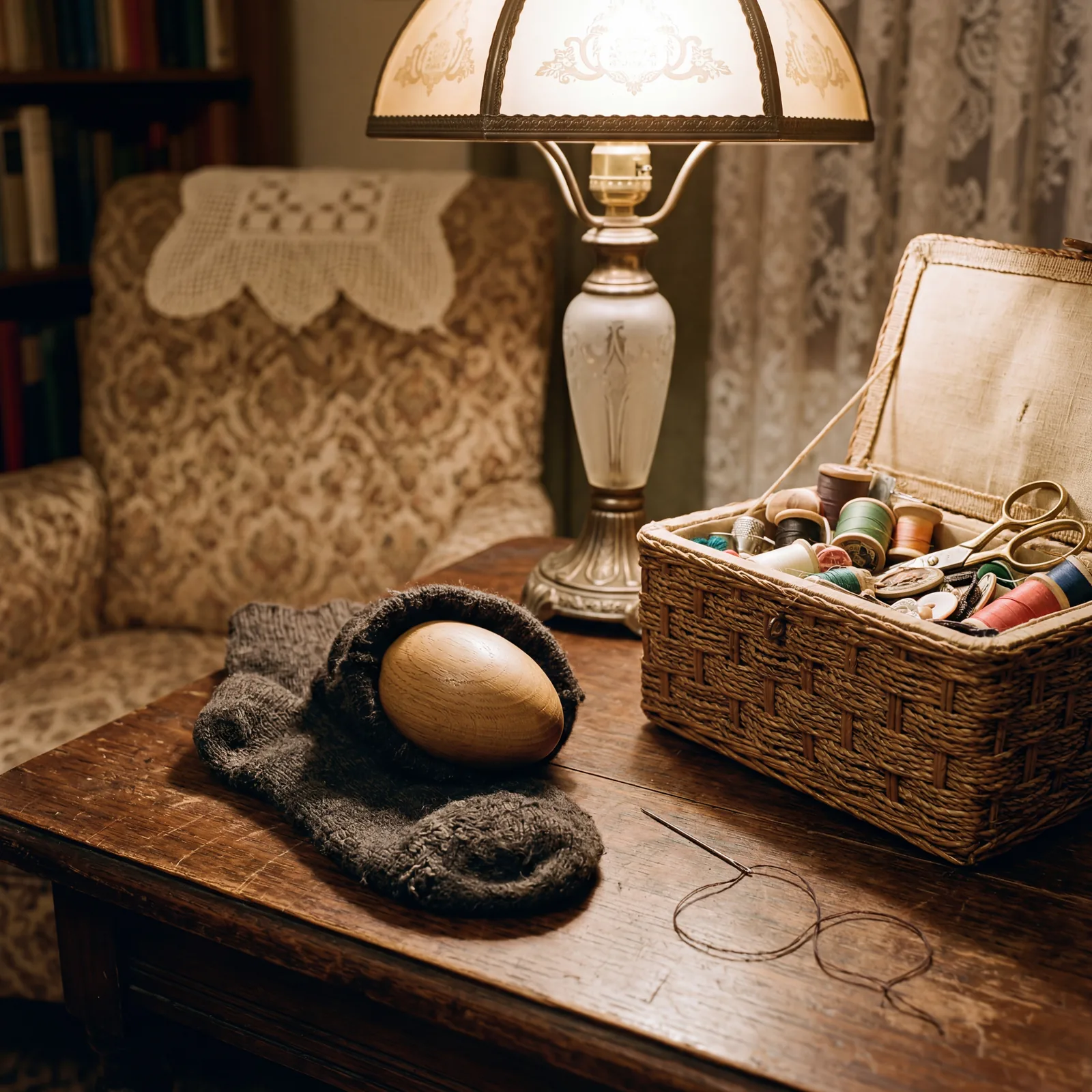
A worn sock wasn’t thrown away. It was sat down with.
The darning egg was a smooth wooden oval, about the size of an egg, that fit inside the sock to hold its shape while you wove new thread across the hole. The technique was methodical: run threads in one direction, then weave back through them in the other, building a patch of new fabric that held the original shape. When done well, the repair was nearly invisible. If you like this kind of overlooked detail, 25 Things Hotel Staff Notice About Every Guest the Second They Walk Through the is another useful read to open next.
Darning was taught to children, both boys and girls, as a basic life skill. Needles, thread, and a darning egg were in every home. Socks wore through at the heel and toe because those were the points of friction, and darning extended their life by months or years.
A single pair of wool work socks in the 1930s might have been darned a dozen times before they were finally too far gone to mend. The eggs still turn up in estate sales and antique shops, smooth and familiar in the hand, completely baffling to anyone under sixty.
“It’s hard to believe we’ve forgotten it. But it doesn’t come close to what’s waiting at #1.”
1. Saying Grace Before Every Meal Without Exception
The One That Every 1930s Family Did Without Question

It wasn’t a religious statement. It was how you marked the fact that there was food on the table.
In a decade when millions of Americans stood in bread lines, when the Dust Bowl had stripped entire regions of their capacity to grow anything, when neighbors went without meals and families split apart looking for work, sitting down to a meal and acknowledging it out loud was not a ritual. It was reality. For a different but related slice of the same world, The Slang That Defined Every Decade from the 1950s to Today is a good next stop.
Every family said grace. Not just churchgoing families. Not just rural families. Not just the devout. The practice crossed denominational, regional, and economic lines in a way that almost nothing else did. A Dust Bowl family in Oklahoma, a Black family in Birmingham, a factory worker’s household in Pittsburgh, a fishing family in Massachusetts. All of them bowed their heads. For another nearby rabbit hole, What Did ‘Groovy’ Actually Mean? The Real History looks at a related piece of everyday culture.
The words were different. Some were long and formal. Some were a sentence. Some were silent. But the pause was there.
A retired schoolteacher from Kentucky told me her grandmother described it simply: “We never once started eating without thanking God. Not once. Because we always knew people who didn’t get to eat that day.” That same curiosity is what makes 25 Things Experienced International Travelers Always Pack That Most People Never worth checking after this section.
Gallup surveys from the 1930s show that over 75 percent of Americans identified as religious, and among those who did, daily or mealtime prayer was near-universal. But the practice went beyond the religious. It was a cultural baseline, a shared acknowledgment that food was not guaranteed.
We live now in an era of such extraordinary abundance that the idea of food being uncertain feels abstract. We don’t pause before meals because there’s no reason to. The gratitude that grace expressed, the recognition that this meal was not inevitable, has almost entirely disappeared.
Grace was the daily reminder that having enough was not the default state of the world. The 1930s made that impossible to forget.
“Now you know why we saved this one for last.”
A Way of Life Worth Remembering
The 1930s family didn’t think of itself as resilient or resourceful or admirable. It just got through the week. What we’re looking at, from a distance of nearly a century, is what it looks like when people live completely inside their actual means, with complete attention to what they have.
If any of these caught you off guard, drop a comment below. And share this with someone who grew up hearing their grandparents talk about these things. If this part caught your attention, 25 Things Hotel Staff Notice About You the Moment You Walk Through the Door in 2 gives you another specific angle to compare.