
You were maybe eight years old. The living room smelled like something you can’t name now.
It was pine sap and candle wax and your grandmother’s perfume all layered together. That smell doesn’t exist in a bottle.
Christmas back then had a weight to it. A specific gravity. The kind you only notice once it’s lifted.
Nobody called it “the holiday season.” It was Christmas. It started sometime after Thanksgiving and it had rules.
The rules weren’t written down. They didn’t need to be. You just knew: the tinsel went on last, the good china came out at 2pm, you waited until morning.
Some of those rules died quietly. You didn’t notice until you looked back and realized you hadn’t done them in twenty years.
Others went fast. One year they were there. The next, the store didn’t carry them. Nobody made an announcement.
This list is about those things. The ones that defined Christmas and then vanished before anyone could save them.
You’ll recognize most of these. A few might unlock a memory you didn’t know you still had.
We saved the biggest one for last. It’s the tradition that held the whole season together. You’ll know it when you get there.
Keep reading. These ones are worth remembering.
35. The Cedar Chest Full of Decorations
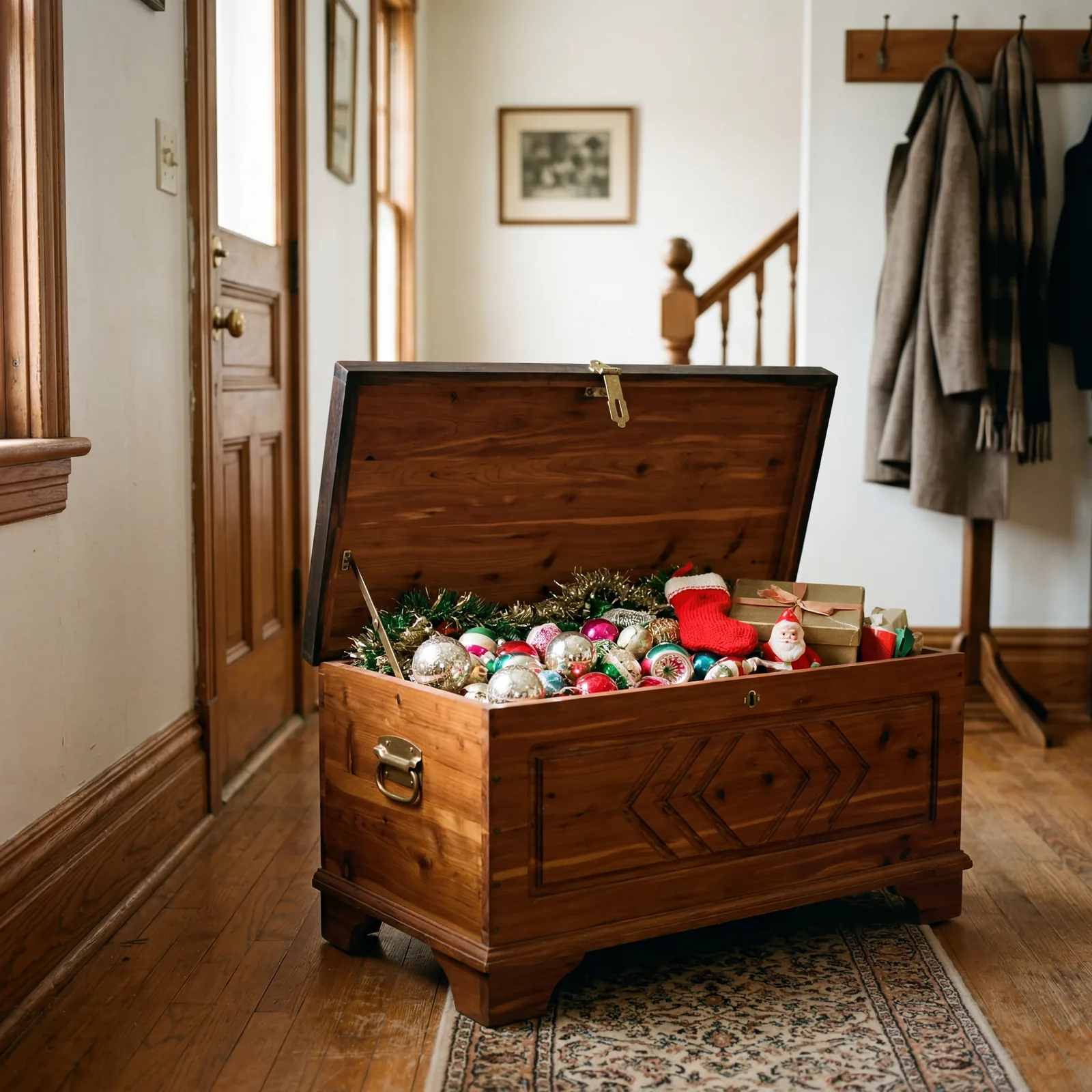
You didn’t need to see it to know Christmas was coming. You could smell it from the hallway.
That cedar chest lived in the spare room or at the foot of the bed all year, sealed tight. When your mother lifted the lid in late November, the smell hit you like a door opening into the past.
The cedar chest tradition peaked in American homes during the 1950s and 1960s, when Lane Cedar Chest was a standard wedding gift and every household had one.
Once Christmas went to plastic bins in the garage, that smell went with it.
34. The One Ornament That Had Been on Every Tree Since 1954
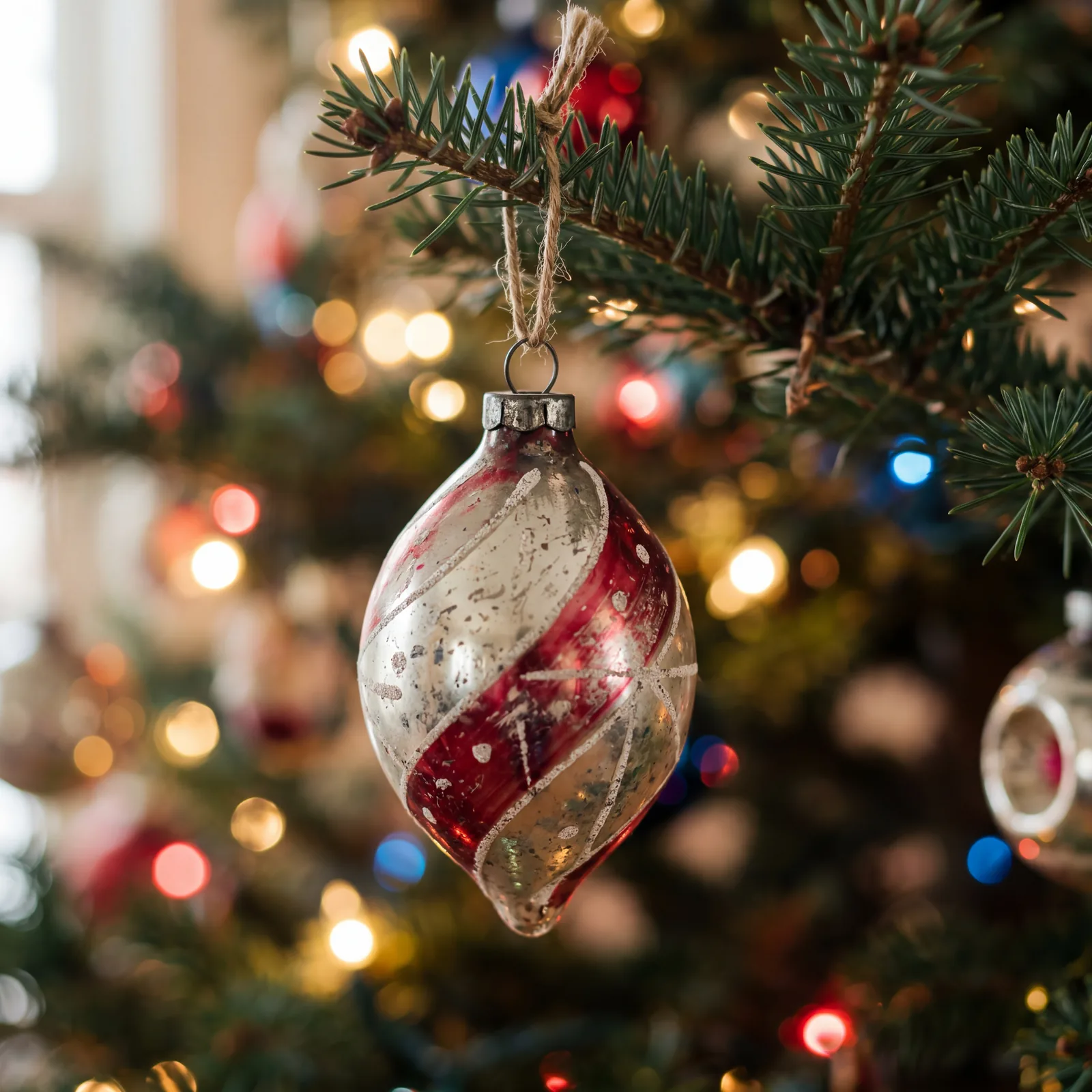
It was ugly. Everyone knew it was ugly. It went on the tree first, every single year.
The paint was flaking. The hook was bent at a weird angle. Nobody could remember where it came from, but your mother handled it like it was made of something precious.
Glass ornaments from the 1950s and early 60s were hand-blown, often imported from West Germany, and genuinely fragile in ways that modern plastic ornaments aren’t.
When it finally broke, the tree was never quite the same.
33. Christmas Morning in Pajamas
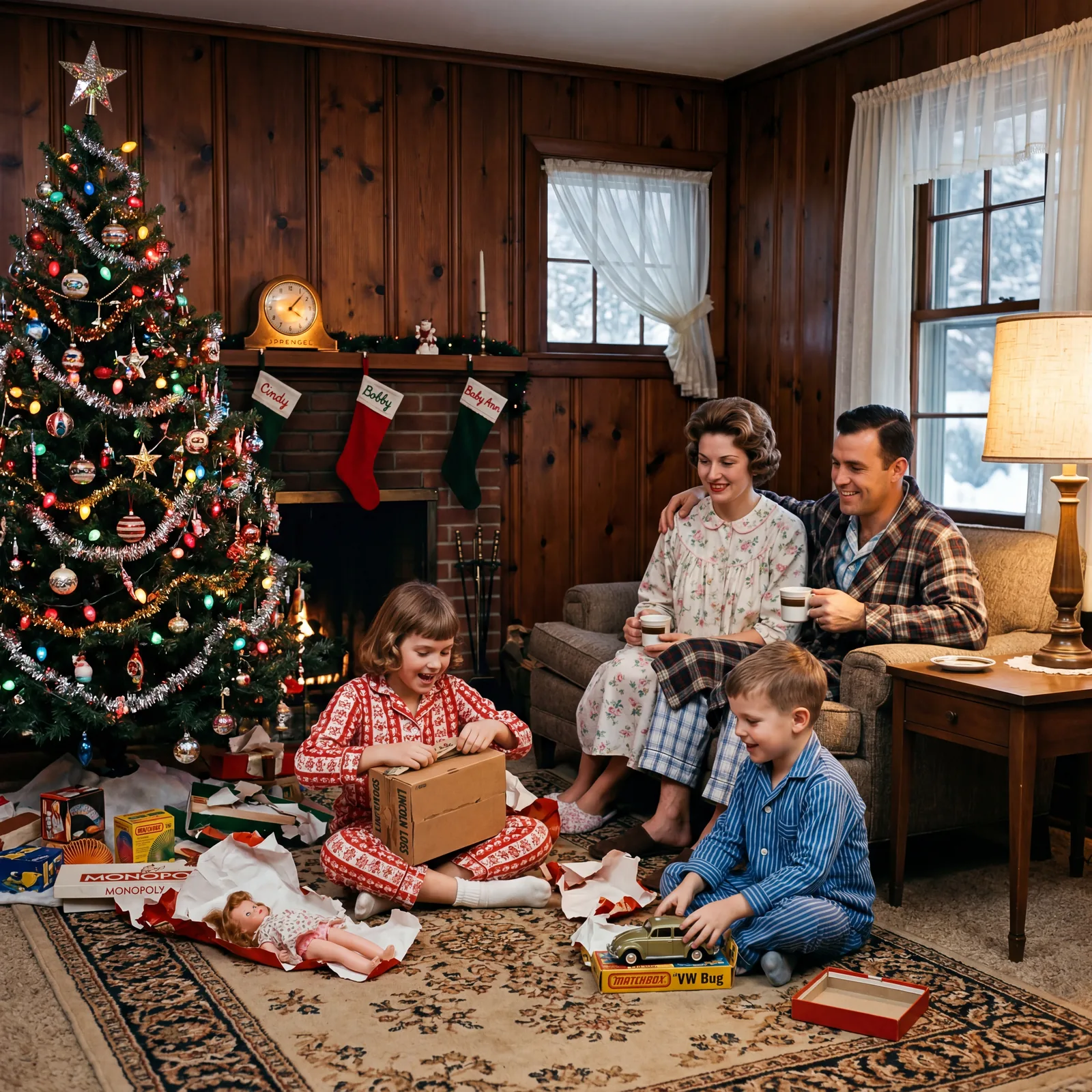
You didn’t get dressed first. That was the rule. Everyone stayed in their pajamas until the gifts were open.
The whole family. Dad in his flannel. Mom in her robe. Nobody was too old and nobody was too dignified. The pajamas were part of it.
Somewhere in the 1980s and 90s, this started to slip. People got dressed before guests arrived. Kids ran to the tree before anyone else was up.
The collective pajama Christmas is mostly gone now. It went quiet, like most of the good stuff.
32. The Smell of a Fresh-Cut Tree After Dad Brought It Home

You heard the car in the driveway. Then the front door opened and the whole house changed.
That smell, cold and green and sharp, moved through every room. It wasn’t a candle. It wasn’t a spray. It was the real thing, still cold from outside, leaving a trail of needles on the carpet.
Artificial tree sales overtook real tree sales in the US sometime around the early 1990s. By 2000, most homes had made the switch permanently.
The smell went with the tree.
31. Waiting Until Christmas Morning
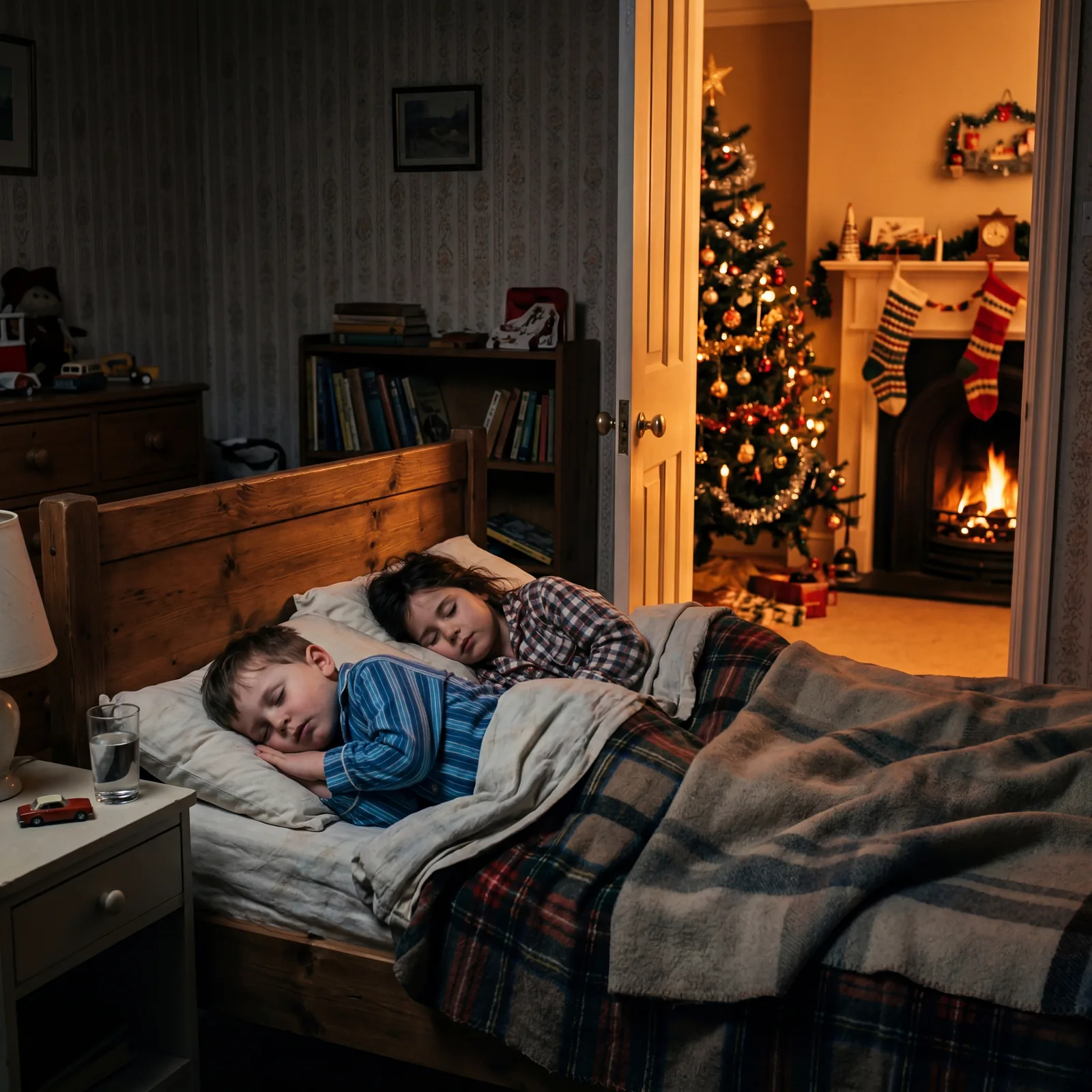
There was one gift on Christmas Eve. Maybe. That was the deal.
Christmas morning was sealed. Non-negotiable. You waited. The waiting was part of the tradition, not a punishment.
By the 1980s, the “open one on Christmas Eve” rule had softened into “open whenever the family agrees.” By the 2000s, many families had moved to Christmas Eve entirely.
The morning reveal lost something when it stopped being universal.
“The next one was in every kitchen in America. And then it wasn’t.”
30. The Aunt Who Made Her Own Fudge

Every family had one. She started the fudge in early December. You weren’t allowed in the kitchen when she was making it.
It came out on a plate lined with waxed paper, cut into squares, slightly grainy in the best possible way. Store-bought fudge has never come close.
The homemade fudge tradition required time, a candy thermometer, and someone who cared enough to make it from scratch. All three became rarer as the decades moved on.
She took the recipe with her. Most of them did.
29. Christmas Dinner at 2pm Sharp

Not 1:30. Not 3. Two o’clock. Everyone knew. Everyone showed up.
The table was set by noon. The good china was out. There was an order to the seating that nobody had to explain because it had always been that way.
The 2pm Christmas dinner was a relic of a time when families lived close enough to gather without travel, and when Sunday dinner culture still set the rhythm of the week.
It disappeared as families spread out and schedules fractured.
28. Sending Thank-You Notes the Day After Christmas

You sat down on December 26th with a pen and a stack of notecard paper. Every gift got a note. That was the deal.
Your mother stood over you until it was done. You wrote the person’s name, what they gave you, and one sentence about why you liked it. Then you sealed it and stamped it.
Stationery sales in the US peaked in the late 1960s and began a long decline once phone calls became cheaper and easier than letter-writing.
The thank-you note generation is almost entirely gone now.
27. The Nativity Set on the Mantle
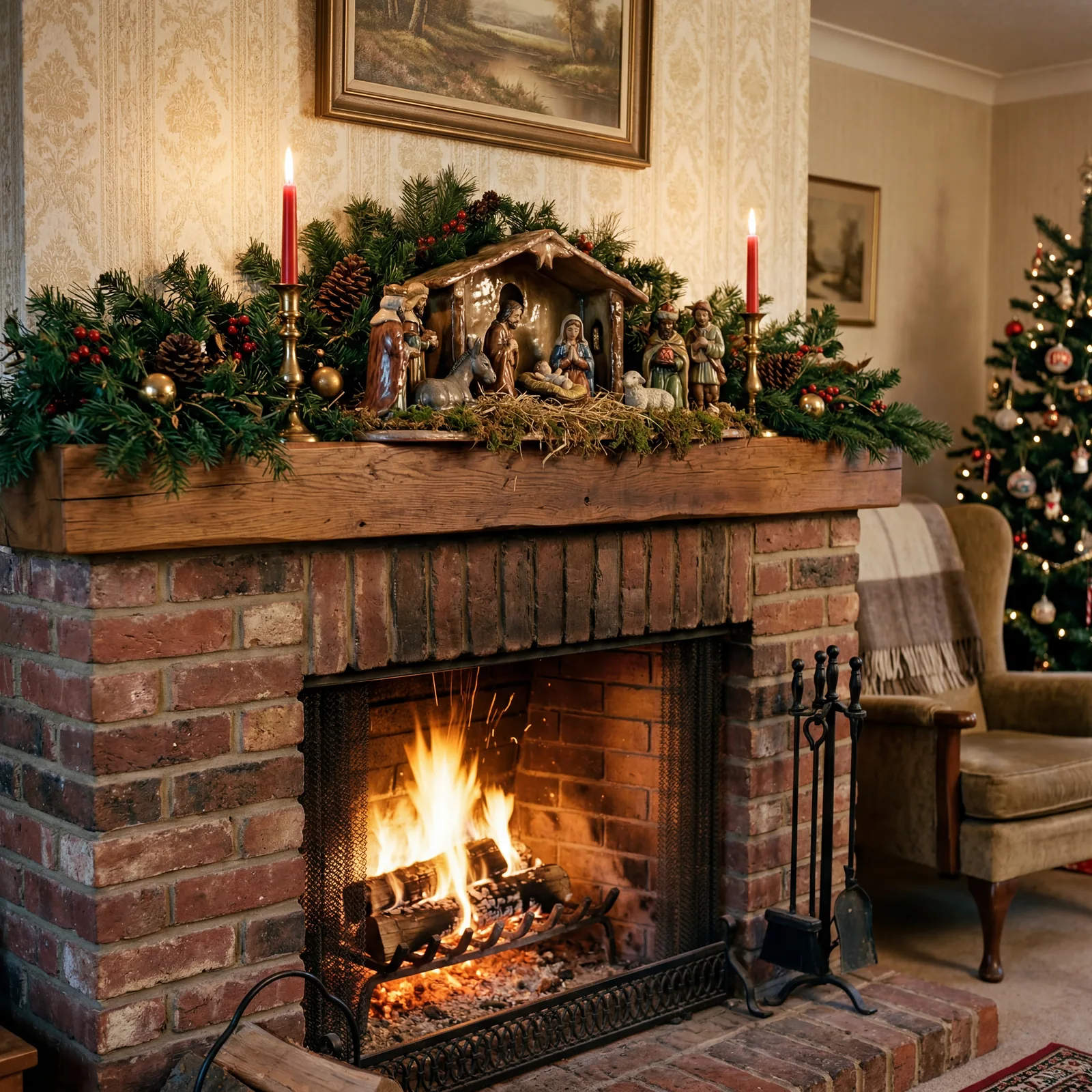
It came out of its box piece by piece, each figure wrapped in old newspaper. You were allowed to help unwrap them, but not to move them once they were placed.
The nativity went on the mantle first, before the tree was decorated. That was the order. Everything else was decoration. This one meant something.
Nativity sets were a standard household item in mid-century Catholic and Protestant homes alike. By the 1990s, HOA rules and cultural shifts had moved many of them indoors or away entirely.
Some things leave slowly. This one was patient about it.
26. Watching “A Charlie Brown Christmas” When It Aired
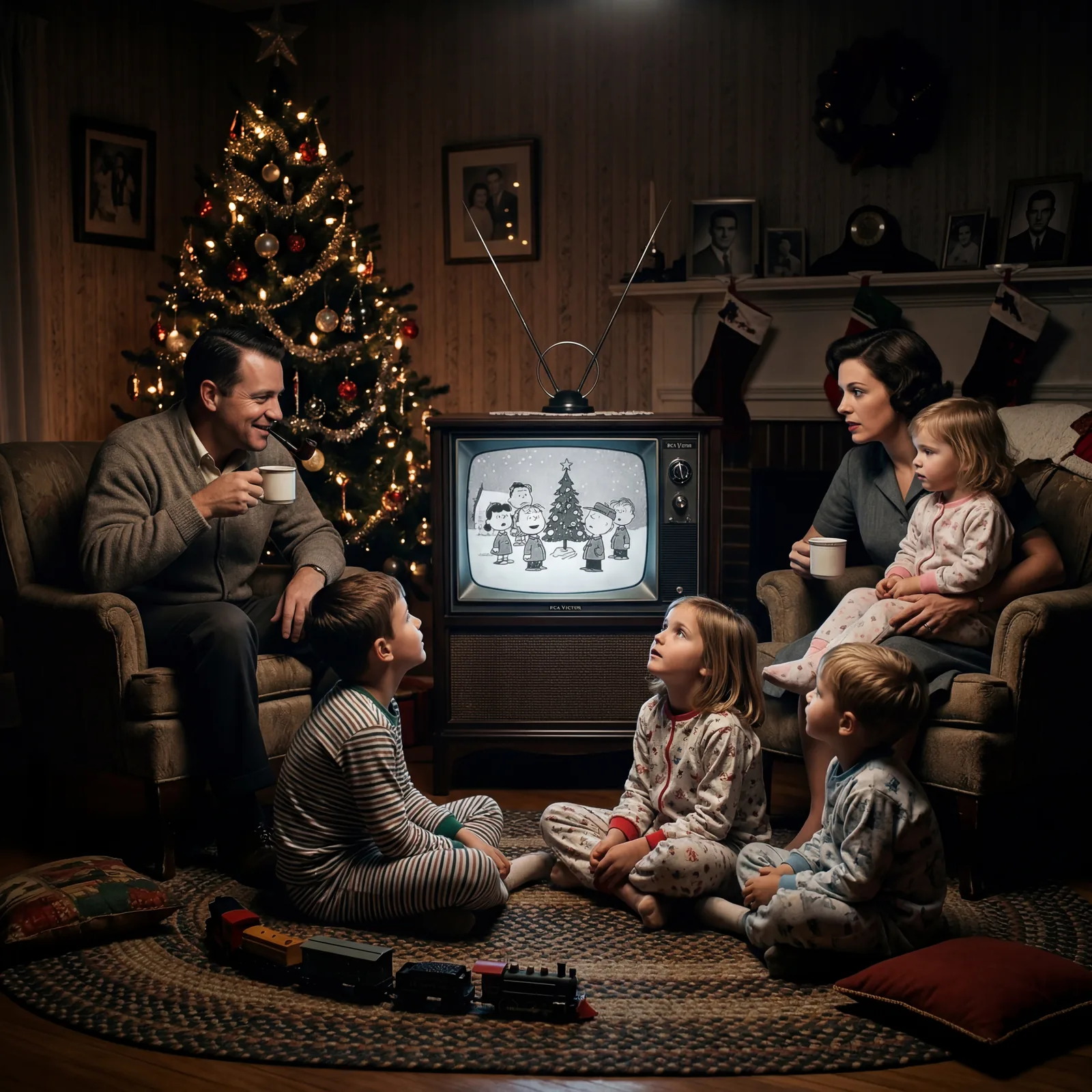
You didn’t record it. You didn’t stream it later. You watched it Tuesday at 7:30 or you missed it until next year.
The whole family sat down. The commercials were part of the experience. You knew when the Vince Guaraldi music started.
“A Charlie Brown Christmas” premiered December 9, 1965 on CBS and became an annual tradition that ran uninterrupted for decades. It was one of the last true must-watch moments in American television.
When streaming arrived, it still existed. But the urgency was gone.
“This next one came out of a box that smelled like your grandmother’s attic. You’ll know it instantly.”
25. Homemade Ornaments From Construction Paper
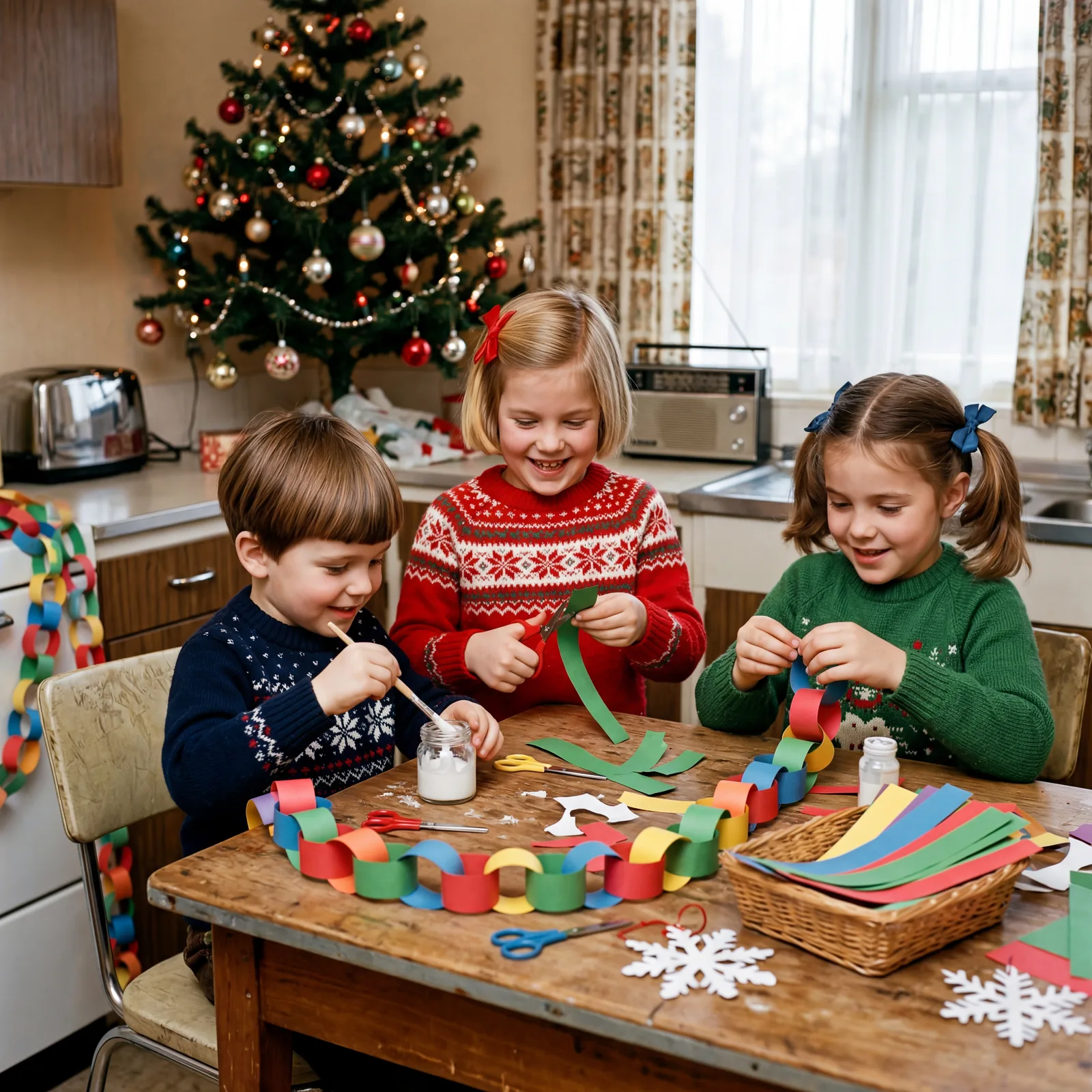
You made them at school and you brought them home like they were fine art. Your mother hung every one.
Red and green loops of construction paper twisted into chains. A paper Santa. A glitter star on cardboard with a bent paperclip for a hook. None of it was beautiful. All of it was on the tree.
Paper chain garlands date back centuries in European Christmas tradition, brought to America by German immigrants. By the late 1970s, plastic garland had largely replaced the handmade version.
The store-bought version never felt the same, because it wasn’t.
24. The Smell of a Real Douglas Fir in the Living Room
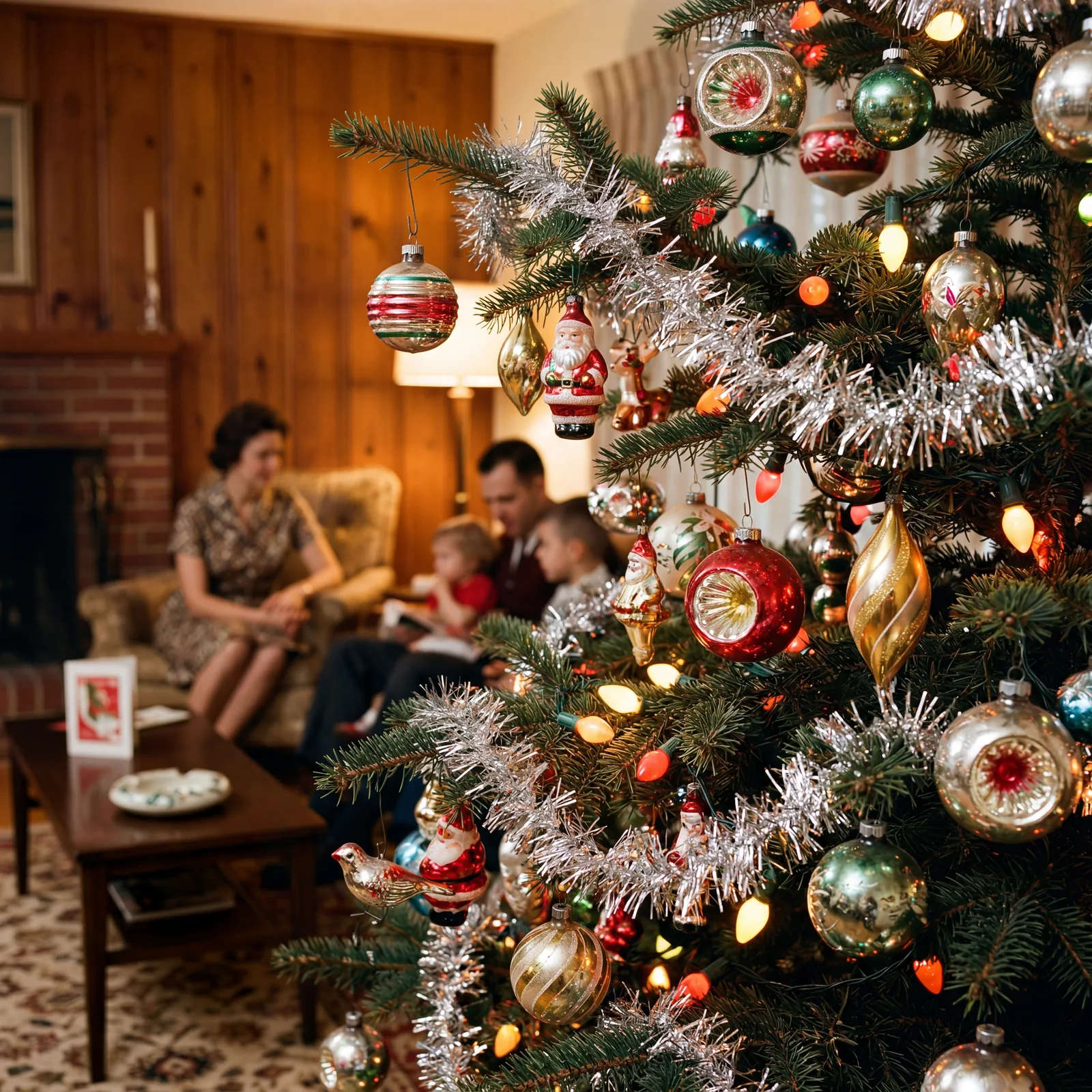
You stopped noticing it after a day or two. That’s the thing about smells. They fade into the background. But when you walked back in from outside, it hit you again fresh.
Pine resin and cold and something sweet underneath it. The whole house smelled like the tree by Christmas Eve. Your clothes did too.
The US Christmas tree industry sells between 25 and 30 million real trees per year today, but that number has been roughly flat for decades while artificial tree households grew from near zero in 1960 to about 80 million by 2010.
The real tree in every living room was once a given. Now it’s a choice.
23. Wrapping Gifts in Brown Paper and Twine
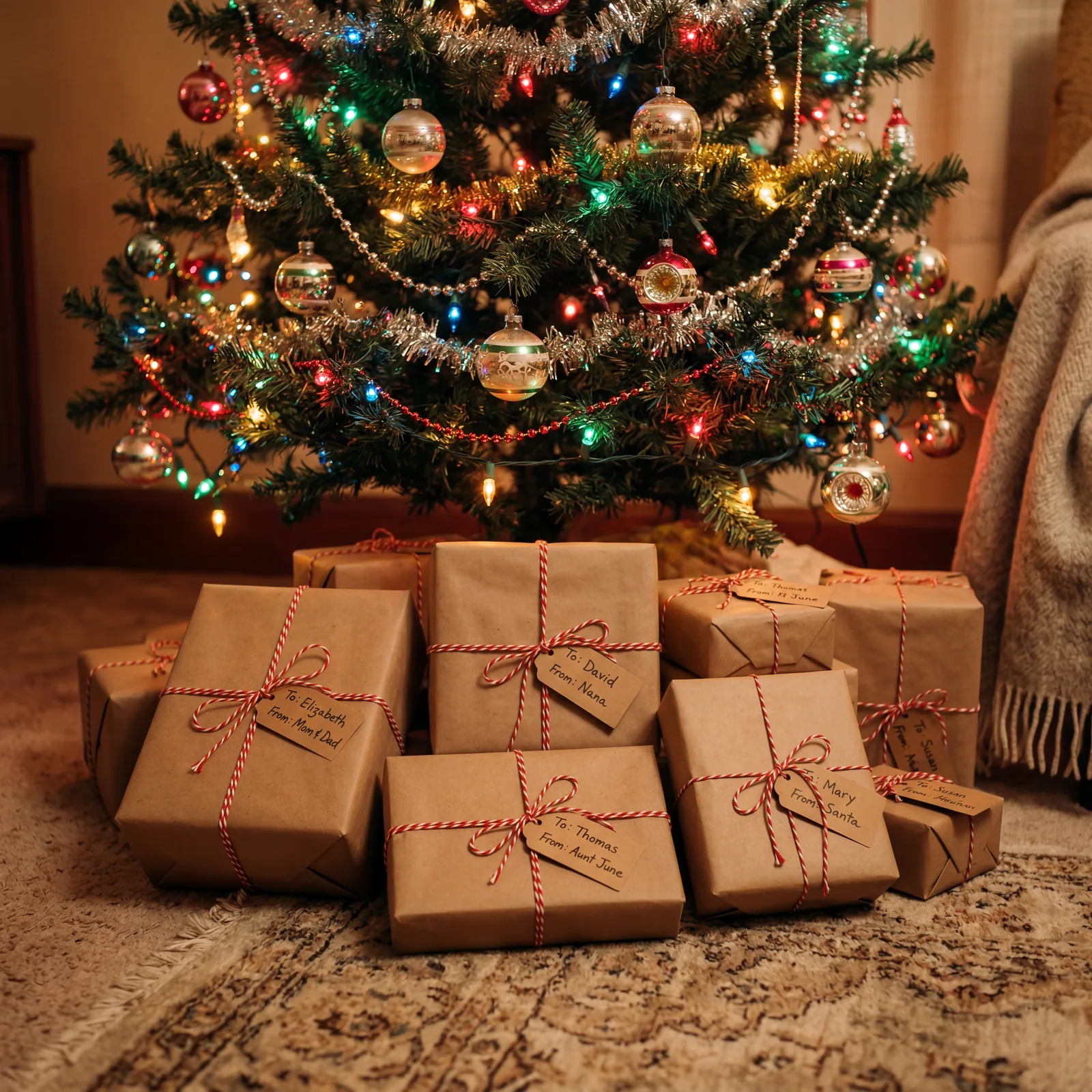
Before foil paper and curling ribbon, there was brown paper. The kind that came in a roll. You cut it with scissors, folded the corners, and tied it with kitchen twine.
It looked like something sent through the mail. It was somehow more exciting than glossy paper with a pre-made bow. The handwritten tag in your uncle’s handwriting said more than any store tag.
Mass-produced gift wrap became widely available and affordable in the US by the 1950s, gradually replacing the brown paper tradition in most homes by the mid-1970s.
Some craft stores sell brown paper wrap now as a trend. It’s not the same thing at all.
22. Christmas Records on the Turntable
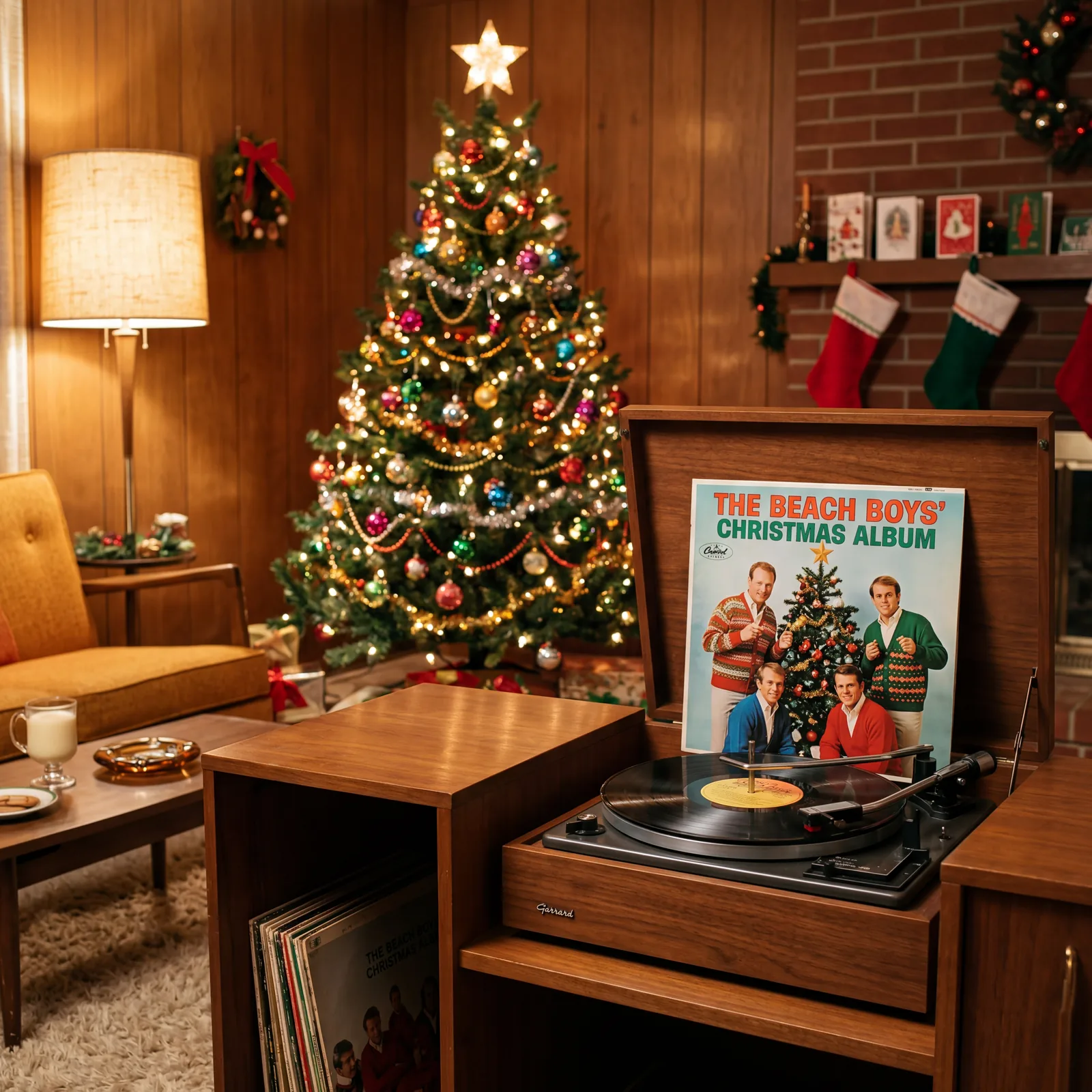
Not a radio station. Not a playlist. A specific record, chosen from the stack, placed on the turntable by hand.
Bing Crosby. Nat King Cole. The Ray Conniff Singers. You knew which side had which songs. The crackle before the music started was part of it.
Christmas vinyl sales peaked in the 1960s. The market for holiday LPs was enormous, with dozens of major artists releasing dedicated Christmas albums every year.
The randomness of shuffle has made it impossible to replicate what a chosen record felt like.
“The next one is smaller than you remember. But the feeling it gave you was enormous.”
21. The Advent Calendar With Paper Doors
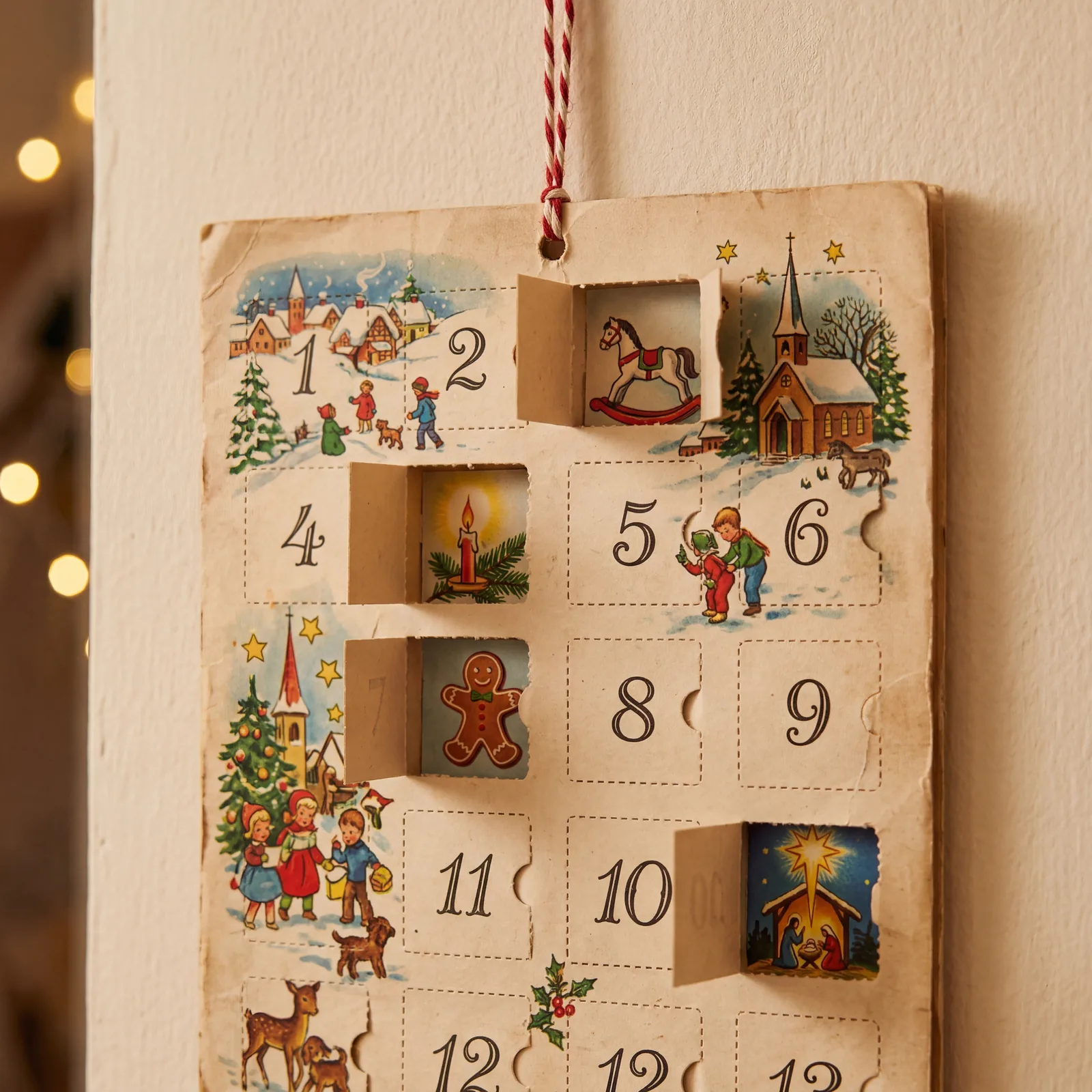
It hung on the wall in the kitchen or the hallway, and you were allowed to open one door per day. One. Not two because you forgot yesterday.
Behind each door was a tiny picture. A star. A candle. An angel. No chocolate. No toy. Just the picture and the number and the proof that Christmas was getting closer.
Paper Advent calendars originated in Germany in the early 1900s and became popular in American homes by the 1950s. The chocolate-filled version wasn’t widely sold in the US until the 1980s.
The paper door calendar measured the days in a way that felt earned.
20. Ribbon Candy
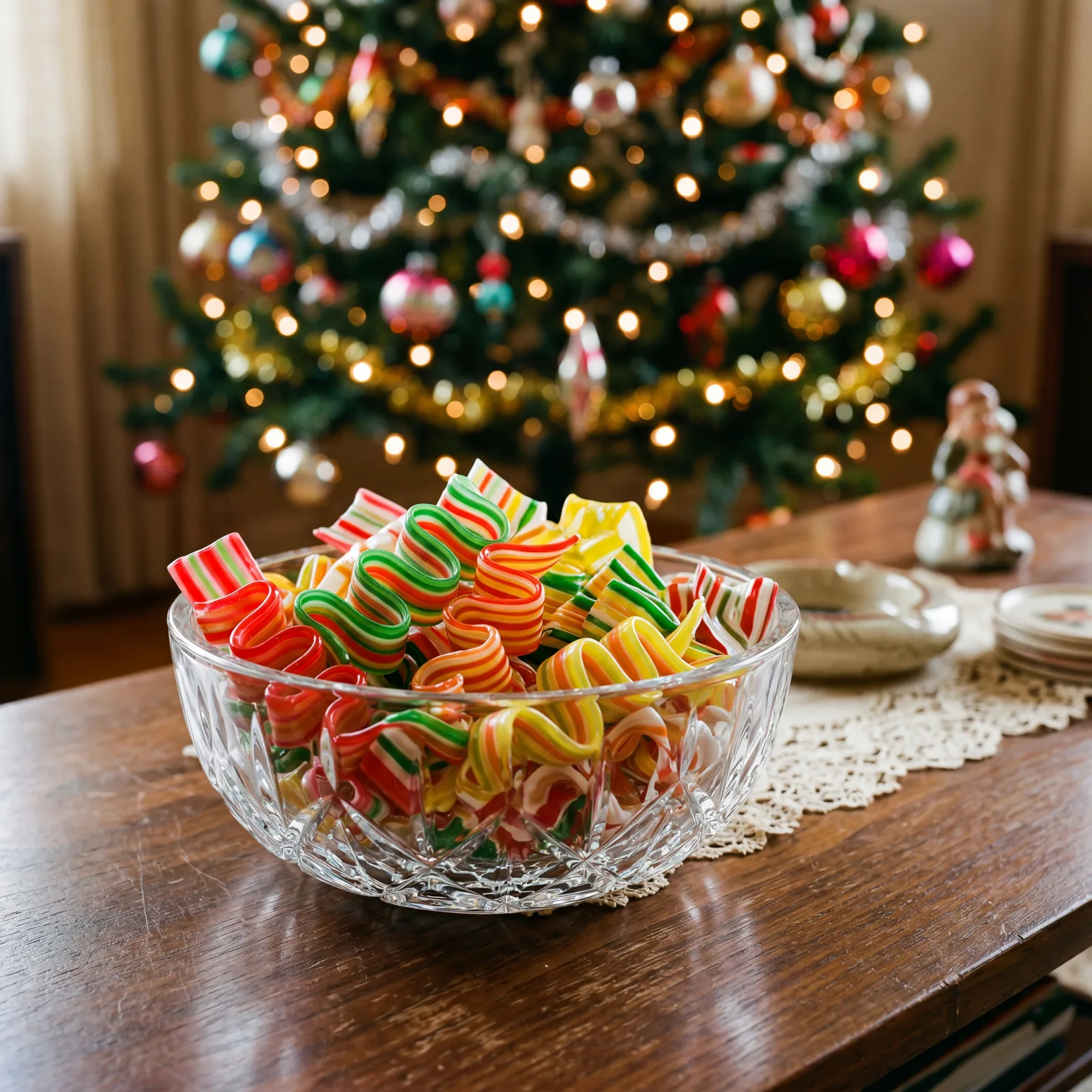
It sat in the candy dish on the coffee table and you weren’t supposed to eat it but you always took a piece anyway.
Ribbon candy is exactly what it sounds like: flat, folded, translucent hard candy in Christmas colors, peppermint or anise or cinnamon. It broke into shards when you tried to eat it. It stuck to everything.
Ribbon candy has been made in the United States since the late 1800s. By the 1970s it was a Christmas staple in most homes. Today it’s a specialty item you have to search for.
The candy dish with ribbon candy was a signal that the season had arrived. Now it’s just a niche confection.
19. Nuts in the Shell in a Bowl With a Nutcracker
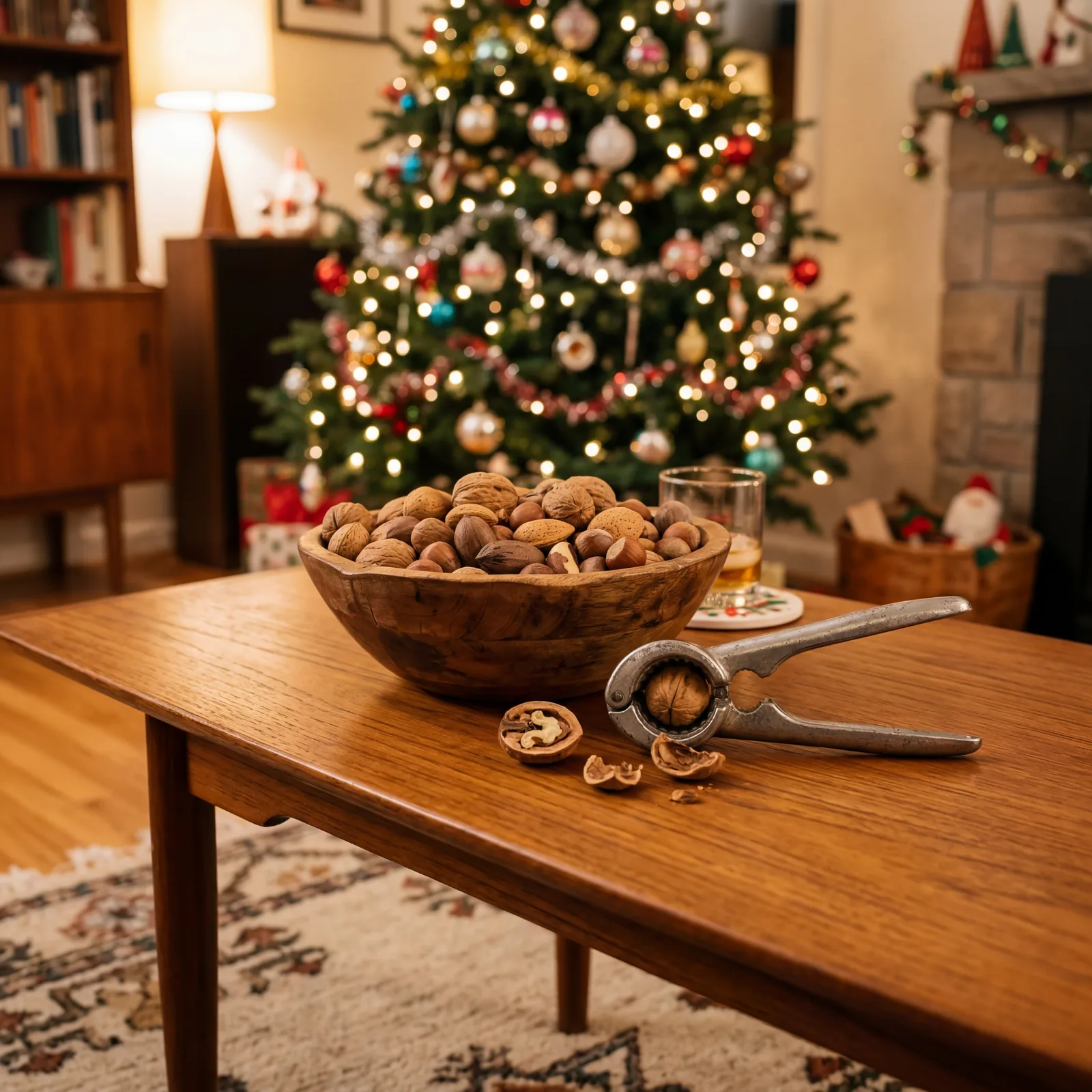
The bowl sat on the end table and the nutcracker sat beside it. Getting to the nut was part of the point.
Walnuts, Brazil nuts, hazelnuts, pecans. You worked for each one. The shells went into an ashtray or an old newspaper. Your grandfather was very good at getting the walnut out whole.
Mixed nuts in the shell were a standard Christmas tradition tied to the fall harvest season. Pre-shelled nuts in cans became cheaper and more convenient by the 1980s, ending the ritual almost entirely.
The effort made the nut taste better. That’s not nostalgia. That’s just true.
18. Fruitcake Made From Scratch
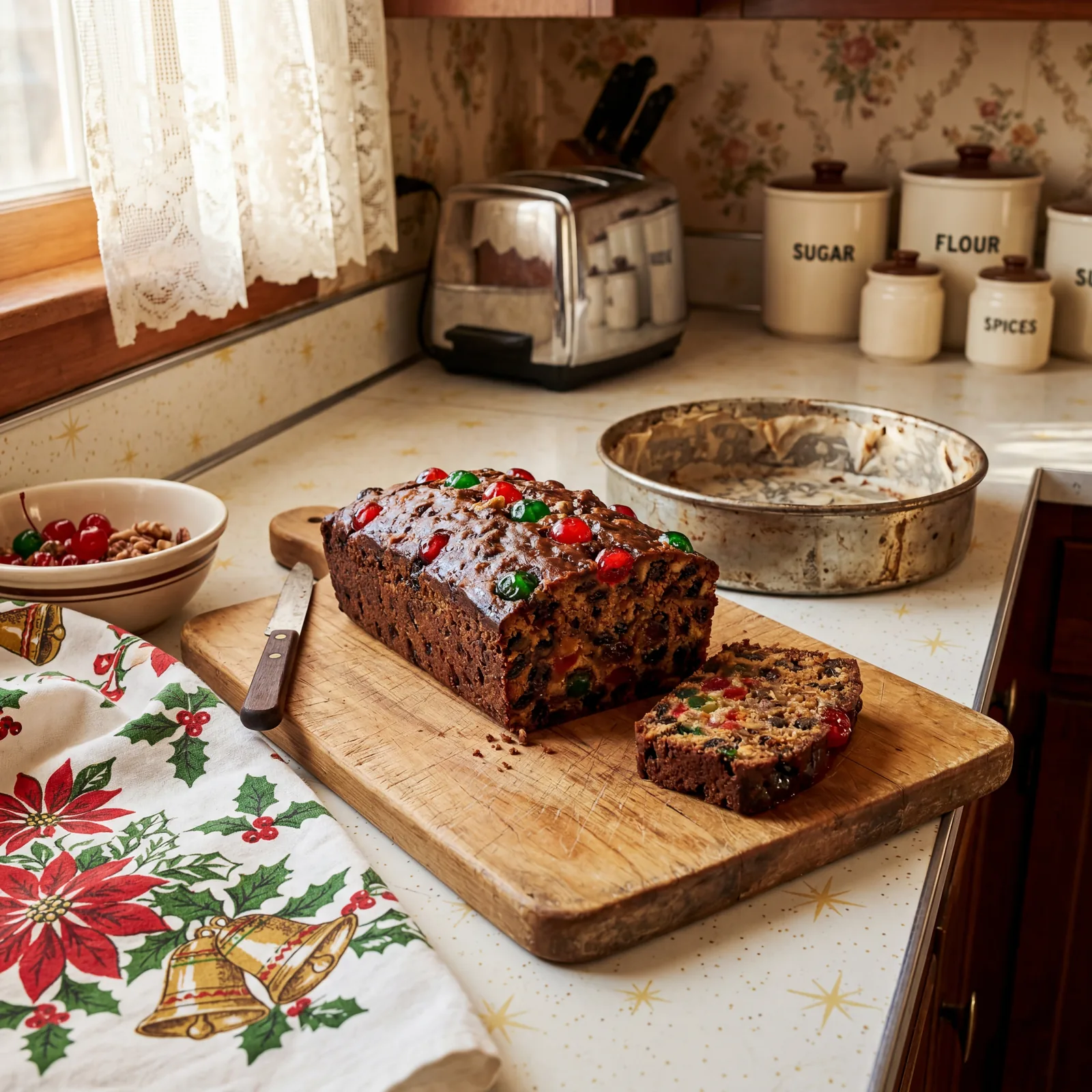
Not the joke version. Not the dense, plastic-wrapped brick from the grocery store. The real one, made six weeks before Christmas so it had time to age.
Your grandmother started it in November. She soaked the dried fruit in bourbon. The cake was dark and heavy and dense with actual flavor. It lasted for weeks because it was supposed to.
Traditional American fruitcake recipes date to the colonial era and were standard Christmas gifts through the mid-20th century. The joke version, the cheap commercial brick, arrived in the 1970s and killed the reputation of the real thing.
Real fruitcake is delicious. Almost nobody alive today knows this.
“The next five are where it starts to get specific. You’ll feel the difference.”
17. Caroling Door to Door
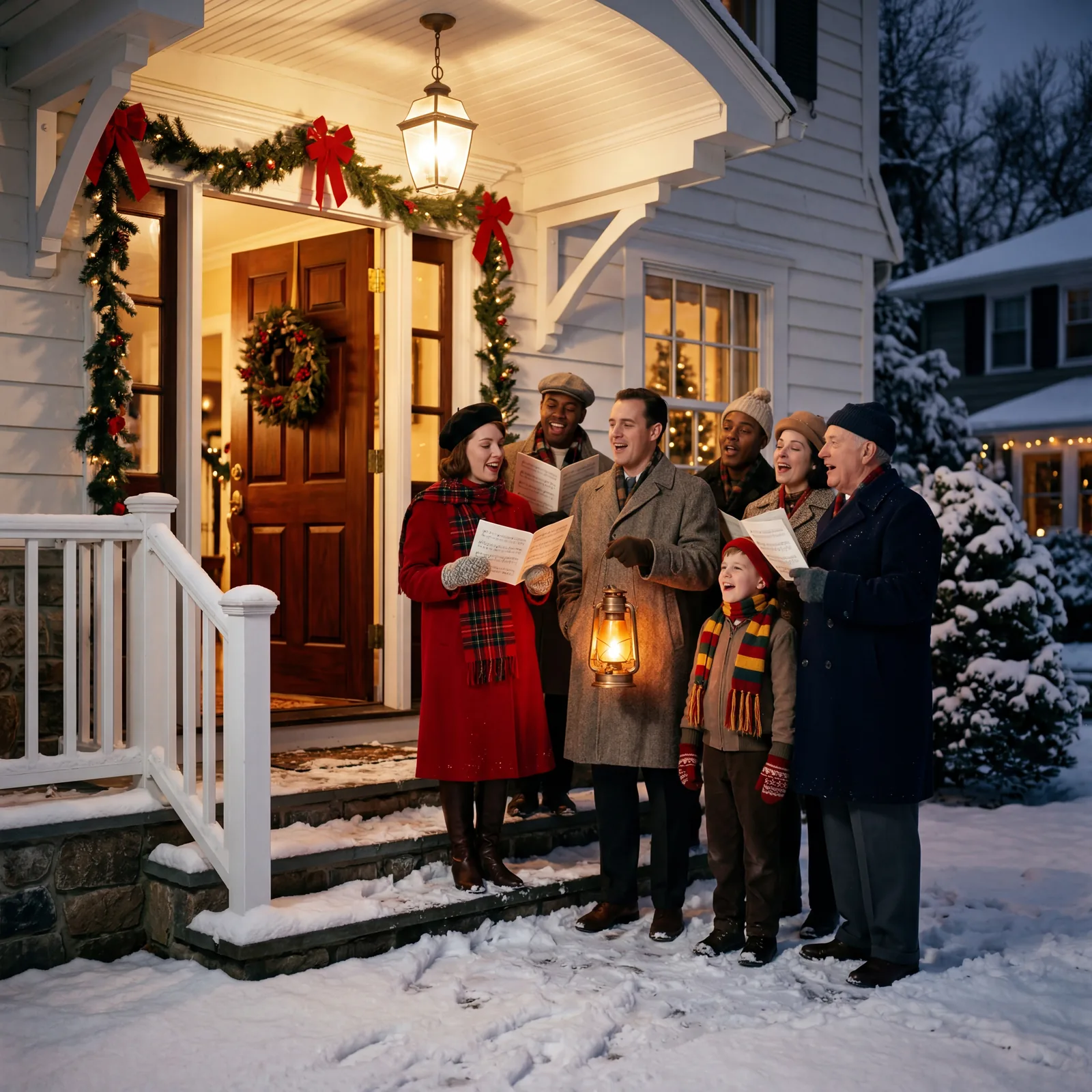
You went in a group. The neighborhood kids, maybe a parent or two, coats over pajamas, someone holding a flashlight.
You knocked on doors. People opened them and actually seemed glad. A few invited you in for cocoa. One old man on the corner always gave out dollar bills. If this part caught your attention, 25 Things Experienced International Travelers Always Pack That Most People Never gives you another specific angle to compare.
Organized neighborhood caroling was common in American suburbs through the 1960s and began declining sharply in the 1970s as neighborhoods became less connected and foot traffic after dark felt less safe.
It required trust. That’s what it actually required.
16. Opening One Gift on Christmas Eve
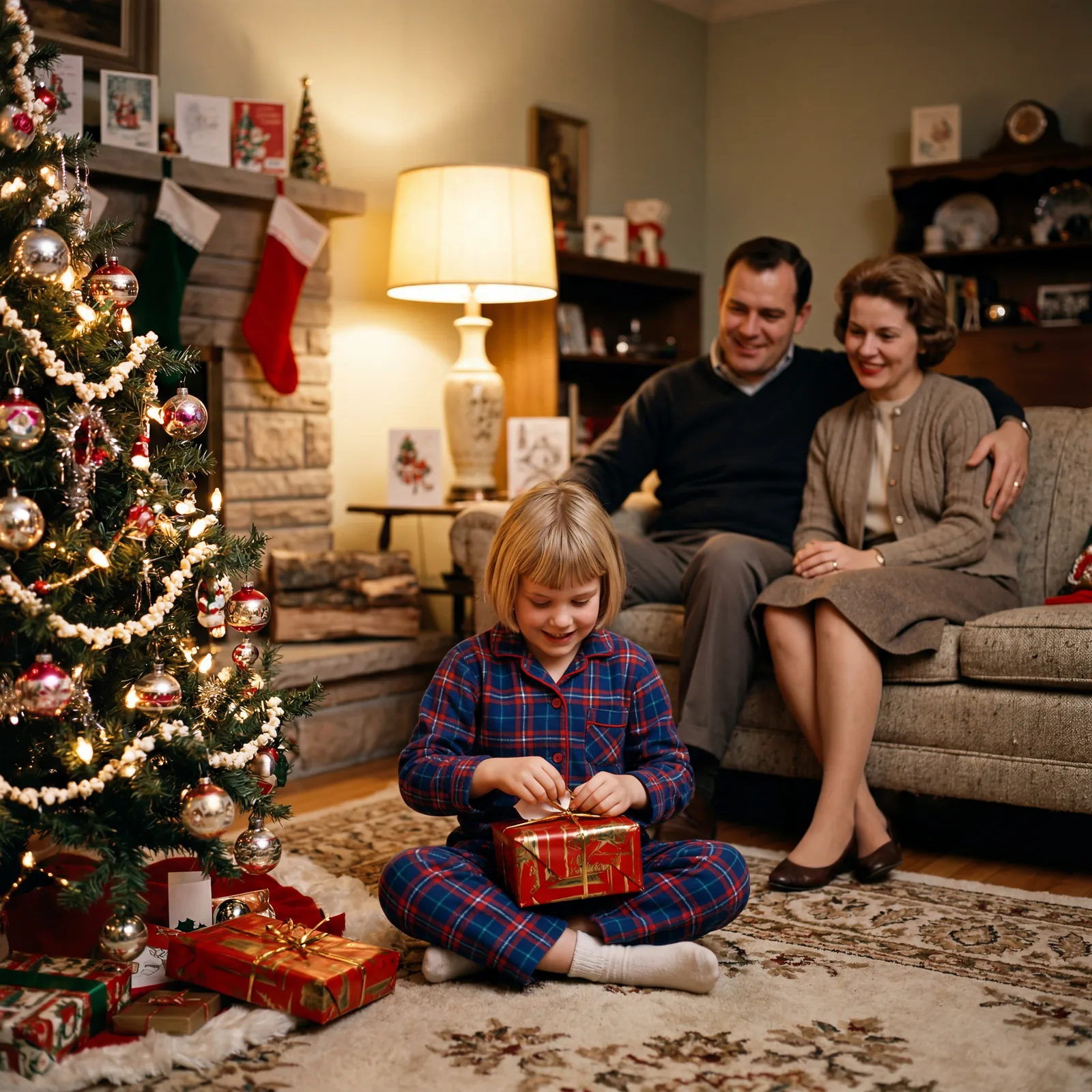
Your parents decided which one. You didn’t get to choose. It was always something practical, usually pajamas or slippers, so you’d have something to wear the next morning.
It sounds like a trick. It wasn’t. That one gift on Christmas Eve was an event. You held it in your lap, shook it carefully, then opened it like you were defusing something.
The “one gift on Christmas Eve” rule was a compromise tradition that balanced the excitement of children with the ritual structure of Christmas morning. It’s been largely abandoned as gift-opening timelines have fragmented.
The pajamas always fit. Your mother had already checked the size three weeks before.
15. Christmas Eve Midnight Mass
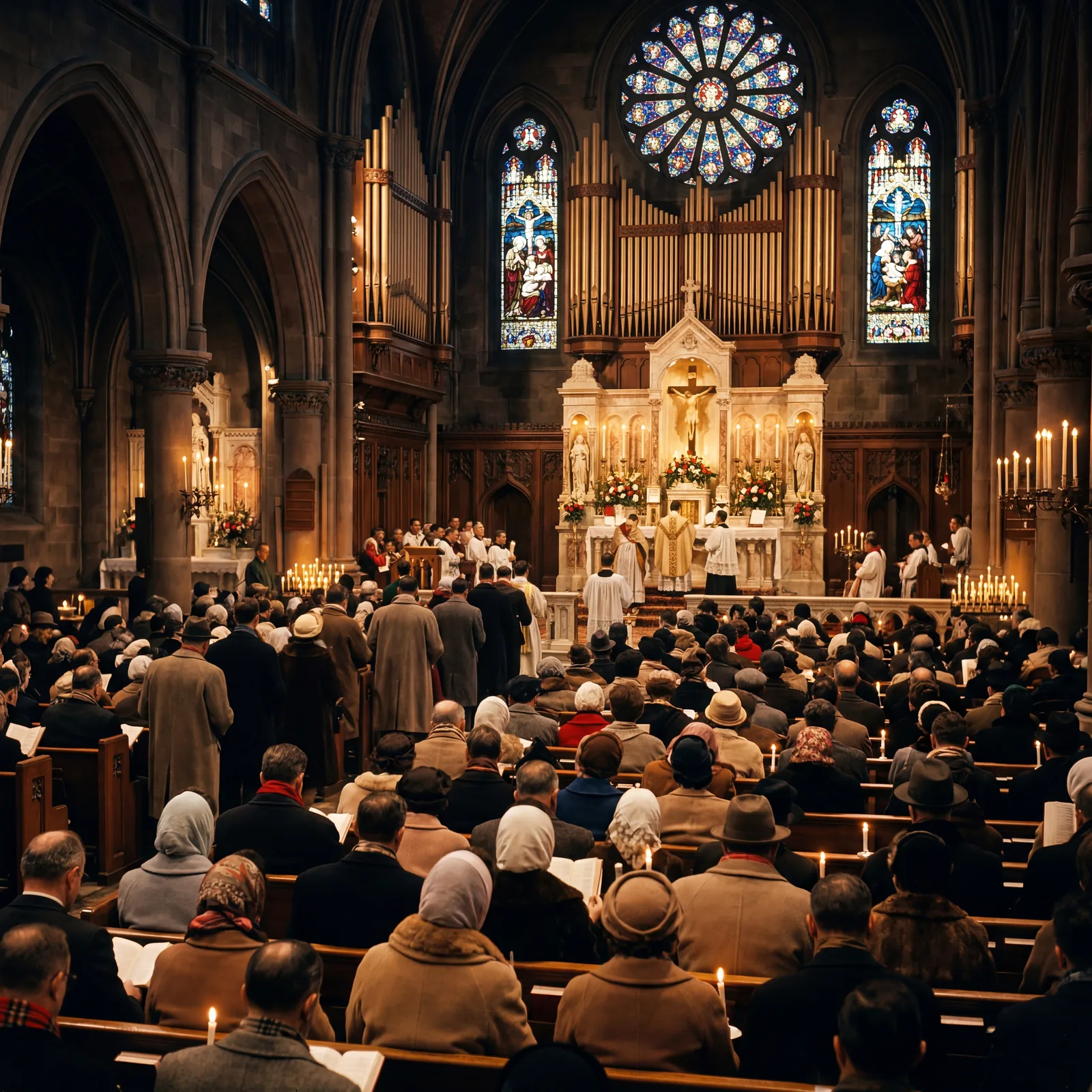
You stayed up past midnight. That alone made it feel significant. The church was full in a way it only was twice a year.
Everyone wore their good clothes. The organ was loud. The candles made everything flicker. You were tired enough that the whole thing felt slightly dreamlike.
Midnight Mass attendance in American Catholic churches peaked in the mid-20th century. By the 1990s, most parishes had moved the Christmas Eve service to 10pm or even earlier to accommodate families with young children.
The one night a year you were allowed to stay up that late is gone. It moved to 7pm.
14. Electric Trains Under the Tree
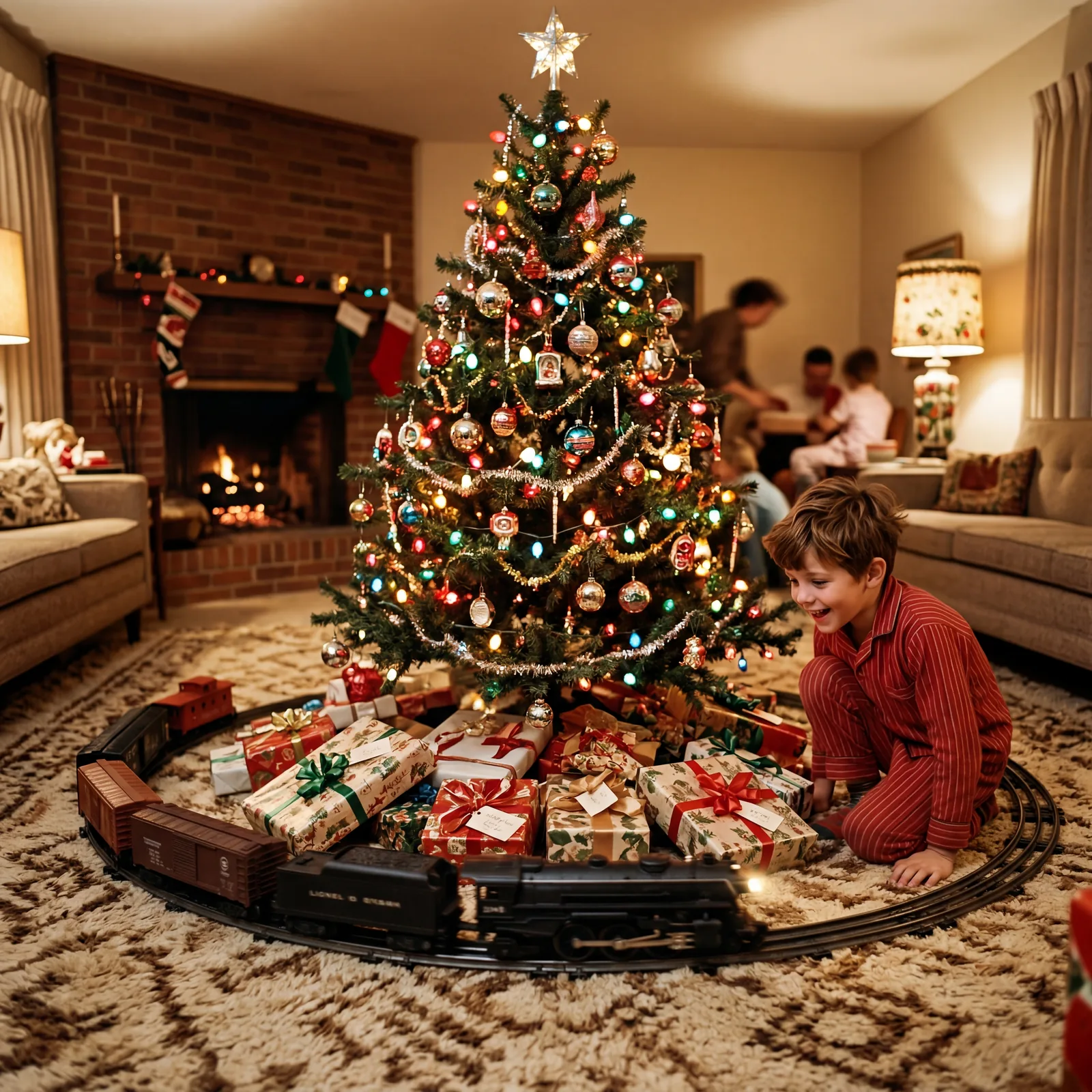
It ran on an oval track that took up most of the floor space under the tree. You weren’t allowed to touch the transformer.
The train had a coal car and a caboose and it made a real whistle sound. The smell of the motor warming up mixed with the pine tree above it. Your father set it up the night before, and it ran on Christmas morning while gifts were being opened.
Lionel Trains, founded in 1900, sold its peak number of units during the 1950s and 1960s. The electric train under the tree was a standard middle-class Christmas centerpiece. Video games largely replaced it by the 1980s.
It ran in circles for hours. Nobody wanted it to stop.
“You’re getting close to the ones that actually hurt a little. Brace yourself.”
13. Candy Cane Mice on the Tree
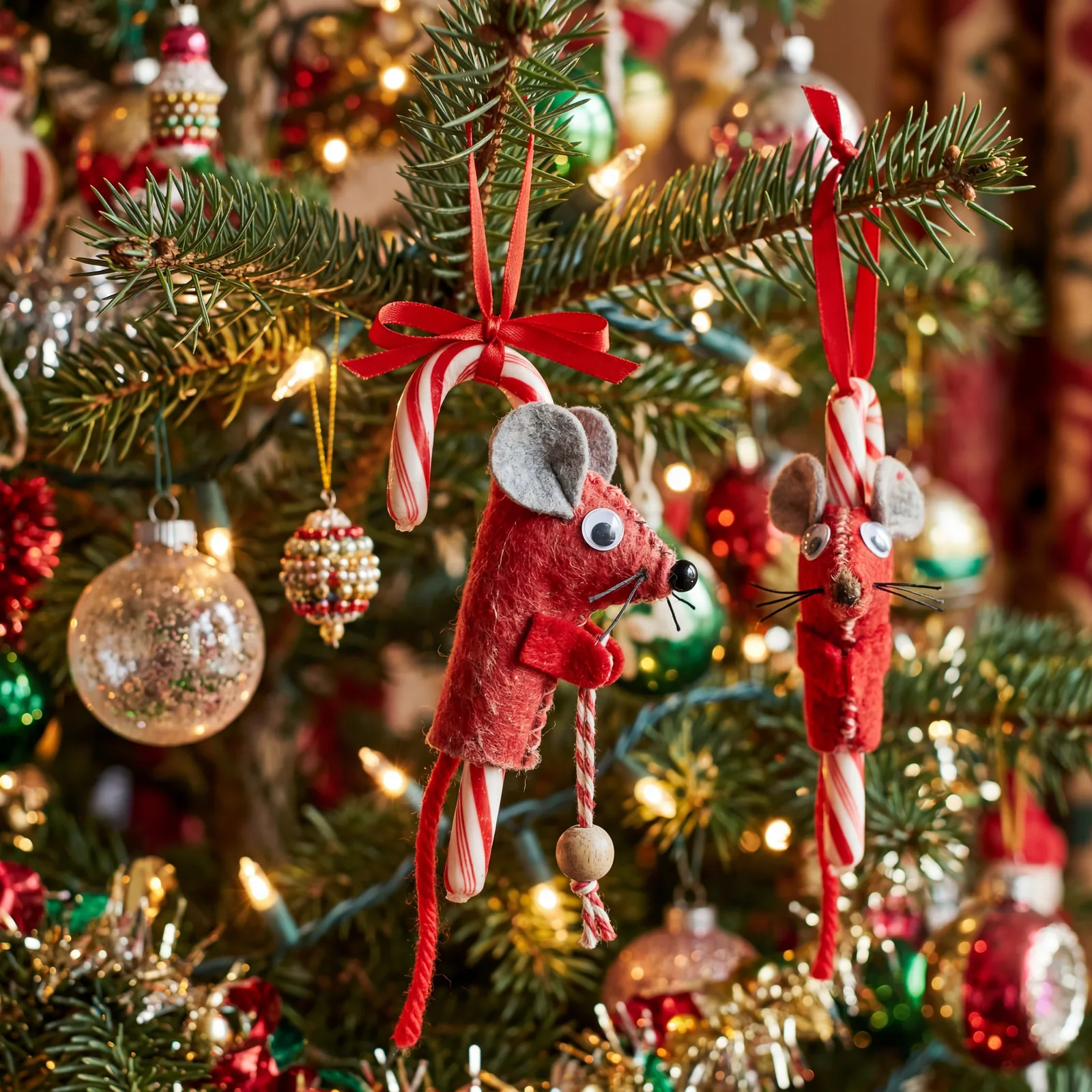
Someone in the family made them every year. A candy cane for the body, felt ears, little googly eyes, a red ribbon bow. They went on the lower branches where the kids could see them.
They weren’t sold in stores. That was the point. Someone sat at the kitchen table in early December with a hot glue gun and a bag of candy canes and made twenty of them.
Candy cane mice were a popular DIY Christmas craft from the 1960s through the 1980s, featured in every women’s magazine craft section during that era. Ready-made versions killed the homemade tradition.
The homemade version had imperfections. That’s what made them perfect.
12. Eggnog From a Punch Bowl
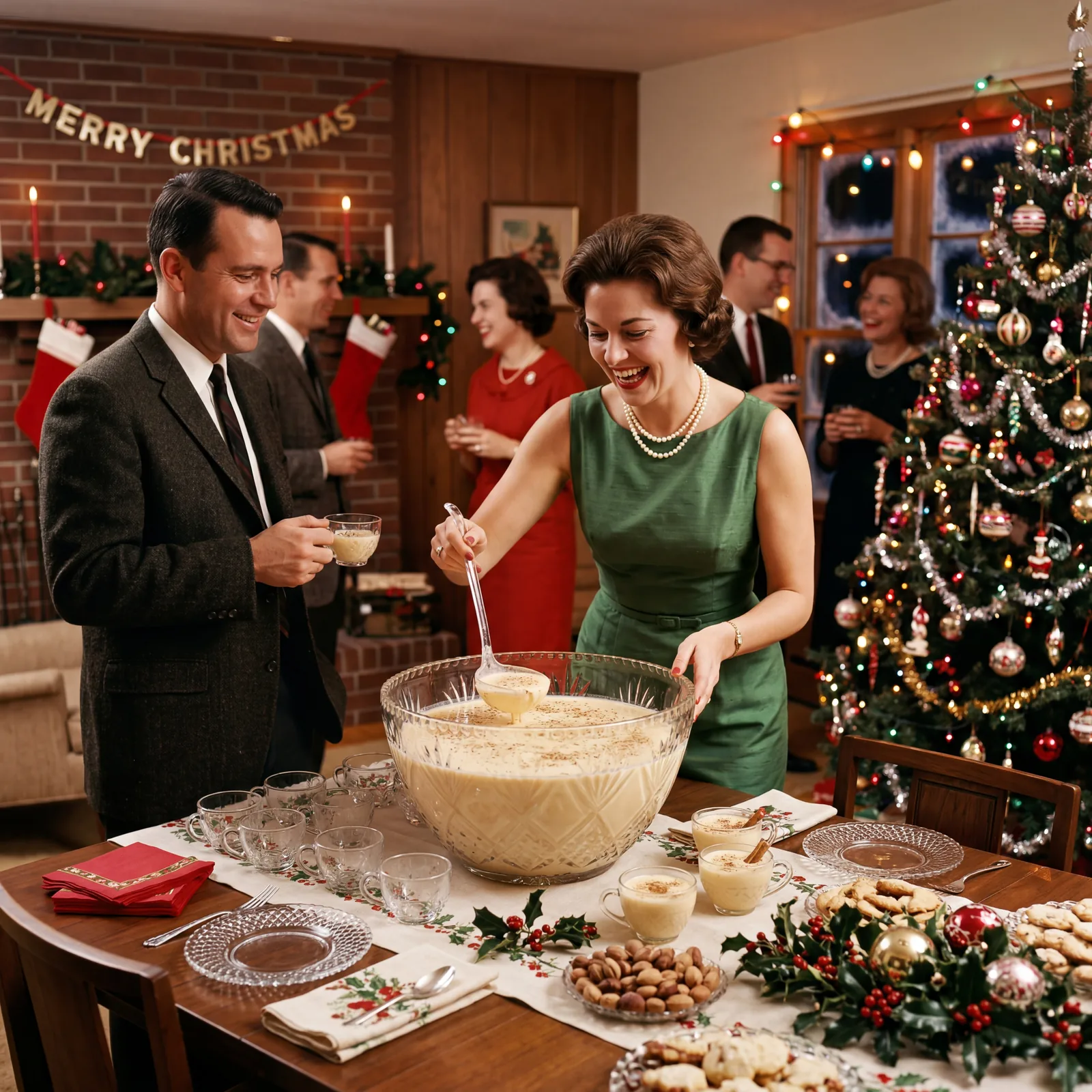
The punch bowl only came out twice a year. Christmas was one of them. It sat on the sideboard in the dining room and you helped yourself with the ladle.
The eggnog was homemade. It had nutmeg grated fresh on top. The adults’ version had bourbon in it. You got the version without, which tasted close enough.
Punch bowl sets were standard household items from the 1940s through the 1970s, when home entertaining still centered on serving food and drink from communal vessels. Individual cartons of store-bought eggnog made the punch bowl unnecessary.
The ladle made it feel like an occasion. A carton in the fridge does not.
11. The Family Encyclopedia Used for Christmas Research
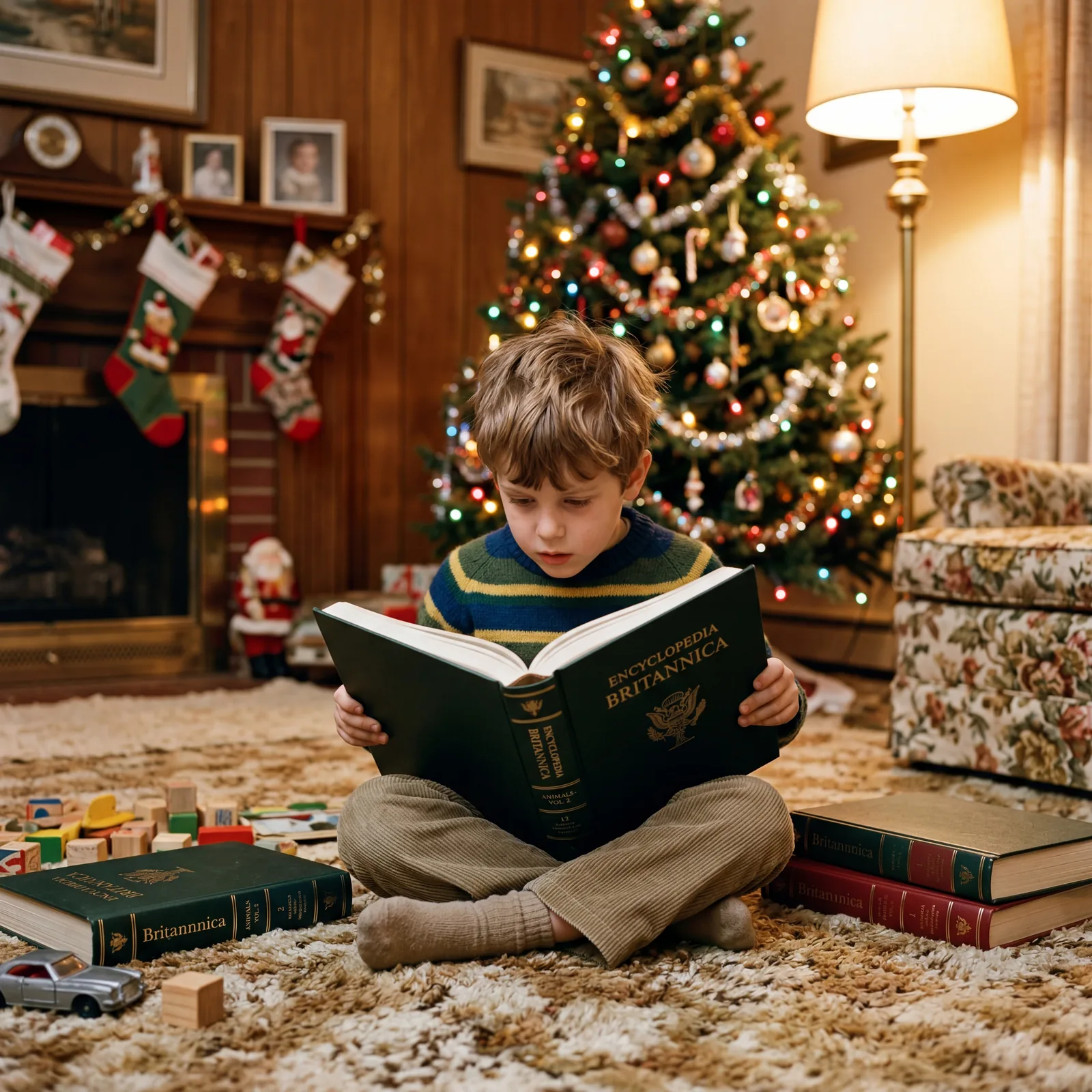
You wanted to know something about the North Pole, or reindeer, or what country Santa came from. You went to the encyclopedia.
It was heavy. You carried the right volume to the couch and looked it up. The entry had a black and white photograph. You read every word, including the parts that weren’t what you were looking for.
Encyclopedia Britannica sold its last print edition in 2010, but in the 1960s and 70s it was a fixture in American living rooms. The Christmas volume was E or N, depending on what you needed.
The encyclopedia made you smarter just by being heavy.
“The next five are the ones people always forget to mention. That’s exactly why they belong here.”
10. Christmas Cards Displayed on the Mantle With Tape
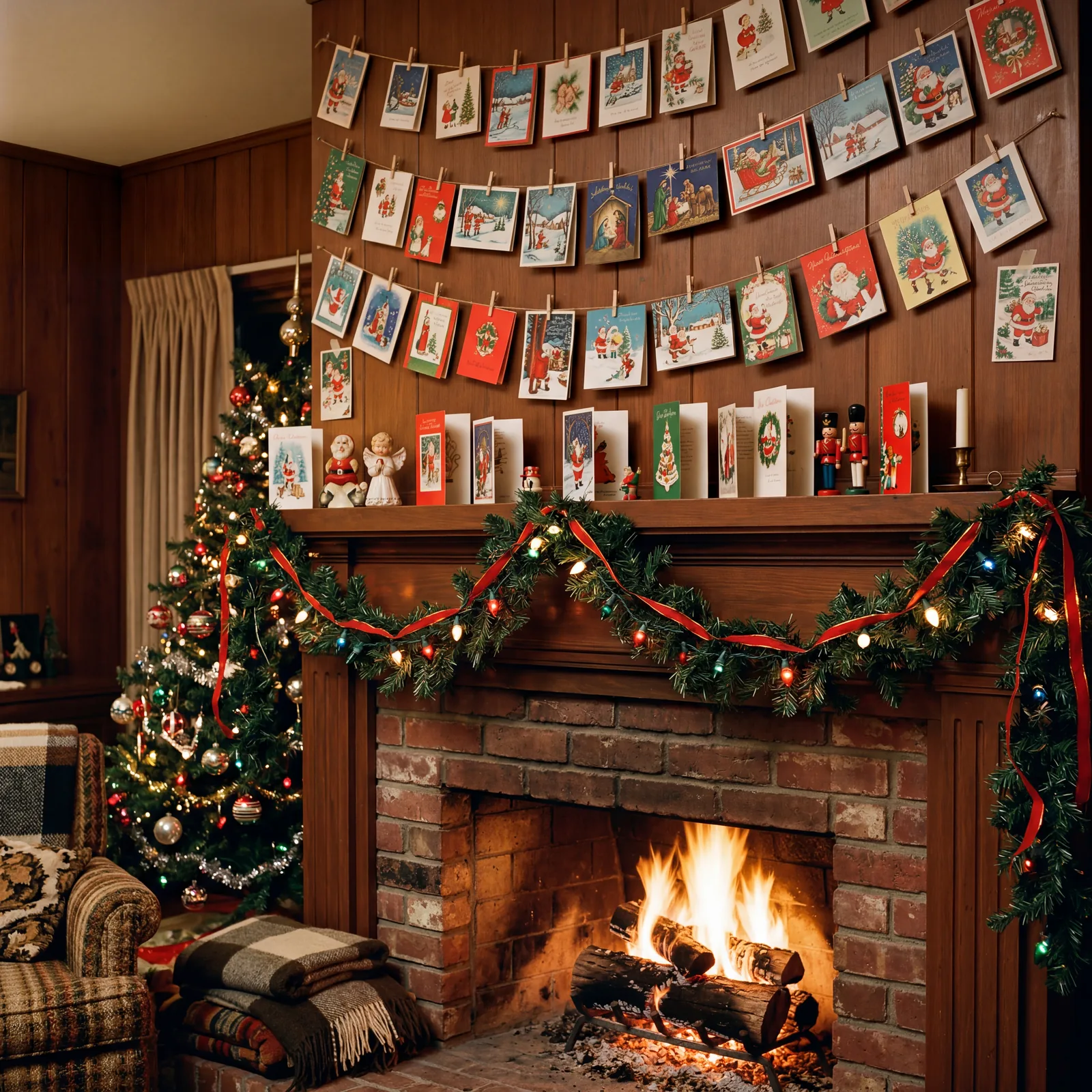
You taped them up as they arrived. Some families strung a ribbon across the wall and clipped them on. Either way, by December 20th the mantle was covered.
You could tell a lot about a family by their Christmas cards. Studio portrait or handwritten letter. Religious or secular. The ones your parents kept from year to year were stored in a shoebox. For another nearby rabbit hole, Words Your Parents Used That Gen Z Has Never Heard looks at a related piece of everyday culture.
Americans sent an estimated 2.5 billion Christmas cards per year at the tradition’s peak in the 1960s. That number has declined by more than 70 percent since email became universal.
The cards on the mantle told you someone was thinking of you. Not a notification. A card.
9. Fruit in the Toe of the Stocking
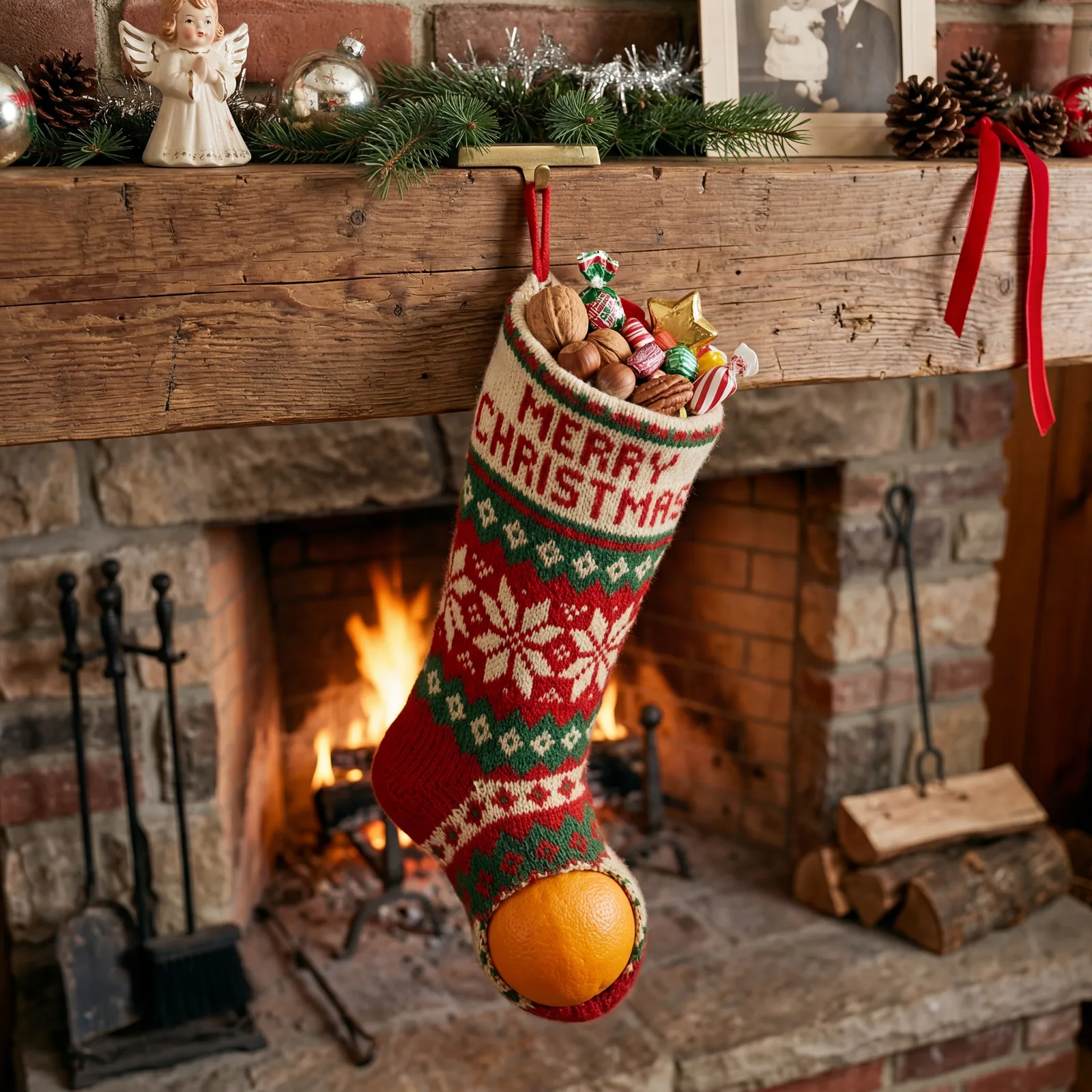
You reached in and felt something round and heavy at the bottom and you knew what it was before you pulled it out. An orange. Sometimes a tangerine. Always something citrus.
It wasn’t a disappointment. It was a tradition. The orange in the stocking goes back to the legend of Saint Nicholas, who provided gold for poor families, later represented by coins and eventually fruit.
In the early 20th century, citrus was a genuine luxury in northern states during winter. By the 1970s, it was symbolic. By the 1990s, it had mostly disappeared from stockings entirely.
The orange meant something because it used to mean survival. We forgot that part.
8. Christmas Tree Flocking Spray
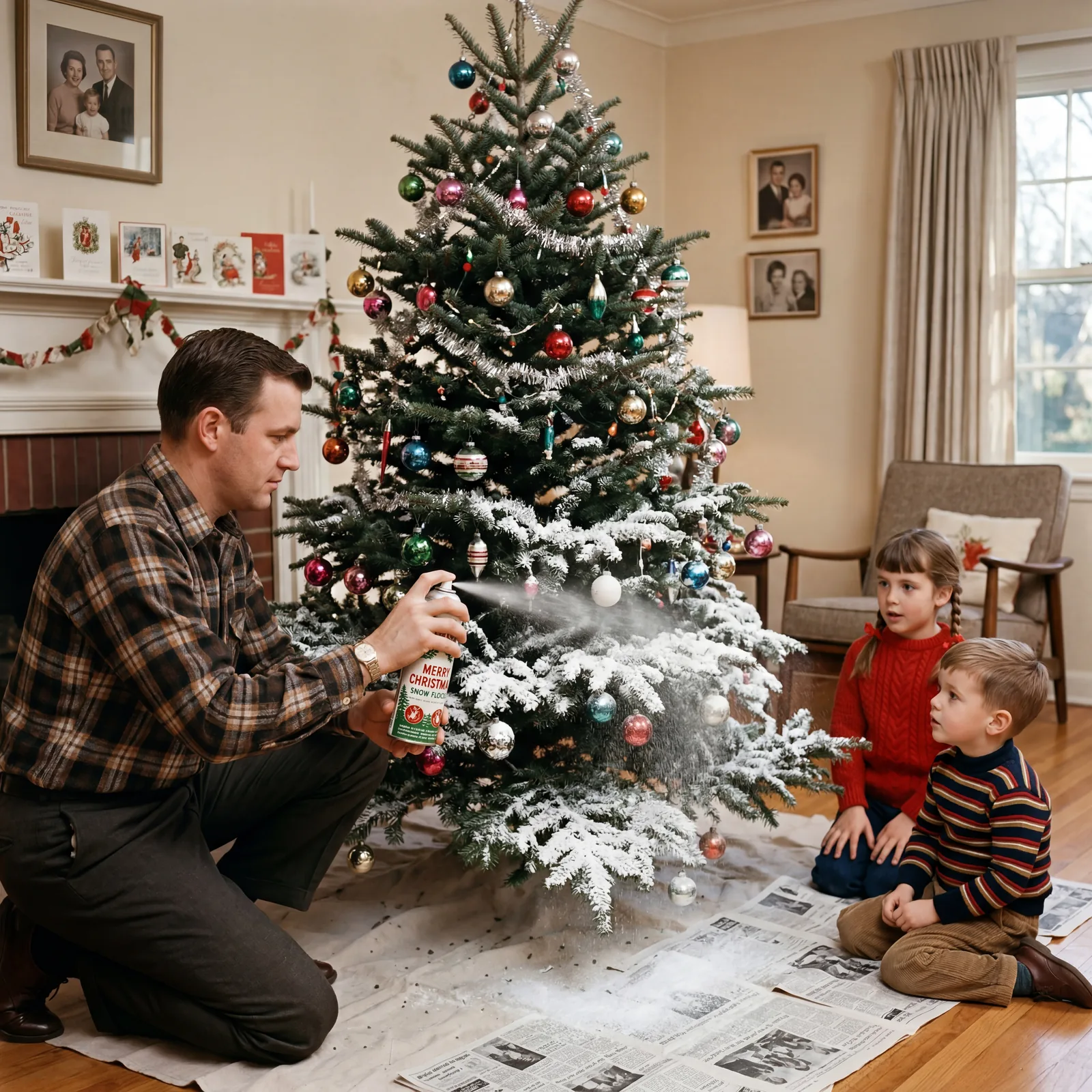
The can was white with a picture of a snowy tree on it. You shook it hard and sprayed it on the branches and it looked like snow for about forty-eight hours.
It smelled like a craft store and a chemical plant had a baby. It got on everything. It came off on your hands every time you touched the tree. It was worth it.
Flocking sprays were at peak popularity in American homes from the late 1950s through the 1970s. Environmental regulations in the 1980s changed the formula, and the original aerosol versions were eventually pulled from most markets.
The tree looked like it had just come in from outside. Even when it hadn’t snowed in years.
7. Tinsel by the Strand
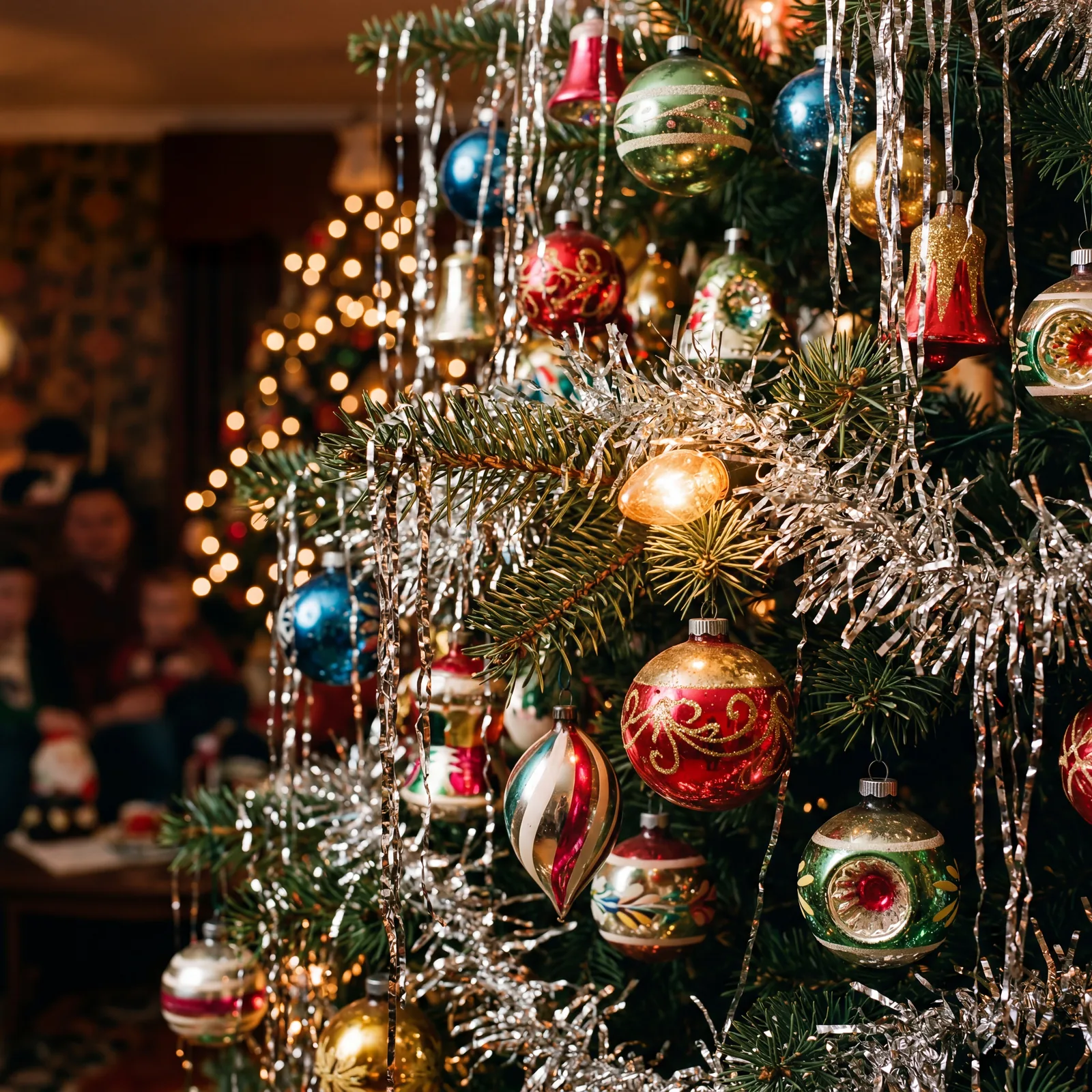
You put it on one strand at a time. That was the rule. Not a handful. Not a clump. One strand, draped carefully over the branch, until the whole tree shimmered.
It was heavy because it was made of lead. Real lead foil, cut into strips, which is why it actually hung straight and caught the light the way it did. Nothing since has looked like it. That same curiosity is what makes What Did ‘Groovy’ Actually Mean? The Real History worth checking after this section.
Lead tinsel was banned in the US in 1972 by the FDA over concerns about lead poisoning in children. Mylar plastic tinsel replaced it, but plastic tinsel is light and static-prone and never hangs the same way.
You can still buy the aluminum version in some places. It’s not the same weight. It knows it’s an imitation.
“Two more. These are the ones worth reading slowly.”
6. Bubble Lights on the Tree
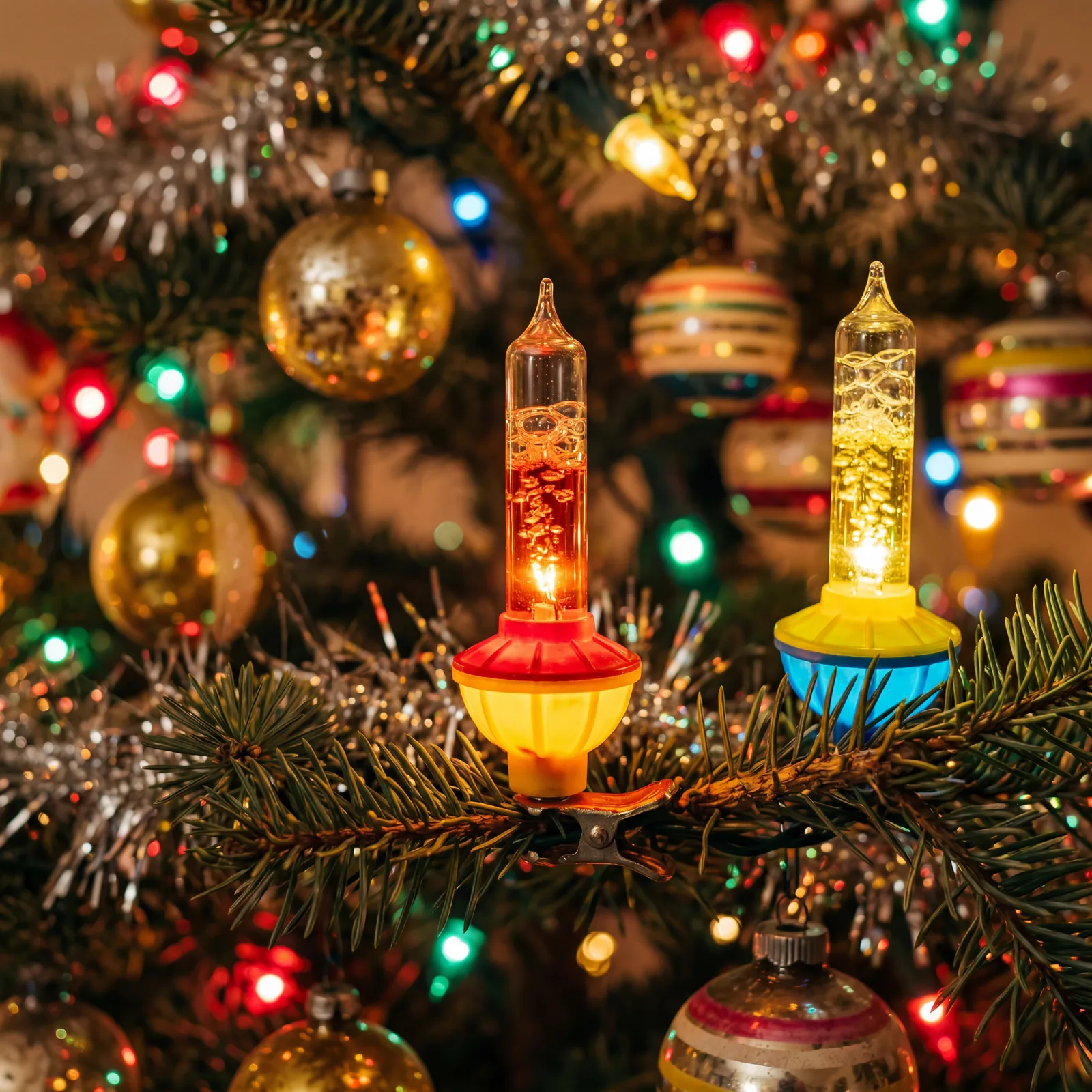
They looked like test tubes filled with colored liquid, and when the bulb heated up, the liquid started to bubble. You could stare at them for a long time.
Red. Blue. Green. Yellow. Each one a different color, each bubbling at its own pace. The tree felt alive because of them. Nothing else on the tree moved.
Bubble lights were invented in 1946 and reached peak popularity through the 1950s and 1960s. They fell out of fashion in the 1970s when modern light strings became dominant, and the methylene chloride liquid inside was later flagged as a safety concern.
They made the tree feel like it had a pulse. That’s not a metaphor.
5. Christmas Seals on Envelopes
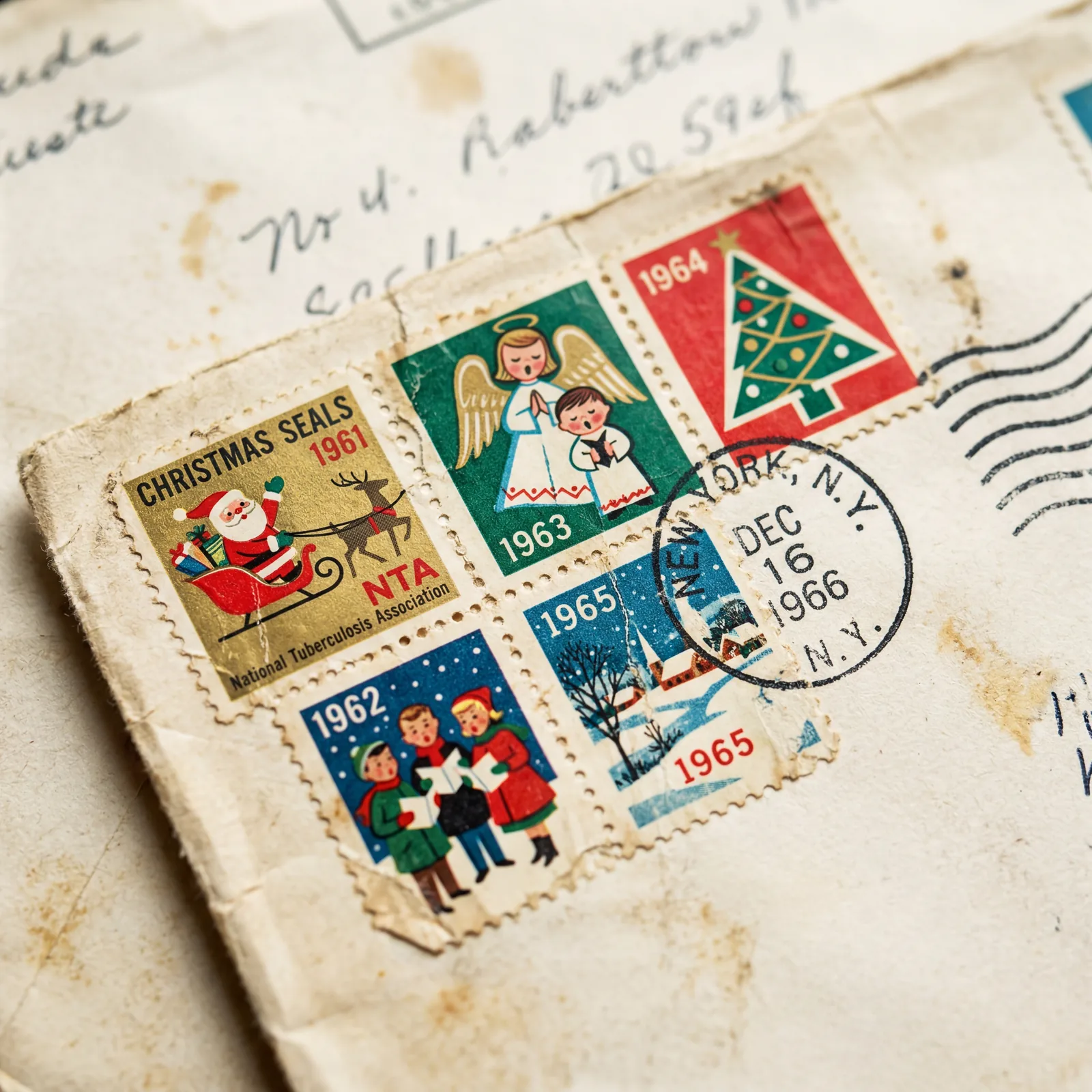
Every Christmas card you mailed got a seal. Sometimes two. They were small adhesive stamps you bought from the American Lung Association, not for postage but for decoration and charity.
They came in a sheet in a small cardboard envelope, and you licked each one and pressed it onto the back flap of your Christmas cards. There were different designs each year. You collected the sheets.
Christmas Seals have been sold in the United States since 1907, originally to fund tuberculosis research. Sales peaked in the mid-20th century when mailing cards was still the primary form of holiday communication.
You paid a little extra to seal the envelope with something that mattered. That impulse hasn’t completely disappeared. But the seal has.
“It’s hard to top. But #1 manages it.”
4. The Sears Wish Book
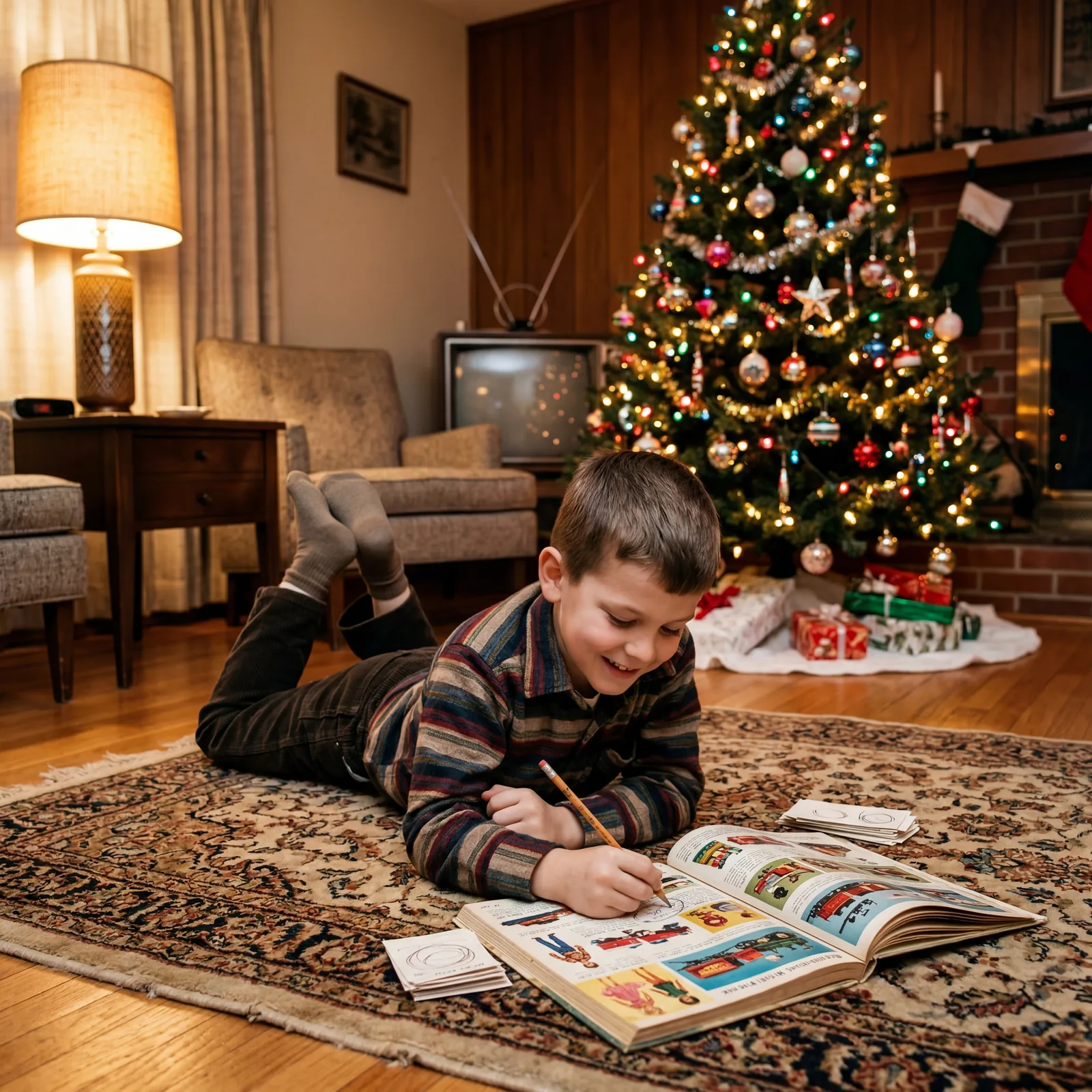
It arrived in the mail in October. You carried it to your room and you read it like a novel.
Every page had something you wanted. You dog-eared the corners. You circled things in pencil. You carried it around for weeks and studied it the way you should have studied your schoolbooks. By Christmas morning you had it memorized. Readers who enjoy these kinds of details may also want 35 Things Every 1930s Family Did That We’ve Completely Forgotten for another quick detour.
The Sears Christmas Wish Book launched in 1933 and reached its peak circulation of over 15 million copies in the 1960s and 70s. Sears discontinued it in 1993 and the catalog itself ended by 2018 when Sears filed for bankruptcy.
The Wish Book taught you how to want things carefully. Amazon’s algorithm does the opposite.
3. Waiting by the TV for Christmas Specials
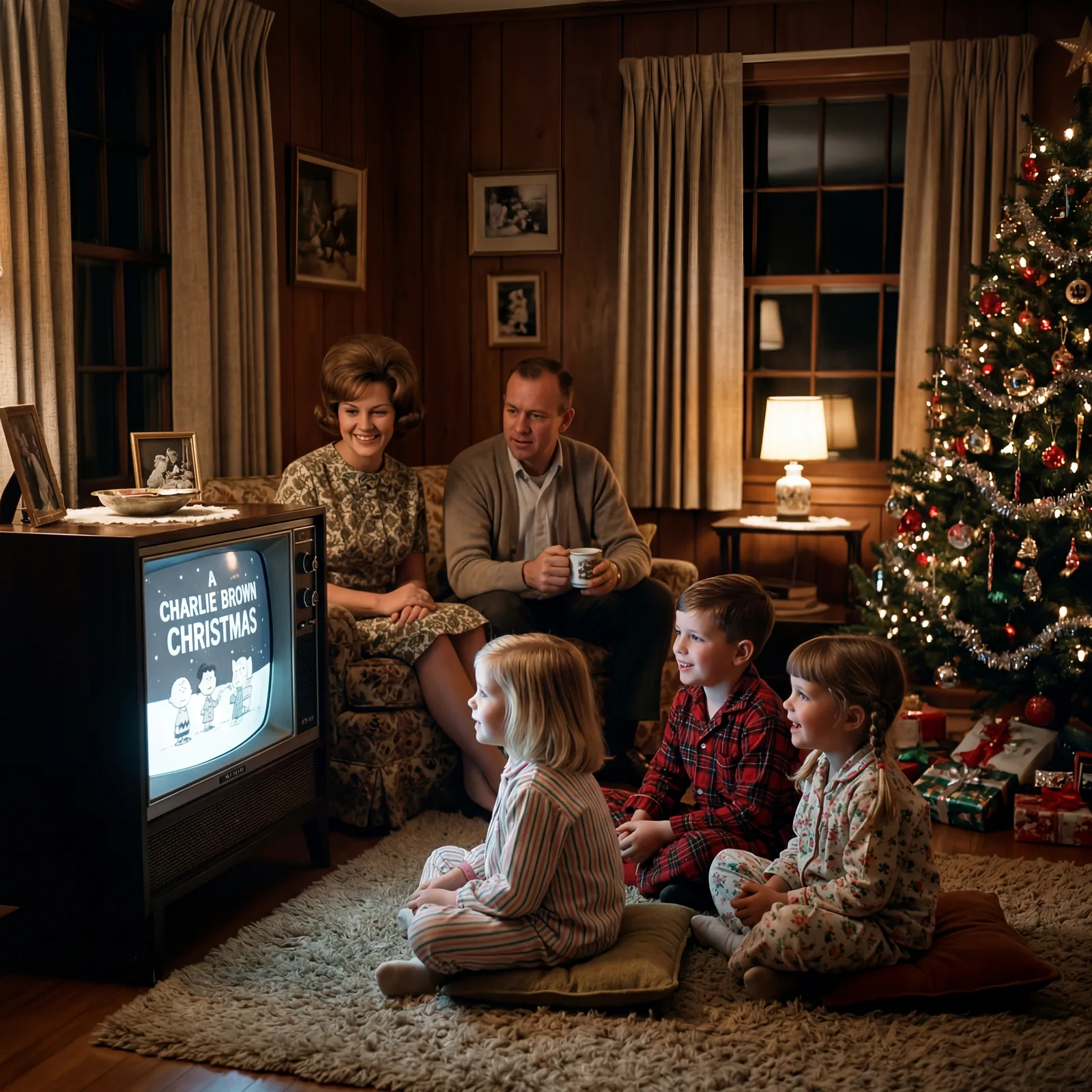
You checked the TV Guide on Sunday and you marked the date in pencil. December 9th, CBS, 7:30pm. You made sure you were home. You told your friends to be home.
If you missed it, you missed it. There was no rewind, no recording, no streaming it later. It aired once and then it was gone until next year. That made it an event.
The era of must-watch Christmas television ran from roughly 1964 to 1990, when homes still gathered around a single television set and networks controlled the entire viewing experience. DVR adoption after 2000 ended the urgency permanently.
When you can watch it anytime, you watch it less carefully. That’s just how it works.
2. The Color Wheel Spotlight for the Aluminum Tree
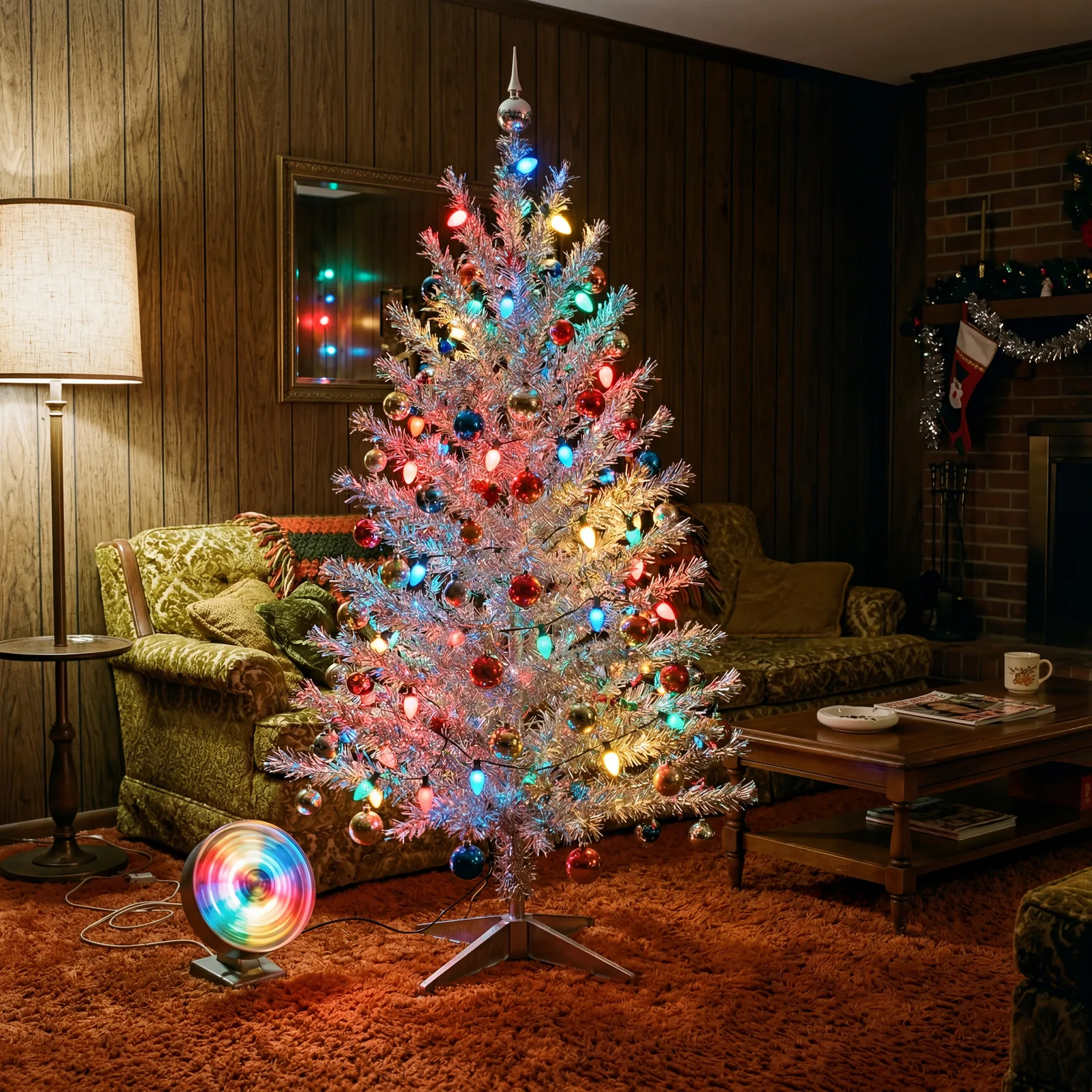
The aluminum tree didn’t have lights on it. It couldn’t. The metal branches were a fire hazard with electric lights. So instead, you aimed a color wheel at it from across the room.
The color wheel was a motorized disk with four colored panels, red, blue, green, yellow, that rotated slowly in front of a single bright bulb. The tree changed color every few seconds. It was the most futuristic thing in the house.
Aluminum Christmas trees were manufactured by the Evergleam company starting in 1959 and became one of the most iconic products of mid-century American Christmas design. “A Charlie Brown Christmas” in 1965 famously criticized the aluminum tree, contributing to a backlash that nearly killed the market by 1970.
The color wheel made your living room feel like the future. The future didn’t keep it.
“It’s hard to top. But #1 manages it.”
1. The Aluminum Christmas Tree Itself
The Tradition That Defined Christmas Back Then
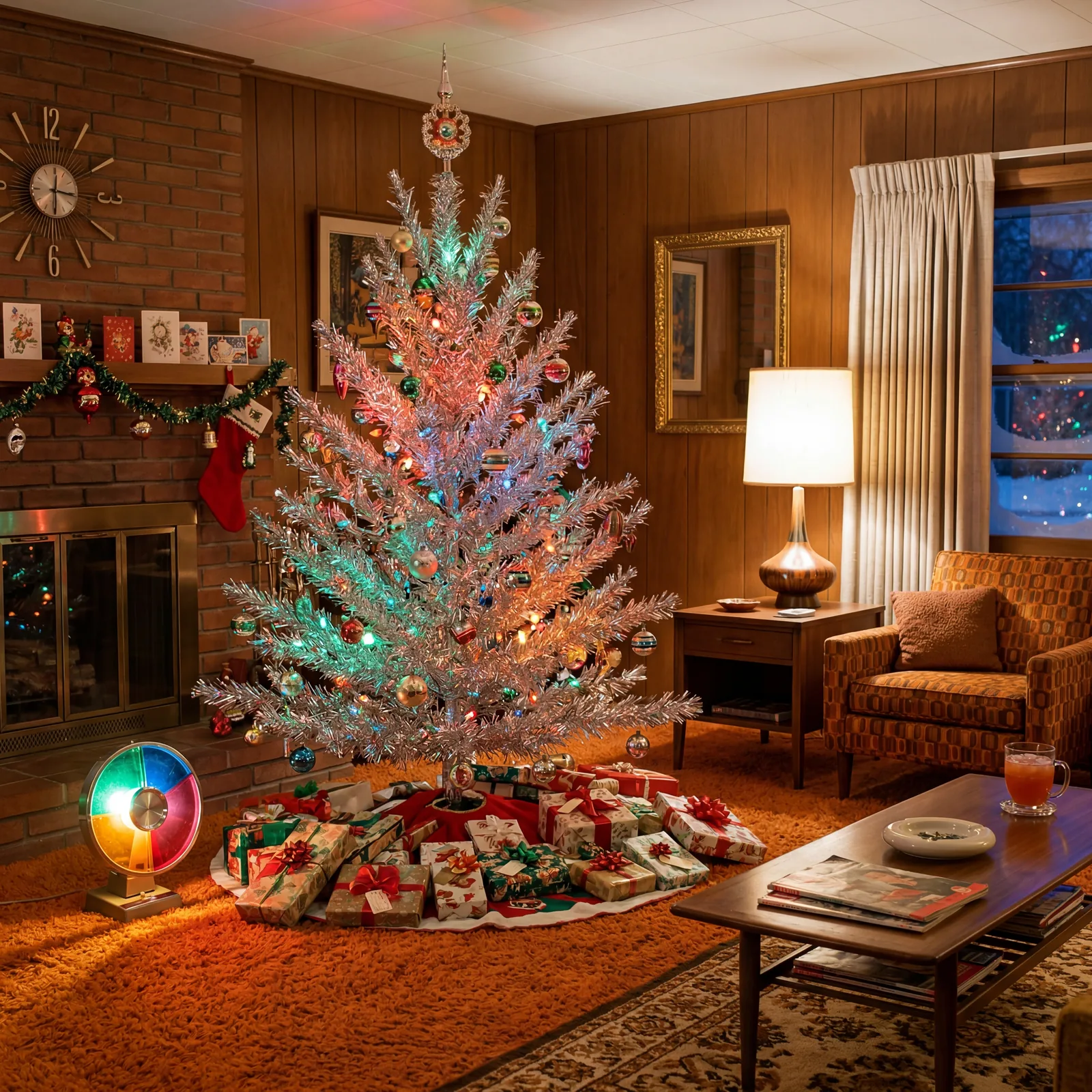
It didn’t look like a tree. It looked like someone had decided Christmas should be in the future, and they were right.
The branches were silver foil strips attached to a white pole, and when the light hit them they caught and scattered it in every direction at once. No pine smell. No dropped needles. No fire danger. Just silver.
You either had one or you went to the neighbor’s house to stare at theirs.
The Evergleam aluminum tree was introduced in 1959 by the Aluminum Specialty Company of Manitowoc, Wisconsin. It sold 1.5 million units in its first two years. By 1965, it was in millions of American living rooms. Then “A Charlie Brown Christmas” aired, and Linus stood in front of a sad little real tree and said something about what Christmas was really about, and America felt embarrassed about its aluminum trees. Sales dropped. The trees went into storage. Most were thrown away. For a different but related slice of the same world, 25 Things Hotel Staff Notice About You the Moment You Walk Through the Door in 2 is a good next stop.
Today, an original Evergleam in its box sells for hundreds of dollars at antique fairs. A retired art teacher from Michigan told me she found hers in her mother’s attic in 2019, still in the original box, still in perfect condition. She cried for a reason she couldn’t fully explain.
The aluminum tree didn’t vanish because it was bad. It vanished because someone told you it meant you didn’t care enough about the real thing. But for a decade, it was the most exciting object in millions of American homes, and the children who grew up staring at it, watching it turn red, then blue, then green, then yellow, never forgot what it felt like. If you like this kind of overlooked detail, 27 Foods From the 1970s That Vanished Into Thin Air is another useful read to open next.
It felt like Christmas was trying something new. And it was gorgeous.
“Now you know why we saved this one for last.”
The Christmas You Remember
These traditions didn’t disappear because they stopped working. They disappeared because time moved and nobody organized a defense.
You remember more of these than you thought you would. That’s not an accident.
Tell us in the comments: which one hit hardest? And which tradition are you still keeping alive?