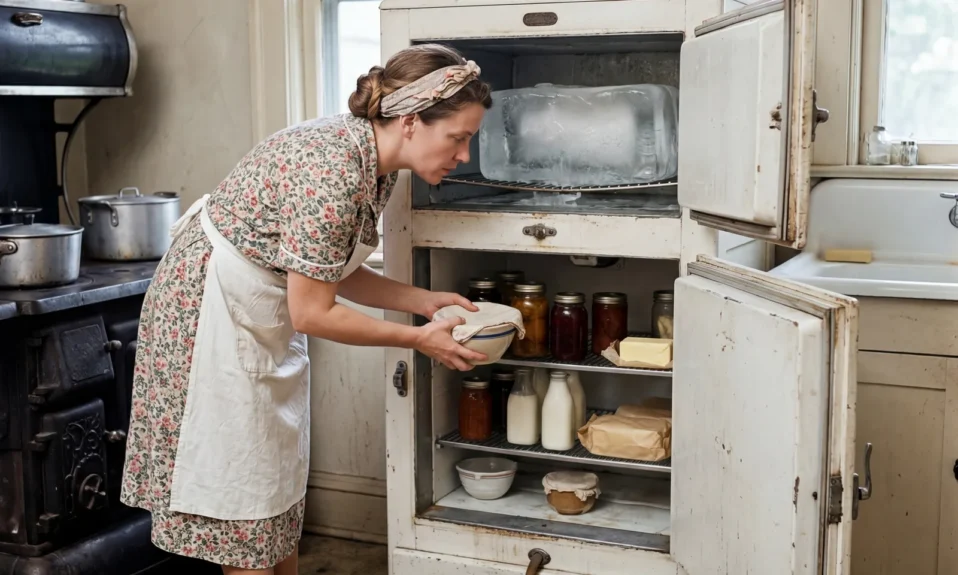

Picture a kitchen in 1974. Avocado green appliances. Linoleum floors. A casserole dish cooling on the counter with something jiggly inside.
You walked in from school and the smell hit you before you even opened the door. Whatever it was, you knew you’d be eating it for dinner and probably lunch tomorrow too.
Food in the 1970s tasted like effort. It tasted like a housewife who had read a magazine and decided tonight was the night.
It was also a little weird. A lot of it involved gelatin where gelatin had no business being.
Most of it is gone now. Not just discontinued. Gone from memory. Gone from recipe cards. Gone from the cultural shorthand you share with strangers at dinner parties.
That’s actually a shame. Those foods built something. They built the version of you that’s reading this right now.
This list is an attempt to pull them back. Not all of them were good. But all of them were real.
We saved the most loaded one for last. You’ll know it the moment you see it. And you’ll wonder why you never thought to look for it.
Scroll slow. Some of these will hit you harder than you expect.
27. Waldorf Salad
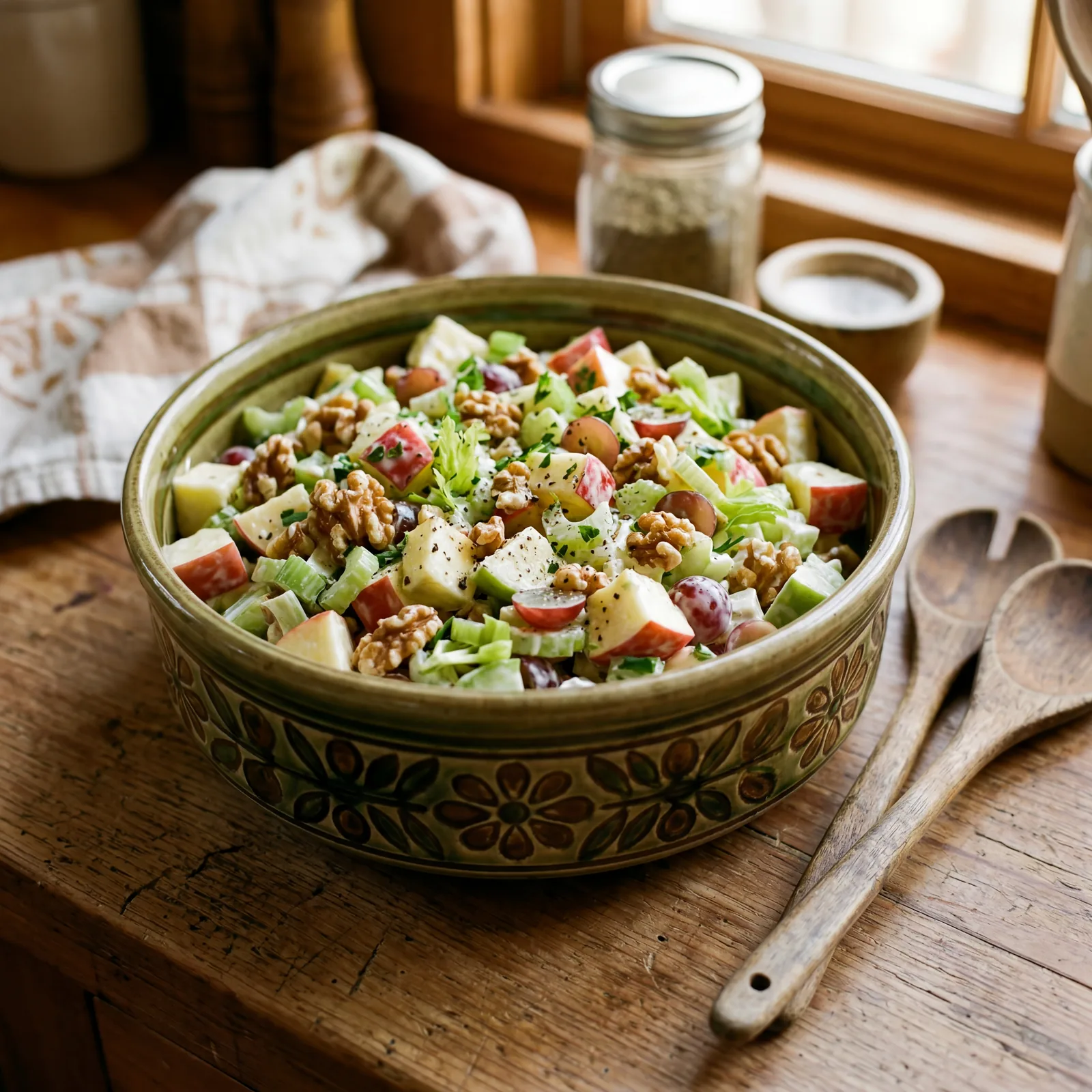
The Waldorf salad sounds fancy until you realize it’s just apples and mayonnaise with pretensions.
It was crisp, sweet, slightly tangy from the Miracle Whip, and studded with walnuts that nobody warned you about. You’d find it at every church potluck between 1968 and 1982.
Marriott Hotel invented it in 1896 but the 1970s housewife absolutely claimed it. By 1985 it had been quietly retired from tables across America.
A salad that convinced a generation that mayonnaise was elegant. That’s a legacy.
26. Clam Dip at Parties
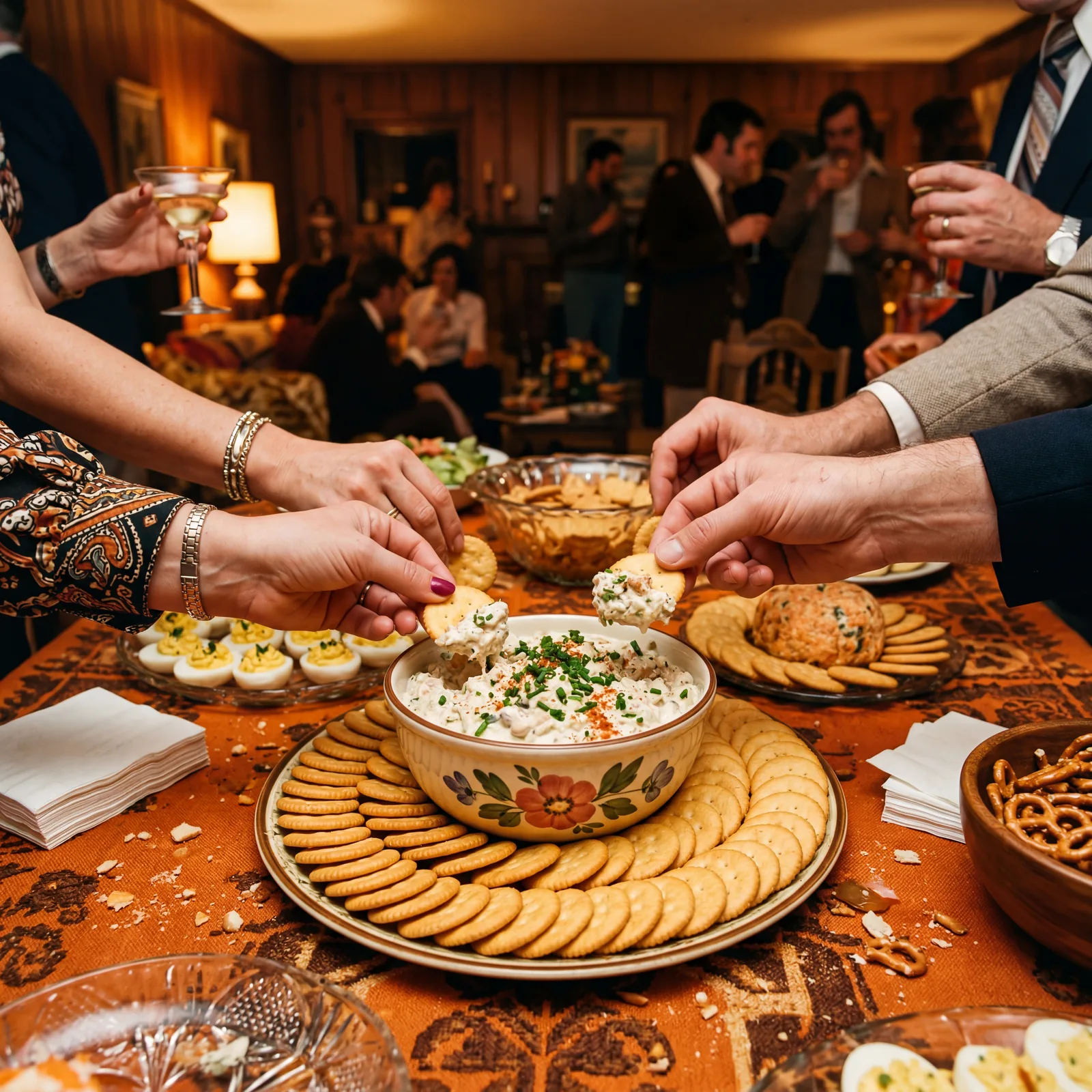
Clam dip was the most confident thing at every 1970s party. Nobody questioned it. Everyone ate it.
It was cream cheese and canned clams blended together, served cold with Ritz crackers. The smell was oceanic. The taste was somehow perfect.
Lipton’s recipe card version circulated through American kitchens for two solid decades. It didn’t disappear because it tasted bad. It disappeared because the 1990s decided seafood dips were suspicious.
Something that smelled that bold and got eaten that fast deserves more respect than history gave it.
25. Deviled Eggs at Every Potluck
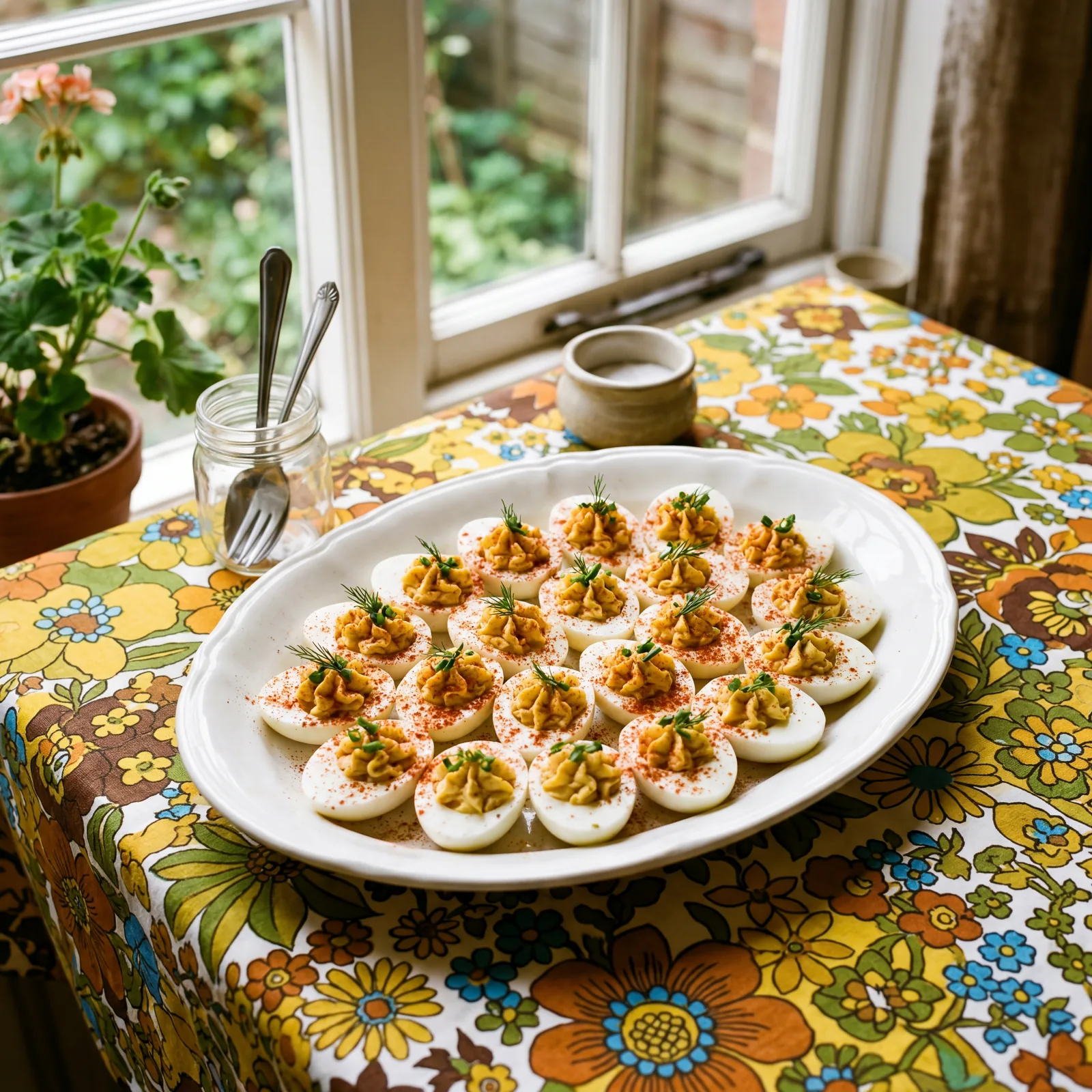
Deviled eggs haven’t disappeared but the version you remember has. That’s a different thing entirely.
The 1970s deviled egg was piped high, topped with a paprika snowfall, and it arrived on a special oval tray your grandmother owned specifically for this purpose. The yolk filling was dense, mustardy, slightly sweet.
Every potluck, every Easter, every church social. You’d count them before sitting down because you knew the ratio of eggs to people was never in your favor.
The deviled egg tray has been replaced by the sheet pan. And something important went with it.
24. Vienna Sausages in a Can
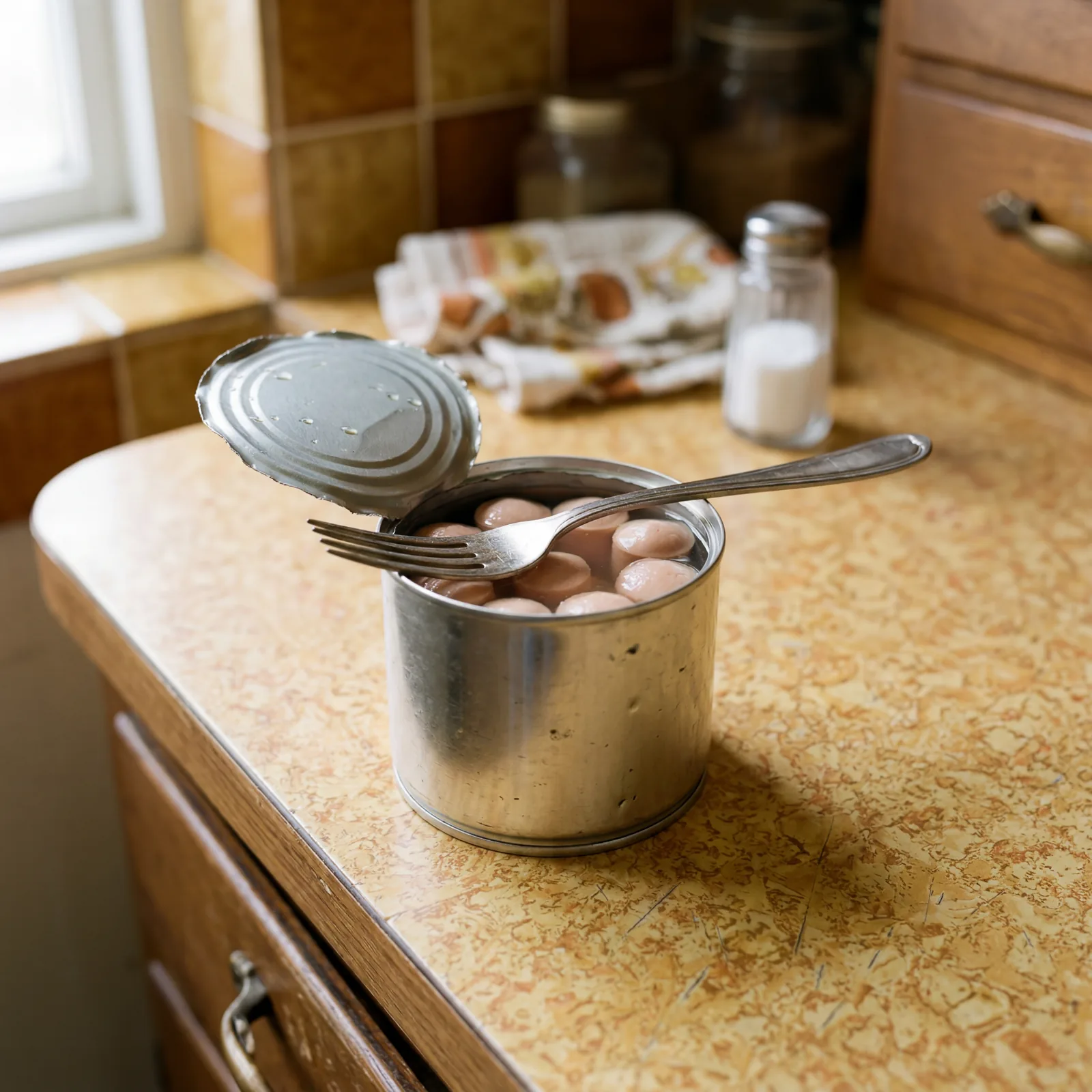
You ate these straight from the can and you felt absolutely no guilt about it.
Vienna sausages in brine. Pale pink, slightly rubbery, salty in a way that no other food is salty. You’d spear one with a fork and eat five before you realized what you’d done.
Armour and Libby’s were the main brands. They’re technically still available but the cultural moment when this was acceptable party food is gone completely.
Food that asked nothing of you and delivered exactly what it promised. That’s rare.
23. Ambrosia Salad
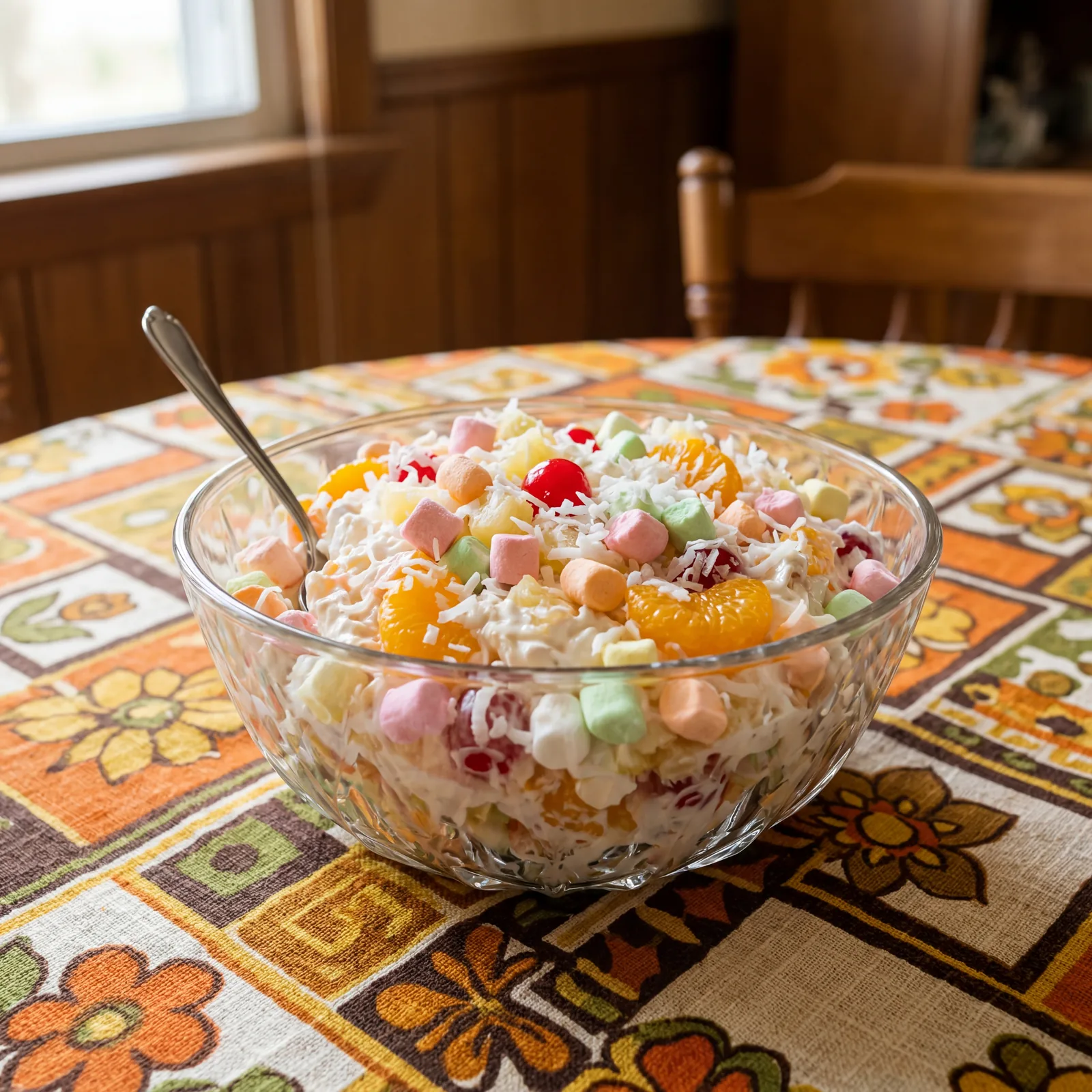
Ambrosia salad is what happens when you give someone canned fruit, Cool Whip, and the word “salad” as a permission slip.
It was marshmallows, mandarin oranges, pineapple chunks, shredded coconut, and sour cream or Cool Whip folded together and chilled overnight. It was cold, sweet, fluffy, and completely absurd.
Every Thanksgiving through the 1970s had one. Every grandmother had her variation. By the late 1990s it was being ironically revived at potlucks, which meant it was already over.
Food of the gods, apparently. The 1970s took that seriously.
“The next one is coming up. You probably haven’t thought about it in forty years. That’s about to change.”
22. Pigs in a Blanket (Cocktail Version)
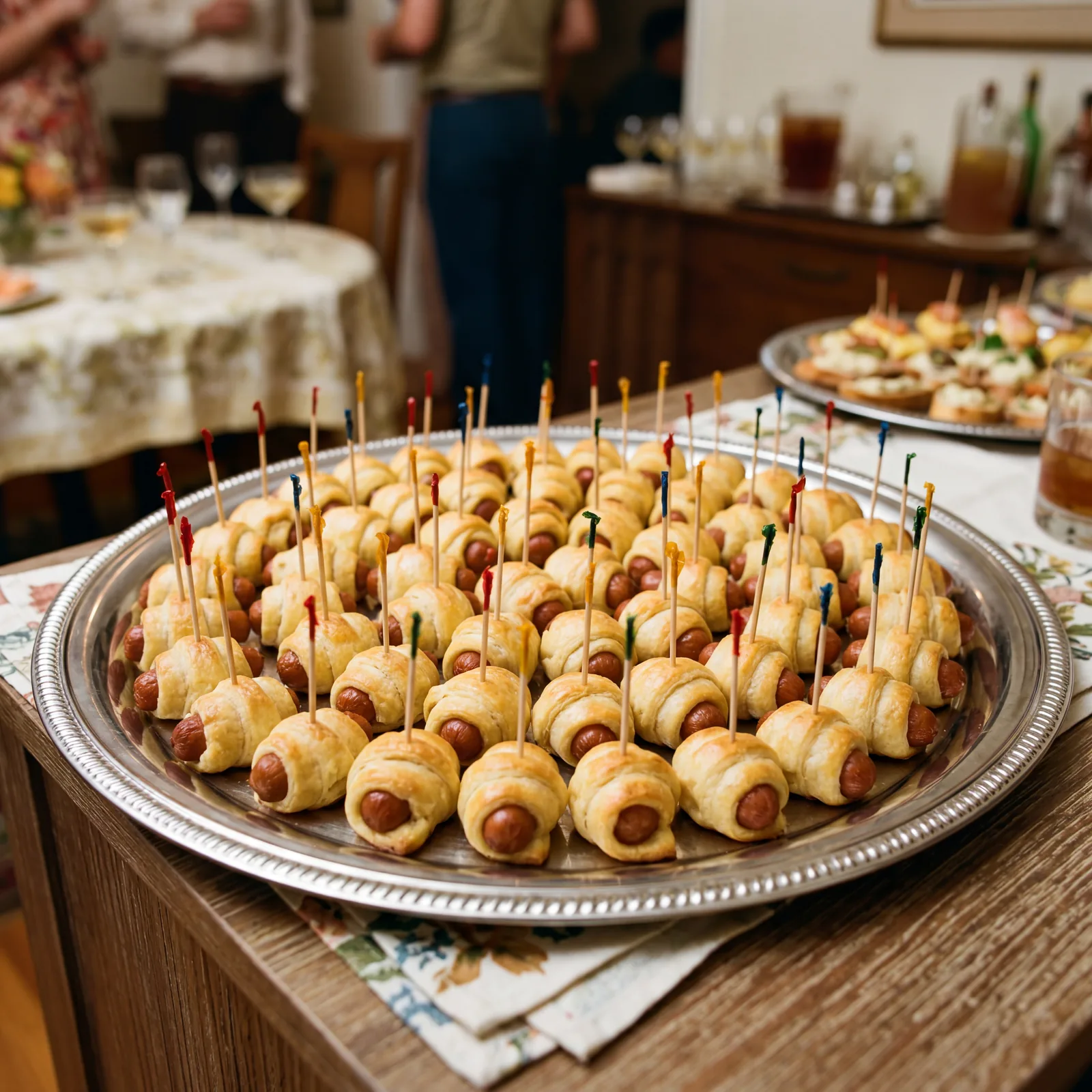
The cocktail pig in a blanket was a specific food at a specific moment and that moment is gone.
It was a tiny smoked sausage wrapped in crescent dough, baked until golden, skewered with a frilled toothpick. You could eat twelve of them while talking to someone you’d just met and that was socially acceptable.
Pillsbury’s crescent roll dough made the 1970s version possible. They were on every holiday table from 1968 to 1988.
You can make them now. But they won’t taste the same, and you know why.
21. Carnation Instant Breakfast
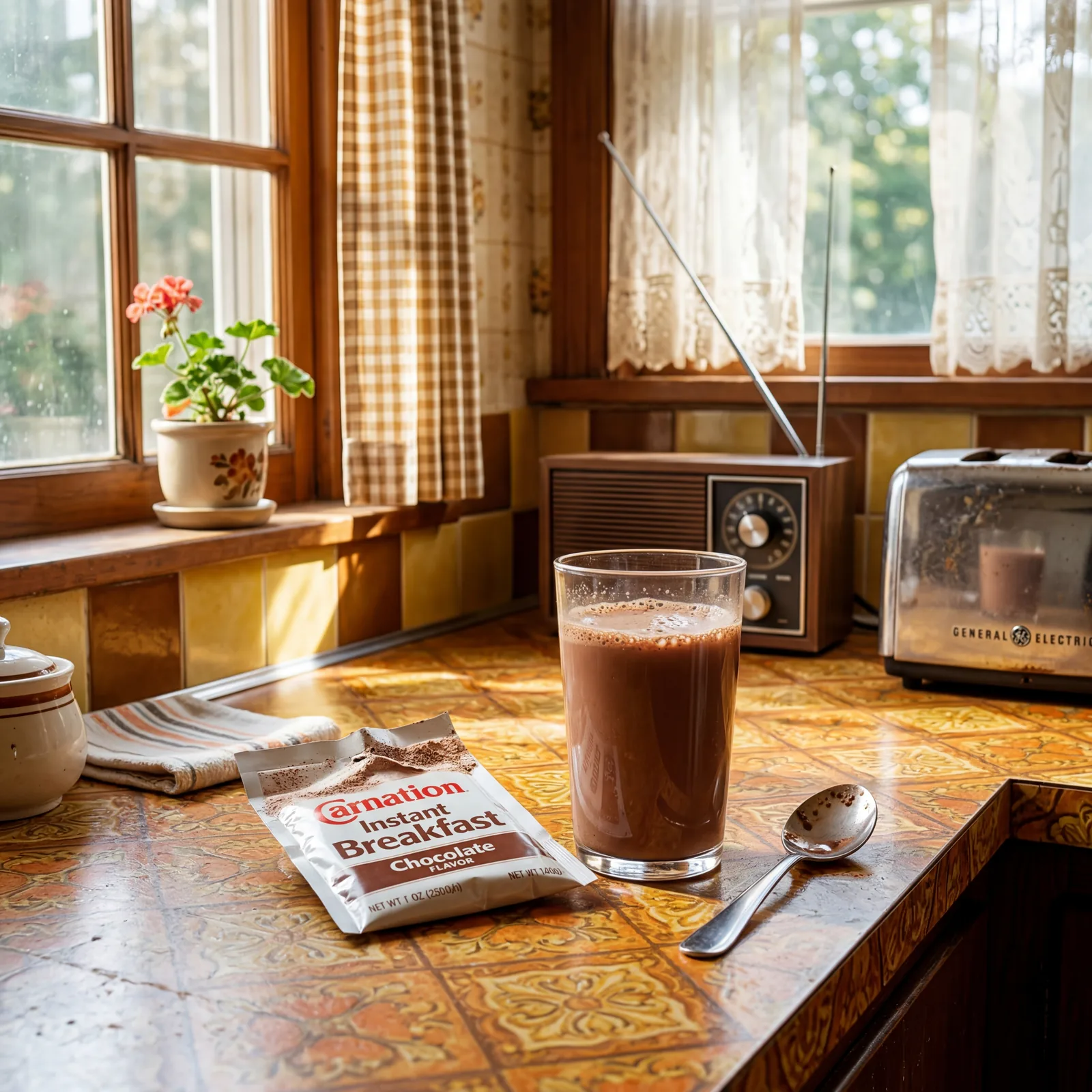
Carnation Instant Breakfast was the first time you understood that drinking your breakfast was a real option.
Chocolate powder into cold milk. Stir. The result was thin, sweet, vaguely malty. It felt futuristic in a way that cereal never did.
Carnation launched it in 1964 but the 1970s were its golden decade, positioned as a “nutritious meal replacement” for busy families. Nestle eventually reformulated it into something called Carnation Breakfast Essentials that tastes completely different.
The original formula tasted like a promise that mornings didn’t have to be hard.
20. Hawaiian Punch from a Can
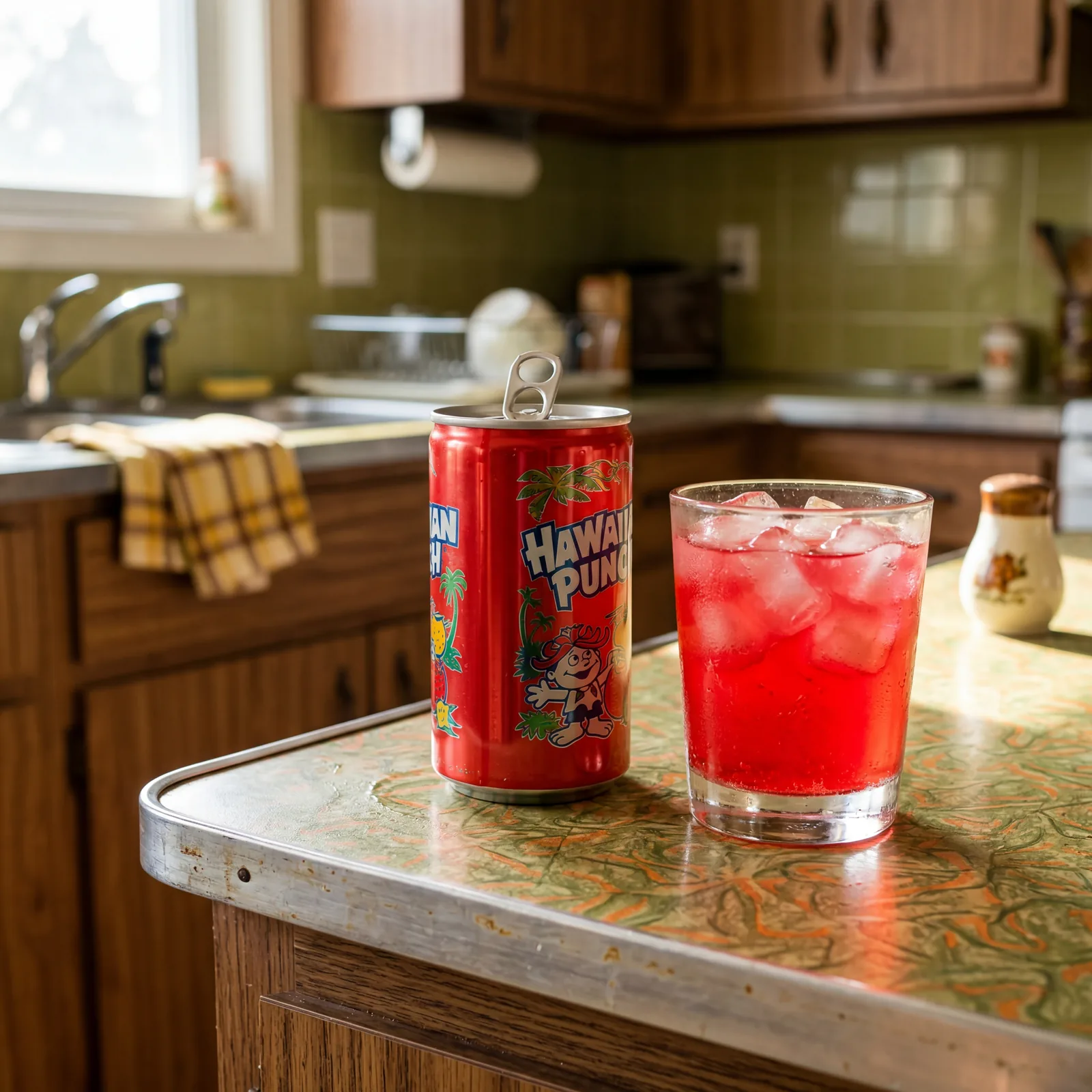
Hawaiian Punch from an actual can is a different product than the bottle version you can still find today.
The can was colder, the flavor more concentrated, the red more aggressively red. You drank it and your tongue turned a color that alarmed your parents. That was part of the appeal.
Reuben Products launched it in 1946 but canned Hawaiian Punch ruled the 1970s lunch box and cookout table. The can disappeared when two-liter bottles took over the market around 1982.
Forty-something years later, you still remember exactly what that can felt like in your hand.
19. Beefaroni (Chef Boyardee)
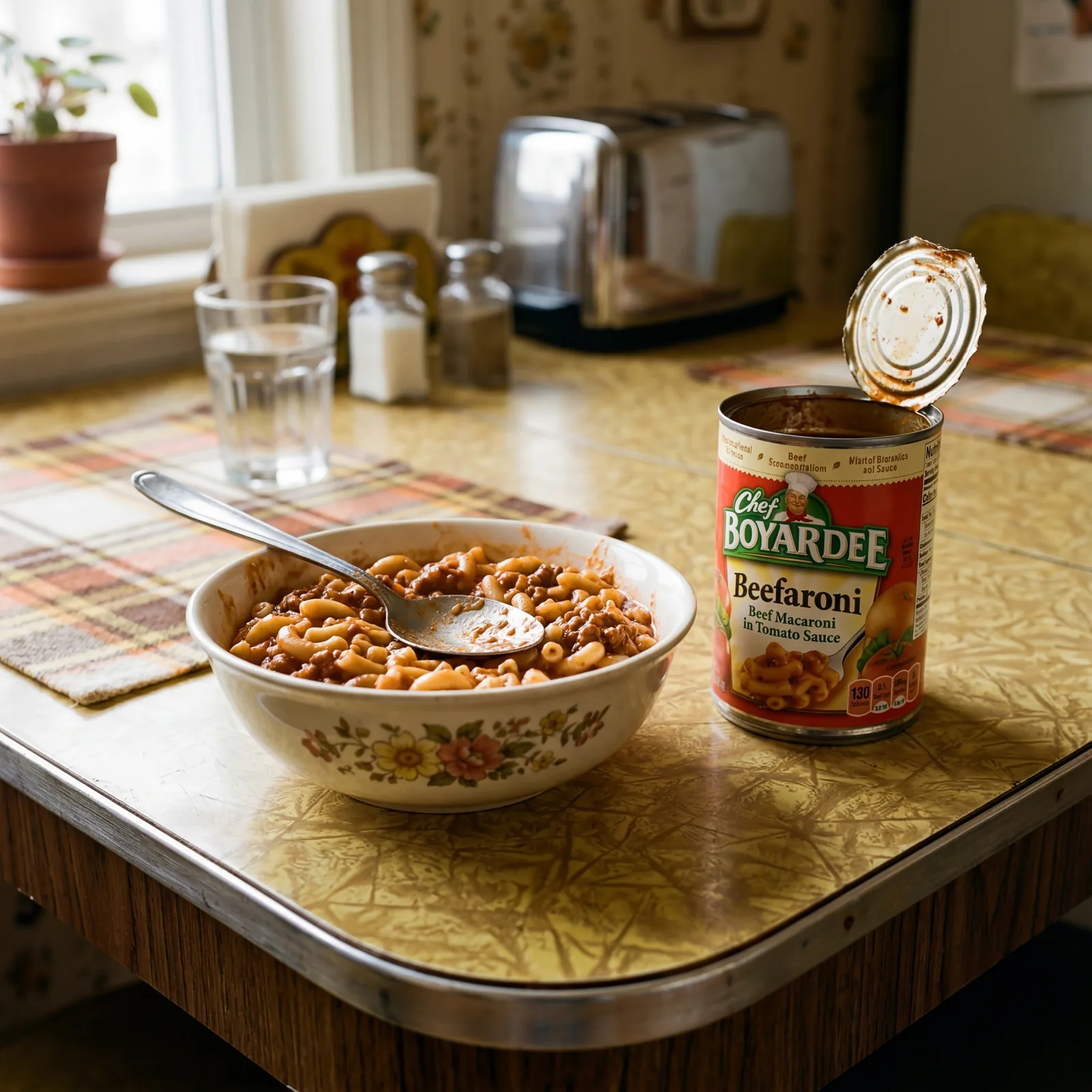
Beefaroni was the food you ate when your mom was too tired and she didn’t apologize for it. Neither did you.
Macaroni tubes, ground beef, tomato sauce. It came from a can. It got heated in a pot. Sometimes it got heated directly in the can if someone was really tired. It tasted like convenience and you loved it completely.
Chef Boyardee still makes a version but the original 1970s Beefaroni used a different beef ratio and a sharper tomato base. The reformulation happened quietly in the mid-1980s.
You didn’t know it was possible to miss a can of food this specifically.
18. Chicken à la King on Toast

Chicken à la King on toast sounds like something a hotel invented in 1910. The 1970s housewife made it Wednesday night dinner without irony.
Creamed chicken with pimentos, mushrooms, and peas spooned over toast or into a patty shell. It was white, rich, and deeply satisfying. Every church cookbook from 1968 to 1981 had a version.
The canned version from Swanson let you skip the homemade route. By 1990 it had been replaced on weeknight menus by pasta dishes and stir-fry. It didn’t survive the transition.
Toast that needed a meal on top of it. The 1970s were very serious about this concept.
17. Creamed Chipped Beef on Toast
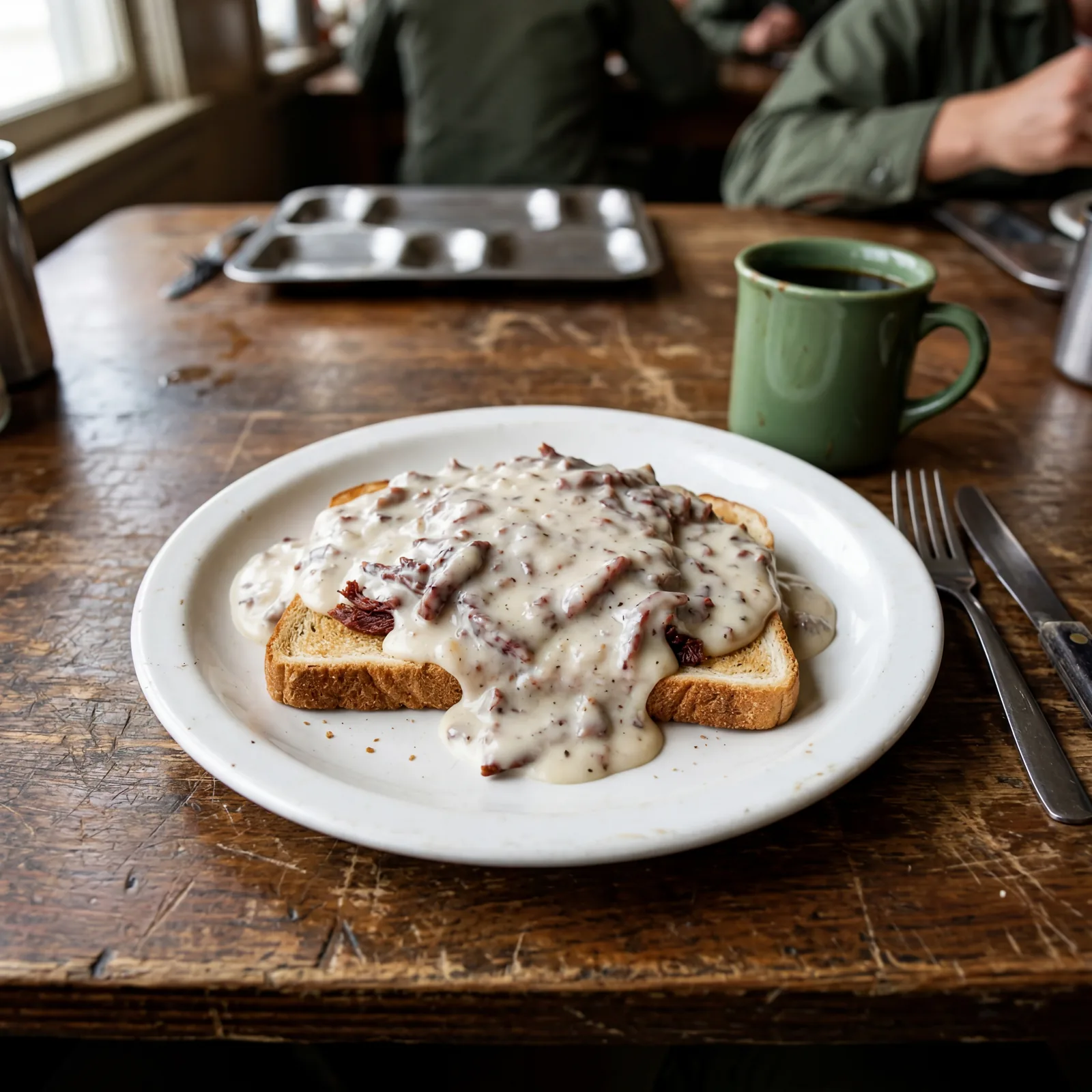
The military called it something unprintable. Your family called it dinner.
Dried, salted beef in a thick white cream sauce, poured over white toast. The beef was salty enough to make your lips pucker. The sauce was heavy and floury. Together they made something that felt substantial in a way that mattered in the 1970s.
Buddig pre-packaged dried beef was the pantry staple that made this possible. It peaked in the mid-1970s as a budget meal and vanished from family tables when sodium consciousness hit in the 1980s.
A meal that asked you to reconsider what “cream” and “beef” meant together. The 1970s were brave.
“This next one launched a thousand school-lunch arguments. You were either team yes or team no. There was no middle ground.”
16. Shake ‘n Bake Chicken

Shake ‘n Bake was technically still frying. It just didn’t want to admit it.
The coating went into the bag first. The chicken piece went in after. You shook. The result was baked chicken with a crust that tasted fried, which felt like cheating in the best possible way.
General Foods launched it in 1965 but it owned the 1970s kitchen. The “And I helped!” campaign made children feel responsible for dinner. The original pork and chicken varieties had a seasoning blend that’s been quietly adjusted multiple times since then.
The box still exists. The original coating doesn’t. You can tell the difference.
15. Quiche Lorraine

Quiche Lorraine was the 1970s version of sophistication. It said: we have a tart pan. We use it.
Eggs, cream, bacon, Gruyère in a buttery pastry shell. It was rich, custardy, slightly smoky. It appeared at brunches and dinner parties alike. The 1976 bestseller “Real Men Don’t Eat Quiche” was written specifically because quiche had gotten too powerful.
By 1984 it was over. The brunch trend moved on. Quiche became a punchline before anyone could save it.
Food that was genuinely delicious and got taken down by a cultural joke. That’s a tragedy.
14. Fizzies (Flavored Water Tablets)
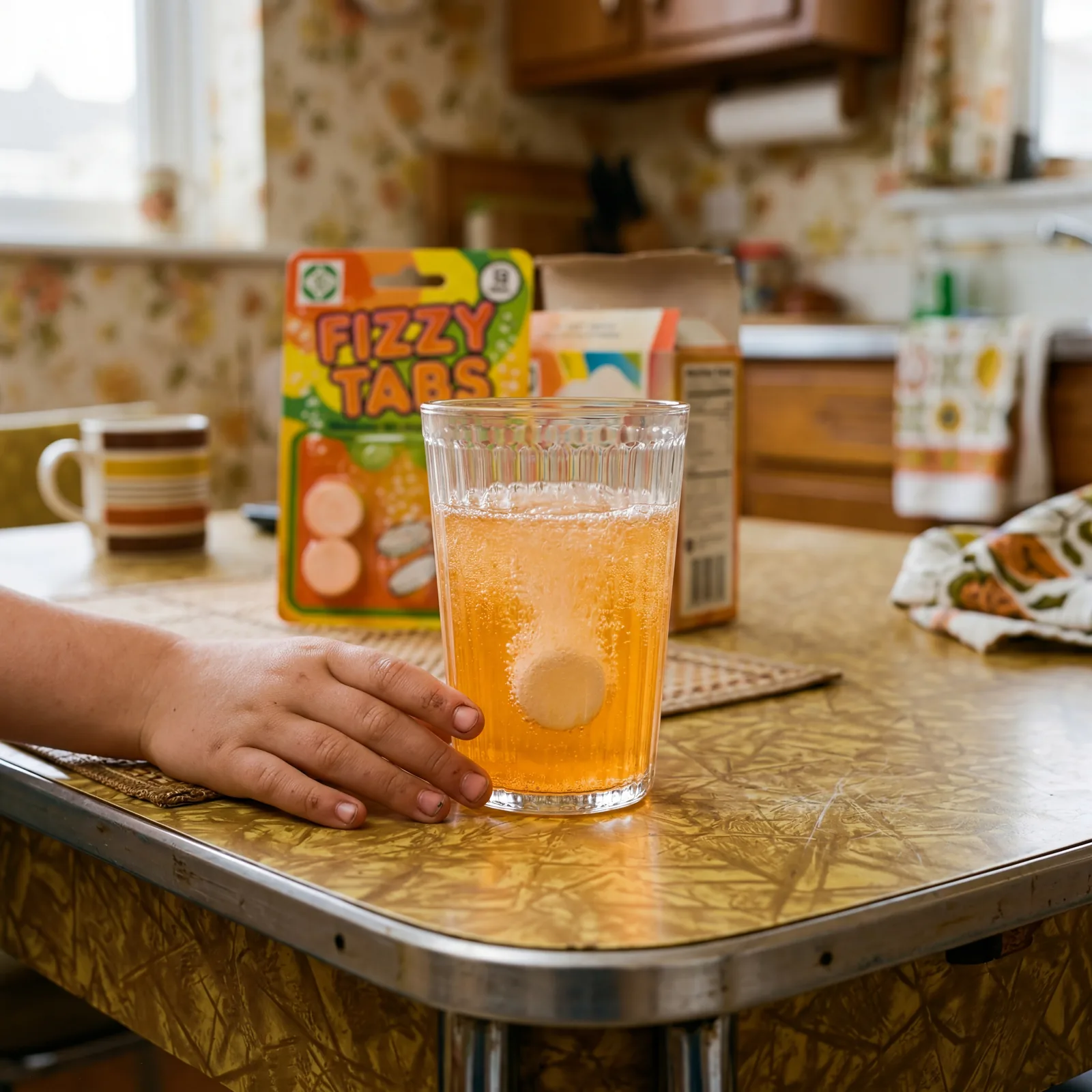
Fizzies were a tablet you dropped in water and it became a drink. That was the entire product. It was enough.
The tablet hit the water and erupted. The water turned grape or cherry or orange and fizzed frantically. You drank it immediately before it went flat. The flavor was artificial in a way that was specifically, precisely correct for 1974.
Amstan Products launched them in 1957 but the 1970s kept them alive. They were pulled from shelves when the FDA banned cyclamates in 1969, reformulated briefly, then vanished by the early 1980s. A revival in the 2000s didn’t stick.
A drink that required participation. The 1970s valued that.
13. Tomato Aspic
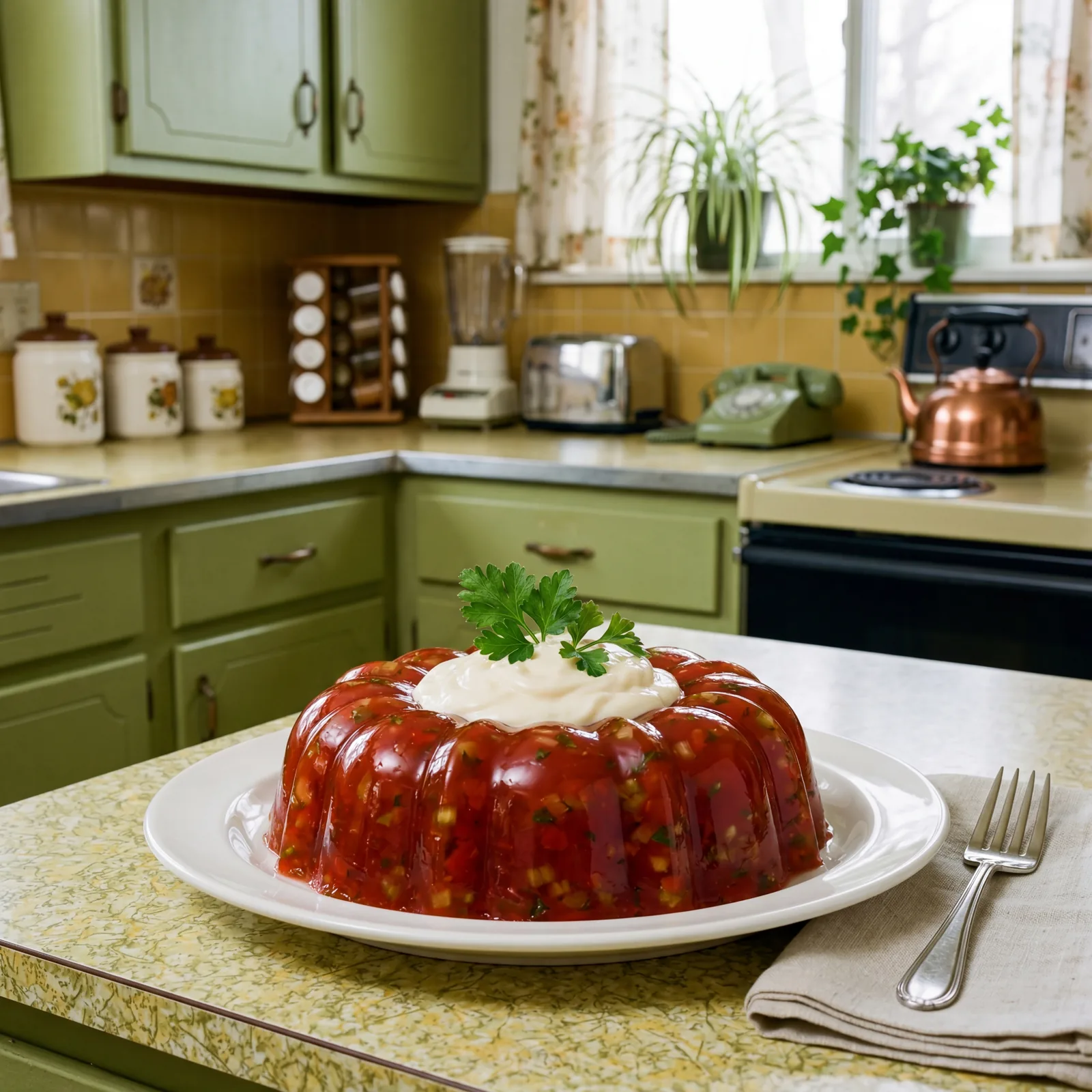
Tomato aspic is exactly what it sounds like and somehow worse.
It was tomato juice set in gelatin. Sometimes with olives inside. Sometimes with celery. It was cold, savory, vibrantly red, and it wobbled when you put it on the table. You were expected to eat it as a salad. The 1970s had committed entirely to this bit.
Southern Living and Better Homes & Gardens ran recipes throughout the decade. By 1990 it had disappeared from American tables with such totality that most people under 50 have never seen one. If this part caught your attention, 25 Things Experienced International Travelers Always Pack That Most People Never gives you another specific angle to compare.
The courage it took to serve tomato Jell-O at a dinner party. Unmatched.
“Almost at the halfway point. The next one is one most people remember fondly but can’t actually find anymore. There’s a reason for that.”
12. Tang
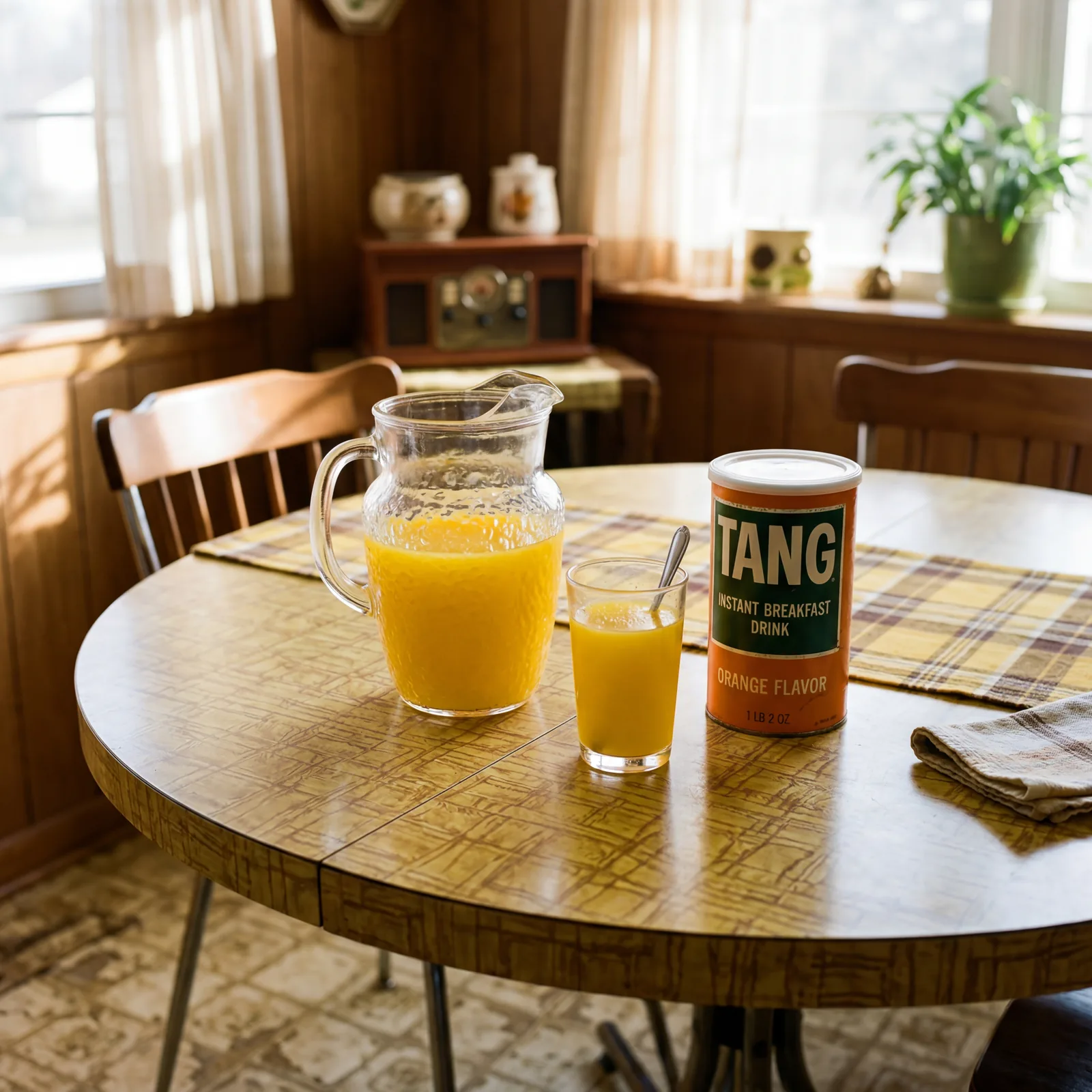
Tang tasted like orange juice that had been to space and come back changed.
It was a powder you mixed with water. The result was bright, sweet, artificially citrusy, and absolutely nothing like actual orange juice. That was fine. That was the point. NASA used it. You used it. You felt something in common with astronauts.
General Foods launched it in 1957 but it exploded in the 1970s after the Apollo missions made it famous. The original US formulation has been quietly revised. The Tang you find today in international markets doesn’t taste like the Tang you made in a pitcher in 1977. If you like this kind of overlooked detail, 25 Surprising Items You Should Always Pack for International Travel in 2026 is another useful read to open next.
That specific orange. That specific summer morning. You can still taste it exactly.
11. Beef Stroganoff from a Can
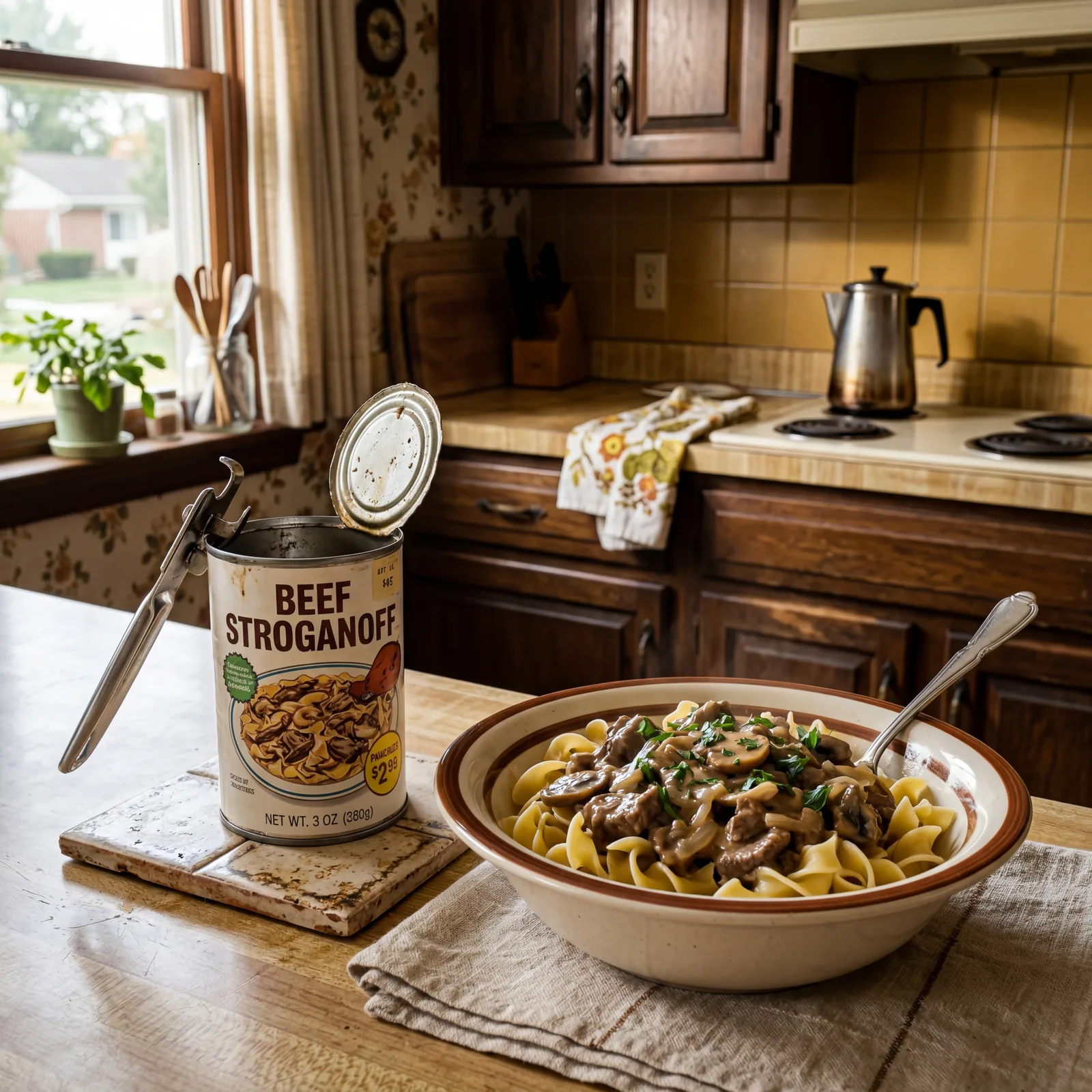
Real beef stroganoff took an hour. Canned beef stroganoff took three minutes and it didn’t apologize.
Chunks of beef in a sour cream-style gravy, poured over egg noodles. The texture was soft, the flavor was mild and satisfying. Your mother served it on busy nights and it felt more substantial than cereal, which was the real competition.
Dinty Moore and Chef Boyardee both made versions in the 1970s. The sour cream-based gravy was reformulated in most products by the 1990s, replaced with a lighter cream sauce that’s technically more stable but less correct.
Convenience food that tasted like someone had tried. The bar was exactly right.
10. Hostess Choco-Bliss
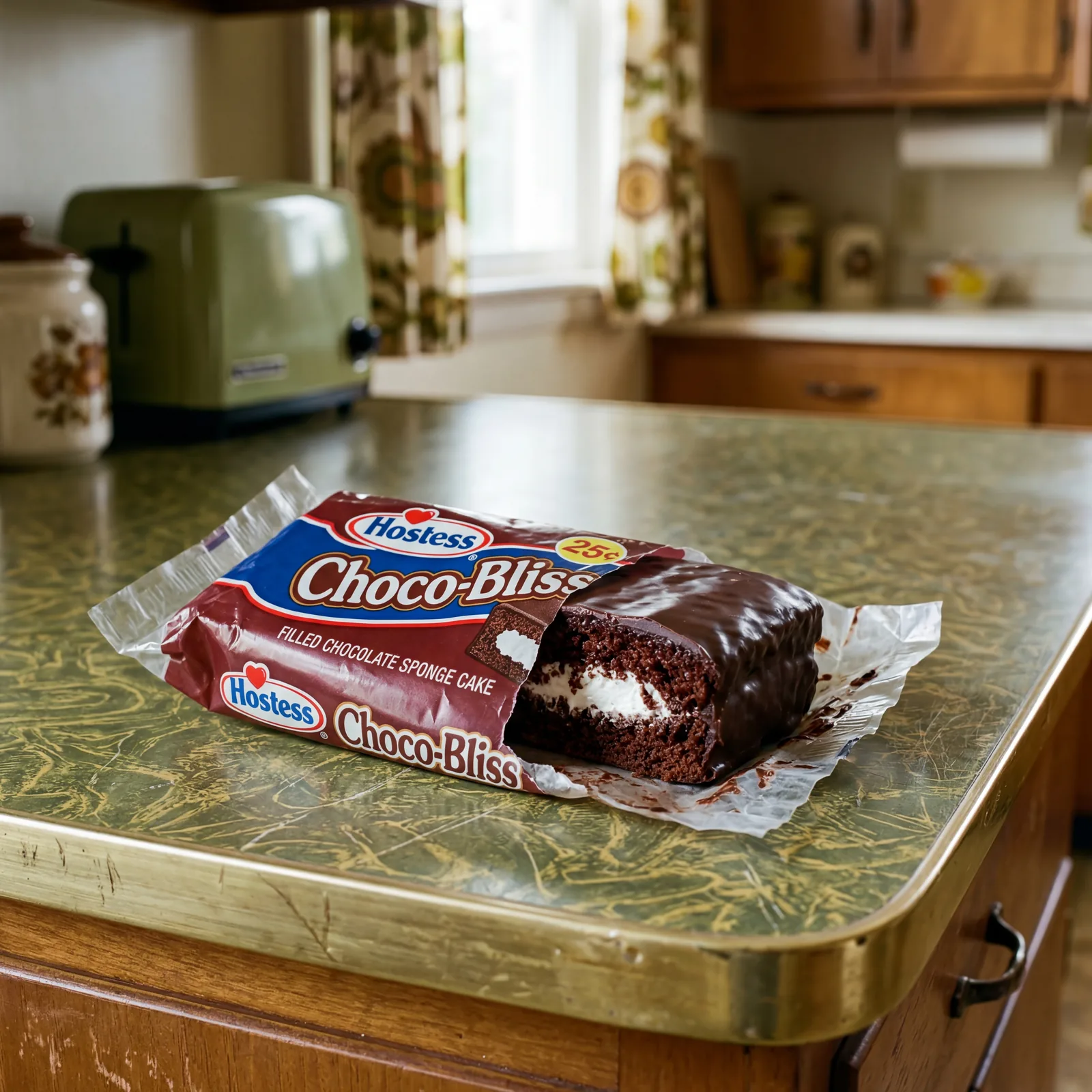
Hostess Choco-Bliss is one of those products that most people swear they remember but can’t quite describe. That vagueness is the tell.
It was a chocolate snack cake with a cream filling and a dark chocolate coating that was slightly thicker than a Ding Dong. The ratio was different. The chocolate was darker. It mattered.
Hostess sold it through the late 1970s and discontinued it when Ding Dongs and Ho Hos proved to be enough. It never came back through the Hostess revival or any subsequent relaunch.
The snack that vanished precisely because it was too similar to what stayed. That’s the cruelest kind of gone.
9. Jell-O Pudding Pops

Jell-O Pudding Pops were not ice cream. They were better than ice cream and you knew it at age seven.
The texture was dense and creamy in a way that ice cream bars couldn’t match. They were colder than they looked. The chocolate version had a pudding flavor that was more intense than any ice cream bar produced before or since.
General Foods launched them in 1979. Bill Cosby spent a decade advertising them. Unilever discontinued the original formula in 2004 and licensed the name for a product that’s completely different. The original molds, the original formula. Gone.
The specific temperature of a Pudding Pop on a July afternoon. You know exactly what that felt like.
“This next one is the one that started disappearing before anyone noticed it was leaving. Most people think it’s still around. It’s not. Not the real version.”
8. Pop Rocks
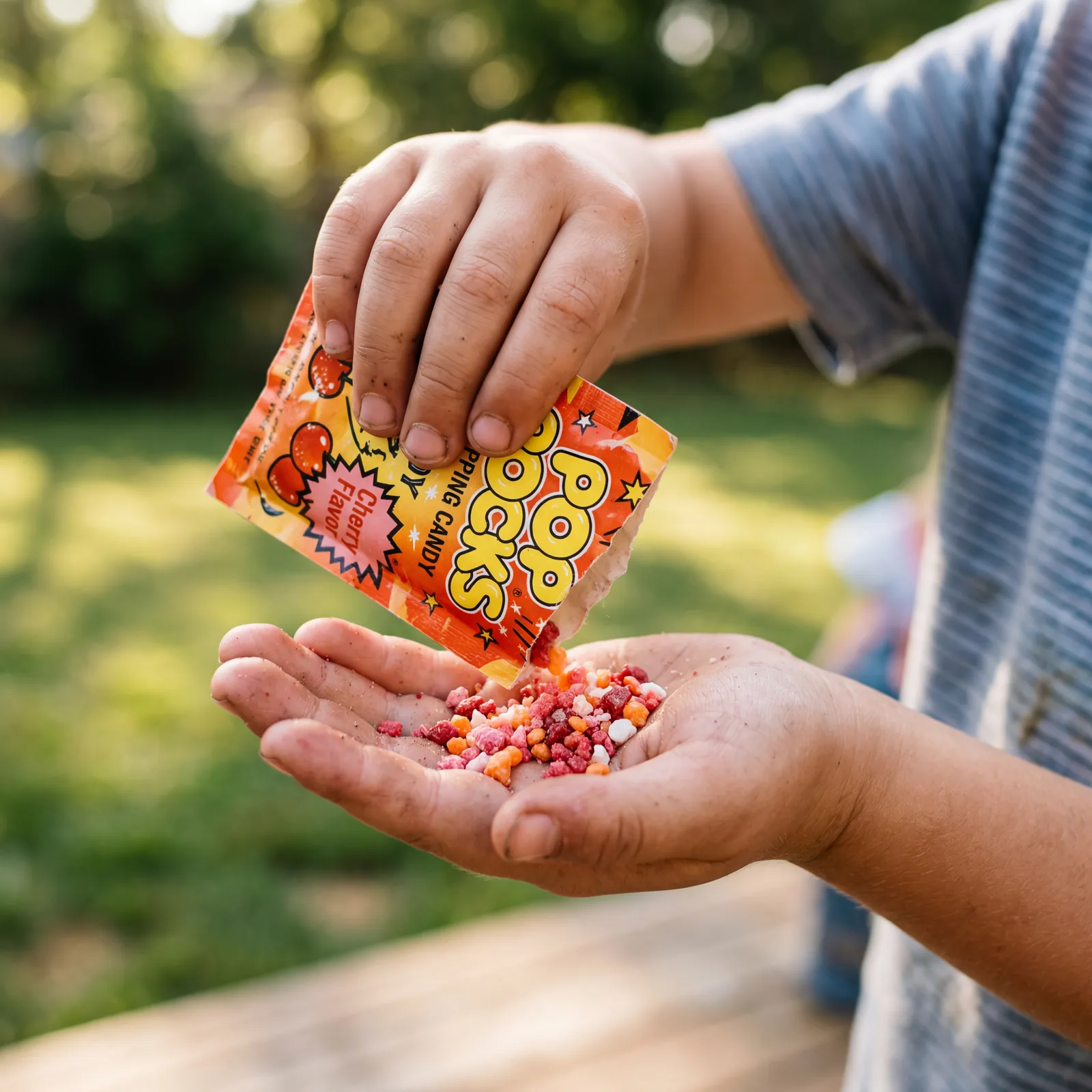
Pop Rocks launched in 1975 and immediately became the most alarming candy in American history.
Carbon dioxide trapped in sugar crystals. You poured them on your tongue and they crackled and popped and caused a very specific panic. There was a rumor that eating them with soda would cause your stomach to explode. General Foods spent actual money publishing a disclaimer.
General Foods discontinued them in 1983. The formula was licensed and sold by other companies, but the original manufacturing process produced a different crackle intensity. You can buy Pop Rocks now. They don’t pop the same way.
A candy that required a warning campaign. The 1970s peaked here.
7. Space Food Sticks
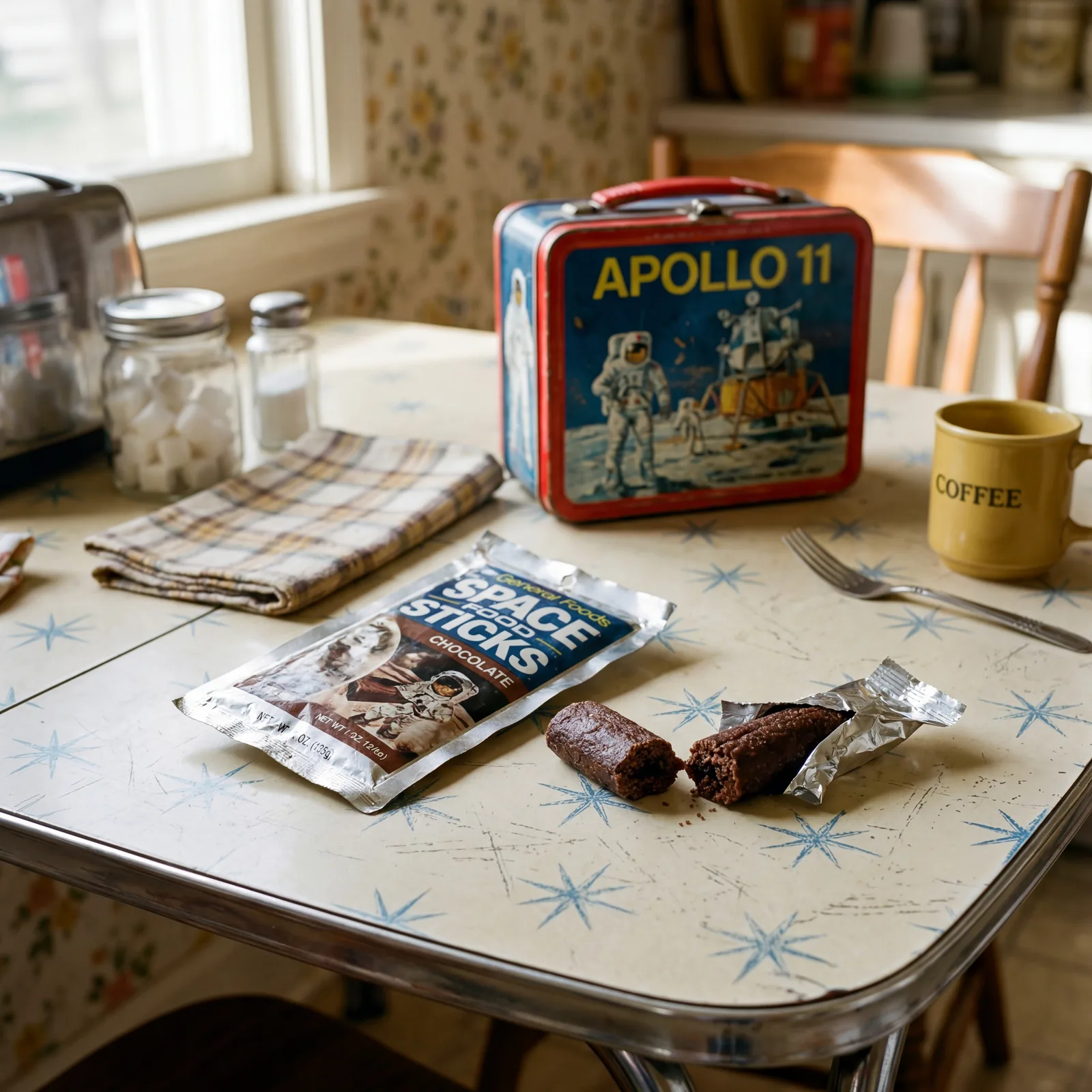
Space Food Sticks were the 1970s’ most successful lie told to children about nutrition.
They were soft, chewy, chocolate or peanut butter flavored rods in a foil package. The pitch was that NASA astronauts ate them. This was loosely true. That didn’t matter. You believed it completely and felt like you were fueling a mission every time you ate one. Readers who enjoy these kinds of details may also want 35 Things Every 1930s Family Did That We’ve Completely Forgotten for another quick detour.
Pillsbury launched them in 1970 riding the Apollo program’s cultural wave. They were discontinued in the late 1970s as the space program lost mainstream momentum. A small-batch revival happened in the 2000s but it reached maybe twelve people.
Food that asked you to believe in something larger. The 1970s knew how to do that.
6. Cheeseburger in a Can (Heinz)
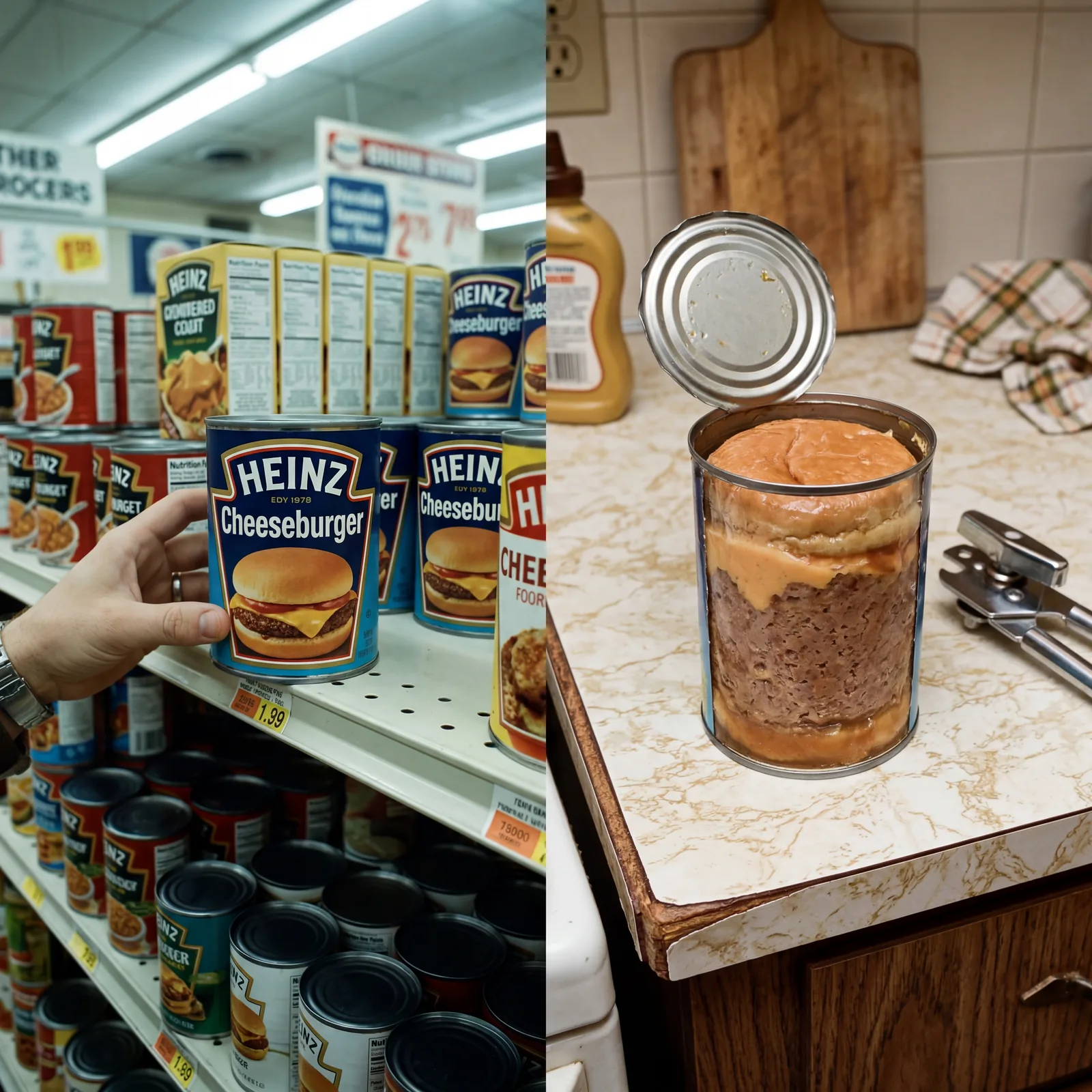
The cheeseburger in a can represents either the height or the nadir of 1970s food ambition. Possibly both.
It was exactly what the name suggests. A cheeseburger, sealed in a can, shelf-stable. You heated the can, opened it, and there was a cheeseburger. The bun was steamed soft. The patty was gray. The cheese had melted and reset. It tasted like a cheeseburger had given up and you were there to witness it.
Heinz produced it primarily for the UK and Australian markets but it found its way into American specialty and camping supply stores throughout the 1970s. It was discontinued by the early 1980s and has never been revived.
A cheeseburger that survived a can. That’s not nothing.
“The top five. Each one is more specific than the last. If any of these hit you personally, you’re exactly who this list was written for.”
5. Swanson Hungry-Man Dinner
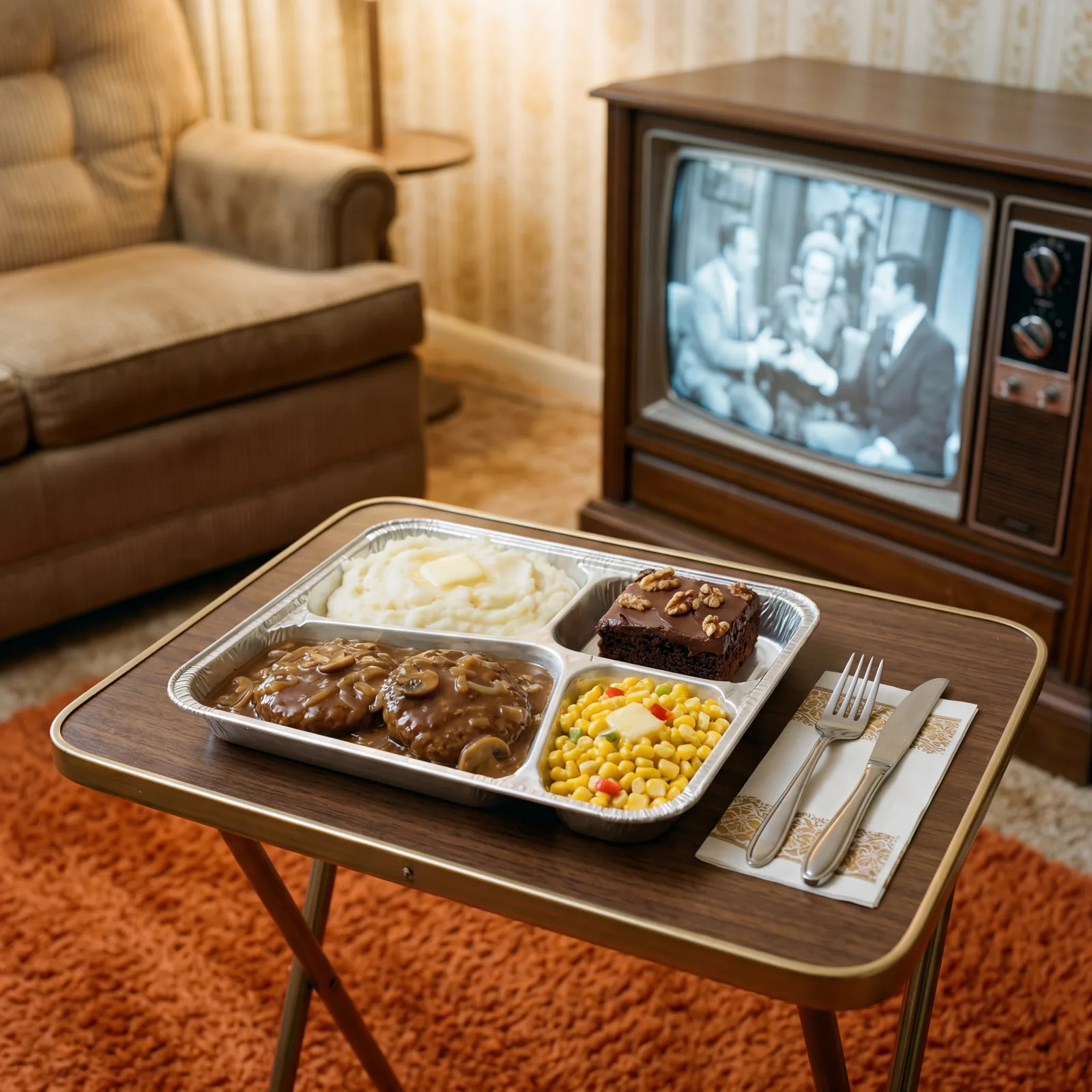
The Hungry-Man dinner was the first time you understood that food could be engineered to feel like a reward.
It was a larger-format TV dinner with a Salisbury steak, mashed potatoes, corn, and a dessert compartment usually containing a brownie or a fruit cobbler. You ate it on a TV tray in front of the news. That was dinner. Nobody apologized.
Swanson launched the Hungry-Man line in 1973. The original aluminum tray format produced specific textures: slightly crispy potato edges, a steak that had steamed and roasted simultaneously. The transition to plastic microwave trays in the mid-1980s changed every texture.
You can still buy Hungry-Man dinners. The tray is different, the textures are different, the flavor profile has been reformulated three times. What you ate in 1977 doesn’t exist in any form.
The meal that taught you what “satisfying” meant. That’s a curriculum.
4. Jell-O Salad Molds
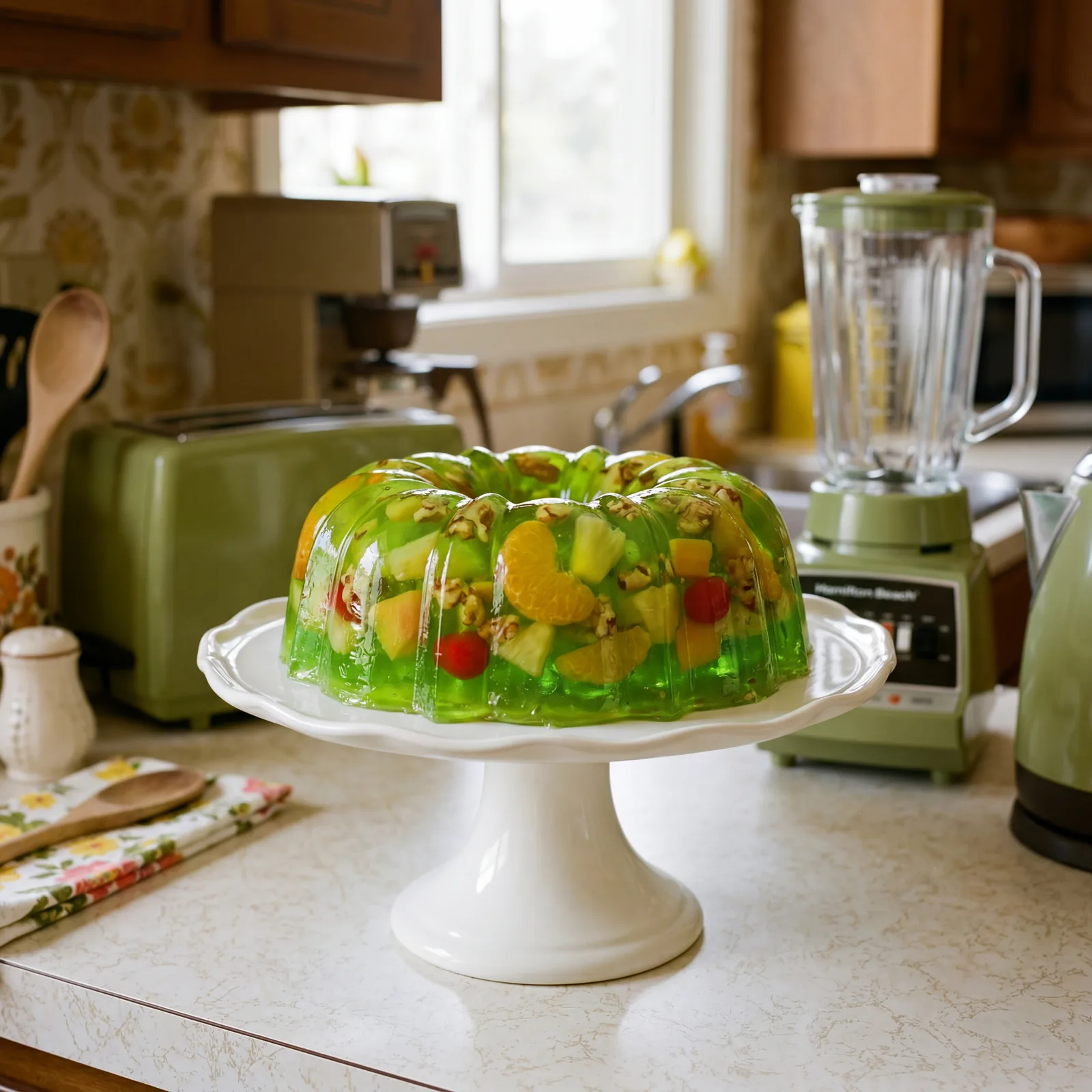
The Jell-O mold was the 1970s housewife’s most audacious act. She put vegetables inside dessert and served it to guests without blinking.
Lime Jell-O with cream cheese and crushed pineapple. Orange Jell-O with shredded carrots. Strawberry Jell-O with bananas and pecans. The molds came in ring shapes, fish shapes, flower shapes. You unmolded them onto a plate and they held their shape and everyone applauded and nobody questioned why there was celery in the Jell-O.
The Jell-O Corporation published dedicated mold cookbooks through the 1970s. The savory-sweet salad mold peaked between 1965 and 1978, then collapsed almost overnight as nouvelle cuisine made Americans suddenly embarrassed by their own kitchens. For a different but related slice of the same world, 25 Things Hotel Staff Notice About You the Moment You Walk Through the Door in 2 is a good next stop.
By 1985 the Jell-O mold had become a punchline. By 2000 it was a nostalgia piece. The specific sensory experience of cutting through cold, bouncy gelatin and hitting a chunk of cold pineapple inside. You either know that feeling or you don’t.
The most committed dish in American food history. The 1970s said “what if Jell-O was also a salad” and followed through completely.
3. Fondue
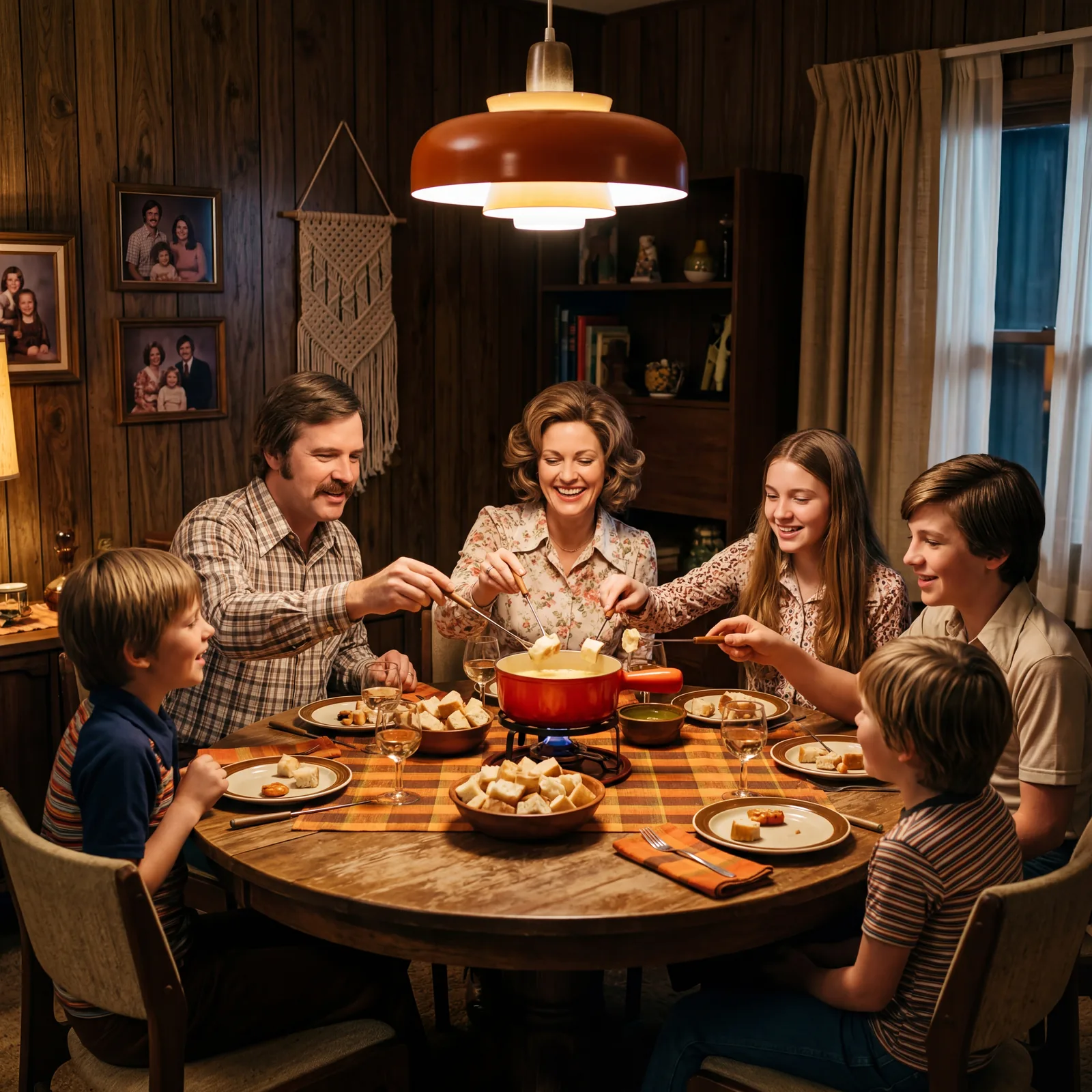
Fondue had a decade. It owned that decade. Then it went into a box in the garage and never came back out.
The fondue pot was a wedding gift that every couple received between 1968 and 1979. It came with the long forks, the fuel canister, the whole ritual. You melted Gruyère and Emmental with white wine and a little garlic. You cubed French bread. You gathered around the pot and you dipped. For another nearby rabbit hole, The Slang That Defined Every Decade from the 1950s to Today looks at a related piece of everyday culture.
The experience was interactive in a way that 1970s entertaining desperately wanted to be. You had to be present. You had to participate. If you dropped your bread in the pot, there was a rule about kissing someone.
By 1984 fondue sets were appearing at garage sales. By 1990 they were a shorthand for everything dated about the previous decade. The ironic fondue revival of the 2000s mostly happened at restaurants rather than homes.
The chocolate fondue variant lasted longer. But the cheese fondue ceremony, the gathered family around a single pot, the long forks and the shared ritual. That’s gone from regular American life in a way that’s actually worth grieving.
“It’s gone. But it doesn’t come close to what’s waiting at #1.”
2. TV Dinners (Swanson Aluminum Trays)
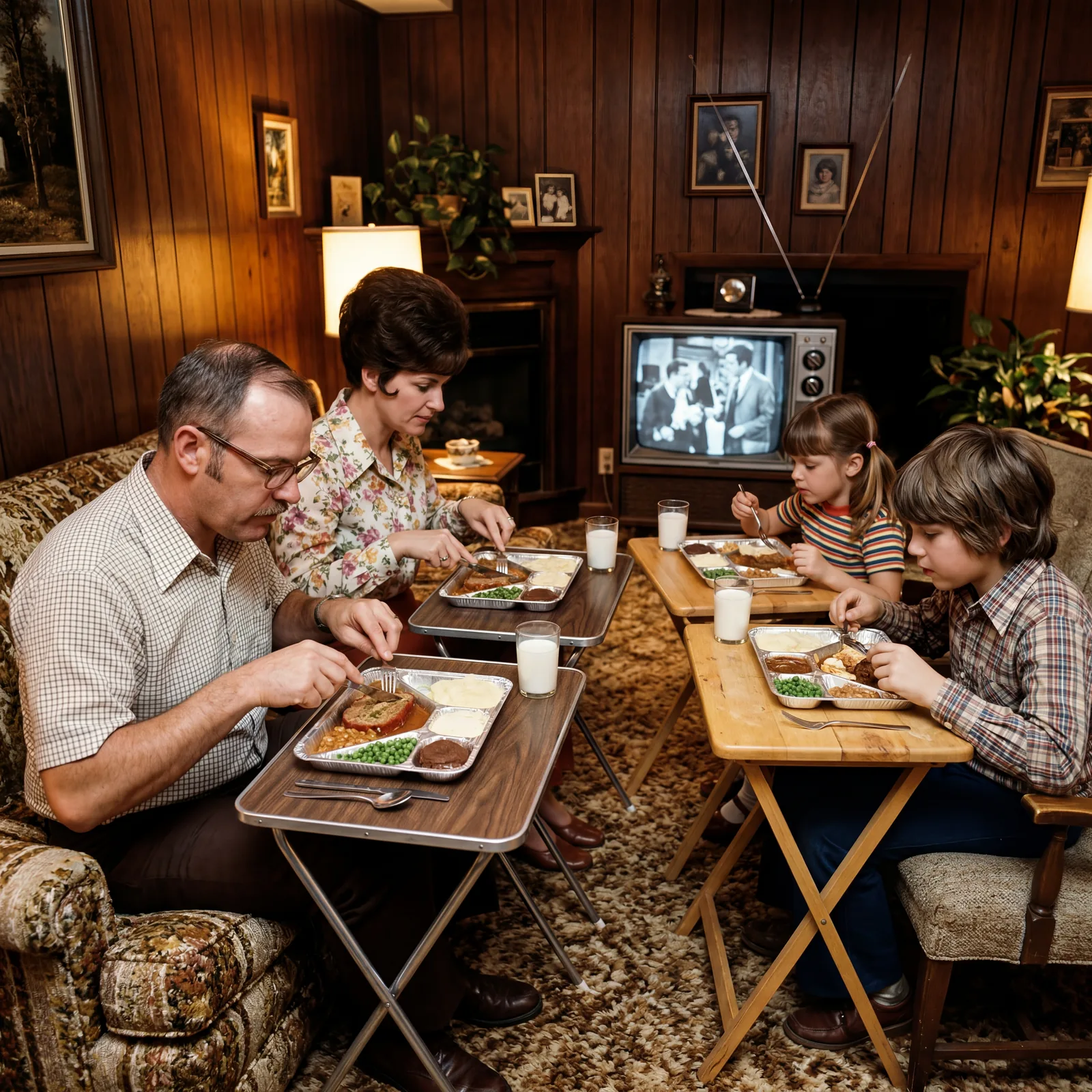
The original Swanson TV dinner in the aluminum tray is not the same product as anything you can currently purchase. This is important to understand.
The aluminum tray went into a conventional oven. The cooking time was 25 minutes. The result was food that had been roasted, not microwaved. The Salisbury steak had edges. The corn had slight color. The mashed potatoes had a skin from the oven heat. It tasted like something had happened to it.
Swanson invented the TV dinner in 1953 but the 1970s made it a cultural institution. The ritual was specific: you preheated the oven, you removed the foil from the dessert compartment, you set the timer. You carried the tray to the living room on the metal TV tray stand. You watched whatever was on.
Swanson transitioned to plastic microwave trays in 1986 when microwave ownership hit critical mass. They stopped making the aluminum version permanently. The flavors were reformulated for microwave cooking times, which steam rather than roast.
Nobody announced the end of the aluminum tray TV dinner. It just stopped being produced and the world moved on without marking it.
“It’s gone. But it doesn’t come close to what’s waiting at #1.”
1. The Original McDonald’s Apple Pie
[The One Nobody Saw Coming Off the Menu]

The original McDonald’s apple pie was deep-fried in beef tallow, served in a cardboard sleeve that was slightly too small for it, and it came out of the fryer at a temperature that could cause real injury. You burned the roof of your mouth every single time. You did not slow down. That same curiosity is what makes What Did ‘Groovy’ Actually Mean? The Real History worth checking after this section.
The crust was shatteringly flaky in a way that no baked pastry can replicate. The inside was apple and cinnamon filling that hit you with steam the moment you bit through. The pastry itself had a fat-fried richness that the baked version, introduced in 1992, has never approached. The sleeve would get grease-translucent. You ate every flake. For another nearby rabbit hole, Words Your Parents Used That Gen Z Has Never Heard looks at a related piece of everyday culture.
McDonald’s launched it in 1968. For 24 years it was fried. The specific combination of beef tallow and hot oil produced a crust flavor that is technically impossible to achieve by baking. When McDonald’s switched to baking in 1992, they cited health concerns and changing consumer preferences. The beef tallow had been removed from the fry oil years earlier due to lobbying from vegetable oil manufacturers, but the pie survived until the full baking transition. If you like this kind of overlooked detail, 35 Christmas Traditions From the 1960s is another useful read to open next.
A retired McDonald’s shift manager from Dayton, Ohio told me: “We’d pull those pies out of the fryer and they’d be so hot we had to use tongs. Customers would grab them right out of the sleeve and just not care. I never saw anyone wait for it to cool down. Not once in eight years.”
The baked version debuted in the UK in 1992. The US followed. The deep-fried version has never returned despite decades of petitions, online campaigns, and occasional regional test revivals that end quickly.
It sold for 29 cents in 1975. It cost you the roof of your mouth every time. You’d have paid more.
“Now you know why we saved this one for last.”
The Taste You Still Remember
These 27 foods don’t exist anymore, at least not the versions you knew. But the memory of eating them is still there, coded into the specific part of your brain that keeps things from the 1970s sharper than things from last week.
That’s not nostalgia. That’s evidence.
If one of these hit you harder than the others, drop it in the comments below. You won’t be alone.