

A comforting letter for the person whose nights after 70 have become lighter, longer, and more emotional than they used to be.
Dear friend,
There is something about being awake at night that makes every feeling louder. In the daytime, you can move around, answer a call, make tea, fold a towel, notice the weather. But at 2:17 in the morning, the mind can become a room with no curtains.
If sleep has changed after 70, you may feel betrayed by something that used to arrive more naturally. You go to bed tired and still wake too early. You drift off and return too soon. You watch the ceiling as if it might eventually explain what your body is doing.
The hardest part may not be the lost sleep itself. It may be what the sleeplessness lets in. Night gives old worries a louder voice. It brings back names, regrets, appointments, finances, children, aches, and memories that were quieter while the sun was up.
You may start calculating. How many hours left before morning? Will tomorrow be ruined? Is this normal? Is this aging? Is this anxiety? Why does everyone else seem to sleep like a closed door?
Please do not make the night another place where you scold yourself. A changing sleep pattern can be frustrating, but frustration becomes heavier when you add shame to it.
Sometimes the body is simply different now. Lighter sleep. More bathroom trips. Medication timing. Pain that whispers until the room is quiet enough to hear it. A mind that has lived long enough to store too much. You are not failing because sleep has become less obedient.
Still, the loneliness of those hours is real. The house has a different sound at night. A refrigerator hum can feel enormous. A passing car can make you aware of how still everything else is. If you live alone, the silence may feel less peaceful and more like proof that you are the only one awake in the world.
You are not. Many people are awake with their own quiet hearts, though you cannot see them. Somewhere, someone else is adjusting a pillow, whispering a prayer, reaching for water, remembering a person they miss.
There can be comfort in making the night less like a battle. Not every wakeful hour has to become a test you pass or fail. Sometimes the kinder goal is simply to make wakefulness less cruel.
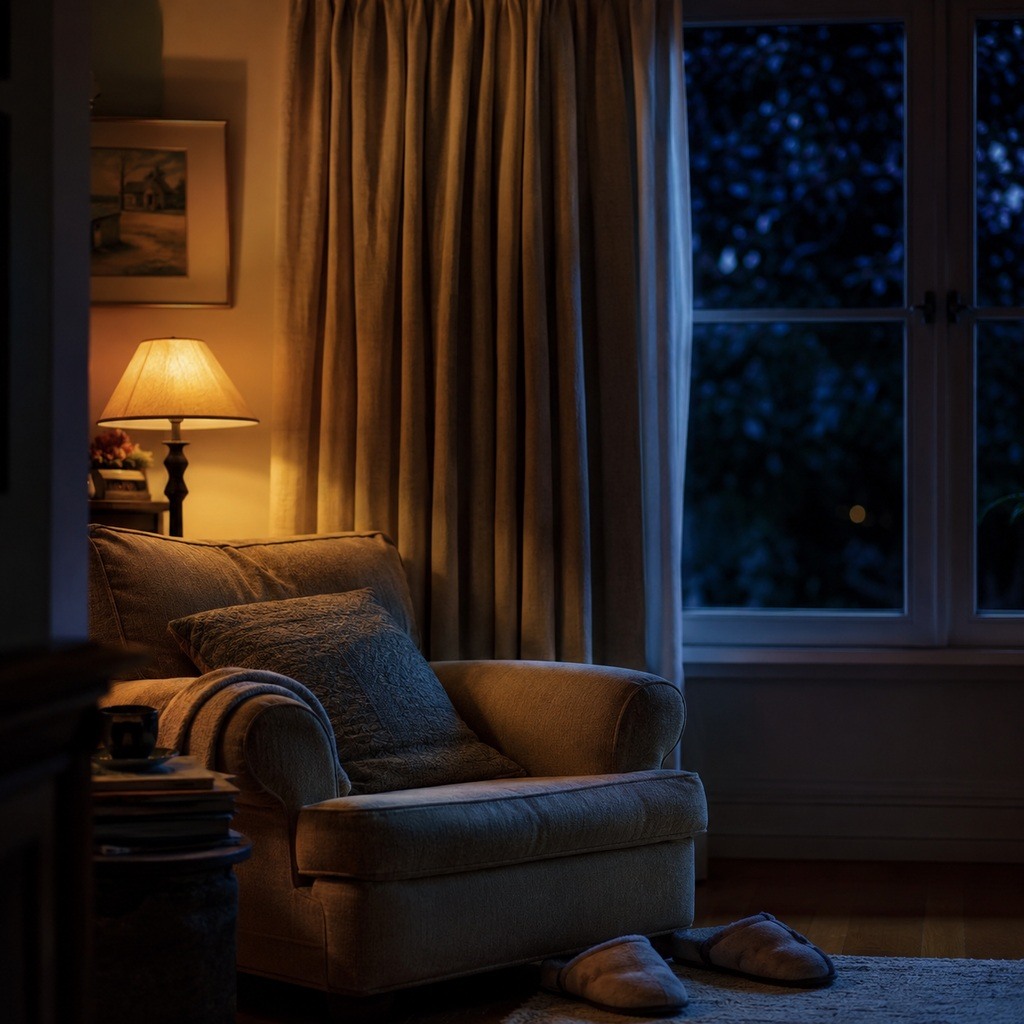
Keep the light soft. Let the clock turn away if it bullies you. Have a familiar book, a warm drink, a small blanket, a notebook for the thoughts that keep circling. Give the night a gentle script before fear writes one for you.
If memories come, let them pass through without grabbing each one by the collar. Some will be sweet. Some will ache. Some will be nonsense stitched together by a tired mind. You do not have to solve your whole life before dawn.
If worry comes, try one small sentence: "Not tonight." Not because the concern is unreal, but because your tired body cannot hold a courtroom in the dark. Some problems deserve daylight.
And if grief comes, especially grief for a spouse, a sibling, a friend, or the version of yourself who used to sleep easily, place a hand somewhere warm and steady. The ache may not leave, but it may stop feeling quite so alone.
You may be tempted to measure the night only by sleep lost. But sometimes a wakeful night can still contain mercy: a memory that returns kindly, a prayer that steadies, a quiet decision, the relief of seeing the first pale light and knowing you made it through.
That does not make insomnia beautiful. It simply refuses to let it own the whole story.
Please talk to a clinician if sleep problems are new, severe, unsafe, or tied to pain, breathing, medication, or mood. Asking for help is not weakness. Rest is a need, not a luxury.
But for tonight, may you stop treating wakefulness as a personal failure. May the room feel less hostile. May your thoughts lower their voices. And if sleep comes late, may it find you with less fear in your body.
The next day can carry its own worry. You may feel irritable, foggy, or fragile and wonder if everyone can see how little you slept. You may start dreading bedtime before dinner because the night has become a place where you do not trust yourself.
That dread matters. Fear of not sleeping can become its own wakefulness. The body hears the alarm before the room is even dark.
So let bedtime become less of a demand. Not "I must sleep now," but "I am going to make rest possible." Rest is softer than command. It gives the body an invitation instead of a deadline.
You may also need a daytime kindness after a bad night. A slower morning. Less caffeine too late. A little light. A walk if it is safe. A nap that does not steal the next night. Recovery can be gentle without becoming surrender.
If you live with someone, explain what the nights feel like before resentment builds. If you live alone, consider one morning check-in with a person who understands. Night is easier when it has an anchor waiting after it.
A difficult sleep season does not mean the rest of your life must shrink around it. It means your body is asking for steadier rituals and less self-punishment.
Some nights, the body may be awake but the heart is the part asking for attention. A worry ignored all day may choose midnight because midnight has no errands to hide behind.
That does not mean you must obey every thought. You can notice a worry without letting it lead the night. Put it on paper. Promise it daylight. Return to the body.
You may also need less heroic expectations. A wakeful night followed by a gentle day is better than a wakeful night followed by self-punishment.
Let rest become a relationship again, not a test you keep failing.
You are not strange for finding nights harder now. A long life carries many things into the dark. May dawn meet you gently.