

The moment you hand over your ID at the front desk, a conversation starts that you’re not part of. Staff swap codes, flags, and shorthand that determine what room you get, whether your rate holds, and what happens if something goes wrong during your stay. The code at #1 follows you to every hotel in that chain’s network, permanently, without any notification. Read every entry before your next check-in.
19. Rack Rate

Rack rate is the number hotels post as the “standard” price for a room. You’ll almost never pay it, and the hotel doesn’t expect you to. It exists as an anchor so that every discounted rate looks like a deal by comparison. A room with a rack rate of $349 might actually sell for $129 on the same night through a third-party site. When a front desk agent says “I’ll give you our best available rate,” they’re not offering you rack. They’re offering you something below rack that still has significant margin built in.
18. Due-Out vs. Stay-Over
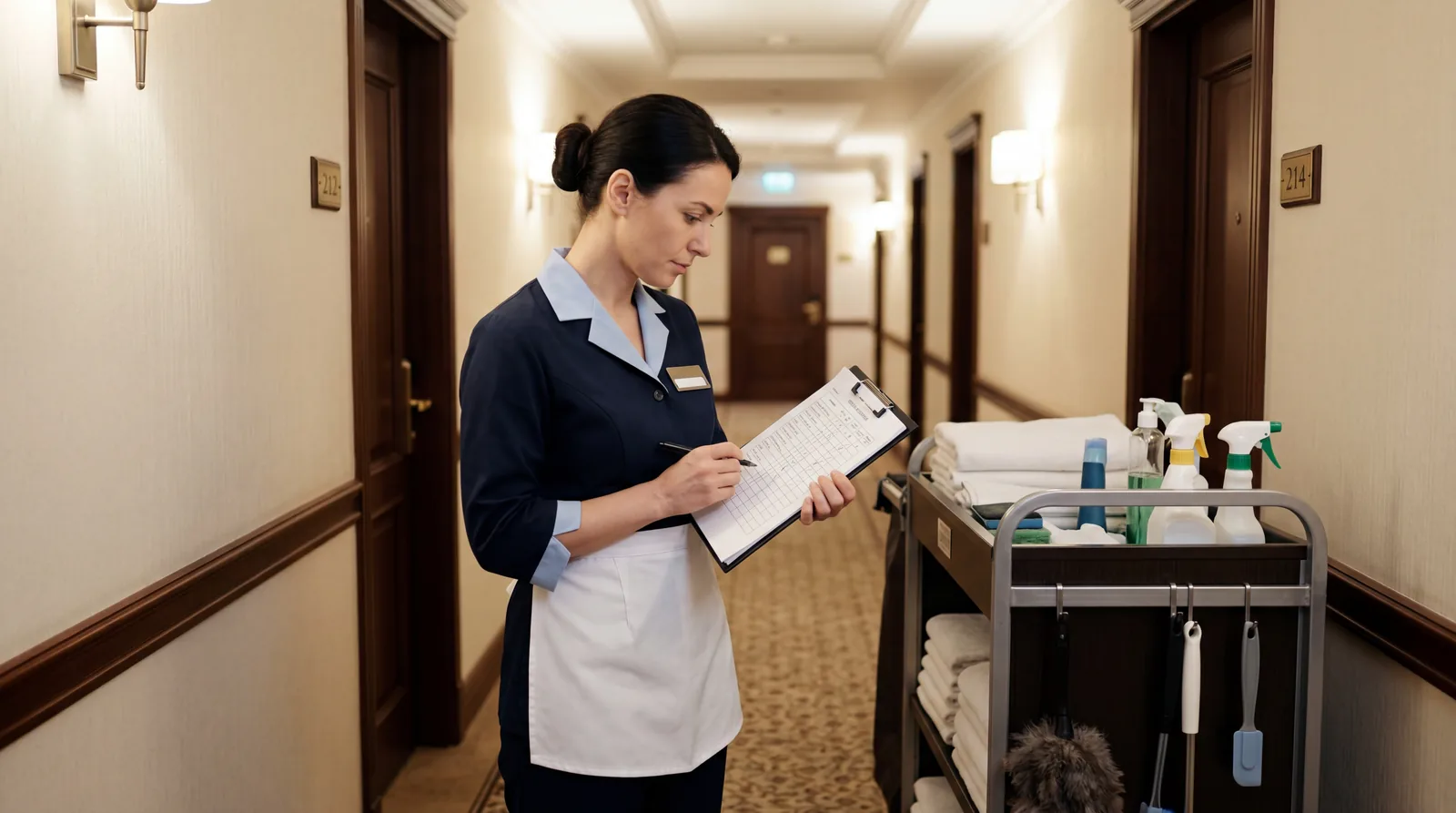
Every room on every floor is coded as either “due-out” (guest is checking out today) or “stay-over” (guest is extending their stay). This sounds like back-office admin. It’s not. If your room is incorrectly flagged as due-out when you’re a stay-over, housekeeping will enter your room, remove your belongings to a bag in storage, and reassign the room. It happens. A man named Robert from Florida described coming back to find his room occupied by strangers and his bags behind the front desk. The fix took two hours.
17. Distress Inventory
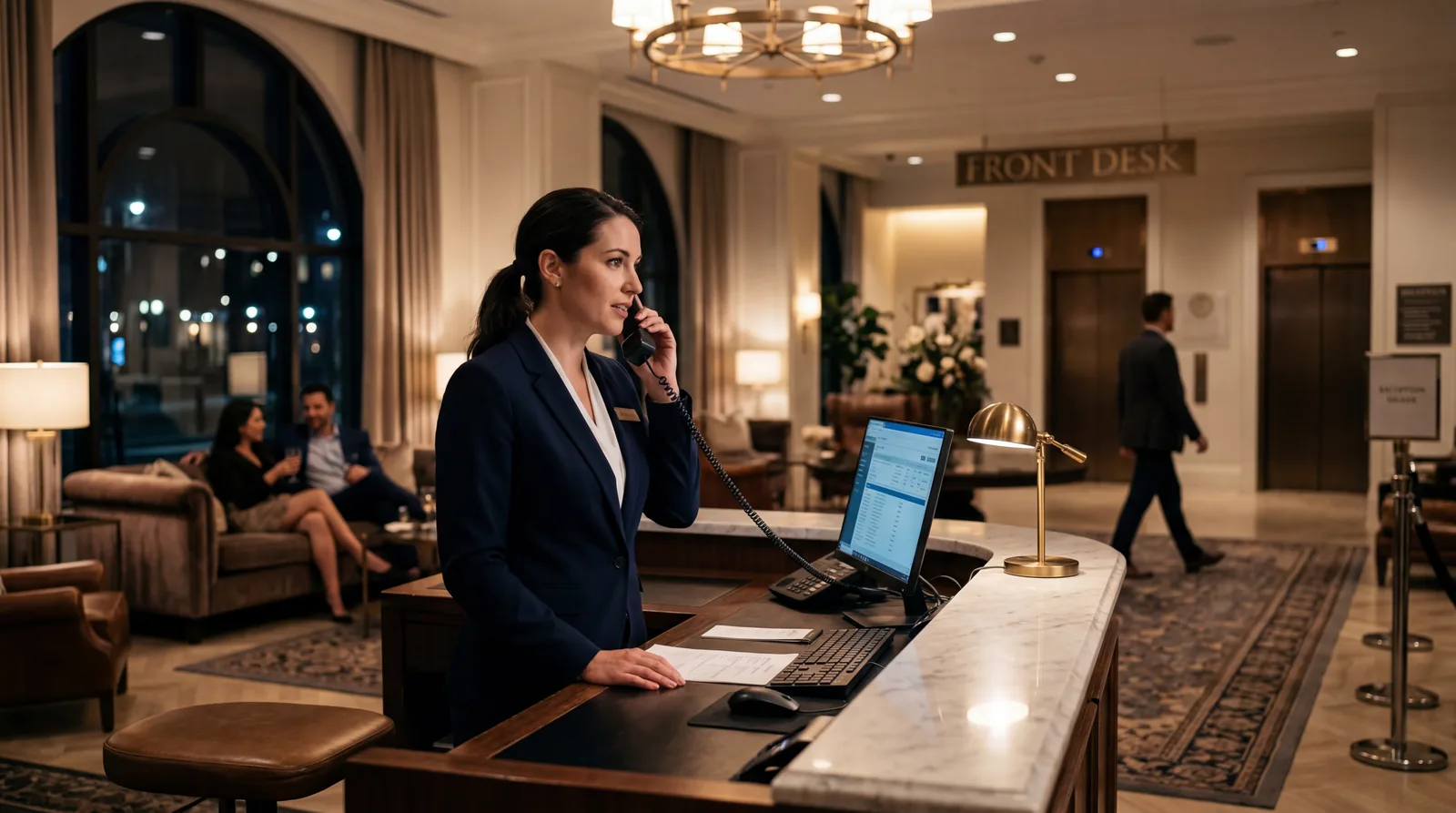
Distress inventory refers to rooms a hotel needs to sell tonight or they earn nothing. Every unsold room is pure lost revenue. After around 10 p.m., hotels will sometimes drop prices by 40 to 60 percent just to fill beds. If you’re booking same-day, you’re often looking at distress inventory pricing without knowing it. The hotel won’t label it that way. It shows up as a “last-minute deal” or “tonight only” rate. The room is identical. The math just changed because the hotel ran out of time to hold out for a higher price.
16. Incidental Hold

When you check in, the hotel places a temporary hold on your card. This is called an incidental hold, and it covers potential charges like room service, minibar, or damage. The amount ranges from $50 to $200 per night at budget properties and can reach $500 or more at luxury hotels. The hold isn’t a charge, but it reduces your available credit immediately. If you’re on a tight budget or have a card near its limit, this can cause declined transactions elsewhere during your stay. The hold typically releases 3 to 7 business days after checkout. Sometimes longer.
It gets more expensive from here.
15. Wash (Group Block Cancellation)
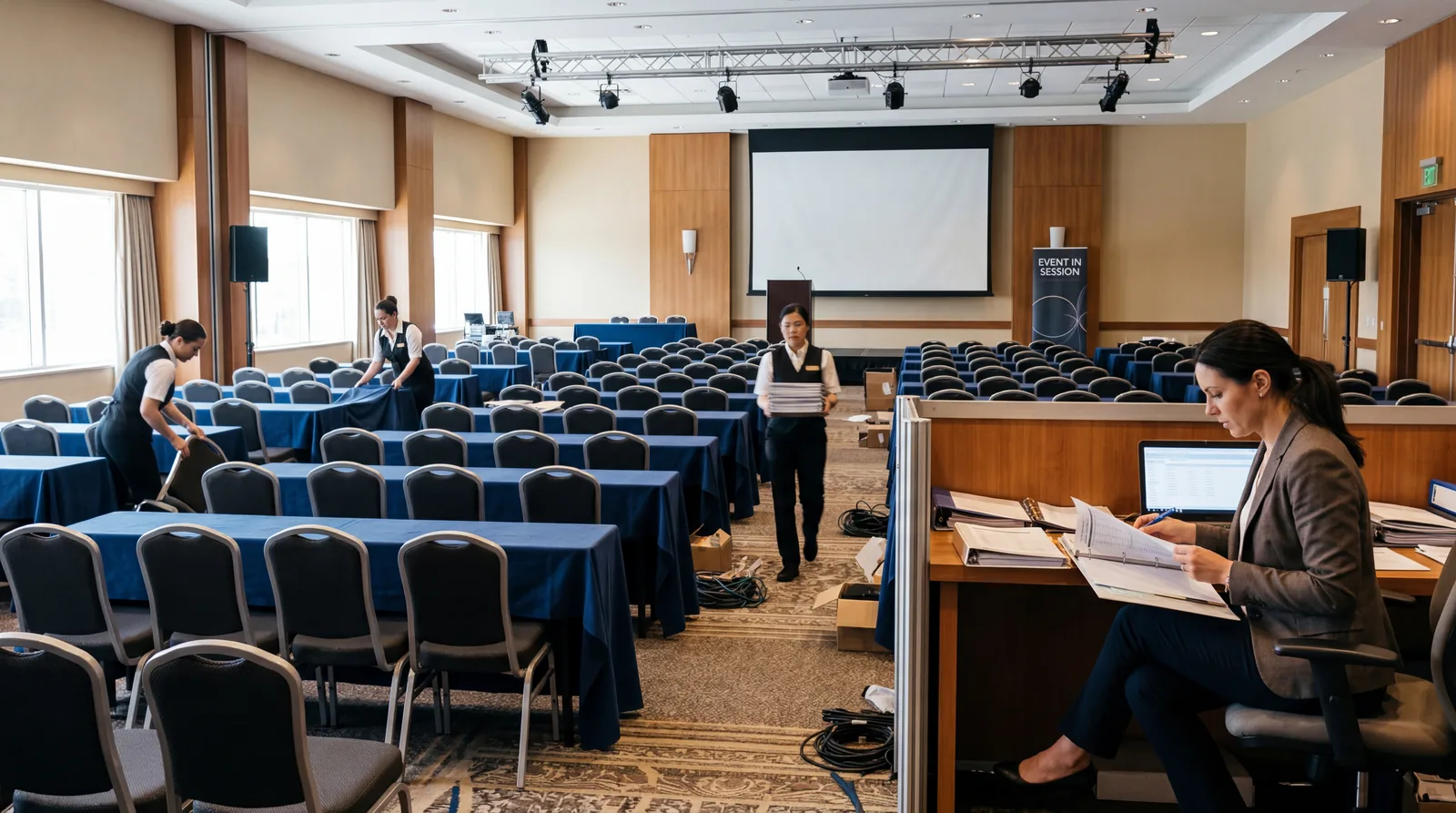
When a company or event organiser books a block of rooms, they rarely fill every one. Washing is the process of releasing unused rooms from that block back to general inventory, usually at a set deadline before the event. Here’s the problem for individual guests: if you booked inside a group block expecting a group rate, and the block gets washed before you complete your reservation, you lose the contracted rate. You get bumped to current best available, which can be $80 to $150 more per night than the original group price. Nobody calls to warn you. You find out at check-in.
14. Slippage

Hotels that host conferences and group events build slippage into their contracts. This is the percentage of the room block they expect the organiser not to fill. A contract might guarantee 80 rooms but include a 15 percent slippage clause, meaning the organiser only pays attrition on the shortfall below 68 rooms. Hotels count on slippage. They overbook group blocks because of it. If attendance is higher than projected and the hotel has already sold those “slippage rooms” at full price, individual attendees get walked to other properties. You paid your registration fee. The hotel still sends you somewhere else.
13. Rate Fence
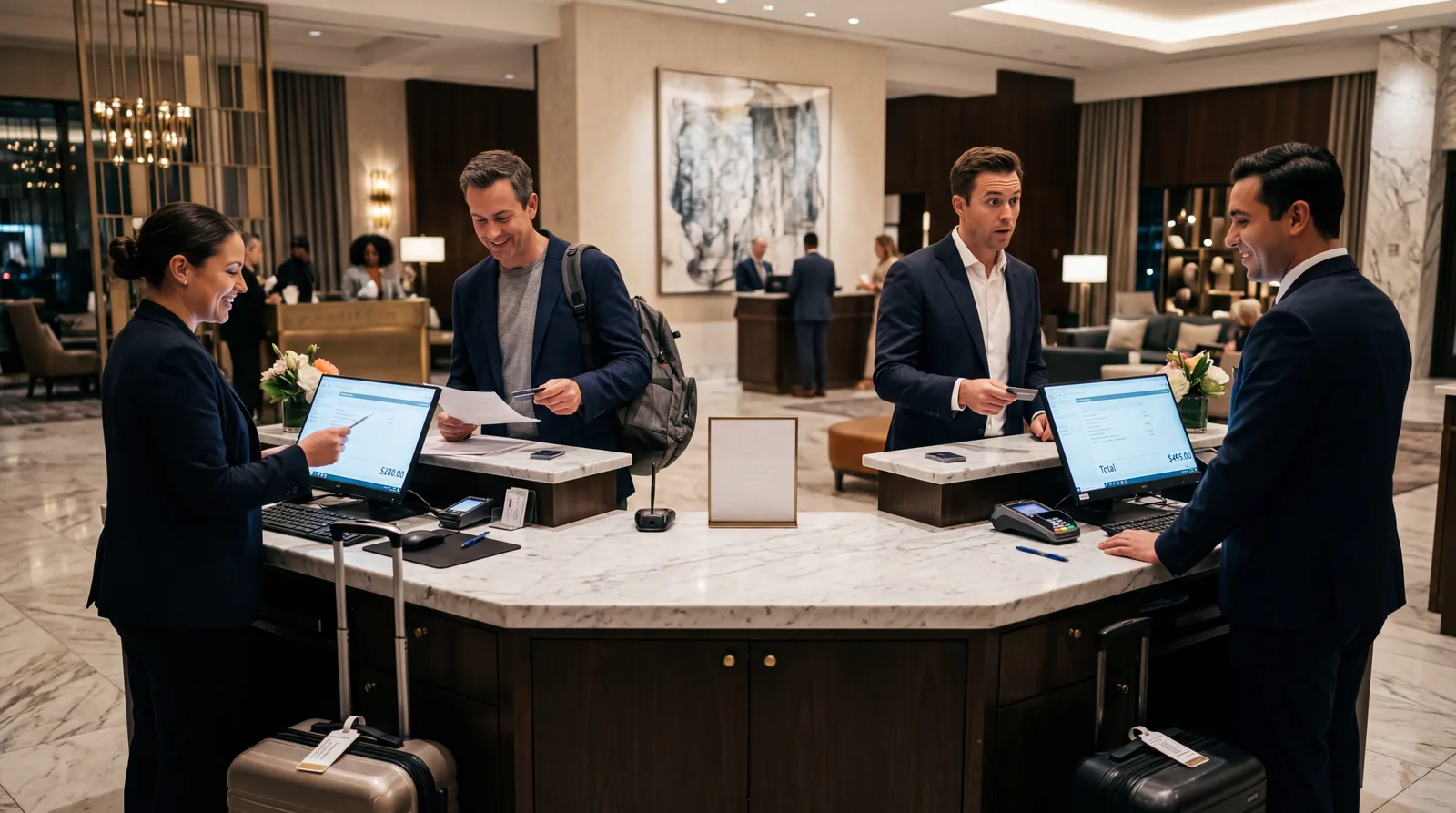
A rate fence is the set of conditions that separates one price tier from another. Stay Saturday night and the rate is $189. Skip Saturday and book Friday-Sunday and the rate jumps to $259 because the system detects a business-trip pattern. Book 14 days in advance and you unlock one price. Book 3 days out and you hit a completely different fence. Hotels don’t publicise the fences. They’re built into the booking engine. Knowing they exist means you can probe around them. A retired travel agent named Diane from Arizona said she always checks rates for slightly different date combinations before booking. She saves $40 to $120 per stay doing it.
Read More: 21 Airline Terms That Are Quietly Costing You Money Every Flight
The next one surprises almost everyone who’s stayed at a chain hotel.
12. Sleeper

A sleeper is a room the system shows as occupied but is actually empty. This happens when a guest checks out without going to the front desk, or when checkout wasn’t recorded properly. The hotel thinks the room is still in use. It doesn’t get cleaned, doesn’t get reassigned, and doesn’t generate revenue. From your perspective as a guest, sleepers matter because they artificially reduce available inventory. When a hotel says “we’re fully booked,” there’s a reasonable chance 2 to 4 sleepers are sitting empty on upper floors. A night auditor named Marcus from Nevada said he’d clear three or four sleepers every single shift.
11. Overbooking Protection
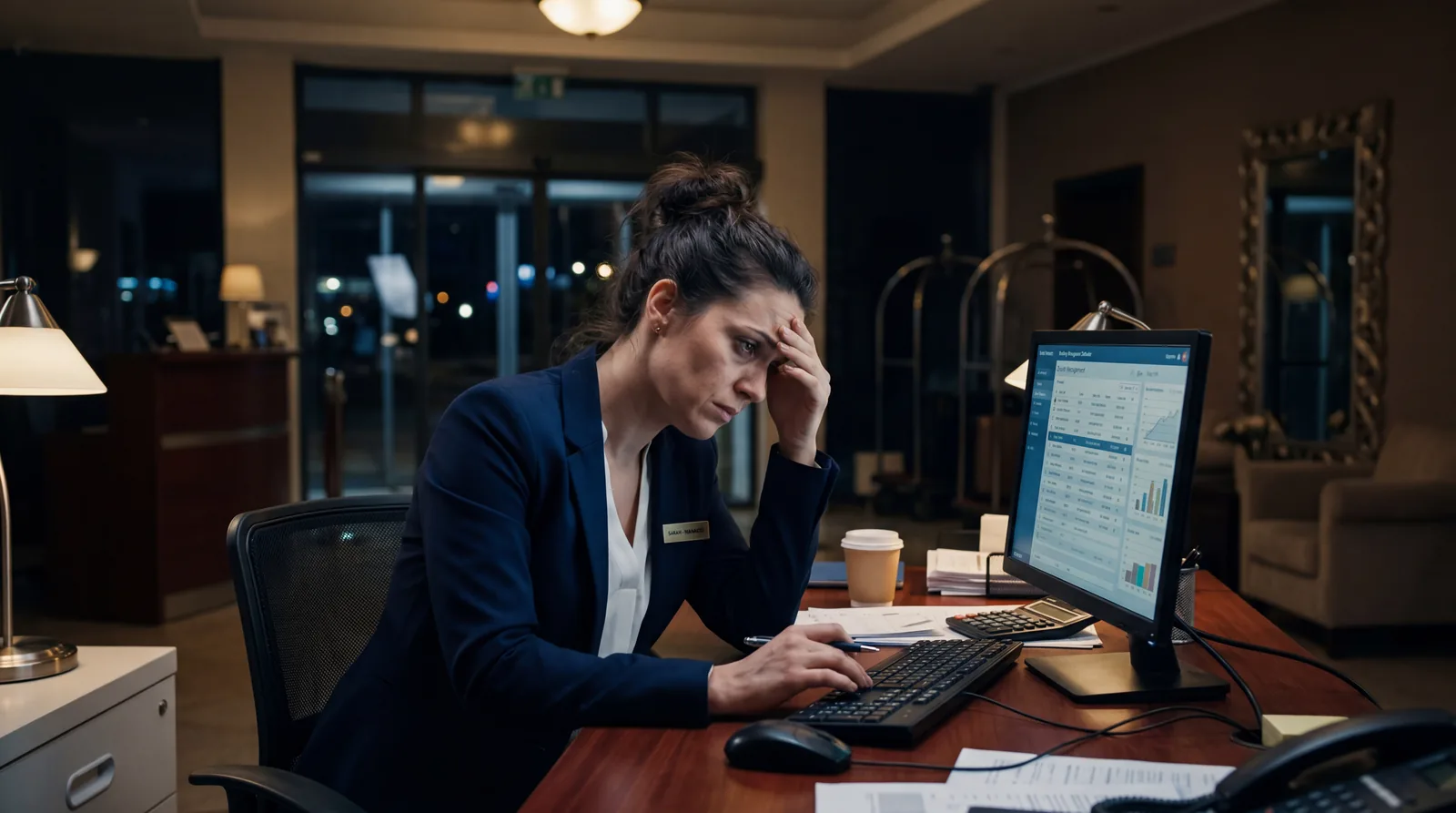
Hotels deliberately sell more rooms than they have. This is called overbooking, and it’s legal. The protection side of it is the algorithm hotels use to decide how many rooms to oversell. If historical data shows 8 percent of reservations cancel same-day, the hotel might oversell by 6 to 10 rooms. When those cancellations don’t materialise, they have more guests than beds. The guests who get bumped are typically the ones who booked cheapest, booked latest, or don’t have status with the chain. You get walked. The hotel covers one night at a comparable property, but transportation, time, and the disruption to your itinerary are on you. Readers who enjoy these kinds of details may also want 19 Words Salespeople Use That Quietly Push You to Spend More in 2026 for another quick detour.
10. High Balance Alert

During a multi-night stay, the hotel’s system tracks your running balance. If your charges exceed the pre-authorised amount on your card, the system flags it as a high balance alert. At that point, a front desk agent will contact you, sometimes by knocking on your door, asking for an additional card authorisation. If you don’t respond or your card declines, the hotel has the right to lock your room key and suspend services until the balance is covered. This hits extended-stay guests most often. A woman named Carol from Michigan said she had her key deactivated mid-afternoon on day four of a business trip because she’d ordered room service three nights in a row.
We almost left this next one out. Then we looked at how often it actually happens.
9. Walk

Being walked means the hotel has a confirmed reservation for you and still doesn’t have a room. They’ve arranged for you to stay at a different property, usually nearby, and they’ll cover the first night’s cost. What they won’t cover: the difference if the replacement hotel costs more for subsequent nights, your transportation if you have an early flight from a specific terminal, or any plans you made based on where you booked. Hotels are legally required to walk guests fairly, but “fairly” isn’t well defined. Chain members with elite status almost never get walked. Guests who booked discount rates through third-party platforms get walked first. Most hotels won’t tell you that part. For a different but related slice of the same world, 25 Things Experienced International Travelers Always Pack That Most People Never is a good next stop.
Read More: 17 Car Rental Codes That Cost Drivers Hundreds at the Counter
8. Comp Authorization Levels

Not every hotel employee can offer you a free room, a meal credit, or a rate reduction. Comp authorization is tiered, and front desk agents typically have authority to offer small gestures only, usually up to $50 in credit or a single amenity. Anything larger requires a supervisor or manager approval. When something goes wrong during your stay and a front desk agent says “I’ll see what I can do,” what they mean is they’ll check what their tier allows. If your complaint is worth $200 in compensation, you need to escalate to someone with the authority to approve it. Asking for a manager isn’t rude. It’s how you get the right person in the room.
7. DNR (Do Not Rent)
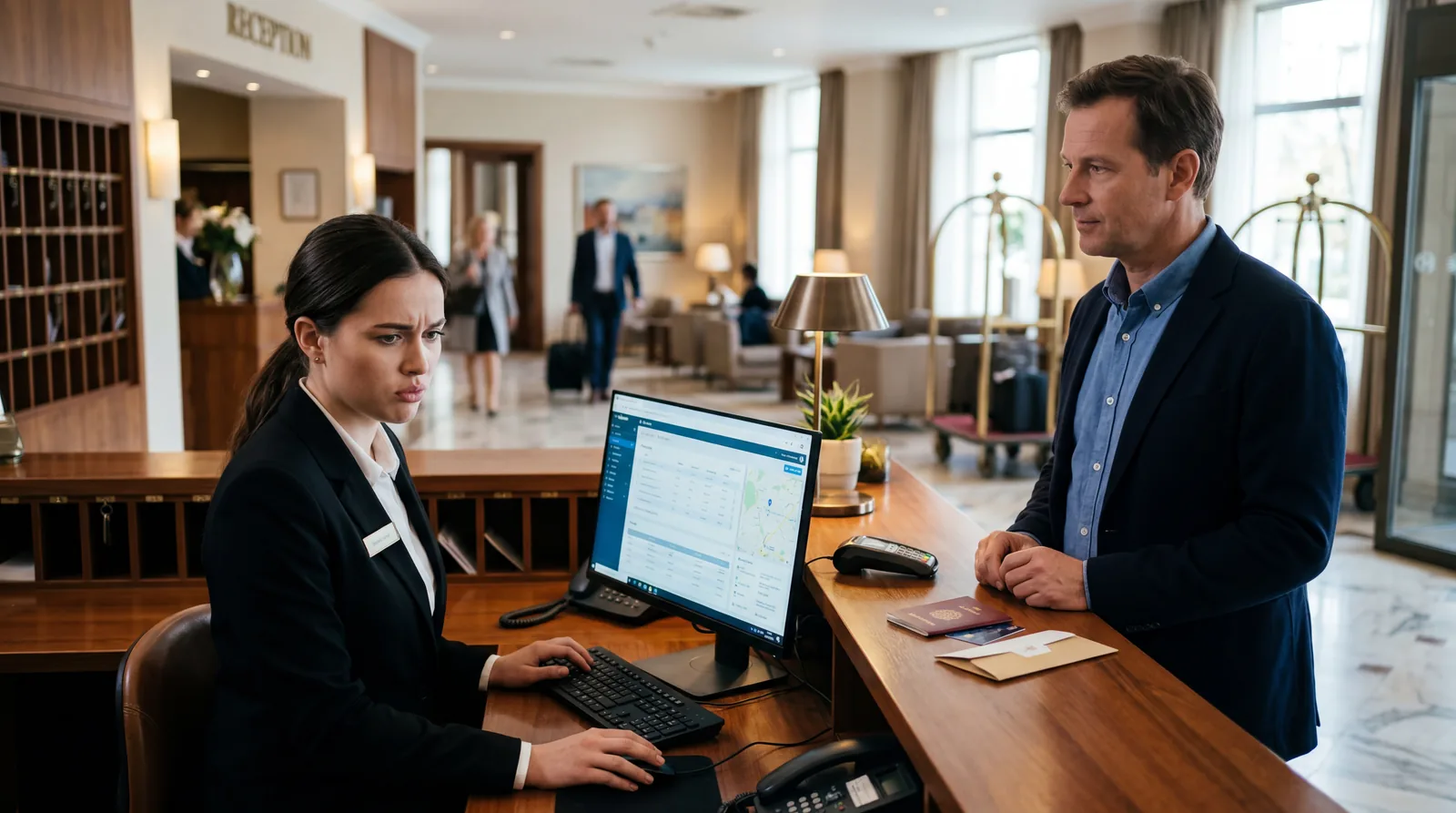
A DNR flag (Do Not Rent) is a note attached to your guest profile that instructs any property in the network to refuse your booking or turn you away at check-in. You won’t be told you’re on the list. You’ll get a vague “we don’t have availability” or your booking will be cancelled with no explanation. DNR flags get added for reasons ranging from legitimate (documented damage, non-payment) to arbitrary (a noise complaint that was never substantiated, a dispute over a charge you had every right to contest). The flag lives in the chain’s central database. It doesn’t expire automatically. You have no formal right to know it exists. A retired hotel manager from Georgia said he’d seen DNR flags placed on guests for complaints that the property management simply didn’t want to deal with. That same curiosity is what makes 27 Secret Codes Airport Staff Announce Over the PA That Passengers Are Never Tol worth checking after this section.
The next one is why you should always use a credit card at check-in, never a debit card. If you like this kind of overlooked detail, 23 Codes Cruise Ship Staff Use That Passengers Are Never Supposed to Hear in 202 is another useful read to open next.
6. Bucket Check and Bucket Busting

During the night audit, every guest account gets reviewed in what’s called a bucket check. This is a line-by-line audit of all outstanding charges to make sure nothing’s missed before the next billing cycle closes. Bucket busting happens when a guest’s account exceeds the authorised hold on their card and the system either charges the overage immediately or flags the account for collections. If your card was authorised for $400 and your minibar, room service, and late checkout fees bring the total to $520, the overage can trigger an automatic additional charge. If that charge declines, your checkout process gets complicated fast. A woman named Brenda from Ohio said she was held at the desk for 40 minutes on checkout morning while a bucket-busting dispute was resolved.
Read More: 23 Insurance Terms That Were Quietly Written Against You
5. Skipper
A skipper is a guest who leaves the property without checking out and without settling their bill. Hotels deal with skippers regularly enough that most front desks pre-authorise your card for the full estimated stay amount upfront. The problem for honest guests is that the anti-skipper measures can create friction even when you’ve done nothing wrong. If your pre-authorisation drops off your card (which can happen after a few days on some cards), the front desk may flag your account as a potential skip risk and ask you to re-authorise. This is embarrassing if it happens while you’re waiting in line. It’s not a personal accusation. It is, however, a system that treats you as a flight risk by default.
4. DND Flag (Do Not Disturb Escalation Protocol)
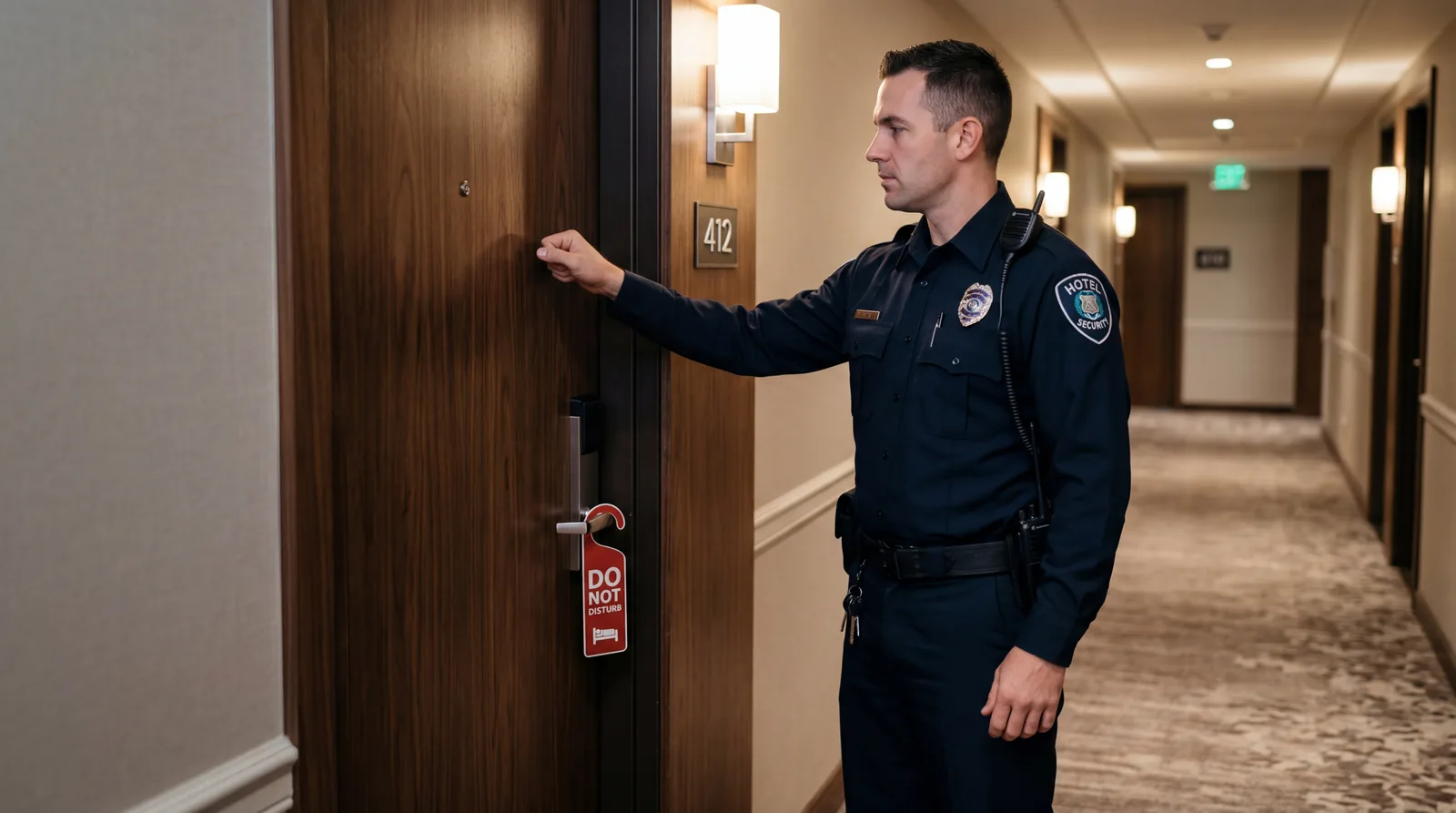
Most guests think a “Do Not Disturb” sign means they won’t be bothered. The reality is more specific. If your DND sign stays on your door for more than 24 consecutive hours, most hotel chains require staff to initiate a wellness check protocol. A manager or security officer will knock, announce themselves, and enter the room if there’s no response. This is called a DND flag escalation, and it’s triggered automatically. The intention is genuine wellness concerns. The effect is that staff enter your room whether you want them to or not. If you’re sleeping odd hours or working through the night, a sign on the door isn’t absolute. Let the front desk know if you don’t want to be disturbed for an extended period. That’s the only way to suppress the escalation. For another nearby rabbit hole, 25 Things Hotel Staff Notice About Every Guest the Second They Walk Through the looks at a related piece of everyday culture.
3. Complimentary Upgrade vs. Upsell Pressure

When a front desk agent says “I can offer you an upgrade to a suite for just $45 more per night,” that’s not a complimentary upgrade. That’s an upsell, and the agent is often working a quota. True complimentary upgrades happen silently, usually when the hotel has excess inventory in a higher category and wants to fill it. You won’t be asked to pay anything. The problem is that the language is deliberately blurred. “We’ve got a special opportunity for you” sounds like a gift. It’s a sales transaction. If you want to know whether an upgrade is genuinely free, ask one direct question: “Is there any additional charge for this?” If there’s hesitation, or if the agent pivots to “well it’s only a small difference,” you’re being upsold. A woman named Janet from Texas said she paid $90 extra on a two-night stay for an upgrade she assumed was a reward for loyalty status. It wasn’t. Her status had nothing to do with it.
2. Overbooking + Rate Fence Stacking
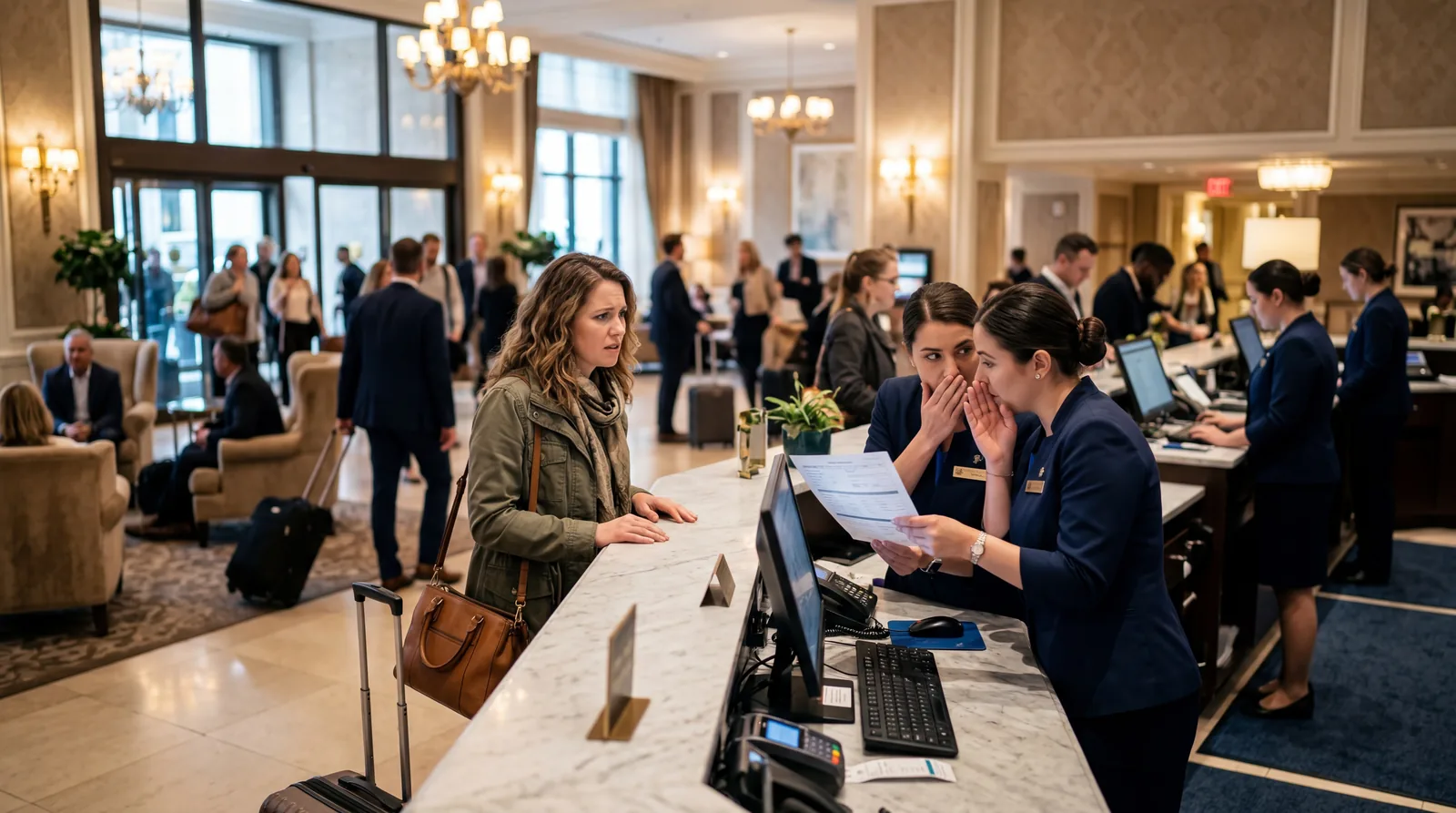
Here’s how two systems combine to take money from you without doing anything technically wrong. You booked a room at a discounted rate through a third-party platform. The hotel is overbooked. When they decide who gets walked, your booking is near the bottom because it generated less revenue. Meanwhile, you’re paying a service fee to the third-party platform (typically 8 to 15 percent) that the hotel never sees and that doesn’t earn you any status credit. The hotel has no loyalty obligation to protect your booking. The platform has no authority to prevent the walk. You’re in the gap between two systems that don’t share accountability. A retired travel agent named Paul from Colorado said he stopped booking through platforms entirely after watching this happen to clients on three separate occasions. The solution is direct booking, even if the upfront rate is slightly higher. Direct bookings carry more protection and the hotel has actual skin in the relationship. If this part caught your attention, 25 Things Hotel Staff Notice About You the Moment You Walk Through the Door in 2 gives you another specific angle to compare.
Bad. But nothing compared to what’s waiting at #1.
1. DNR + Guest Profile Flagging
The Code That Can Get You Quietly Banned
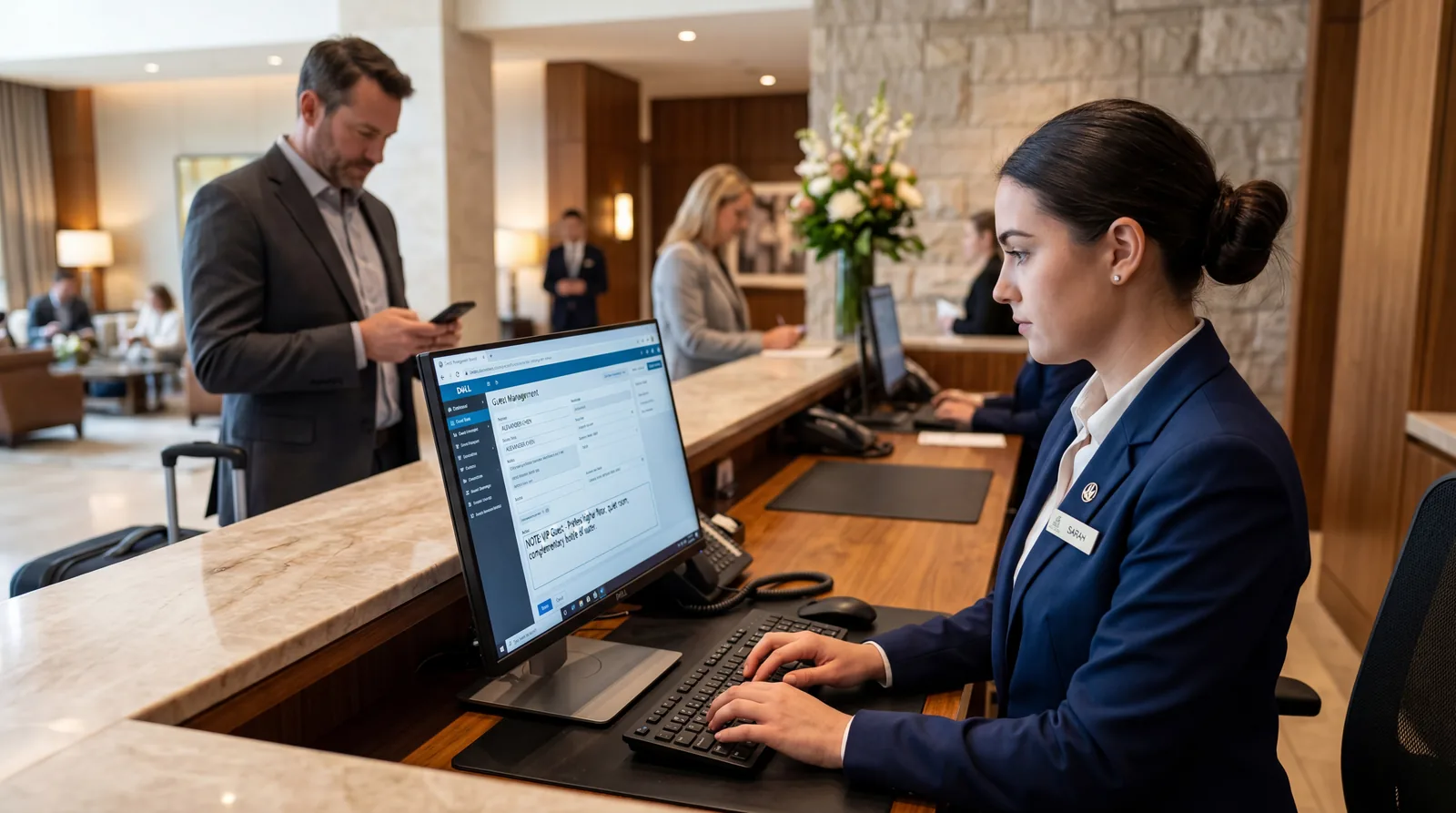
The most consequential thing that can happen during a hotel stay has nothing to do with the room, the rate, or the checkout bill. It’s a flag on your guest profile, and you’ll never see it happen. Major hotel chains operate shared guest databases across their entire portfolio. When a property manager marks your profile with a DNR (Do Not Rent) designation, that flag can propagate to every brand under the parent company’s umbrella. For a conglomerate like Marriott, Hilton, or IHG, that’s hundreds of properties across dozens of brands. Your Marriott Bonvoy profile, your Hilton Honors account, your IHG One Rewards number. All of it. One flag. One night.
What triggers it? Documented damage and non-payment are legitimate grounds. But flags also get added for disputed charges (when you won a chargeback through your bank), for complaints the property found inconvenient, and in rare but documented cases, for being an assertive guest who pushed back on a billing error. A retired hotel manager named Dave, who spent 22 years in front-of-house operations in Las Vegas, put it plainly: “If a guest filed a chargeback through their card company rather than coming back to us first, that was often enough. Managers would add a note. Some of those notes became DNRs.”
You have no right to appeal a DNR flag in most chains. There is no standard process to see your own guest profile. You find out when a reservation is mysteriously cancelled, or when you’re told at check-in that the hotel is unable to accommodate you. The charge on your card gets reversed. The explanation never comes.
If you’ve ever won a chargeback against a hotel chain, check whether future bookings at that brand process normally. If they start failing, you already know what happened.
Next time you check into a hotel, you’ll know exactly what’s happening behind that front desk.
Now You Know What Happens at Check-In
Hotel staff aren’t working against you, but the systems they operate in absolutely can be. Forward this to anyone you know who’s about to book a conference trip, a long stay, or anything involving a major chain loyalty program. The information costs nothing. The alternative might.